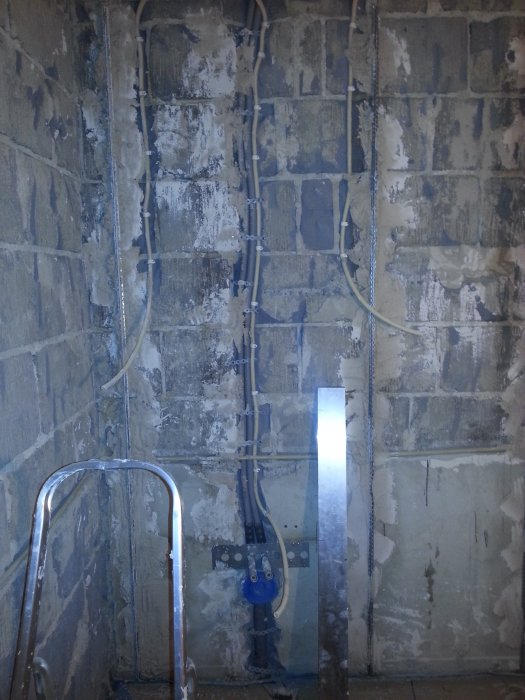
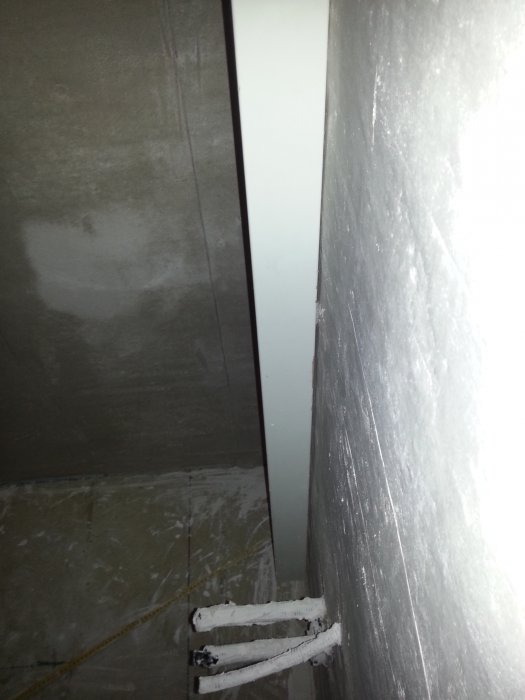
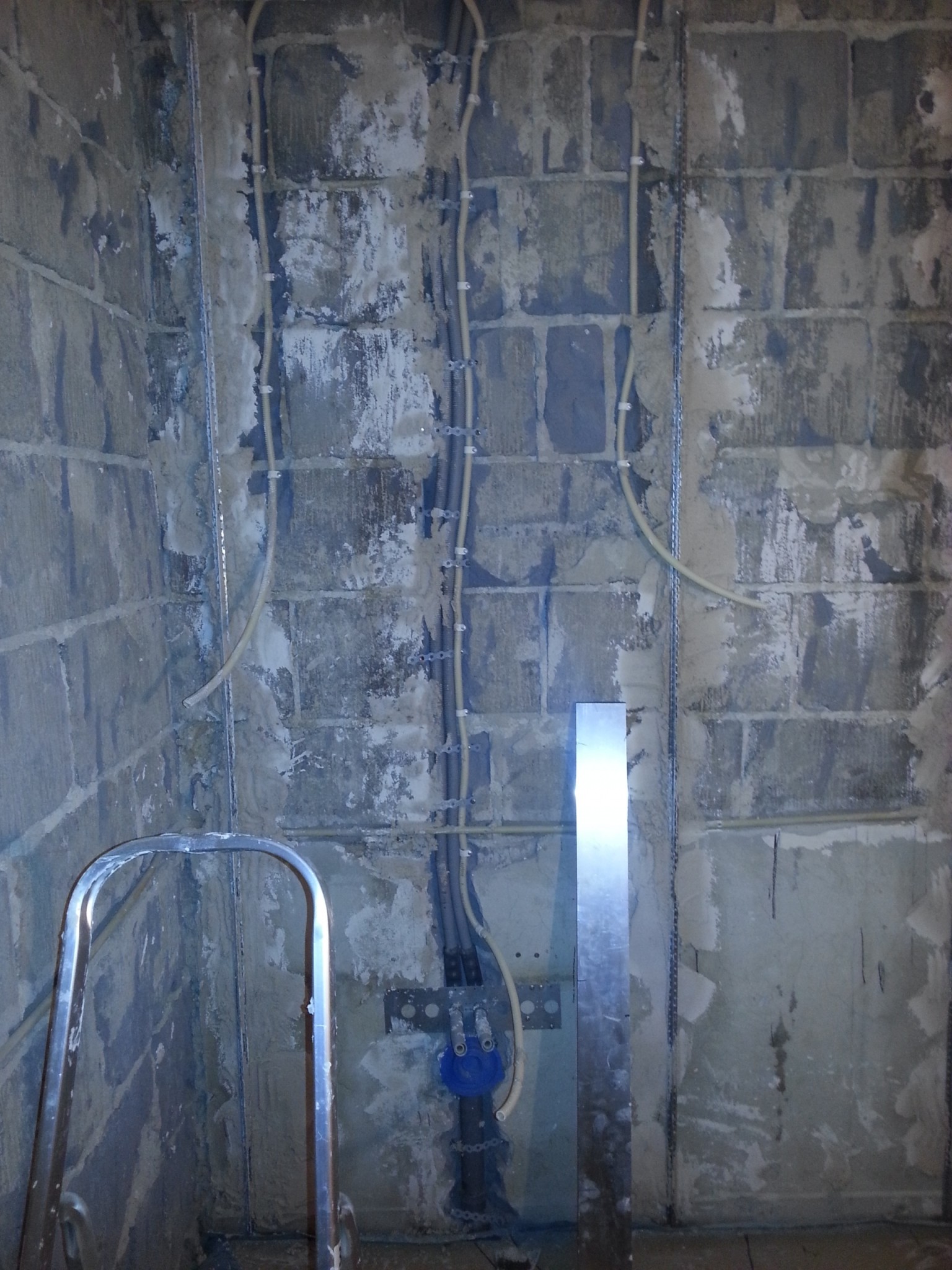
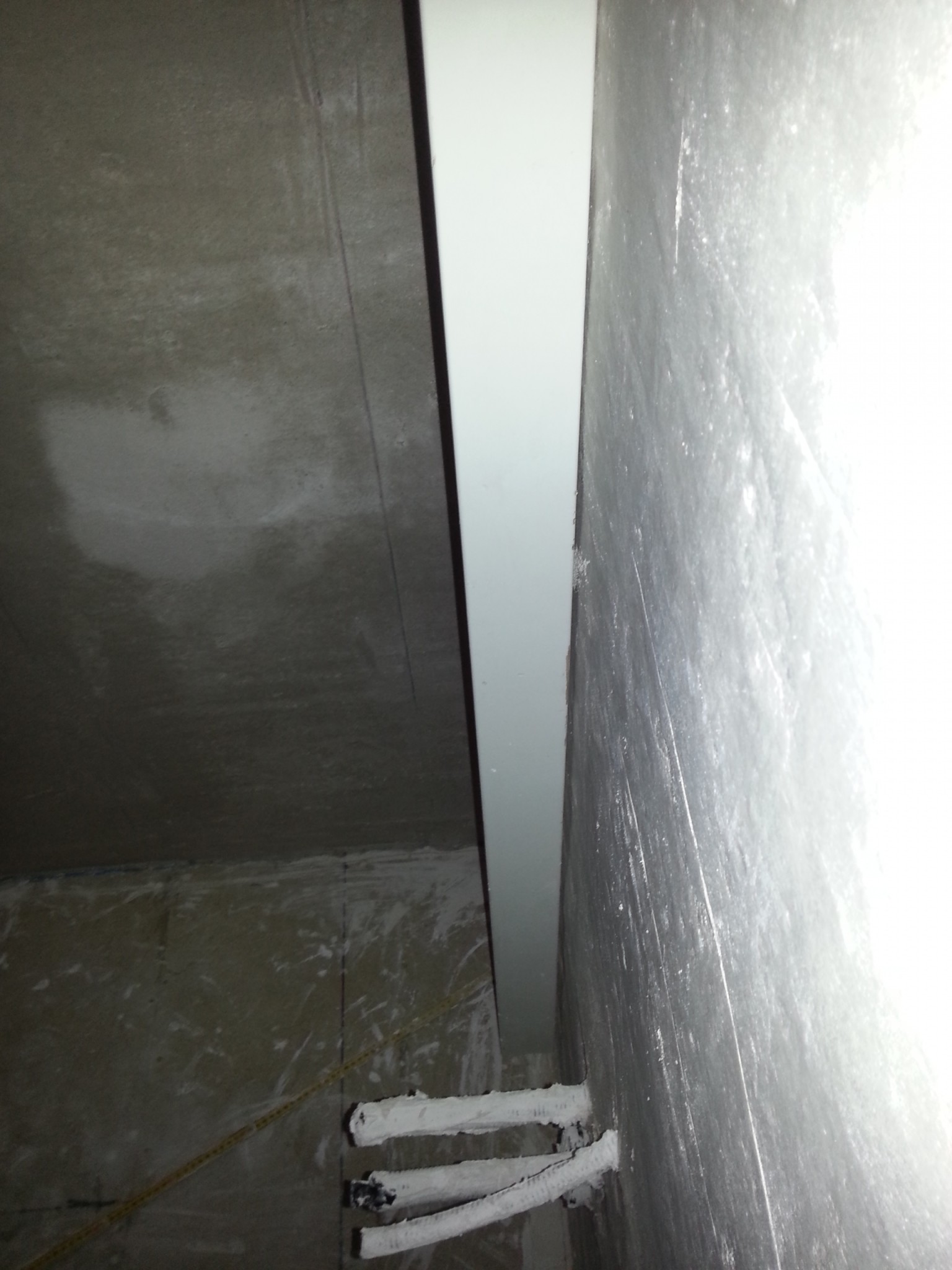
Currently working on a new bathroom at home, I've framed the floor, installed all the plumbing, and glued down the floor chipboard. The issue now is that I have 2 exterior walls made of blåbetong, while the other 2 are interior walls made of plyfa chipboard. As the pictures show before and after, I've plastered 50-60mm on the 2 exterior walls and installed plumbing and water in the exterior wall, which should be fine against frost since I'm planning to have warm underfloor heating (I am a plumber myself). Ideally, I should have framed and installed plyfa drywall on the exterior walls too, but this is how it turned out. The problem is that the walls aren't entirely smooth and straight after my plastering, so the question is how to solve it the easiest way. Should I putty, and if so, what type of putty can support tiles, or should I glue moisture-resistant drywall onto my plastering, but then it might affect my floor drain in the shower not being centered as planned, and there might be some air between the moisture-resistant drywall where there's no glue, meaning that my water pipes in the wall might not be frost-free, not to mention hanging a large vanity might not be ideal. I don't know how even and free of flaws the walls need to be for tiling, maybe it's easier to choose smaller tiles. So, should I putty over the plastering to fix my mistakes or glue moisture-resistant drywall on the walls?
before and after, holding a plank showing there's a difference of about 1-8mm here and there.
But how do I plane straight if there are some bumps in the middle, and if I want to plane as little as possible is there a way to buy smaller cutting depths than 10mm?
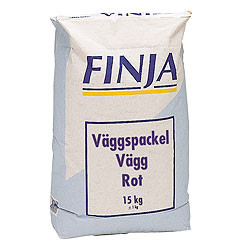
Ah good tips, thanks! Any suggestions for filler that holds up tiles and doesn't dry before you've had time to mix it? I suspect that sand filler and wet room filler aren't meant to support tiles and it needs to be cement-based?