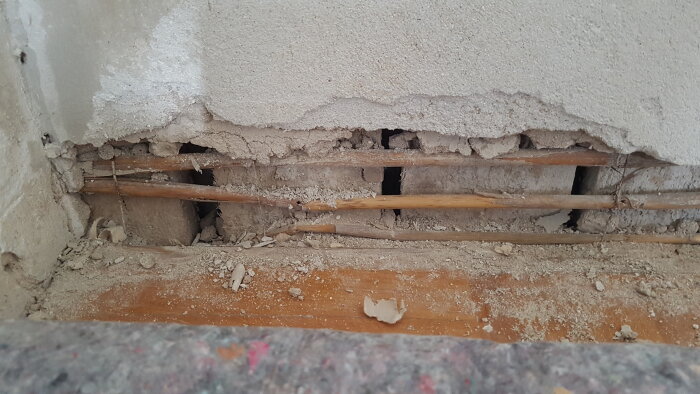
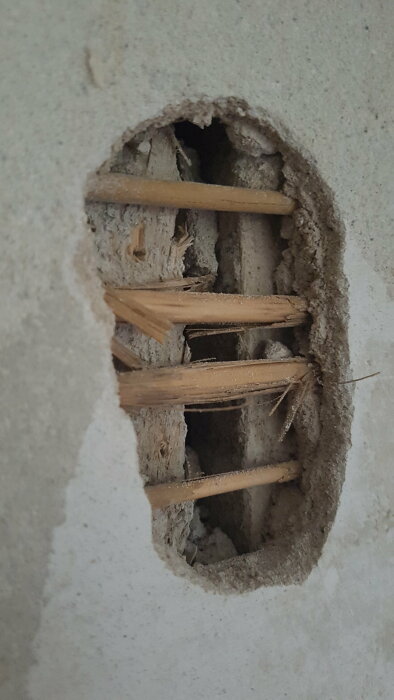
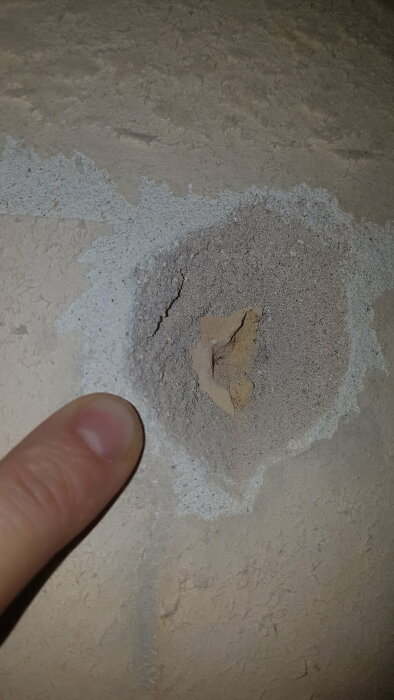
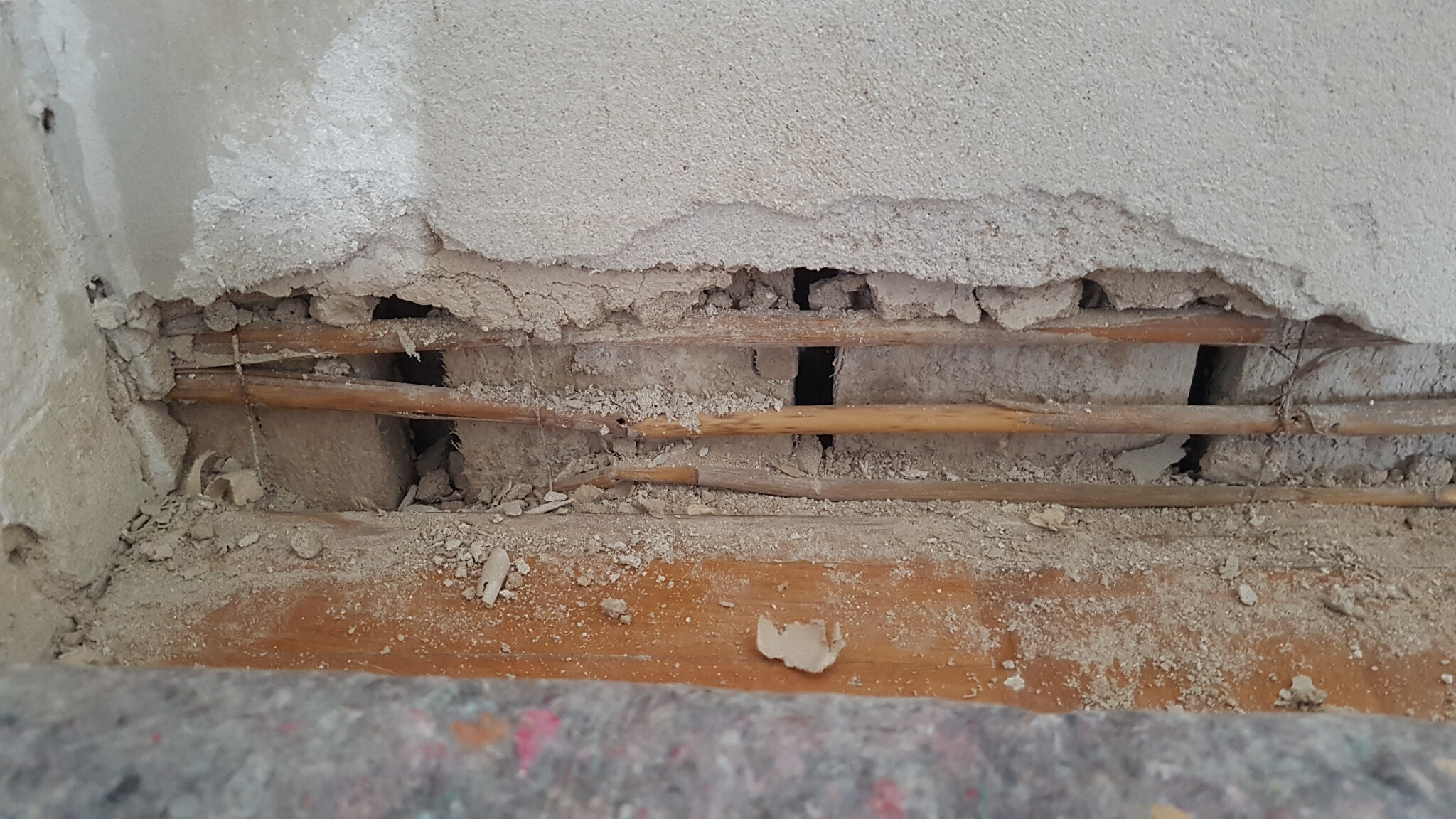
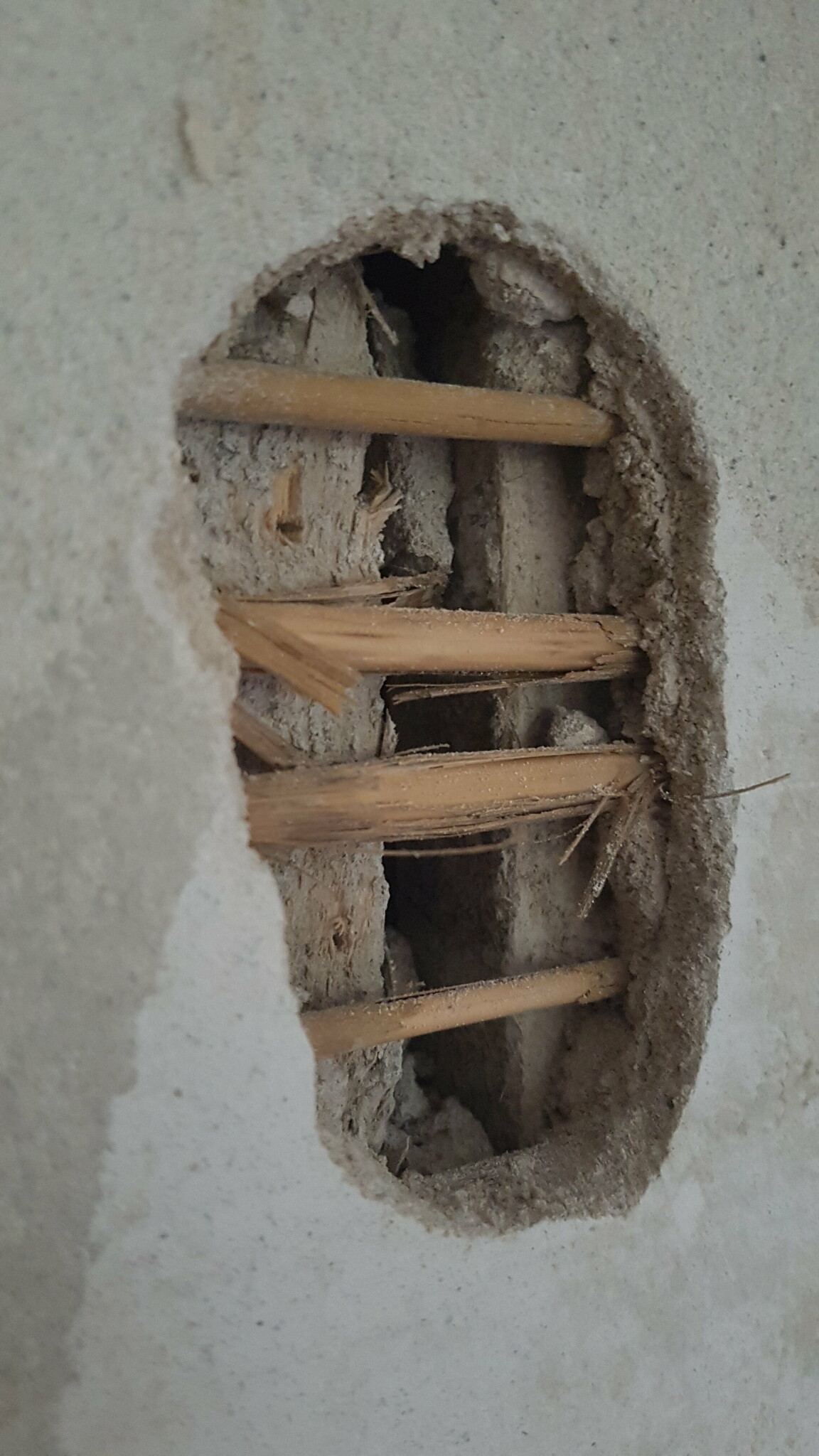
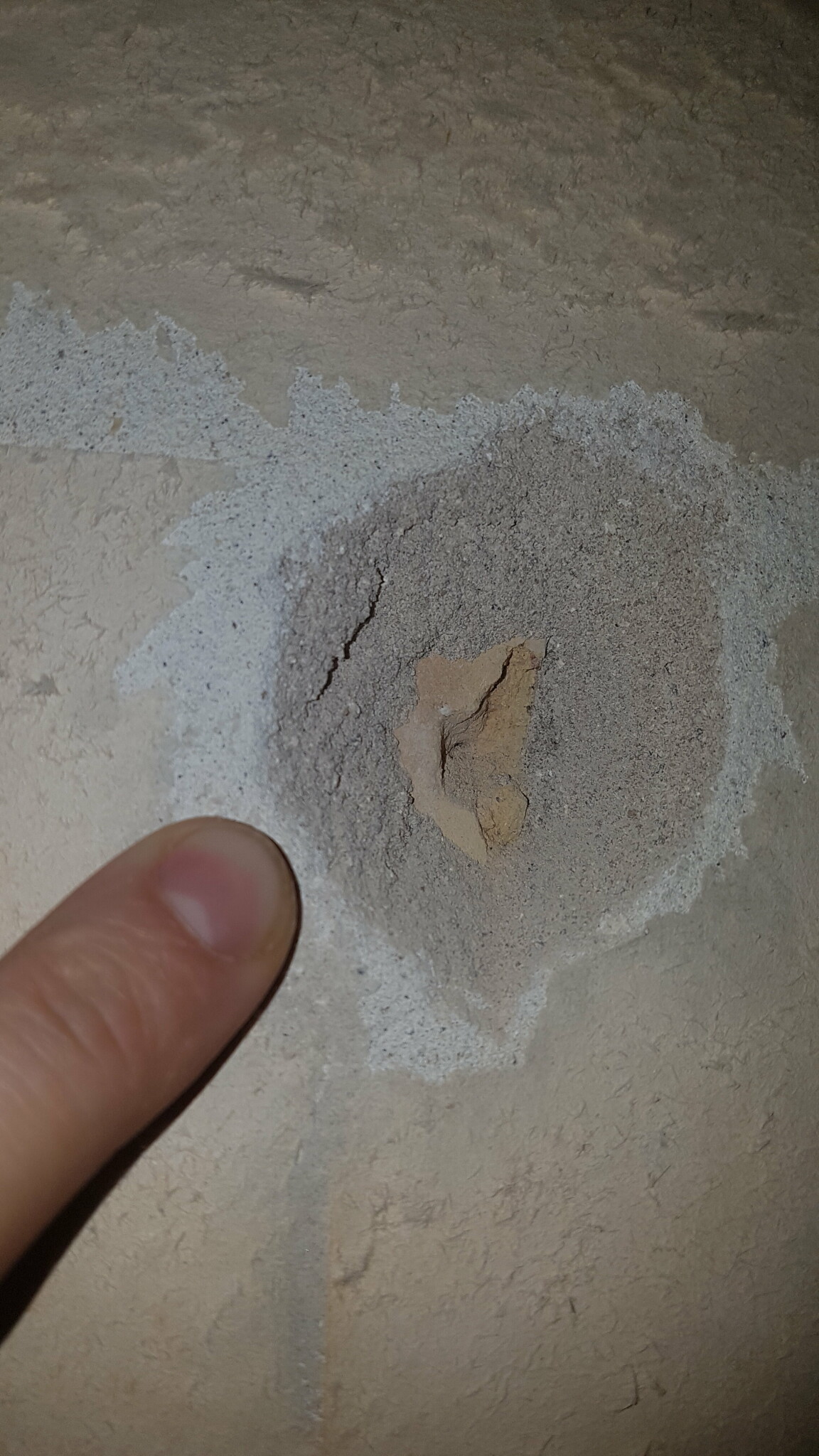
Just bought a house from 1937 where we are replacing wallpaper with paint. When we removed the wallpaper, the plaster came off in some places, including on interior walls made of boards + reed mat and especially behind baseboards. The plaster has also come off in some places from the interior exterior wall of brick where fixings have previously been.
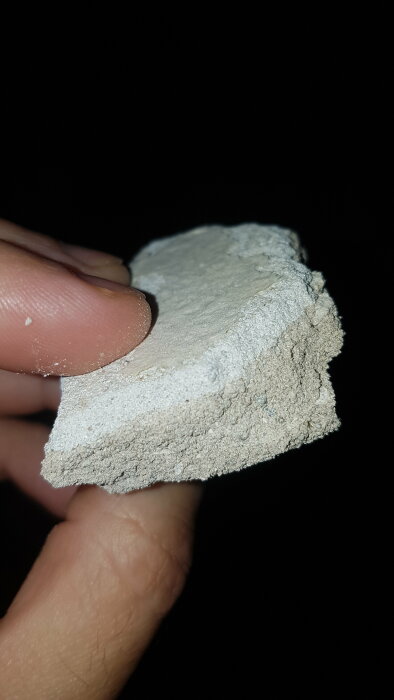
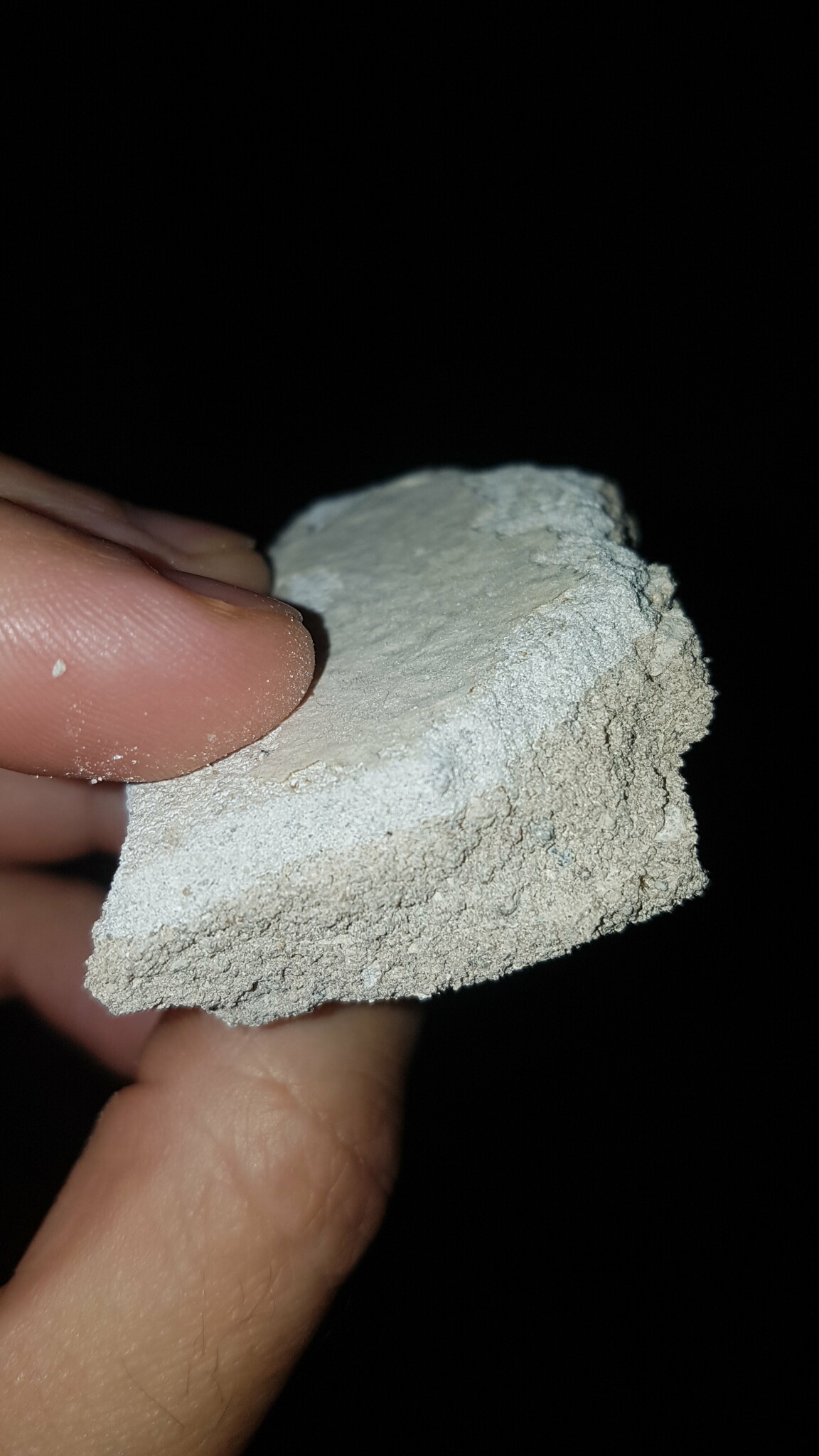
Therefore, we need to repair a bit before planned joint filling (?), but are unsure of which mortar to use. After some research, I guess it is an air-hardening (non-hydraulic) lime mortar considering the age, method, and how easily it crumbles. In that case, this product seems likely, among other reasons because it is readily available.
Lime mortar that you think I would also use. I have mixed in a little gypsum mortar with the lime mortar for more difficult tasks, it becomes a bit "stickier" and holds together better, so if you're repairing a ceiling it's a clear advantage. Or building thicker sections that must be done in one go, such as plastered coves, it's an advantage. I've understood that this was also done in the past, although as I've understood you can mix gypsum with air lime mortar, but not with cement or hydraulic lime mortar. Why, I don't know.
Lime mortar as you think I would also use. I have, for more difficult tasks, mixed a little gypsum mortar into the lime mortar, it becomes a bit "stickier" and holds together better, so if you're making repairs in the ceiling, it's a clear advantage. Or building thicker which must be done in one go, e.g., plastered cove moldings, it's an advantage. I have understood that this was also done in the past, however, as far as I understand, you can mix gypsum into air lime mortar, but not into cement or hydraulic lime mortar. Why, I don't know.
You should never mix gypsum into mortar at all.
In the past, it was sometimes done to get faster drying.
Now there are other products for that.
Kalkbruk 3 mm or c bruk 3 mm works well, if you are looking for the same as TS.
Thanks for the answer!
I'm going to repair a wall (indoors) in a 1930s house with a brick structure and what I believe is lime plaster on top. However, I have concerns about whether to choose Hydraulic or non-Hydraulic lime plaster. I perceive that the drying time is longer with "air lime." But it also seems quite tricky to deal with watering indoors if you are going to use the Hydraulic lime plaster. So pros and cons of both types.
Looked a bit at weber as Ts linked to as well as Finjas. Then there are also building conservation variants that seem a bit more expensive.
What will the consequence be? Where I have done it, it has worked well...
Indoors it might not matter much, but you gain nothing from it.
And I think the material will have a shorter lifespan.
If you have plaster in the material outdoors where moisture comes, it's not good in any form.
Maybe not a huge problem, but nothing to recommend to anyone.
Either you plaster the cove or something else with plaster mix, or regular mix.
Thanks for the response!
I need to repair a wall (indoors) in a 1930s house with a brick structure and what I believe is lime plaster on top. However, I'm wondering whether to choose hydraulic or non-hydraulic lime plaster. I understand that the drying time is longer with "air lime." But it also seems very tricky to manage watering indoors if using hydraulic lime plaster. So, pros and cons of both types.
I've looked a bit at Weber as Ts linked to and also Finja. Additionally, there are also building conservation variants that seem a bit more expensive.
I always use Weber, but Finja is okay.
You must always water regardless of what you use.
If it's brick, you need to water a lot; otherwise, it will set too quickly.
I'd say the hydraulic is a bit more convenient, but air lime is a bit cheaper, although it cracks more easily if you plaster thickly and don't water properly. You have more time with air lime.
Is C mortar not an option? Do you know you have lime mortar on the wall?
Click here to reply
Vi vill skicka notiser för ämnen du bevakar och händelser som berör dig.


Friteradräka said:
Thanks for the response!