
12,824 views ·
14 replies
13k views
14 replies
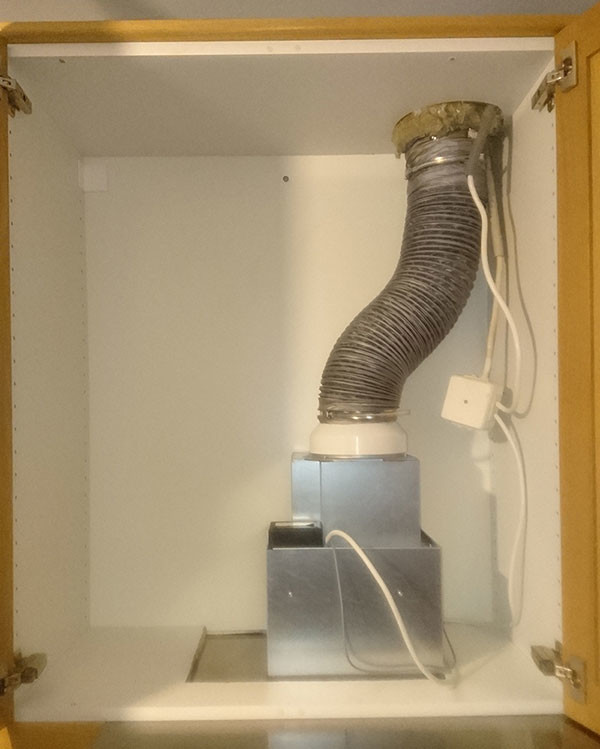
How would you have carpentered around the kitchen hood inside a cabinet?
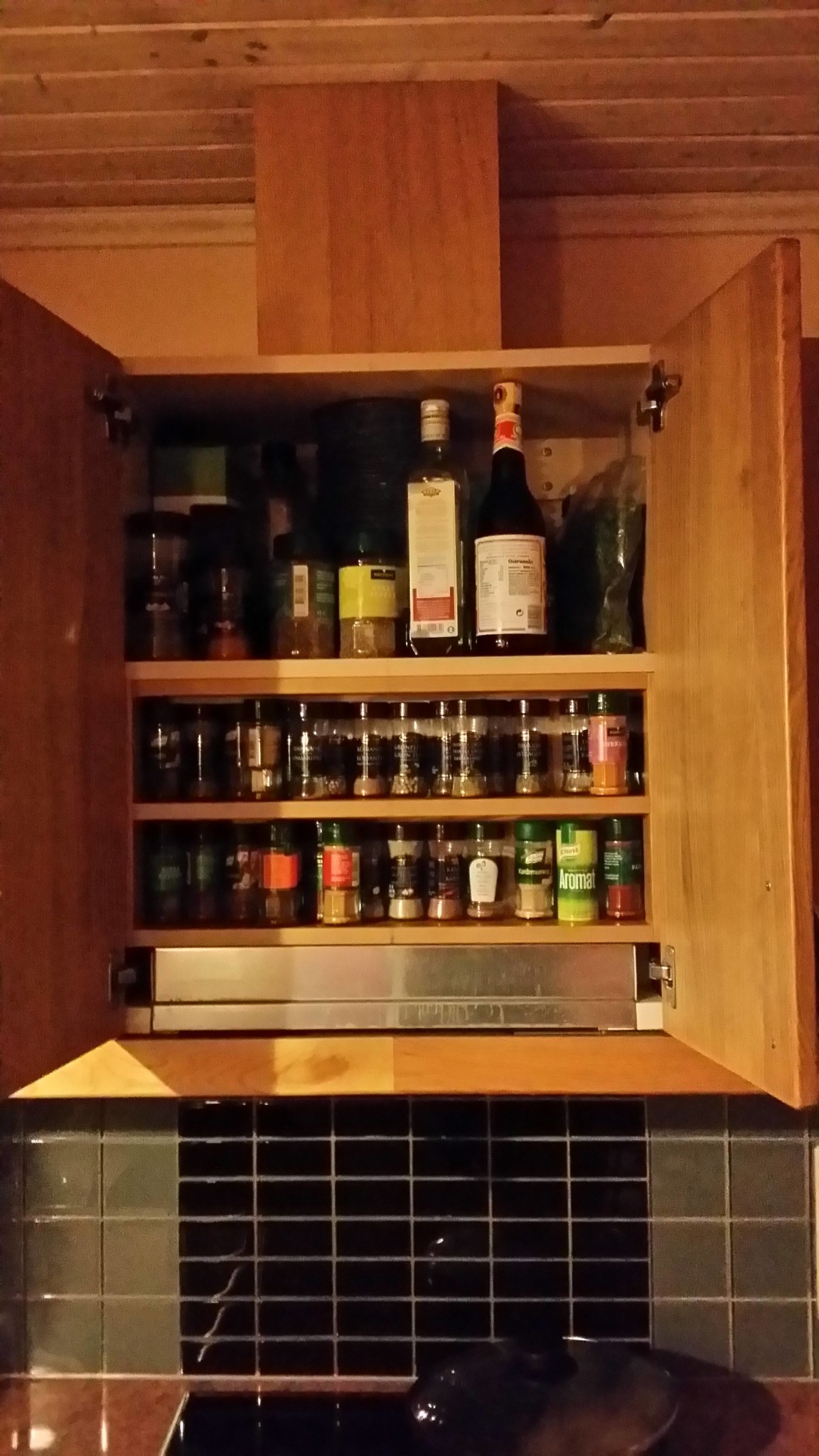

Built a drum around the thing and put up shelves, as shown in the above picture. Keep in mind that there are fire safety requirements regarding kitchen fans.
As someone knowledgeable in electricity, I would have started by fixing the electrical connection.
As someone knowledgeable in electricity, I would have started by fixing the electrical connection.
No burning interest in regulations there...

Homeowner
· Västerviks kommun
· 467 posts
I had placed a board to the left of the fan and then set up a couple of shelves. In front of the fan/pipe, I had screwed on a cover board to hide it.


Unfortunately, I don't have a picture, but in a previous kitchen, we built a "detachable shelf" that was easy to remove when cleaning or during inspections, etc. You could store spice packets/spice jars inside... we had a flat section that covered the parts not covered by the shelves (mostly for aesthetics).
But the whole unit was very easy to remove
But the whole unit was very easy to remove
The spice rack is the worst place in the kitchen to store spices. They should be kept in a dark, dry, and cool place, not warm and humid.




Tomture61
Self-builder
· Född i Luleå
· 6 334 posts
Tomture61
Self-builder
- Född i Luleå
- 6,334 posts
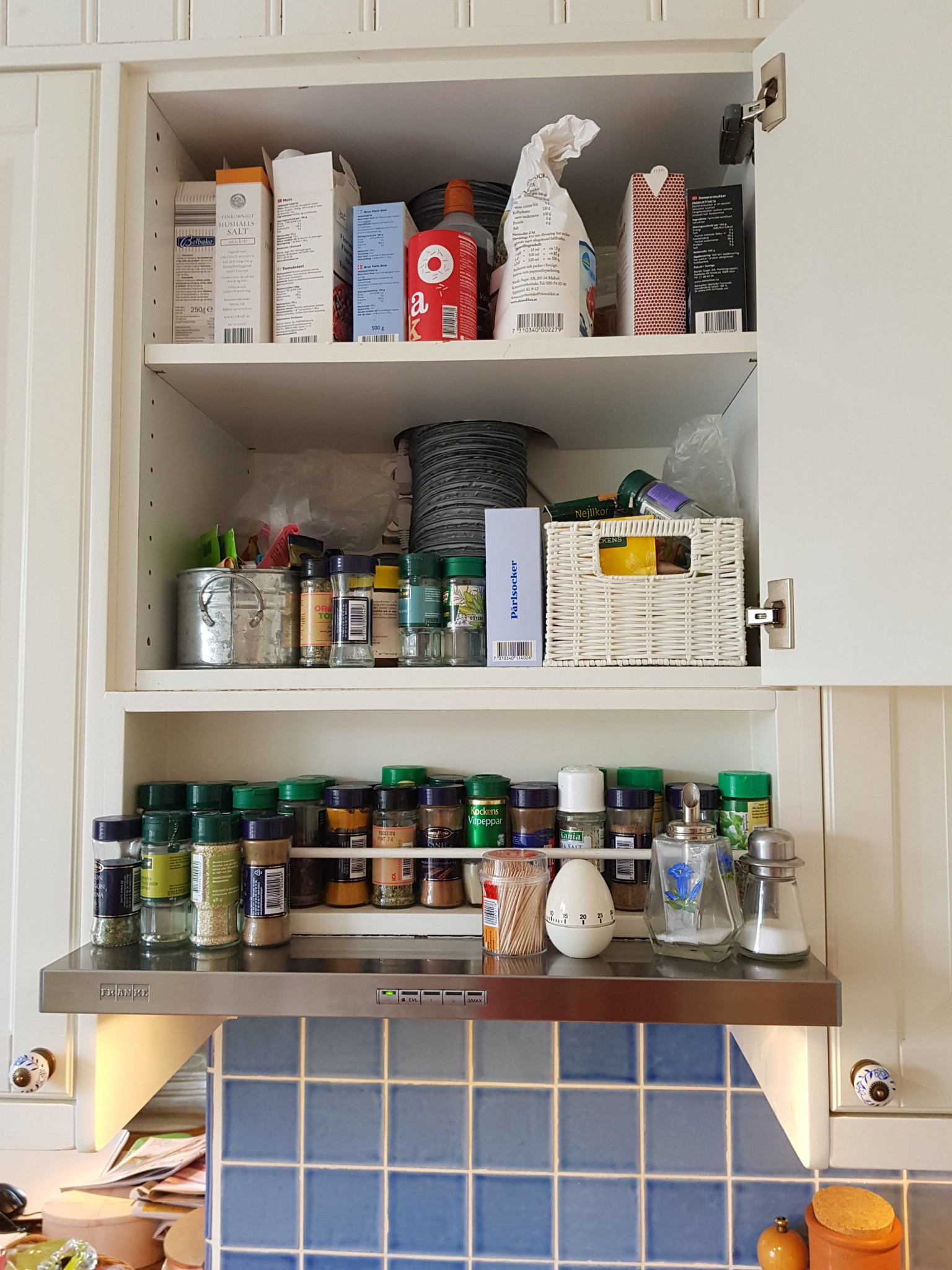
I placed a shelf about halfway up, cut out for the hose.
Assemble a shelf in front of the fan housing at the lower part.
My fan housing is as wide as the cabinet + the hose is in the middle of the cabinet.
Assemble a shelf in front of the fan housing at the lower part.
My fan housing is as wide as the cabinet + the hose is in the middle of the cabinet.
Tomture61
Self-builder
· Född i Luleå
· 6 334 posts
Tomture61
Self-builder
- Född i Luleå
- 6,334 posts
Spices you buy at the store usually come in a glass jar with a plastic lid, and as mentioned earlier, it's dark behind the cupboard doors. Cool, well, nah. I don't know where it's cool in my kitchen with underfloor heatingD Deathtrip2000 said:

Shorten the connection hose to the fan; it should be as straight as possible, with gentle bends, and as smooth as possible.
A duct does not need to be fire-protected in the room where it starts, provided it only serves one fire compartment (one apartment). However, there should/must be an air gap of 5cm (if I remember correctly) to combustible material.
A duct does not need to be fire-protected in the room where it starts, provided it only serves one fire compartment (one apartment). However, there should/must be an air gap of 5cm (if I remember correctly) to combustible material.
How would you solve up there where the insulation sticks out into the upper cabinet?
There is maybe 10 cm between the upper cabinet and the ceiling, so theoretically I should be able to tear off the insulation inside the cabinet, but I'm curious about how to tidy up unnecessarily large cutouts in the cabinet. And if you might wrap insulated air ducts with some plastic or so?
---
I'm leaning towards shortening the flexible duct, removing excess insulation, having an electrical firm correct the wiring, placing a better-cut shelf board at the bottom to cover the unnecessarily large hole at the fan motor, and just cutting out shelves and letting the machinery be visible. Possibly covering the fan parts with white fabric, but that would increase the fire risk, I suppose.
There is maybe 10 cm between the upper cabinet and the ceiling, so theoretically I should be able to tear off the insulation inside the cabinet, but I'm curious about how to tidy up unnecessarily large cutouts in the cabinet. And if you might wrap insulated air ducts with some plastic or so?
---
I'm leaning towards shortening the flexible duct, removing excess insulation, having an electrical firm correct the wiring, placing a better-cut shelf board at the bottom to cover the unnecessarily large hole at the fan motor, and just cutting out shelves and letting the machinery be visible. Possibly covering the fan parts with white fabric, but that would increase the fire risk, I suppose.

Click here to reply