Hello!
We are in the process of a complete renovation of our house and have torn down to the beams on the ground floor (upper floor). I am now considering the best way to handle the insulation between the ground floor and the basement, which is fully furnished.
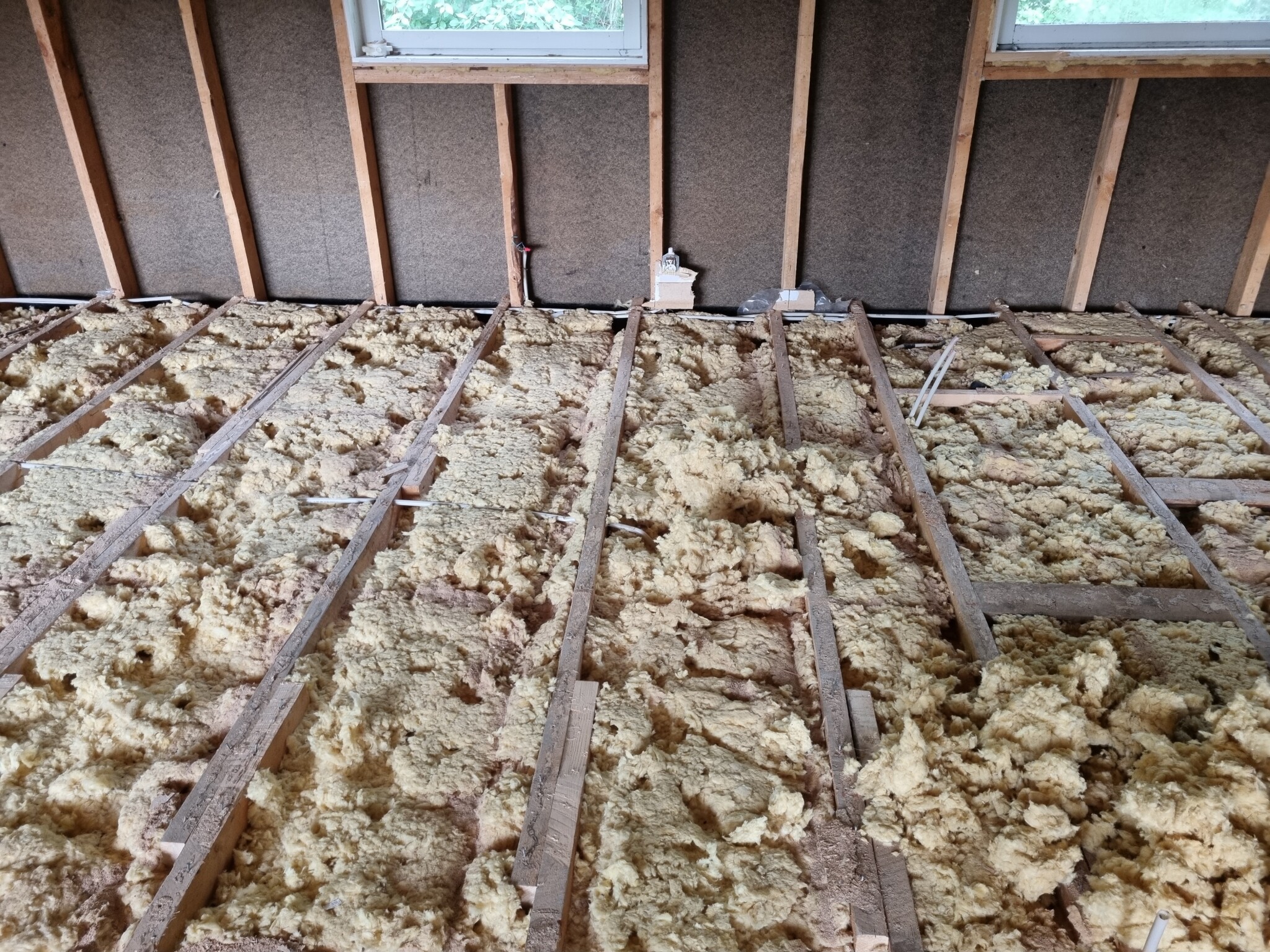
Currently, there is loose fiberglass wool directly on top of the chipboards that constitute the ceiling of the basement. The plan is to remove these chipboards when we finish the renovation of the ground floor and continue with the renovation in the basement. The problem is that I want the insulation to remain in place between the floors, even after the chipboards are removed.
My question is:
What is the best way to keep the insulation in place?
Should one use construction plastic (vapor barrier) to hold it up?
Or is it better to use some form of netting or fabric?
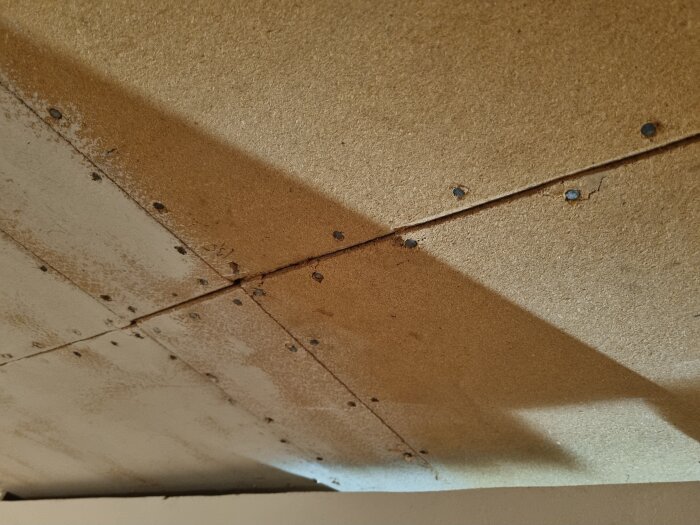
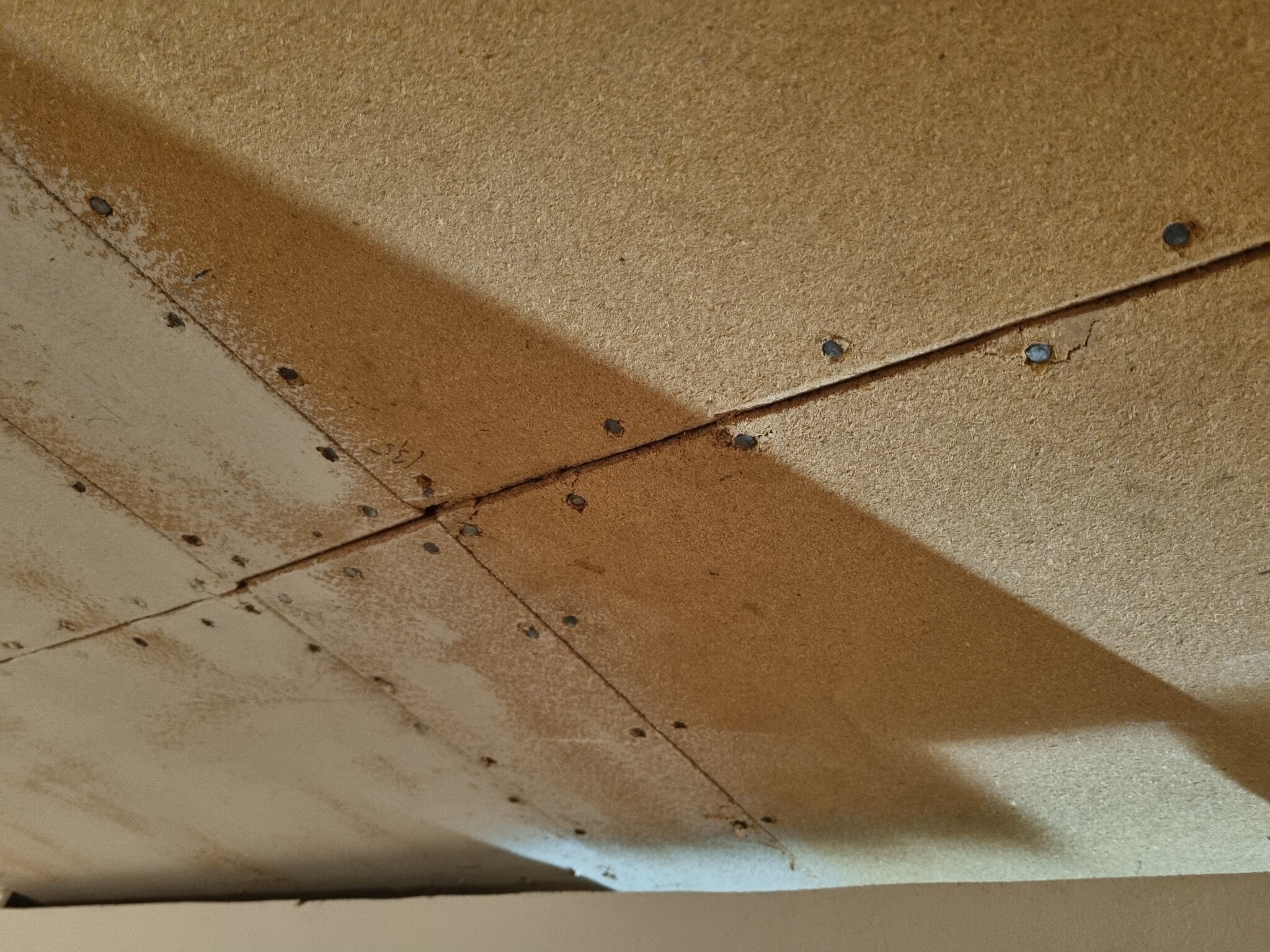
The pictures show how the insulation is placed on the chipboards and what the ceiling in the basement looks like.
Building plastic and sparse paneling are probably the most common
If sparse paneling is used, it will lower the ceiling height in the basement, which is already 215 cm. Won't it also be bad with building plastic because of the vapor barrier?
If sparse paneling is used, it will lower the height of the basement ceiling, which is already 215 cm. Wouldn't it also be bad with construction plastic for the sake of the vapor barrier?
I personally prefer to avoid plastic in houses (except for plastic mats in wet areas, that is a reasonable area to build tightly with plastic
If sparsely spaced panels are used, it will lower the ceiling height in the basement, which is already 215 cm.
You probably find it difficult to get much higher ceiling height, but you could recess noggins in the joists or build a false ceiling if you want to save a few centimeters.
You probably find it difficult to achieve much higher ceiling height, but you can recess cross braces into the joists or build a false bottom if you want to save a few centimeters
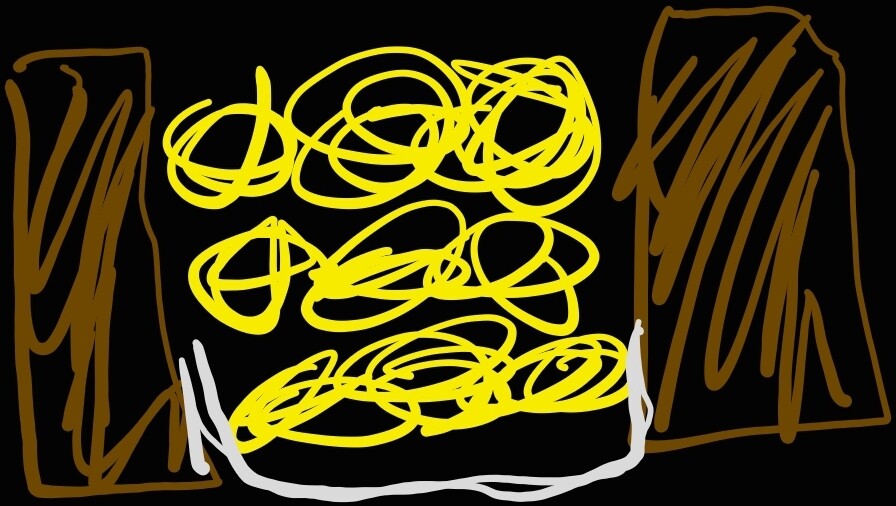
The worst part of this setup is that I have to remove the chipboard now plus all the insulation to make room for the battens under the joists. The solution I was thinking of is to use insect netting and place it between the joists down towards the chipboard so that it forms a hammock that the insulation sits on. In the picture, I envision a cross-section where the gray represents my "hammock," which is stapled in place and the chipboard is removed.



KoKarlsson said: