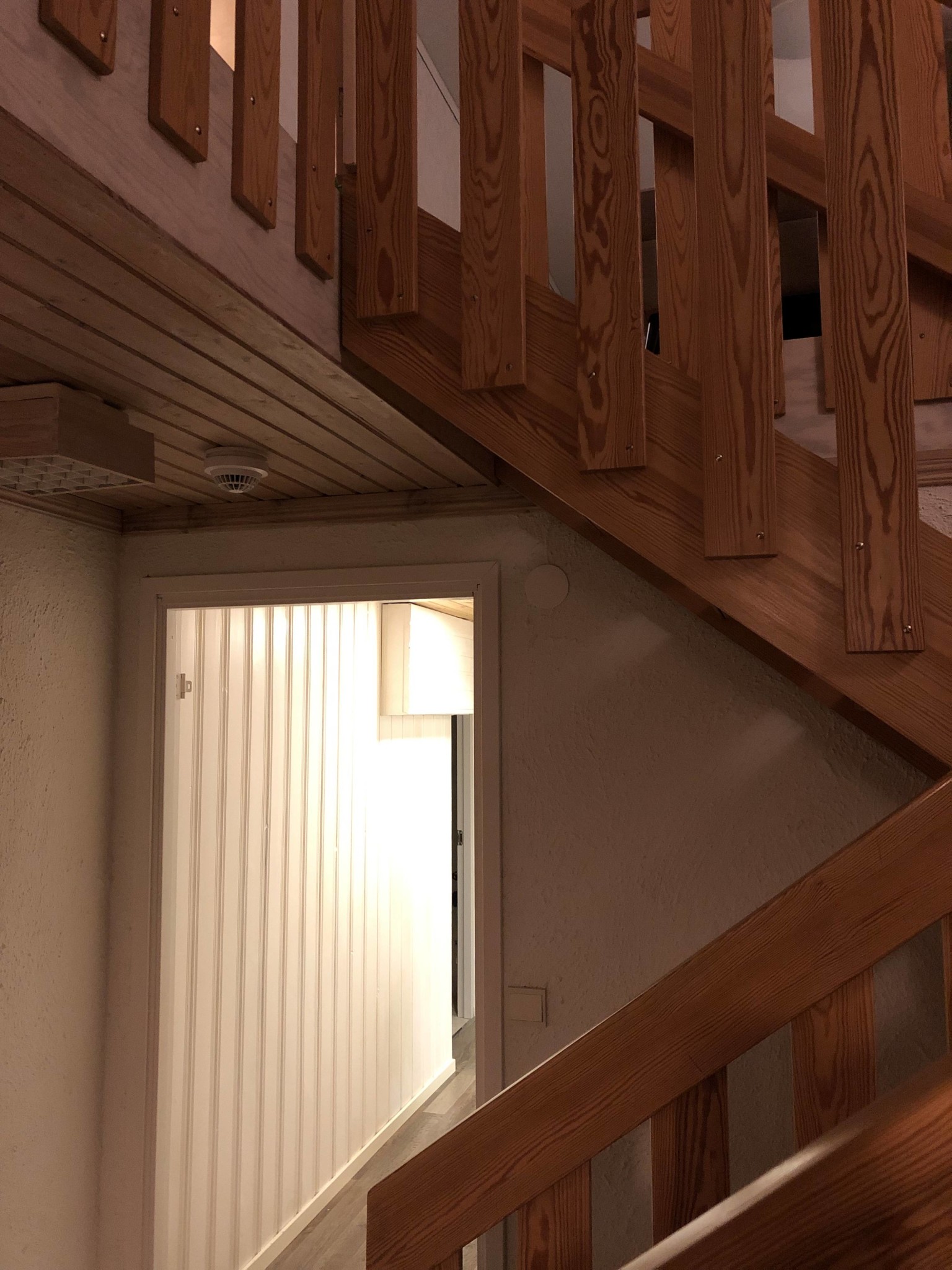
I've been scratching my head trying to understand how my staircase is actually anchored... but I'm neither a carpenter nor a structural engineer, so someone could gladly help me... it's an internal staircase with a landing from '79.
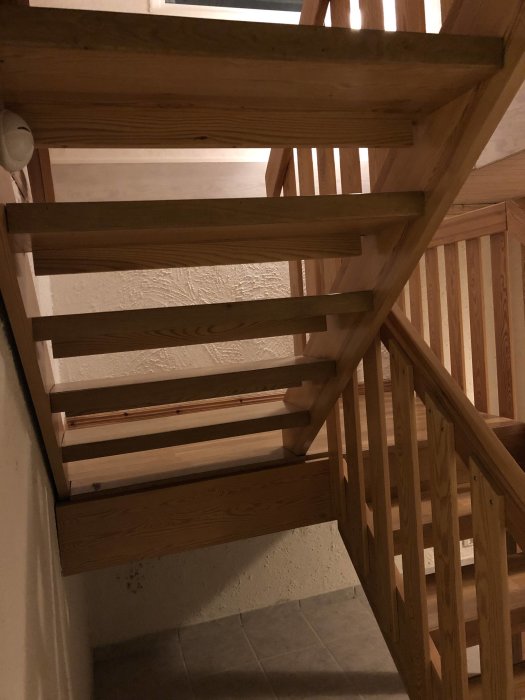
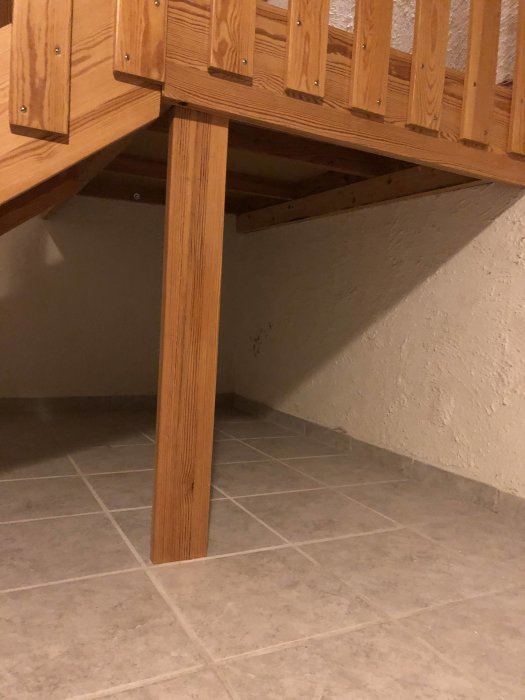
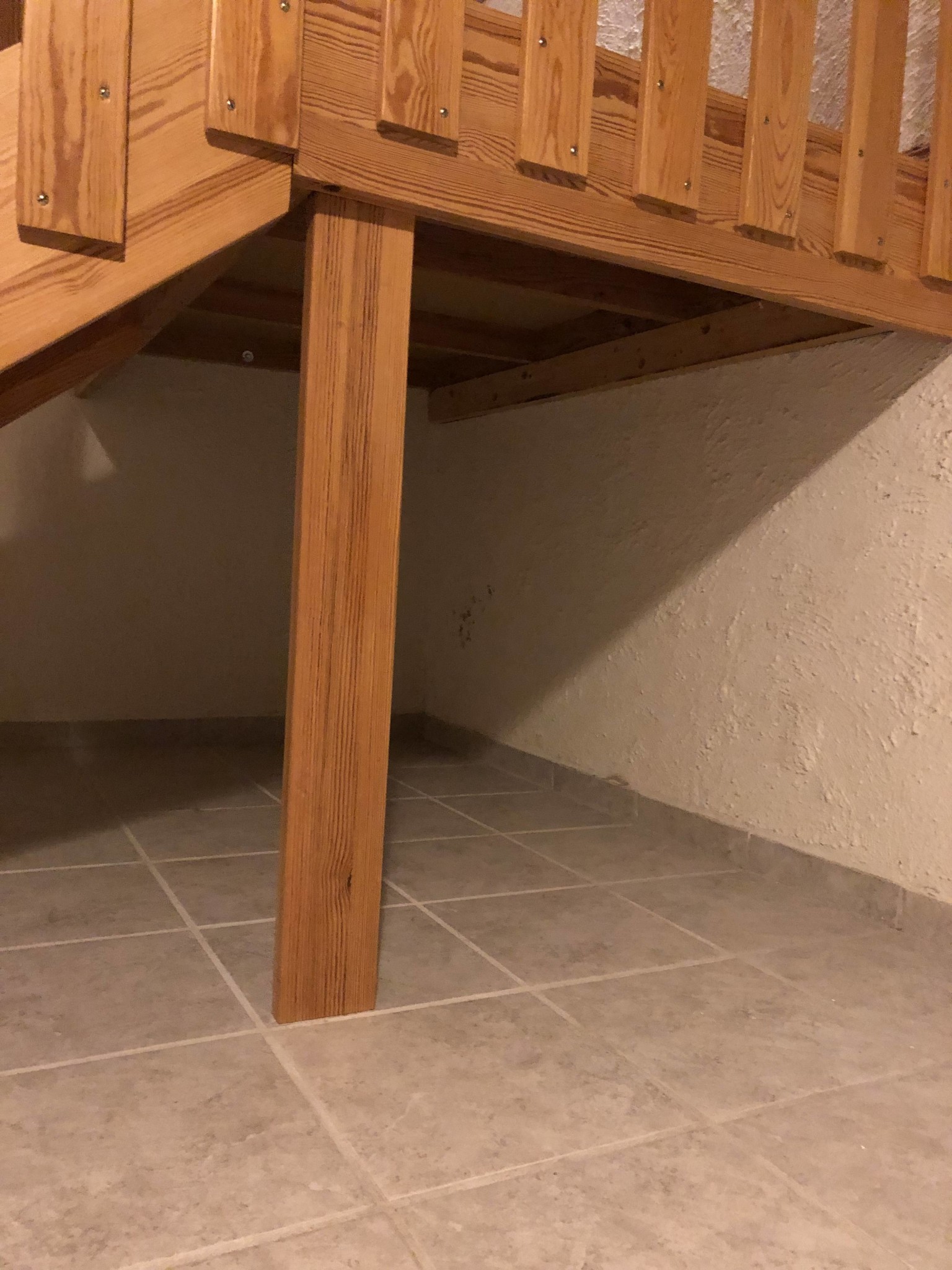
The only thing I can clearly see is the leg that stands against the floor - then the landing rests on a joist that is screwed into the exterior concrete wall. The other joist the landing rests on is only attached with two screws to a drywall (perhaps studs behind).
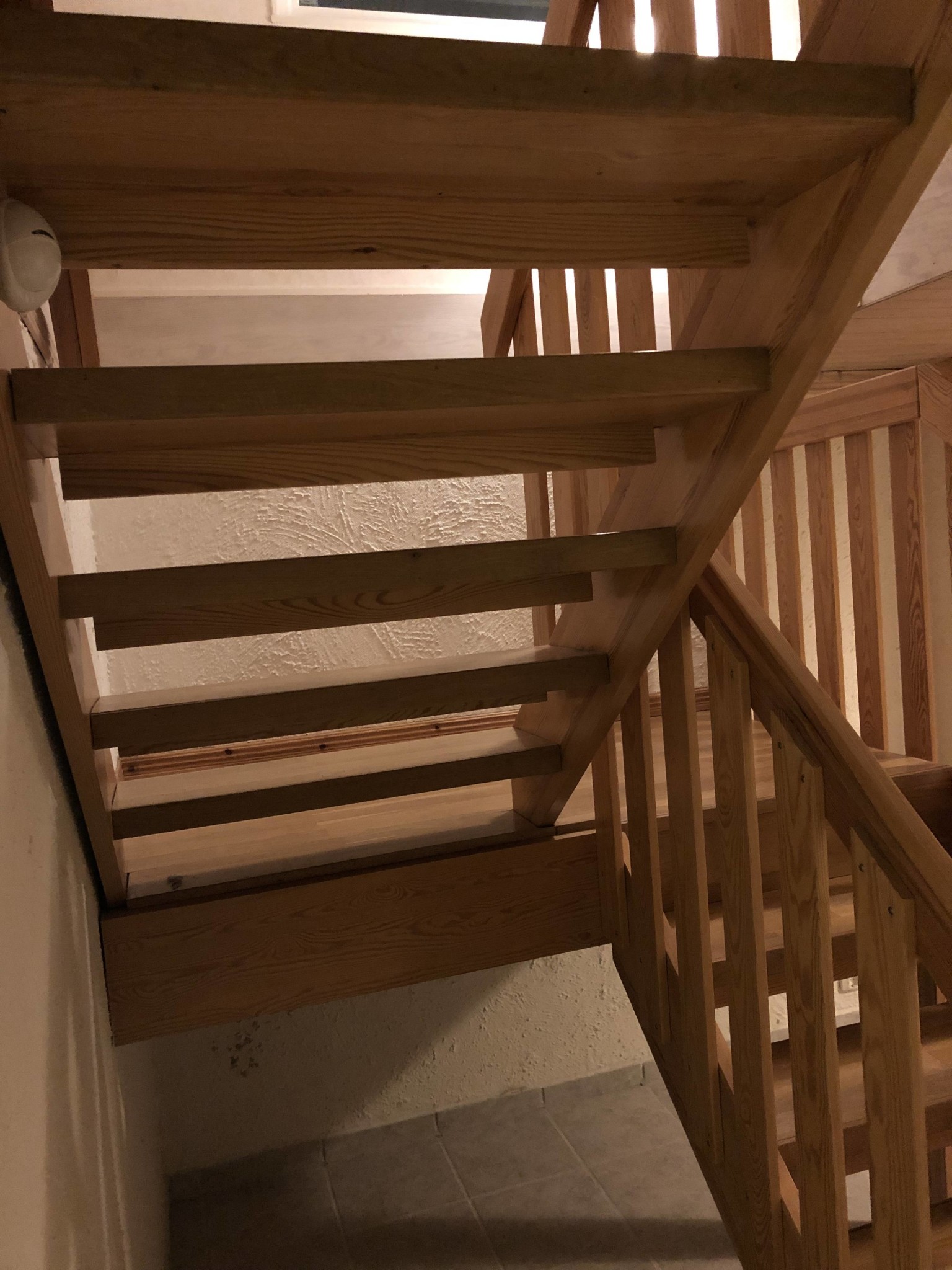
But I can't figure out how the stringers are attached? Shouldn't they be fastened to the joists in some way?
Securely fasten screws through the parts that the stringers rest against; they might have been screwed in before the floor or other elements were installed. Check how it might be; there must be fastenings, otherwise the staircase will collapse.
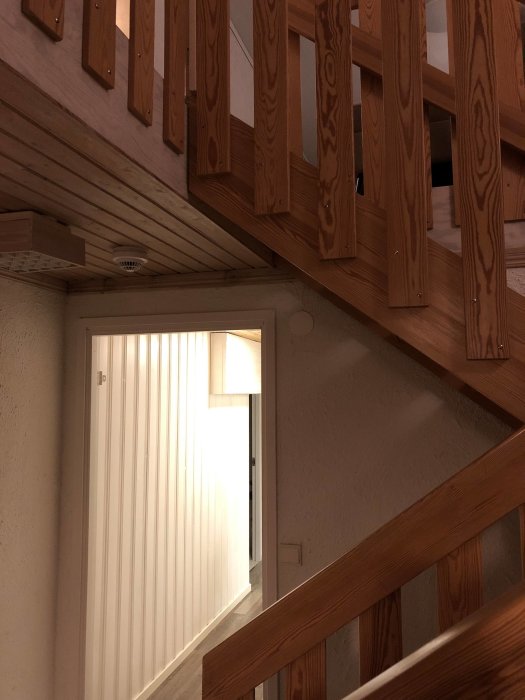
The dead weight of your staircase is not particularly high. The greatest load occurs when someone walks on the stairs, and that is only for short moments. The inner vangstycke (note the spelling) on the upper part of the staircase is screwed into the wall, as well as probably two of the landing sides. The rest rests on the small post. Since it is so short, it doesn't need to have a large cross-sectional area. After all, it has held for 40 years. The outer vangstycke on the upper part of the staircase is also surely attached to the upper floor's framework in some way. Since the staircase lacks risers, the treads are reinforced underneath so that the flex in the steps does not become too bothersome.
There are probably screws going through the parts where the stringers rest, they might have been screwed in before the floor or other elements were installed. Check how it might be; there must be attachment points otherwise the stairs will collapse.
Saint Joseph Spiral Staircase has none!
But this one is probably screwed invisibly behind the stair railing posts.
The dead weight of your staircase is not very high. The largest load occurs when someone walks on the stairs, and that's only for short moments. The inner vangstycke (note the spelling) of the upper part of the staircase is screwed into the wall, as are probably two sides of the landing. The rest rests on the small post. Since it is so short, it does not need to have a large cross-sectional area. After all, it has held for 40 years. The outer vangstycke of the upper part of the staircase is also likely attached to the upper floor's joist system in some way. Since the staircase lacks risers, the treads are reinforced on the underside so that the flexing of the steps doesn't become too troublesome.
The interesting part is that the inner upper vangstycke is actually not screwed into the wall... it sits free from the wall.
As long as the resting plane is properly anchored, it doesn't matter much that the inner vang beam is free. The clever part about sloping vang beams is that only a limited portion of the load from a person walking affects the vang beam. (70% at 45° inclination) However, the vertical load impacting the supports remains unchanged.
Click here to reply
Vi vill skicka notiser för ämnen du bevakar och händelser som berör dig.