
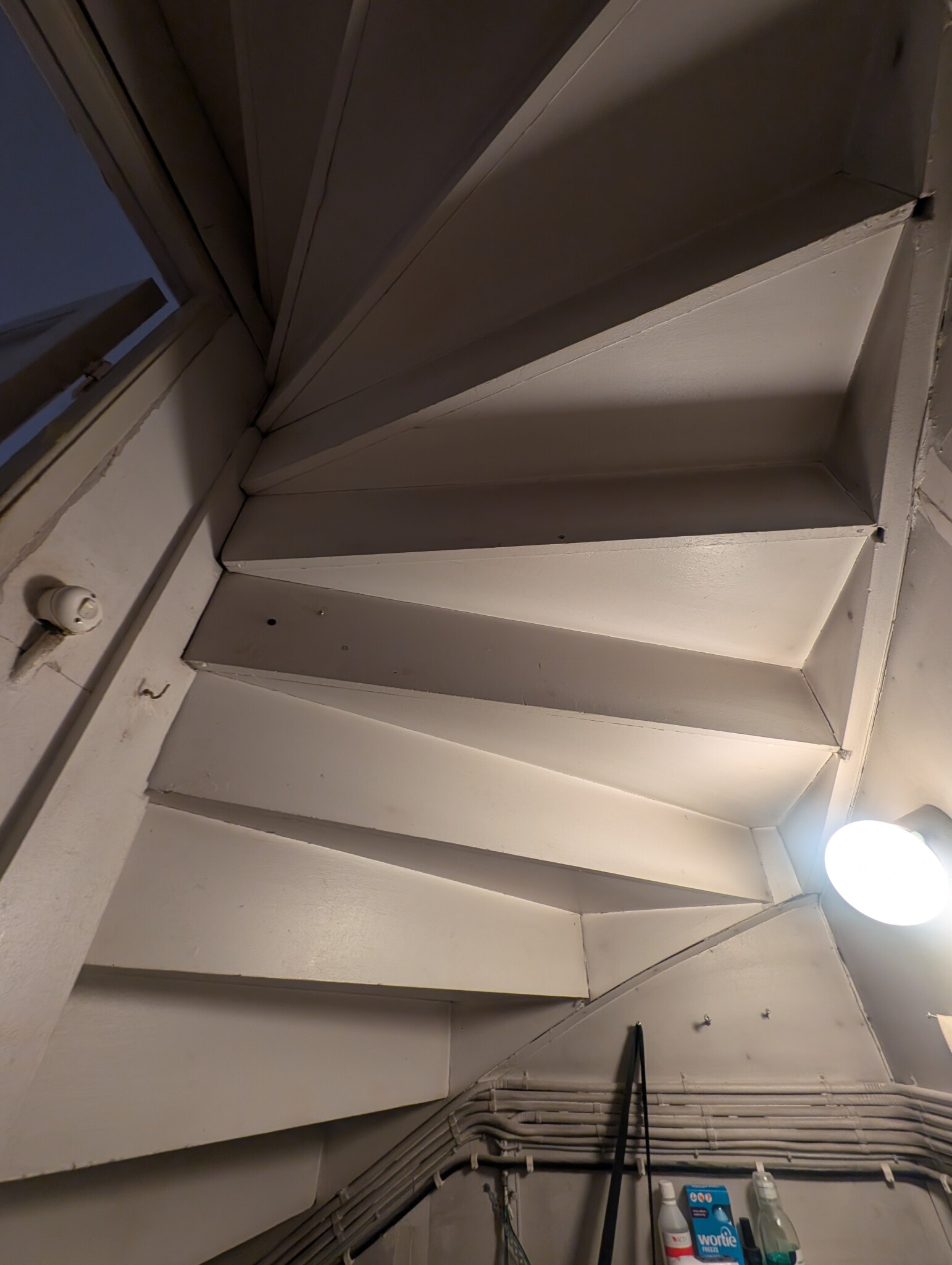

Try to pinpoint exactly where the creak is coming from. From there, it's easier to conclude what can be done.
https://duri.no/floorfixpro
I've used those products with varying success. They are available as glue and some form of oil. Primarily for floors, but sometimes they work for stairs as well.
https://duri.no/floorfixpro
I've used those products with varying success. They are available as glue and some form of oil. Primarily for floors, but sometimes they work for stairs as well.
The question is a bit about where the creaking is coming from - is it the treads creaking against the risers, or are the treads creaking against the tracks in the stringers? Could it be the risers creaking in the track on the stringer?
Depending on where it occurs, there are slightly different measures to take.
If it is the treads creaking against the risers, it might help to remove the riser, plane the top edge into a slight arc (high in the middle and lower towards the sides), and then press it up firmly when you put it back and nail/screw it in new holes. This way, it is pressed up and supports the tread in the middle, and when it is loaded and the tread sags a little, the riser will not slide against the tread.
If it's where the tread enters the stringer creating friction, it might help to wedge them from underneath and set new nails/screws at an angle upwards/outwards into the stringer.
If the riser is moving in the track on the stringer, a similar measure with wedges and screws applies.
In some cases, you can press a flexible adhesive between parts that move against each other to reduce movement and create a soft barrier, but that's only something I have seen others do. I've tried common wood glue and it worked for a while, but then the glue came loose because it doesn't become flexible and the load is too great.
Click here to reply