Okay, not light concrete.
Then you're right to use red primer or cement primer a to then use B-mortar.
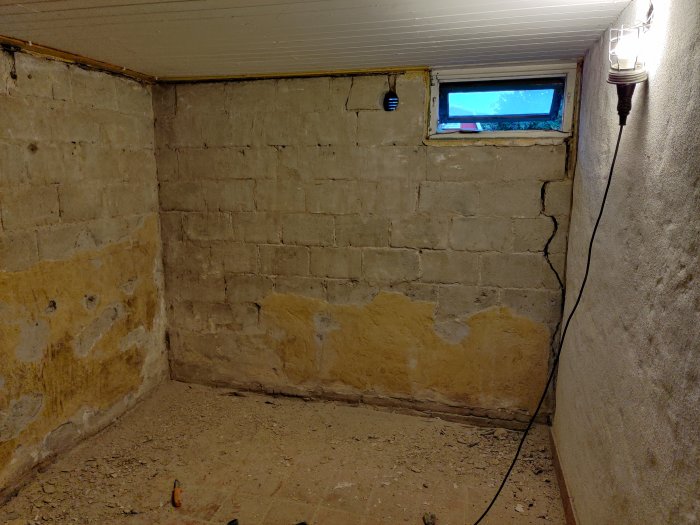
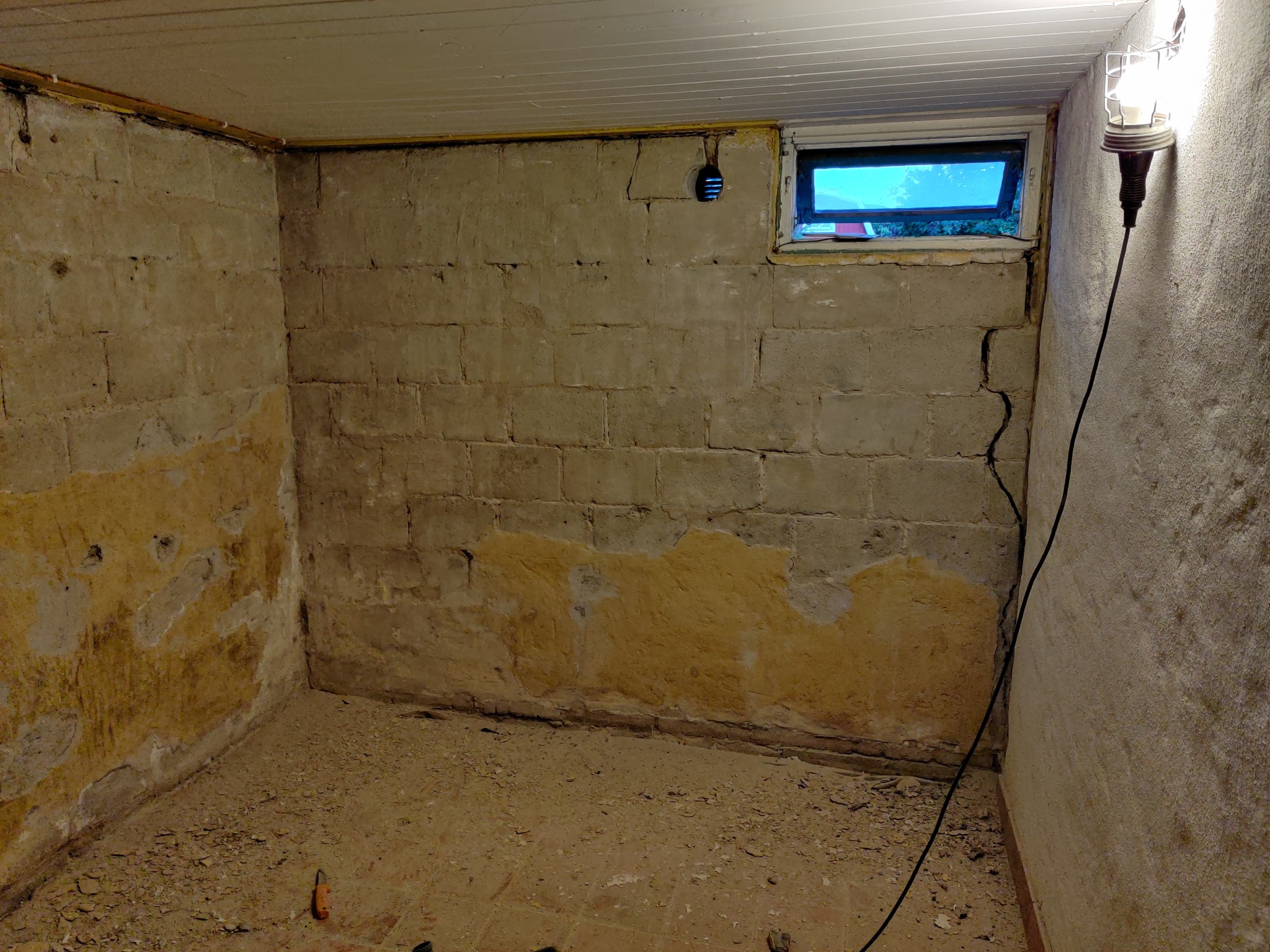
But start with the big crack, prime it and then patch it up with B-mortar, but it looks so deep that you should apply it in two layers until it's level with the rest.
Even if you have B-mortar with large aggregate, it starts to sink if you have more than 2 cm deep at a time.
Okay, not lightweight concrete. Then you are right to use red primer or cement primer a and then have B-mortar.
But start with the big crack, prime it and then repair with B-mortar, but it looks so deep that you should apply it in two layers until you level with the rest. Even if you have B-mortar with large ballast, it will start to sink if you apply more than 2 cm deep at a time.
Thank you so much, I'll do that! Planning to open up for larger windows and take down plaster today.
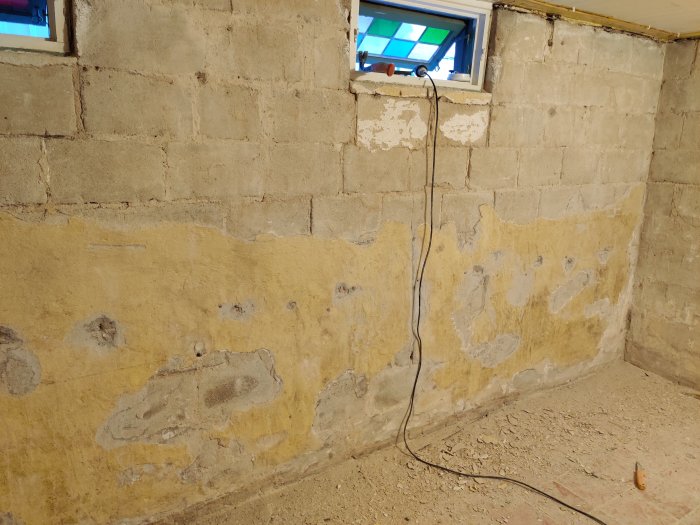
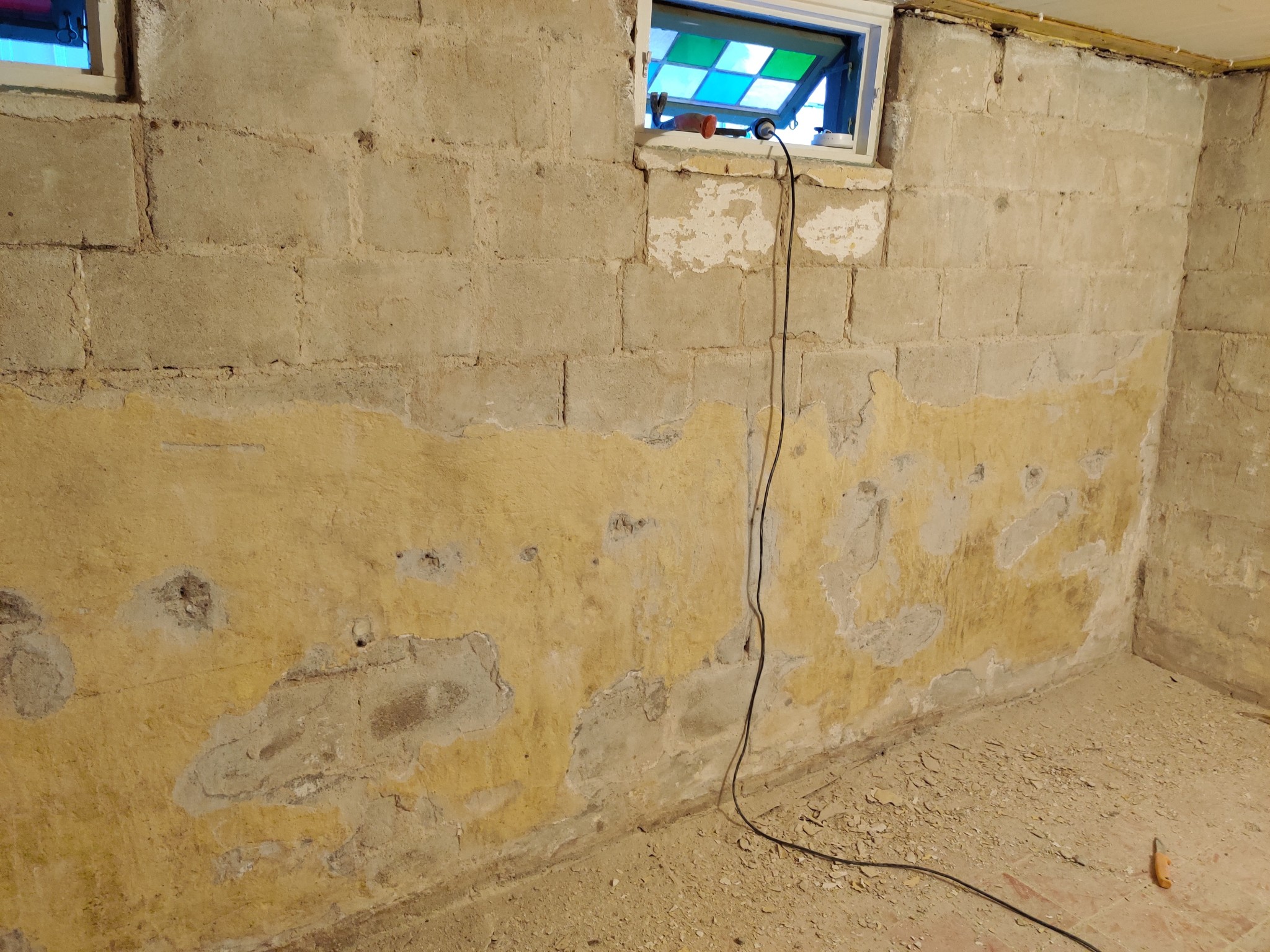
Also tore out a built-in wardrobe and found a ventilation duct made of eternit that was removed, so I didn't get as far as I had hoped today with the plaster. Tried using both a drill with steel brush and paint brush, spatula, and hammer, but the easiest was actually a regular paint scraper to remove it.
How much needs to be removed from the walls? The yellow is a paint that, where it loosens, comes off in brittle flakes. But at the bottom, what's left is extremely hard in the plaster, and the plaster itself adheres extremely hard to the substrate.
Is this enough for red primer and b-bruk? It's Pordrän on the outside if that matters.
How you say the color is releasing indicates that it is not plastic or oil.
Then you can polish it as long as you make sure you have a proper base where the paint is.
It tends to run and become thin over paint if you try with a lime brush. So it is easier if you mix sluring and apply it with a trowel so it becomes coarse and gets proper adhesion.
This almost turned into a building log if anyone wants to relocate and rename
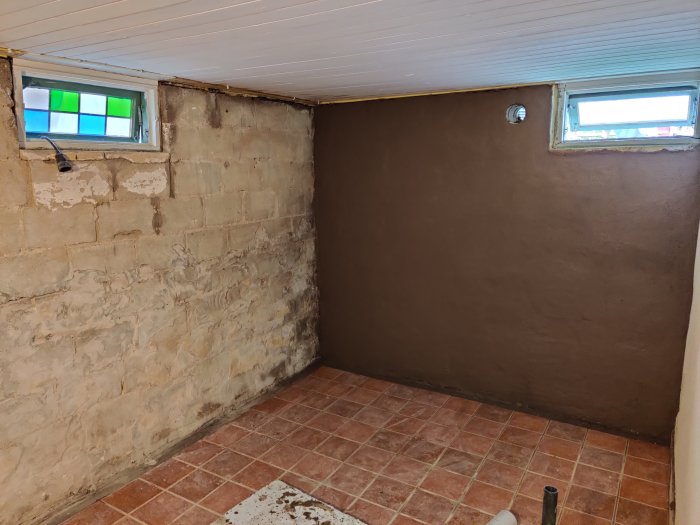
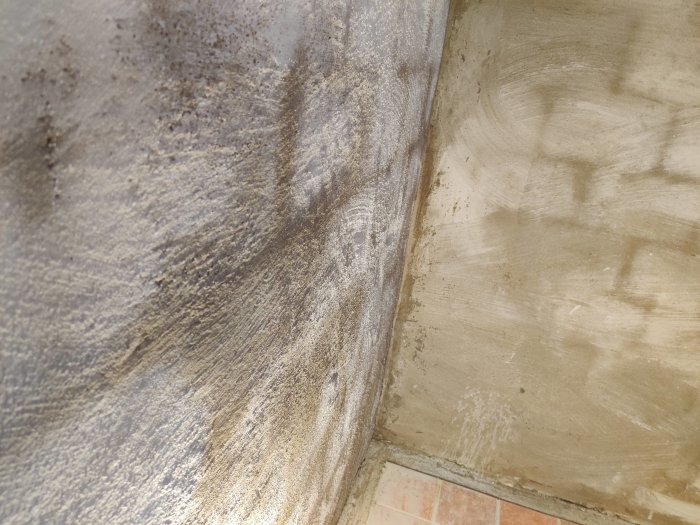
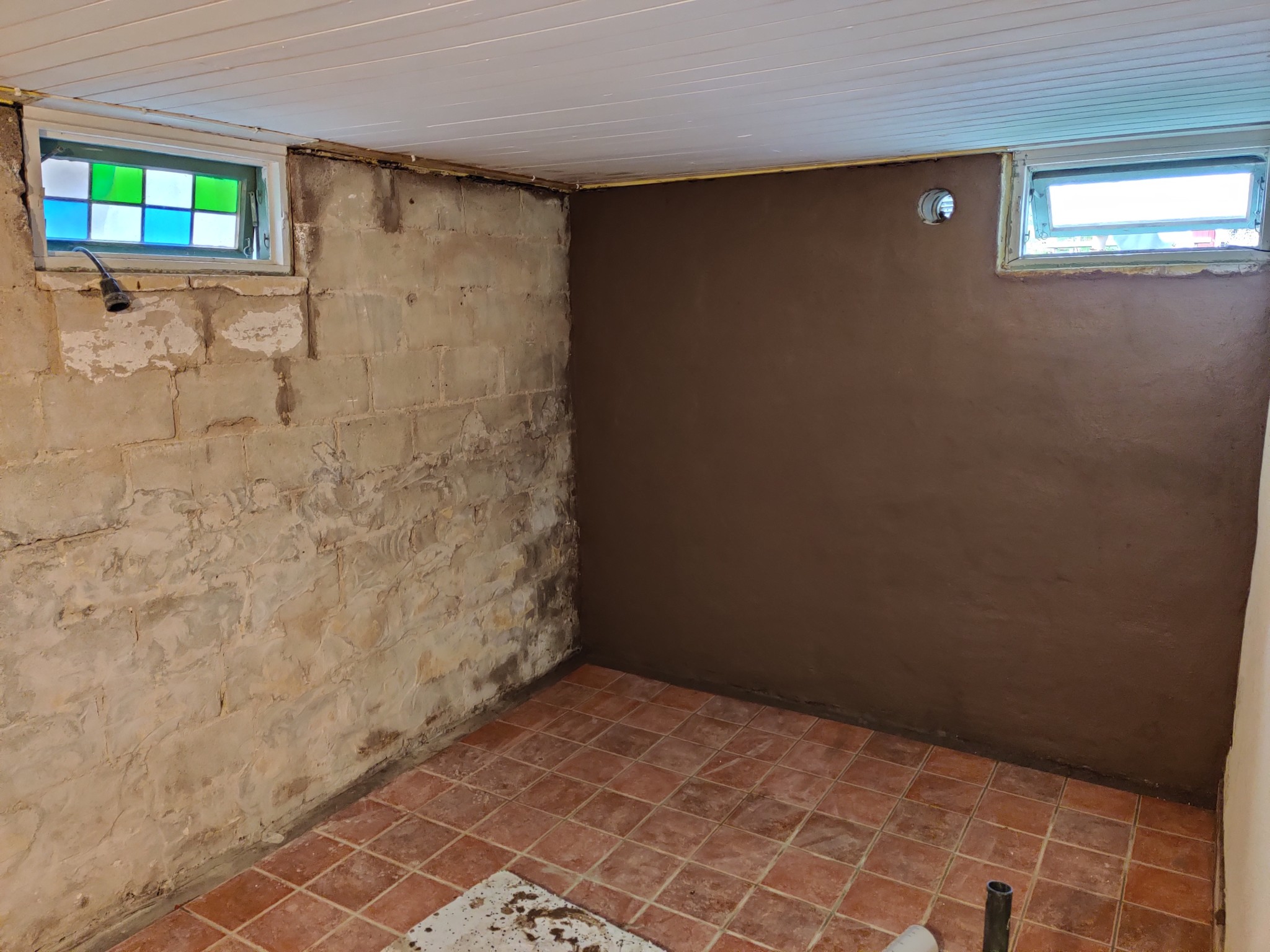
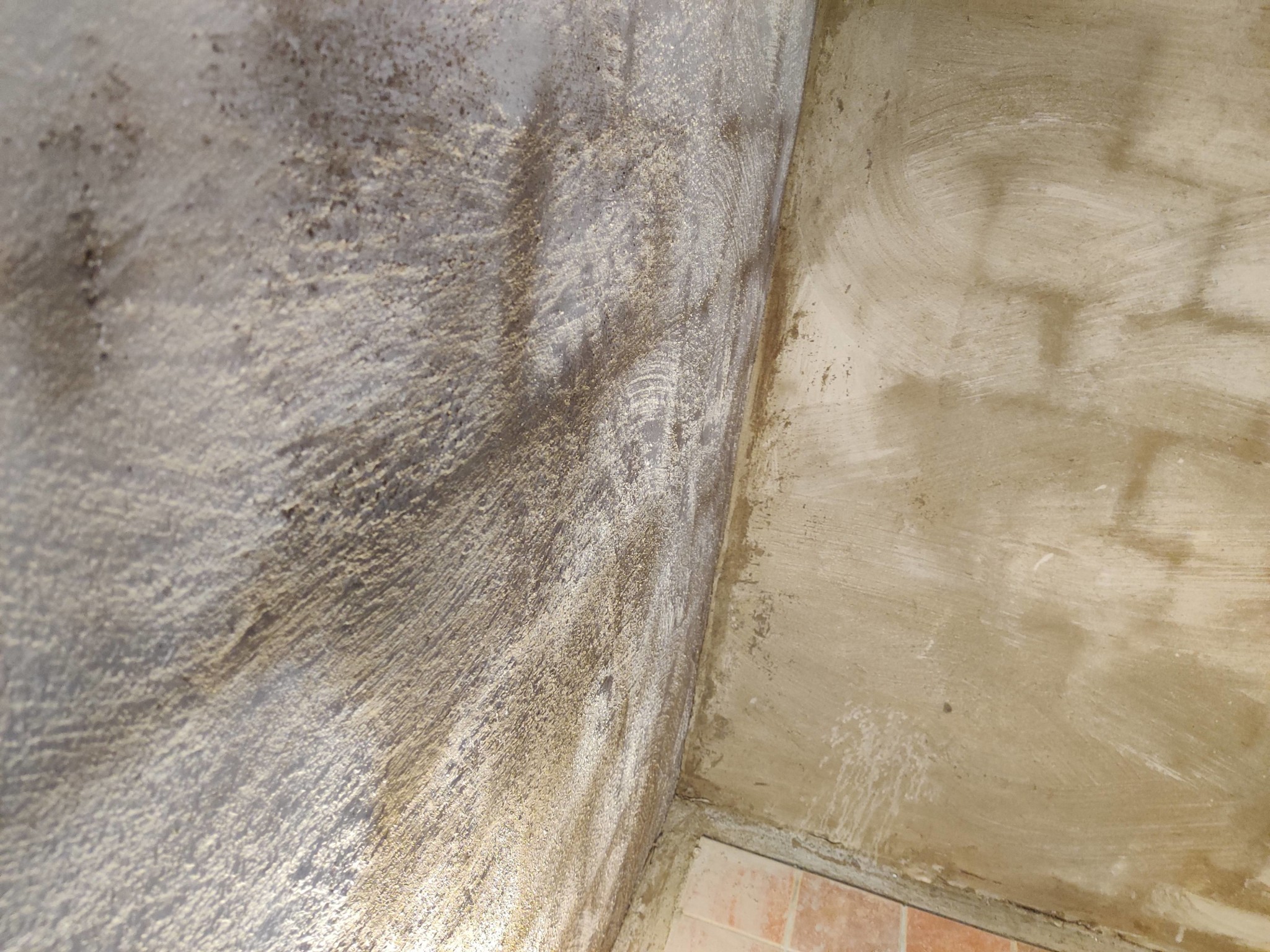
Removed all the plaster, didn't want to take any chances. Bought a diamond blade at Jula and routed with an angle grinder. The by far most tedious and tiring thing I've done. Repaired cracks and holes with b-mortar.
Anyway, yesterday I pre-watered and applied red primer against the outer walls. They were unevenly bricked, so that was quite a bit of work too. Maybe 2-8mm. Applied with my own technique and brushed with water when surface dry to achieve a rough texture.
Now to the questions.
1) When my partner came down, she said "can't we just have it like this?". The surface turned out quite well right away. That is, do we have to plaster with B-mortar, or can we paint directly on the red primer (combimix) with silicate paint?
2) If we paint with silicate paint directly on the red primer, can we later plaster with B-plaster over the silicate paint, or would everything have to be removed again first if we change our minds in 10 years?
It must have taken many bags of rödgrund and unnecessarily expensive. However, rödgrund is practically an a-bruk, so it is very hard, making it likely to crack if you plastered up to 8mm (it's intended to be brushed or applied with a thin coat of a few mm) with this.
Now that you have filled in, the next layer can be applied quickly, so I would have waited a week for any drying cracks, then cut them with a knife and applied another layer with b-bruk over the entire surface. It's easy to achieve the same surface you already think looks good, and you'll see less of the blocks through the plaster.
I also think the color in rödgrund chalks quite a bit and will bleed through if you try to paint over it. I've never heard of anyone painting on rödgrund, so that's just my guess.
It must have been many bags of redgrund and unnecessarily expensive. However, redgrund is practically an a-mortar, so it is very hard, which makes it very likely to crack if you've applied up to 8mm (it's meant to be brushed on or applied a thin wash of a few mm) with this.
Now that you have filled in, it goes quickly to apply the next layer, so I would wait a week for any shrinkage cracks, then cut them with a knife and apply another layer with b-mortar over the whole. It's easy to get the same surface you already like and you avoid seeing as much block through the plaster.
I also think the color in redgrund chalks quite a lot and will bleed through if you try to paint it. I've never heard of anyone painting over redgrund, so that's just my guess.
Ok, sounds like it's not smart to paint over a-mortar due to cracks, even if it would work. Regarding thickness, it says 4-9mm on the combimix site, so no problems there. It was just with one stone it became 6-8mm; without counting, the rest is maybe 3-4mm. Regarding cost, no, nothing that will bankrupt me used 5(6?) bags at 69kr for the exterior walls. The interior walls will only use B-mortar. Costs 50kr, so a marginal difference cost-wise.
But then I’ll put b on top of the exterior walls as well! Thanks!
Click here to reply
Vi vill skicka notiser för ämnen du bevakar och händelser som berör dig.