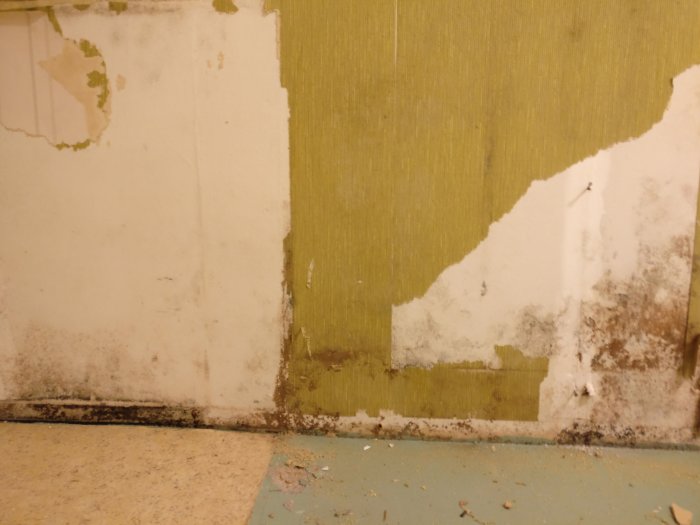
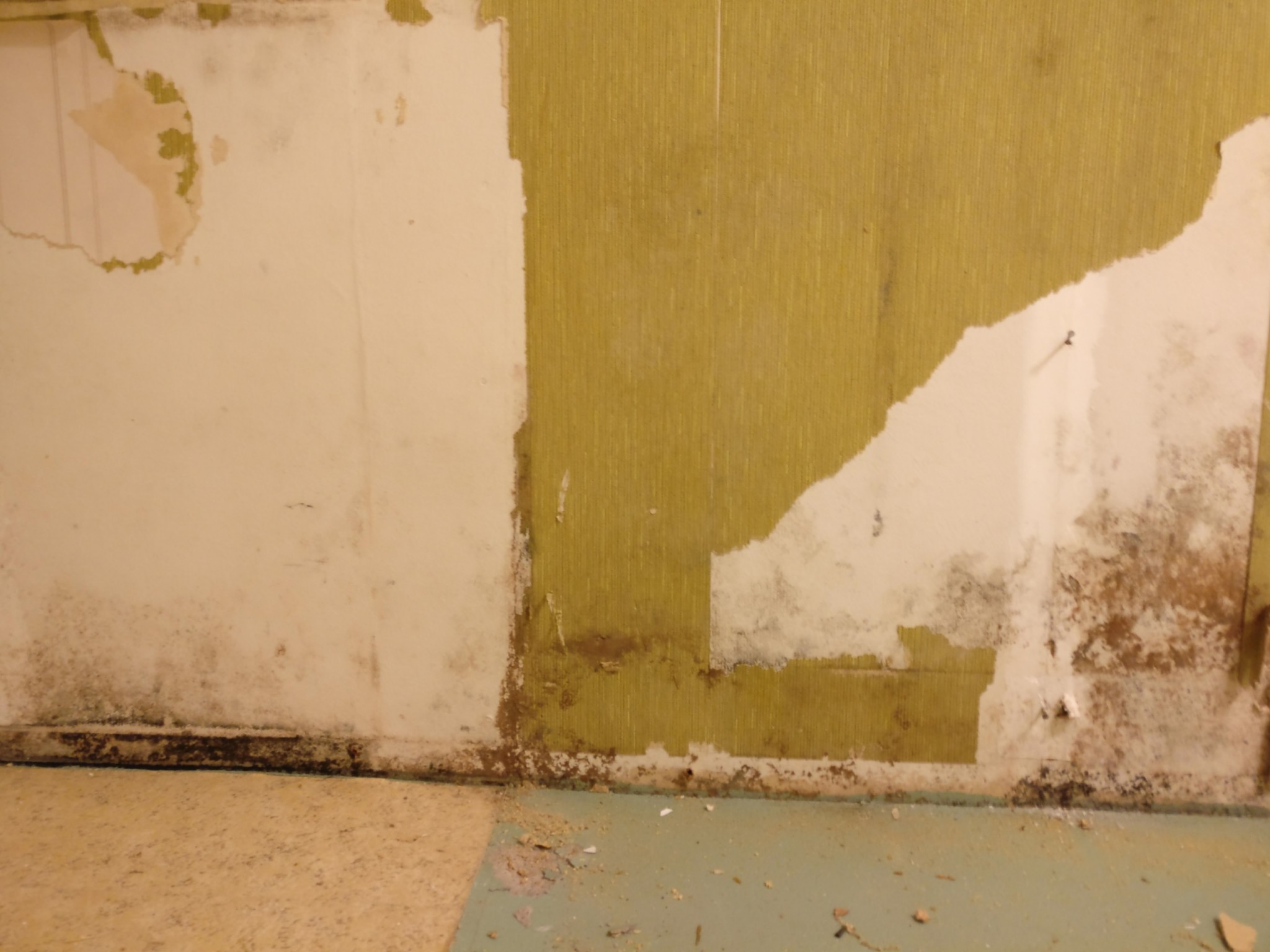
I am going to convert a room that has been used as storage into a bedroom. Tore out closets etc. and found mold behind them as shown in the picture. The wall is an outer wall facing south. Single-story row house with a Mexitegel façade.
I think I should tear out all the drywall, see what it looks like underneath, and then put up new drywall if I don't see anything damp under the plasterboard.
But why has the mold appeared? Is there something wrong that will make the mold come back again? What could have happened?
Worse insulation combined with humid air. Is it just as bad further up the wall where the closet stood?
Probably, the indoor air has condensed there and the moisture has created a breeding ground for mold spores.
There have been wardrobes, so the air exchange has been zero. Moisture is everywhere, and when it gets trapped behind wardrobes, and also insulated from heating so it never dries, the result can probably be this. And it's actually very little mold, less than on our breakfast rolls actually
Hi,
Just speculation, but couldn't you imagine very warm air against the south wall that, due to negative pressure in the house (?), flowed into that little gap I suspect and other leaks and then condensed by the trim..?
-70s house with framed walls insulated on the inside?
Is it additionally insulated on the inside? That is usually a classic mistake as it moves the dew point from the outer wall to the inner wall, which causes condensation and mold in the inner wall. 70s houses are otherwise known risk constructions because there was an energy crisis then. Too airtight and with poor ventilation, but also uninsulated slab on the ground, unventilated facade on mineral wool, etc.
Click here to reply
Vi vill skicka notiser för ämnen du bevakar och händelser som berör dig.