
19,458 views ·
34 replies
19k views
34 replies
Floor on asphalt - insulation
Don't know if you need LECA. For a cheaper build, I would put a proper separator (or whatever it's called) between the concrete and the wood. In the past, thick asphalt felt was used. And metal for drainage purposes.
Hope you update us with photos
Keeping my fingers crossed.
Hope you update us with photos
Keeping my fingers crossed.
We have now reached the point where we will soon begin insulating. The studs are 90 mm, and if you want an air gap of maybe 20-25 mm, you can't go larger than 70 mm.
Is 70 mm enough, or what do you think?
From outside to inside:
1. Fjällpanel
2. Plastic
3. Air gap 20-25 mm
4. Insulation 70 mm (insulation board)
4. OSB board
5. Gypsum board
7. Wallpaper
...update...
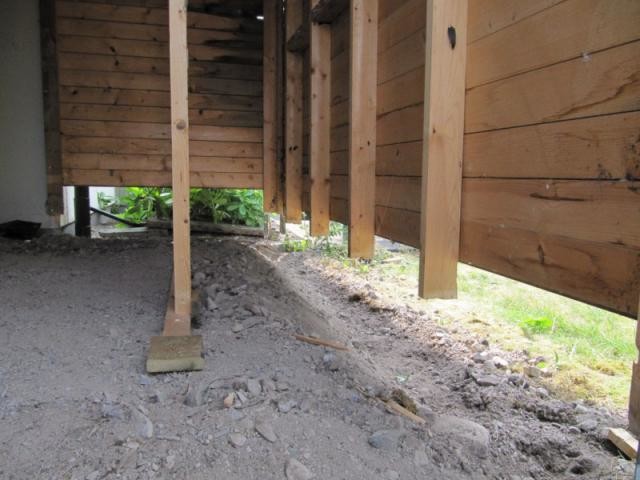
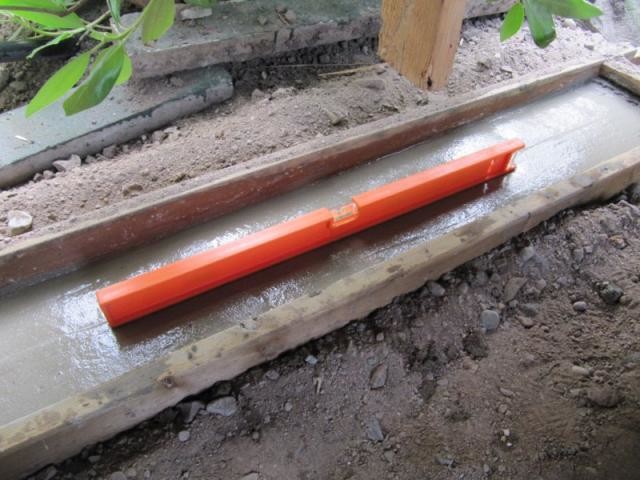
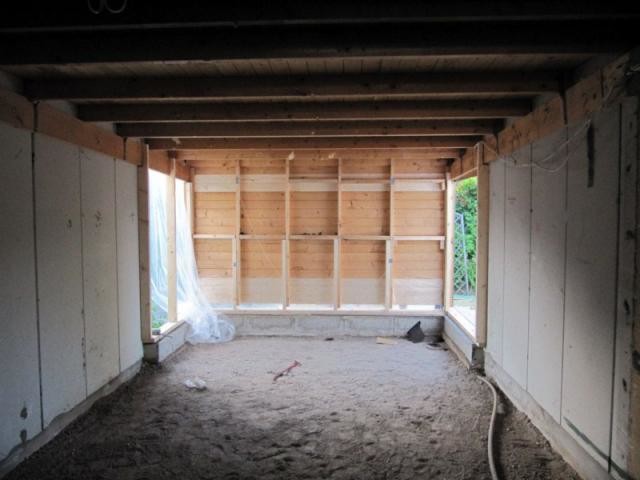
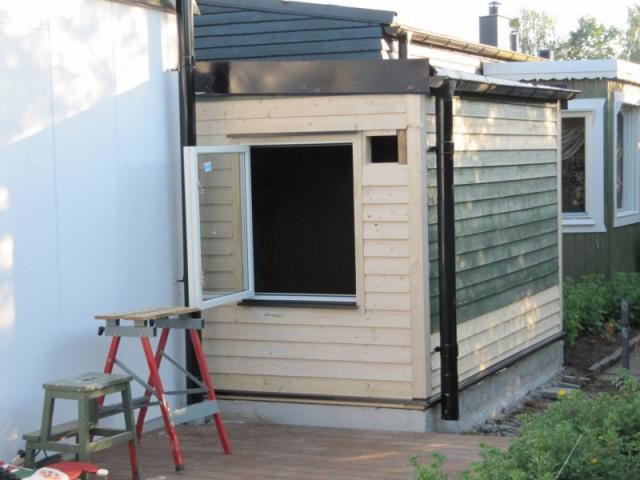
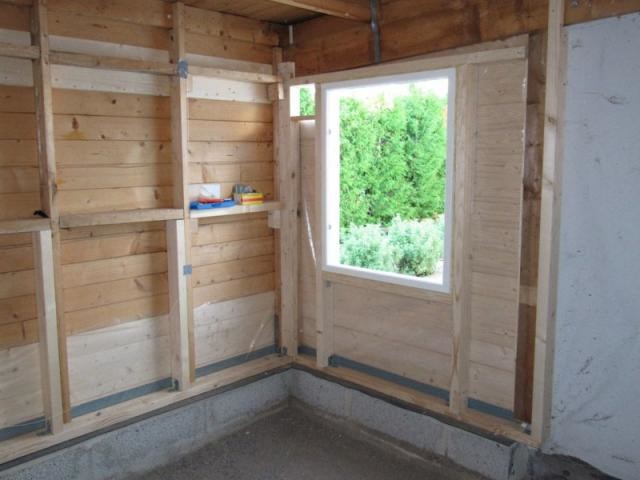
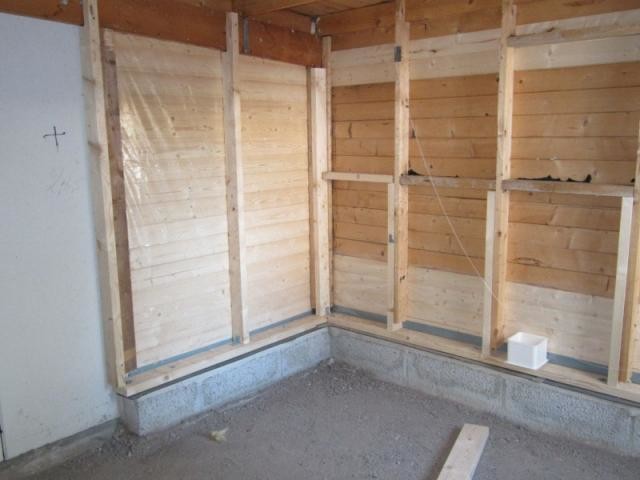
We had to lift the roof and sides to be able to dig down and cast the foundation as well as build a row with lecasten. It worked very well, and the result was very good.
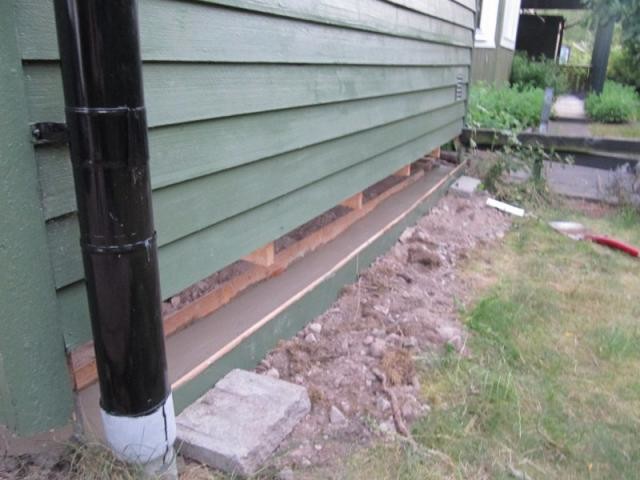
On top of the lecasten, we placed mortar, roofing felt, and then a stud of 120 mm x 45 mm. The stud lies above the roofing felt. Then we used coach screws on the stud, directly into the lecasten. Screws and plugs. It became very sturdy. We took the opportunity to replace a few fjällpanel in the meantime as they were quite bad.
Is 70 mm enough, or what do you think?
From outside to inside:
1. Fjällpanel
2. Plastic
3. Air gap 20-25 mm
4. Insulation 70 mm (insulation board)
4. OSB board
5. Gypsum board
7. Wallpaper
...update...
We had to lift the roof and sides to be able to dig down and cast the foundation as well as build a row with lecasten. It worked very well, and the result was very good.
On top of the lecasten, we placed mortar, roofing felt, and then a stud of 120 mm x 45 mm. The stud lies above the roofing felt. Then we used coach screws on the stud, directly into the lecasten. Screws and plugs. It became very sturdy. We took the opportunity to replace a few fjällpanel in the meantime as they were quite bad.
Last edited:

I have 70 mm insulation in the walls of the 12 sqm. shed, 100 mm in the floor, 120 mm in the ceiling.
At a few degrees below zero, say 5-10 below, the 600W heater is no longer sufficient to heat up to even 20°C.
So if it gets colder than that, I have to turn on a stronger heater.
At 5-10 degrees below zero, the shed consumes at least 0.6x24 = 14.4 kWh/day, which is about 430:-/month in heating costs.
The 4 coldest months cost at least 3000:- to heat if I were to heat the shed all winter.
This may be some guidance.
I would add at least a 95 on the inside and insulate significantly more.
At a few degrees below zero, say 5-10 below, the 600W heater is no longer sufficient to heat up to even 20°C.
So if it gets colder than that, I have to turn on a stronger heater.
At 5-10 degrees below zero, the shed consumes at least 0.6x24 = 14.4 kWh/day, which is about 430:-/month in heating costs.
The 4 coldest months cost at least 3000:- to heat if I were to heat the shed all winter.
This may be some guidance.
I would add at least a 95 on the inside and insulate significantly more.
Last edited:
You should definitely not put 2. Plastic. Then your walls will rot in a few years.Anna-Sara said:
You should have wind barrier paper, asfaboard, or wind fabric there, which allows water vapor to escape.
You might possibly put plastic between 4 and 4
, but if that's the idea, you should probably also plastic the ceiling and down to the foundation, and also make it really tight.About 80% of the room is between our house and the neighbor's house. This means there is already insulation on those sides, and the only place where the cold can come in is the area with cladding panels, visible in the picture. Inside the room, we plan to install a radiator connected to the district heating we already have in the rest of the house, and we're planning to place it as close to the window as possible.Mikael_L said:You should absolutely not use 2. Plastic. Your walls will rot in a few years.
You should use windproofing paper, asfaboard, or breathable membrane there, which allows water vapor to escape.
You might be able to place plastic between 4 and 4
Foundation:
Polystyrene S100 at 100 mm
Plastic (age-res.)
Concrete, about 8-9 cm
+ laminate
Ceiling:
The roof is already in good condition with roofing felt and everything on the top.
Internally, I'm planning to install insulation and then the ceiling.
Last edited:
Click here to reply