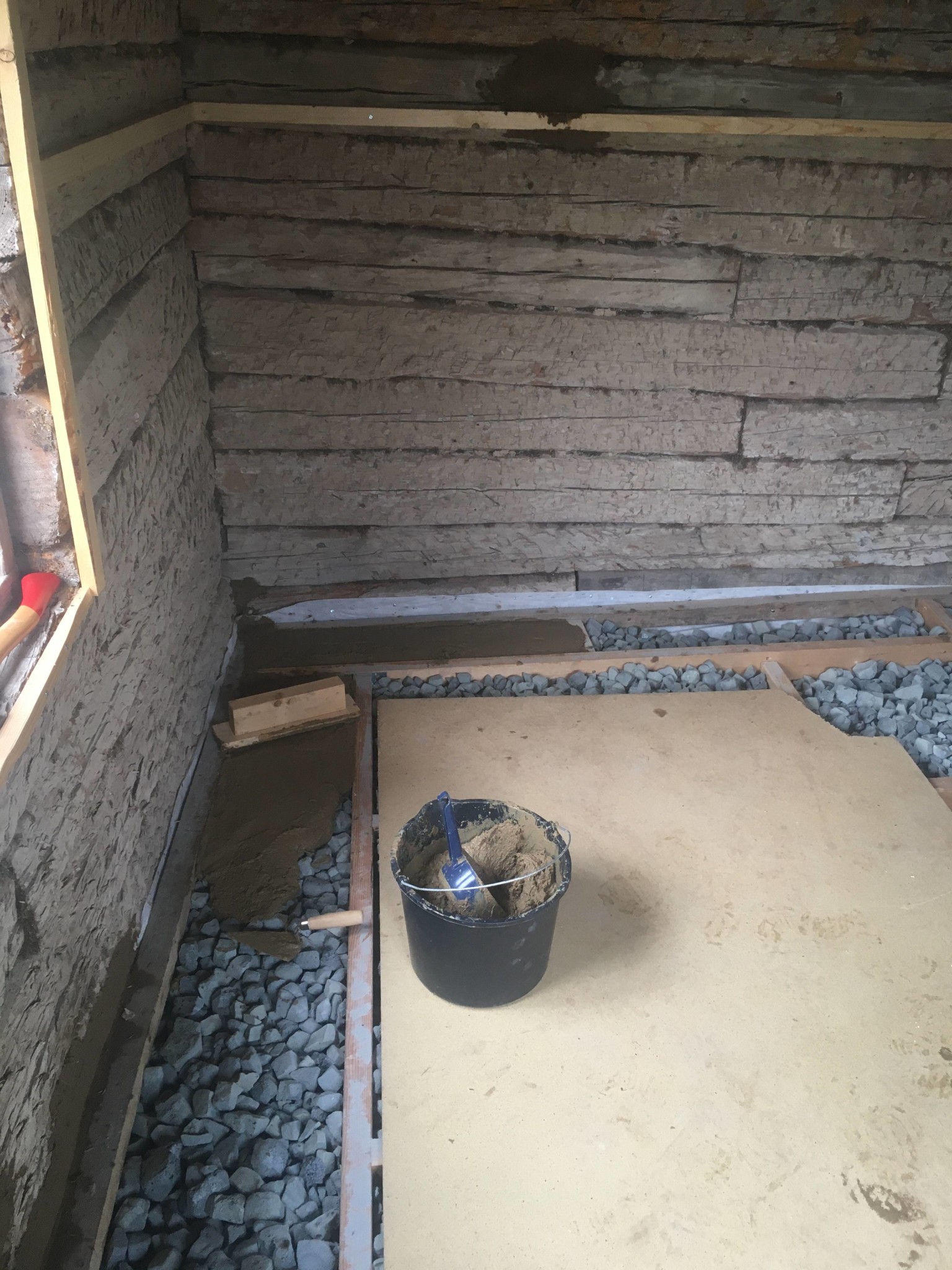
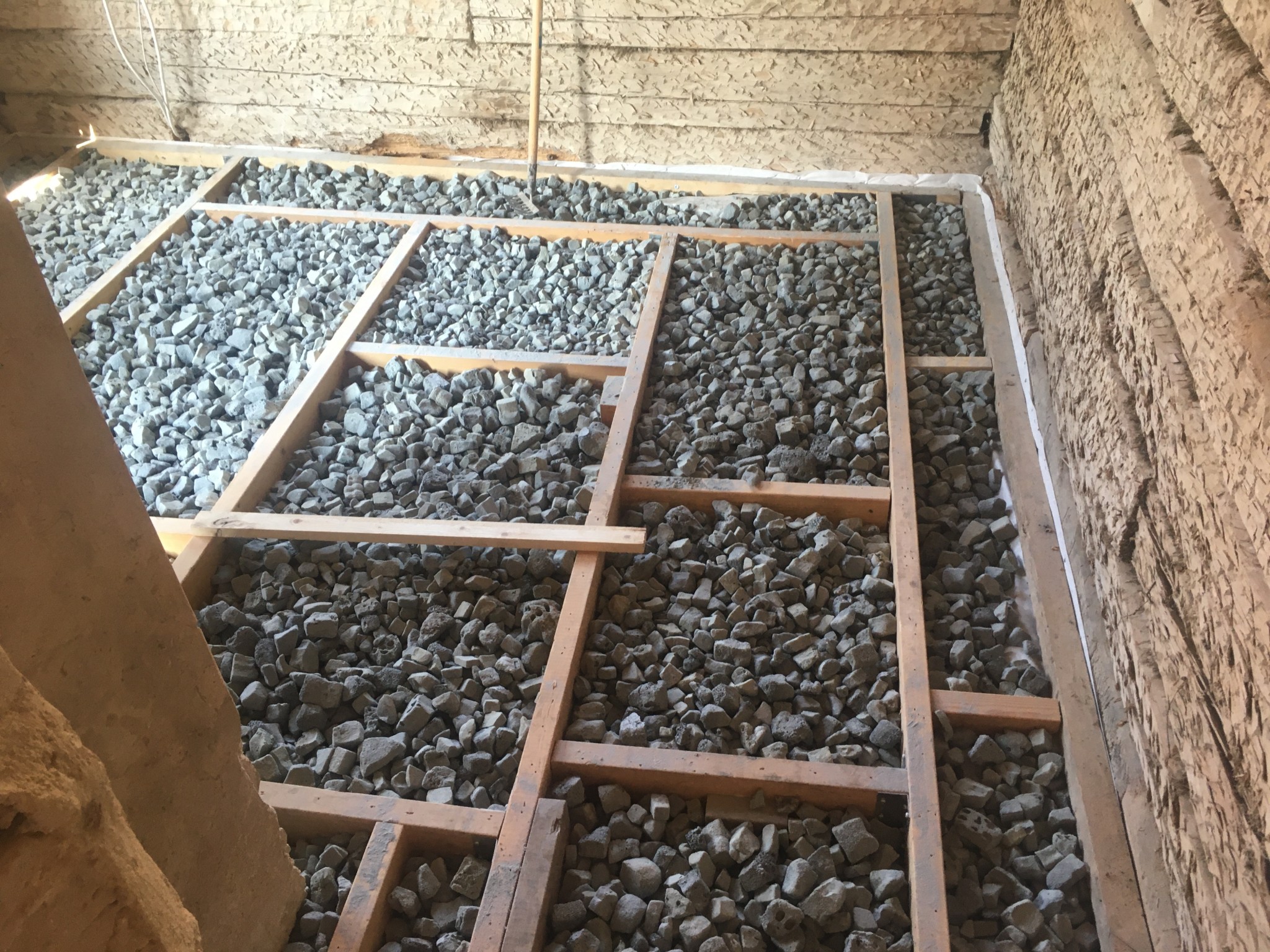
We plugged up all the ventilation vents in the foundation and ensured that the foundation was carefully sealed with clay mortar with a high clay content. Then about 50-80 cm of hasopor was laid in the entire foundation up to the desired level. On top of the hasopor, clay mortar was placed directly and then a fibreboard before the wooden floors were installed. [/QUOTE]
First, a big thank you to everyone for an incredibly rewarding thread. I'm in the middle of my project and will be getting 15 cubic meters of Glasopor on Tuesday (got hold of excess stock from a construction site here in Jämtland, so Norwegian glass haha). I have a question now if you can help me, thanks. I will not be using clay mortar for the foundation, instead, it will be a diffusion-open wind membrane, and I'll try to plug the holes (cat flaps) as best as I can. But on top, I'm considering a small layer of flax insulation or clay plastering. If I just lay a small thin layer of clay, how long would you say I need to dry it before the floor goes on?
And did you stuff flax insulation in the edges against the sill, anything at the top against the sill row? Best regards, Simon
Now received 7 cubic meters of Hasopor. Still digging as it was on hold during winter. Next is the sill, which will be laid on natural stone. T-wind against the sub-floor, N2-cloth against the ground, and then cover with the Hasopor. The wall paneling is set before the floorboards. Clay plastering at the top and bottom of the wall as sealing against drafts and mice. Clay plastering for windproofing in selected areas elsewhere but not over the entire floor. Aiming for 60 cm centers and 34 mm floorboards, tongue-and-groove.
Hope it's ready by autumn =)
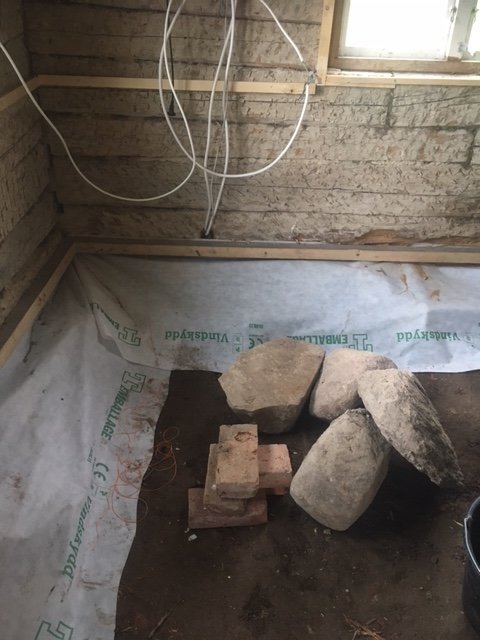
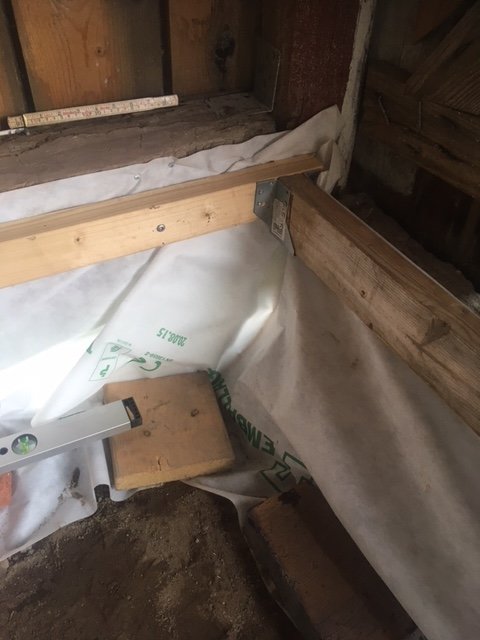
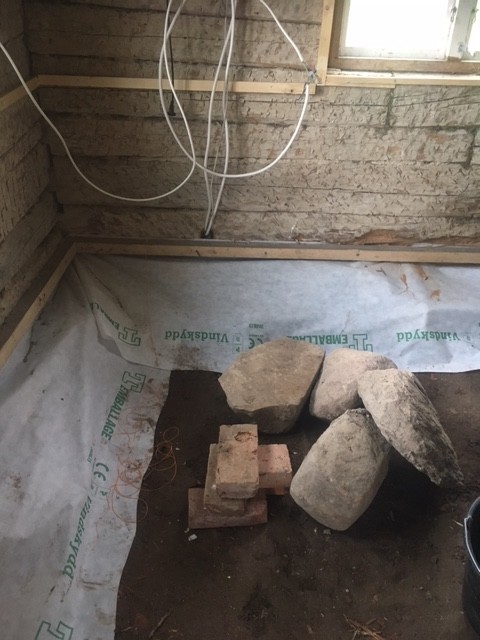
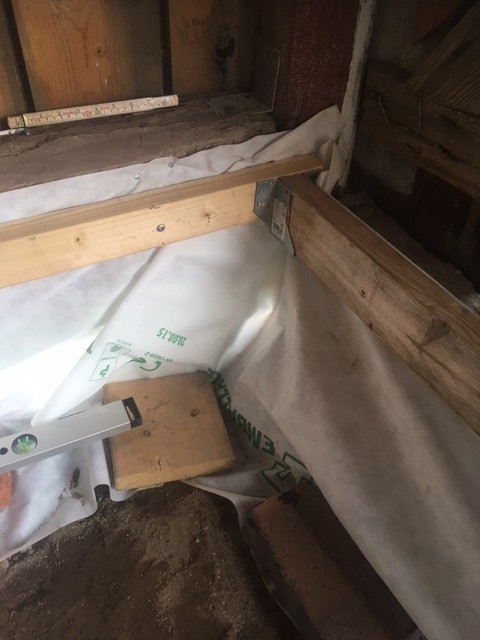
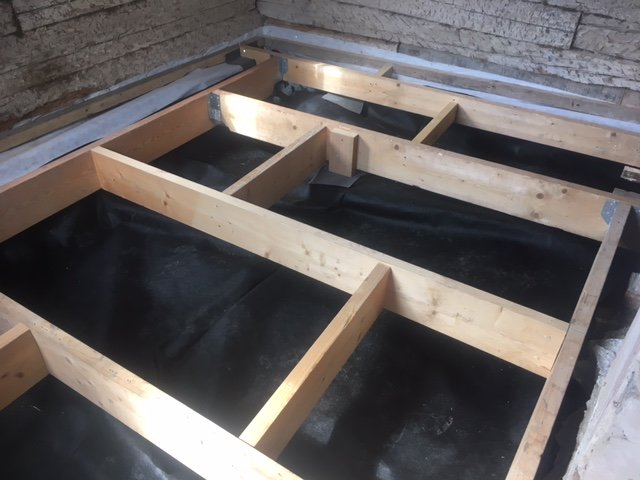
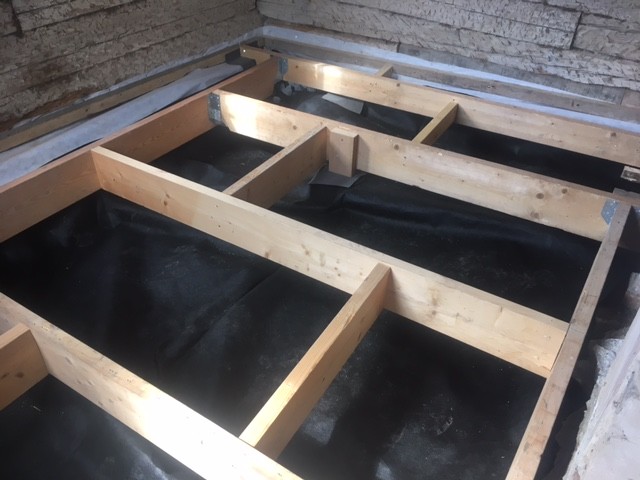
Next step complete. Got the edges in waves with a windbreaker nailed behind, sealing against the crawl space foundation. Now the floor joists need to be installed. First, ground fabric over everything, natural stone as support underneath. Joists running from short side to short side with crossbeams/bracings in between. The Hasopor are standing and waiting in bags.
Should I place the joists in joist hangers against the short sides, or is that a disadvantage in some way? Feels simple. Placed one when I built the frame.
Next step completed. Got the edges leveled with a wind barrier nailed behind, sealing against the foundation. Now the floor joists will be installed. First, a ground cloth over the entire area, natural stone to support from underneath. Joists running from short side to short side with cross beams in between. The Hasopor are waiting in bags.
Should I place the joists in joist hangers against the short sides, or is there any disadvantage to that? It feels simple. I placed one when I built the frame.
[image] [image]
I actually have a bit thicker "beams" instead of studs, maybe around 6x6 inches. But in any case, I laid it floating from the walls
I have slightly thicker "ridges" instead of joists, maybe around 6x6 inches. But in any case, I laid it floating from the walls
I also laid it floating so you can work with the sill and other things without affecting the floor (and vice versa). The previous one had, however, hung the kitchen floor on the sill.
- Why floating?
- Tips on how to level everything on natural stone? Do you have pictures?
Might have to search, but probably not many pictures as they weren't taken with the latest phone since it's been a few years... I wanted to mimic the original with a mullbänk, so I laid it floating. I placed natural stone on gravel, like 8-16, and had to adjust up and down for a long time to get it level in all directions. It became stable regardless. The choice of gravel was probably based on what was available. If you need to replace a sill, etc., as mentioned above, it's an advantage to have it floating. I lifted one side at a time to replace the sill stock and think it probably made it easier that the floor didn't have to be connected with the replacement
Moving forward.
Beams in place, everything level, I hope and believe. Geotextile and the first bucket of Hasopor in the corner.
Will do some small fixes first, then drag in Hasopor on the tarpaulin.
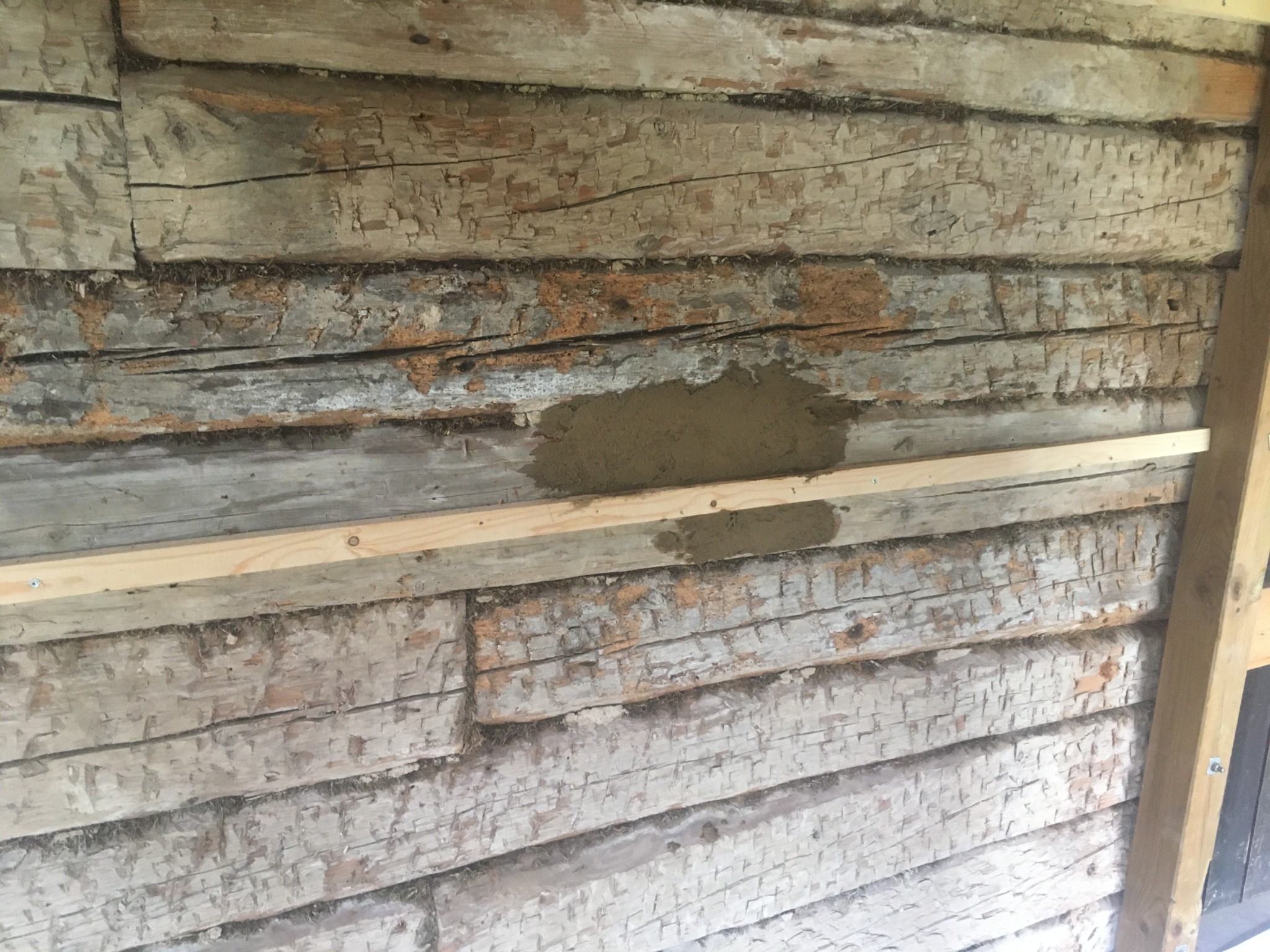
Clay lining that seals strategically later, corners, etc.
Have you explained why the fabric is needed? Had no thought of fabric for my part, but maybe it's necessary?
Muddy and damp at the bottom, I don’t want the clay to work its way up into the Hasopor over the years. That's why geotextile. Wind barrier on the sides so that it doesn’t blow directly through the torpargrund, but moisture can migrate out.
Muddy and damp at the bottom, don't want the clay to work its way up into the Hasopor over the years. Therefore, ground fabric. Wind barrier on the sides so that it doesn't blow right into the crawl space foundation, but moisture can migrate out.
OK, thanks for the info. I also have clay under the house. Is there any reason to believe that the clay on its own migrates up into the hasopor? I don't think I need a wind barrier on the sides since I have a plastered foundation. But it must of course be sealed.
One more question: do you lay the clay plaster on top of the fabric? Where exactly do you place the clay plaster, between the wood and the wall?
OK, thanks for the info. Also have clay under the house. Is there reason to assume that the clay on its own migrates up into the Hasopor?. I don't think I need wind barrier on the sides because I have a plastered foundation. But it needs to be sealed, of course.
One more question: do you apply the clay plastering on top of the membrane? Where exactly do you place the clay plastering, between wood and wall?
Clay plastering on top of Hasopor, directly under the upcoming floorboards. Also clay plastering damages in the log wall.
Thank you for sharing the pictures! Won't the floorboards be placed on floor joists? What function does the clay serve between the hasopor and the boards?
Floor beams in level. A few mm between the clay and the floorboard. Screw the floorboards into the beams. Clay plastering provides insulation against, among other things, drafts.
A thought regarding windbreaker. It is usually the case that the text should be on the cold side. The same with vapor brakes. In your pictures, it looks like it is facing the wrong way. I believe these have membranes that are direction-dependent.
Vi vill skicka notiser för ämnen du bevakar och händelser som berör dig.