
3,354 views ·
9 replies
3k views
9 replies
Facade replacement. Rendered. Cracks, incoming moisture.
Two-family house. So-called radon house. Rendered. Got moisture in a few years ago. Mason repaired cracks. Waited for a while, everything seemed fine. But after a few weeks, when we had spackled and wallpapered again, the wallpaper bubbled. Moisture underneath. Plumber replaced water pipes. We thought the problem was solved. Waited for all moisture to be gone. Borrowed a moisture meter. Looked good. Then we made a big mistake. I read about so-called radon wallpaper that removes a lot of the radon. We have a fan system from years back. Wanted to lower it further. Radon wallpaper up. Everything seemed fine and dandy. But after a year, the wallpaper came off. Radon wallpaper has a plastic layer, so you don’t detect the moisture for a long time. Completely wet underneath. Removed the wallpaper, put in fans. After a year with fans, it seemed dry. But a heavy rainstorm showed otherwise. Then we suspected it could be the balcony. Removed it. Never used it, and it was ugly, so it didn’t bother me. Now we have come to the conclusion that moisture still comes in during storms, so now it's a new facade. Preferably not re-render. But since our neighbor does not have such problems on their side, they don't need to change the facade. We are considering a wooden facade or similar, with a ventilation gap so that the radon bricks can dry, but not sure if we will get a building permit for it. Since the facades would then be different on the house. Have contacted plastering companies but haven't received any response. Some firms seem to mostly do rental houses. Anyone have suggestions for a company that repairs and renders houses? I've heard it can be very expensive. If we get the building permit, we have a good construction company, so that's okay. Any comments on what I’ve written or suggestions are welcome. Regards, Sappan
Radon house, does it mean blue concrete (aerated concrete/lightweight concrete, not to be confused with Lecasten/lightweight clinker)?
Lightweight concrete absorbs moisture like a sponge, so if there are cracks and other places where water (rain) comes in, it gets damp and probably takes a long time to dry out.
How old is the house?
What kind of foundation does it have?
Lightweight concrete absorbs moisture like a sponge, so if there are cracks and other places where water (rain) comes in, it gets damp and probably takes a long time to dry out.
How old is the house?
What kind of foundation does it have?
Oldboy said:
Radon house, does it mean blue concrete (aerated concrete/lightweight concrete, not to be confused with Lecablock/light clinker)?
Lightweight concrete absorbs moisture like a sponge, so if there are cracks and other places where water (rain) gets in, it becomes damp and probably takes a long time to dry out.
How old is the house? 1957 Radon
What kind of foundation does it have?
Radon house, does that mean blue concrete (gas concrete/light concrete, not to be confused with Lecablocks/light clinker)?
Light concrete absorbs moisture like a sponge, so if there are cracks and other places where water (rain) enters, it becomes damp, and it probably takes a long time to dry out.
How old is the house? 1957 Radon
What type of foundation does it have?
Radon house, does that mean blue concrete (gas concrete/lightweight concrete, not to be confused with Lecasten/lightweight clinker)?
Lightweight concrete absorbs moisture like a sponge, so if there are cracks and other places where water (rain) gets in, it will become moist, and it probably takes a long time to dry out.
How old is the house? 1957 Radon.
What kind of foundation does it have?
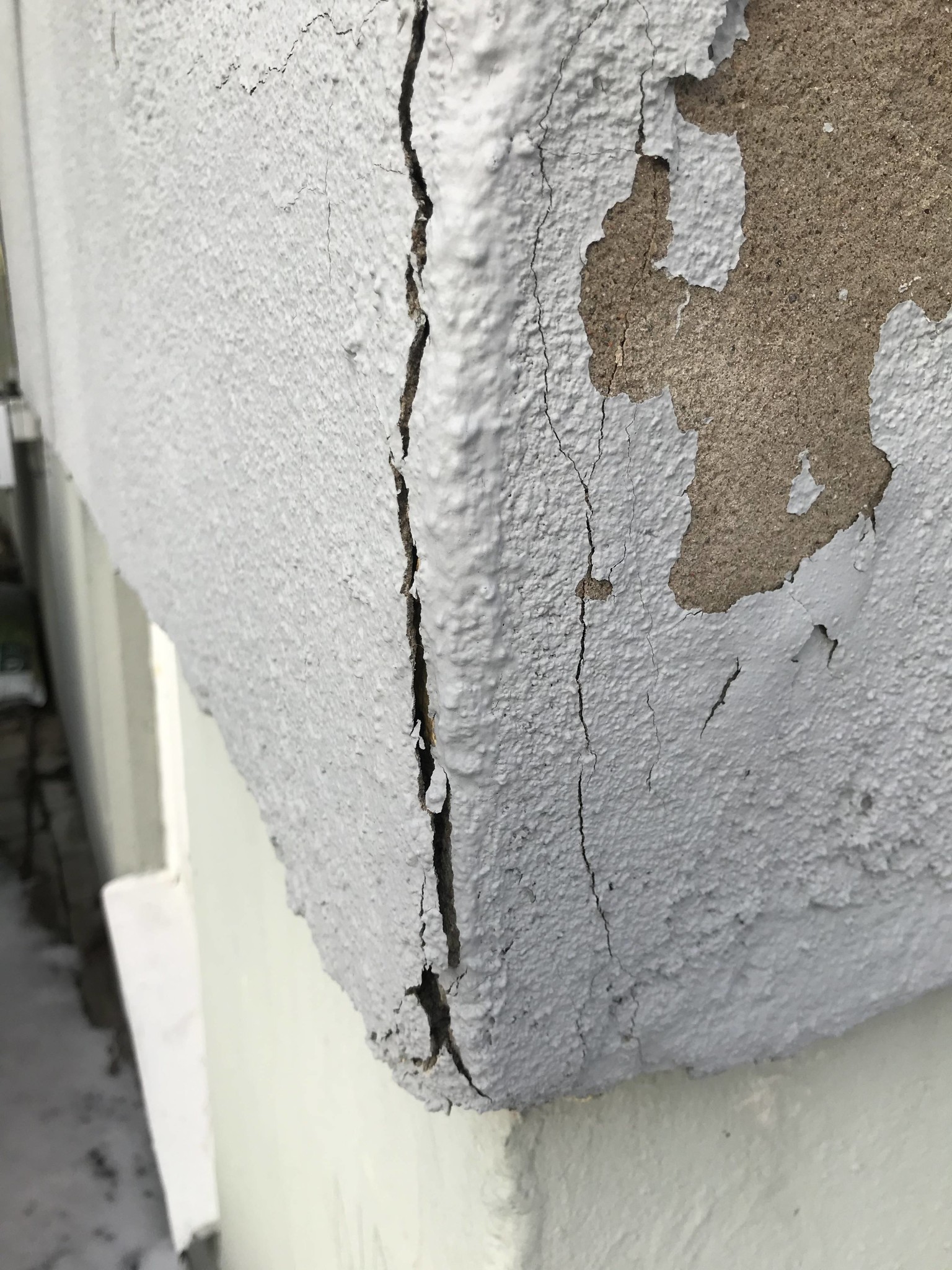
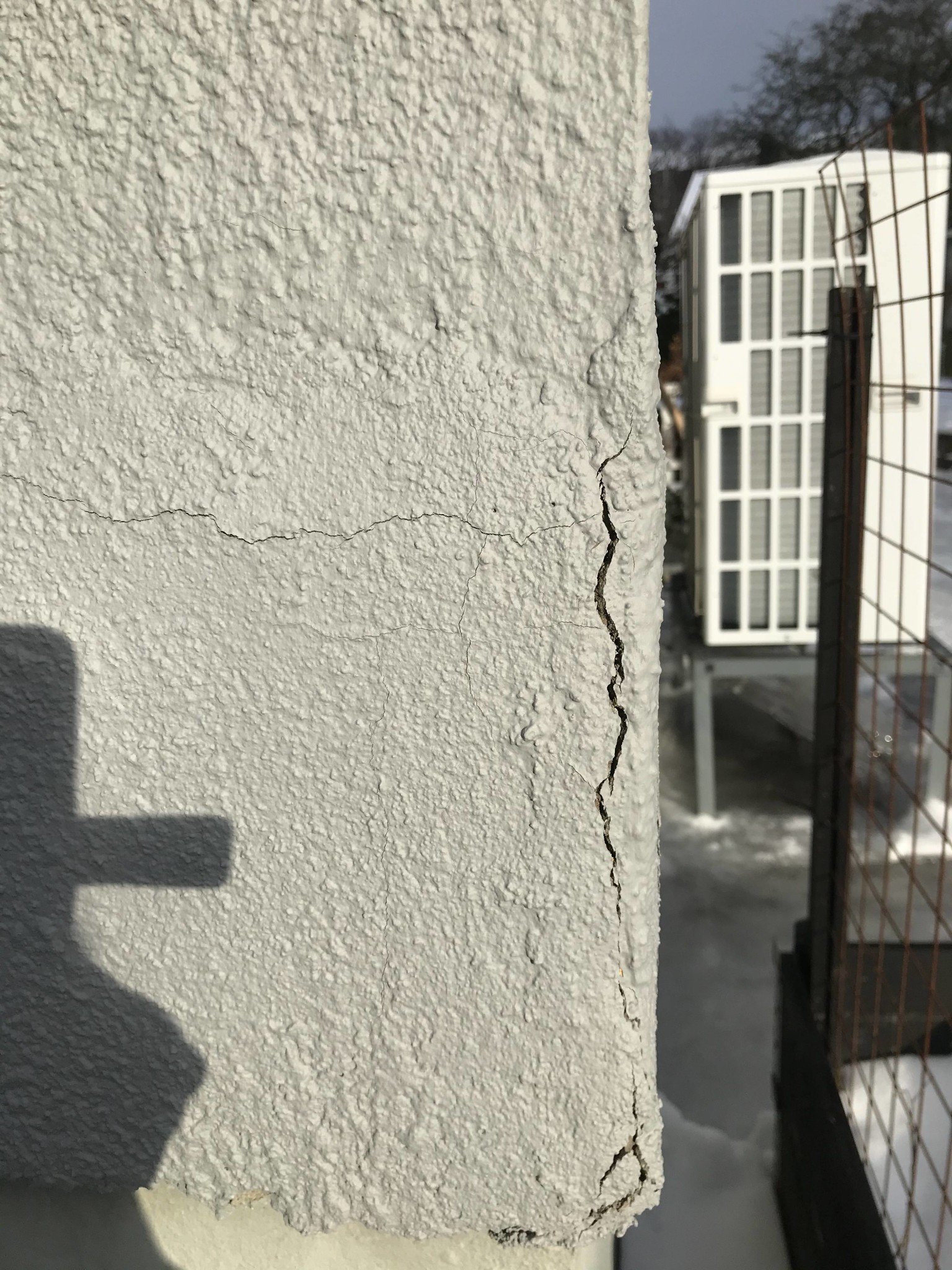
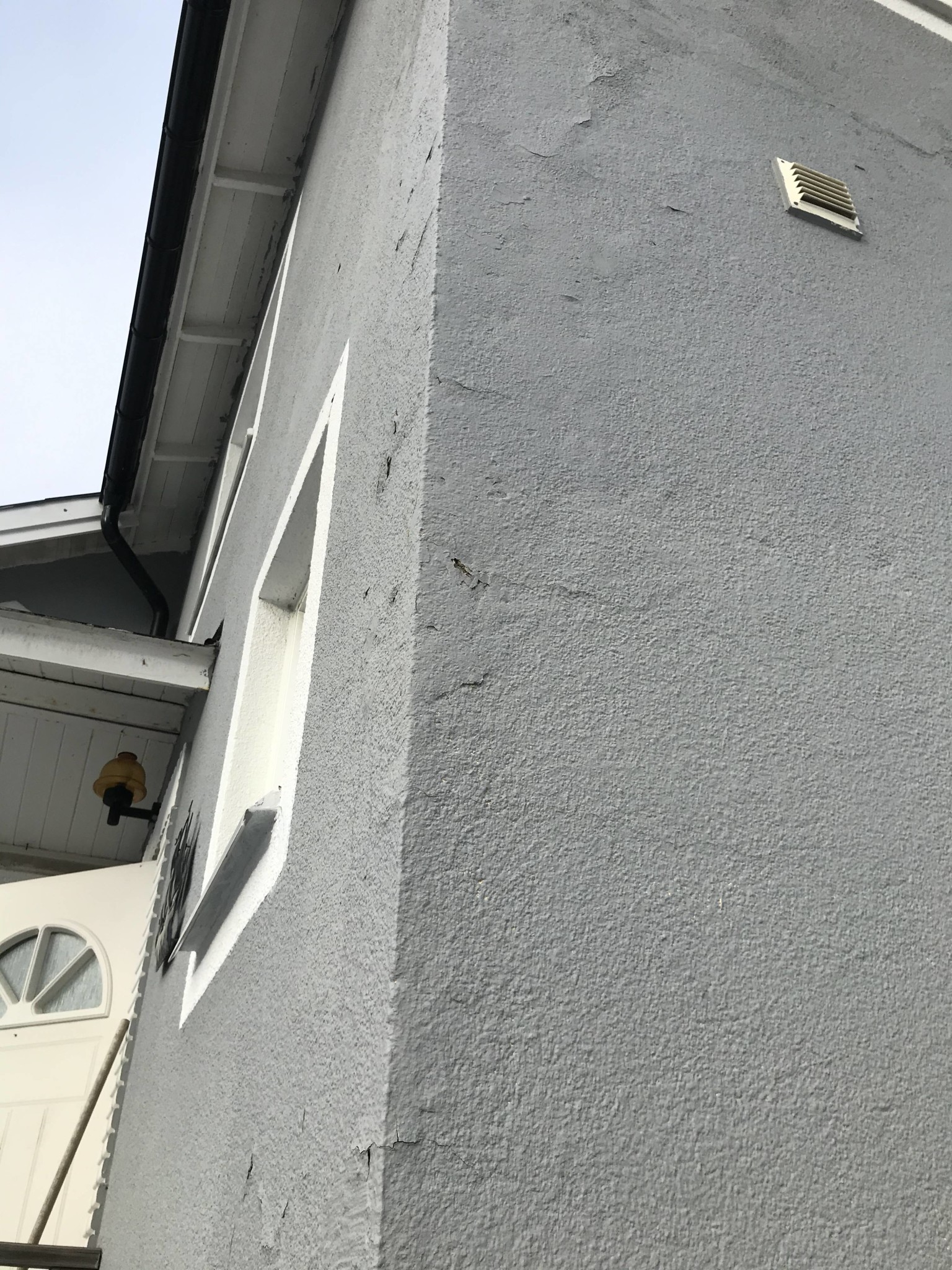
I am not an expert on masonry and plaster, but it looks like part of the problem is that the house is painted with plastic paint. If moisture gets in, which it does in all the cracks, it has a hard time getting out again. This is typical for plastic-coated facades. Plastered as well as wooden ones.
It should be possible to remove the paint and patch the cracks and voids in the plaster, then paint with a moisture-open paint. Silicate or lime should work, I think. The paint might be possible to spray off, similar to graffiti cleaning.
It should be possible to remove the paint and patch the cracks and voids in the plaster, then paint with a moisture-open paint. Silicate or lime should work, I think. The paint might be possible to spray off, similar to graffiti cleaning.
Click here to reply