
3,792 views ·
7 replies
4k views
7 replies
Drilling in plastered wall, probably Leca
I need to set posts for a fence on a wall by my stairs down to the basement, but I'm a bit concerned about how to avoid cracks in the render or concrete blocks.
I'm pretty sure it's Leca/lightweight concrete under the render since the whole basement is built with those.
My plan is to drill some holes (they'll probably be 20-25 mm), fill with anchoring compound, and insert post shoes into the holes.
A hammer drill with/without impact is available, as well as various types of drill bits (e.g., masonry drill bits).
I'm pretty sure it's Leca/lightweight concrete under the render since the whole basement is built with those.
My plan is to drill some holes (they'll probably be 20-25 mm), fill with anchoring compound, and insert post shoes into the holes.
A hammer drill with/without impact is available, as well as various types of drill bits (e.g., masonry drill bits).
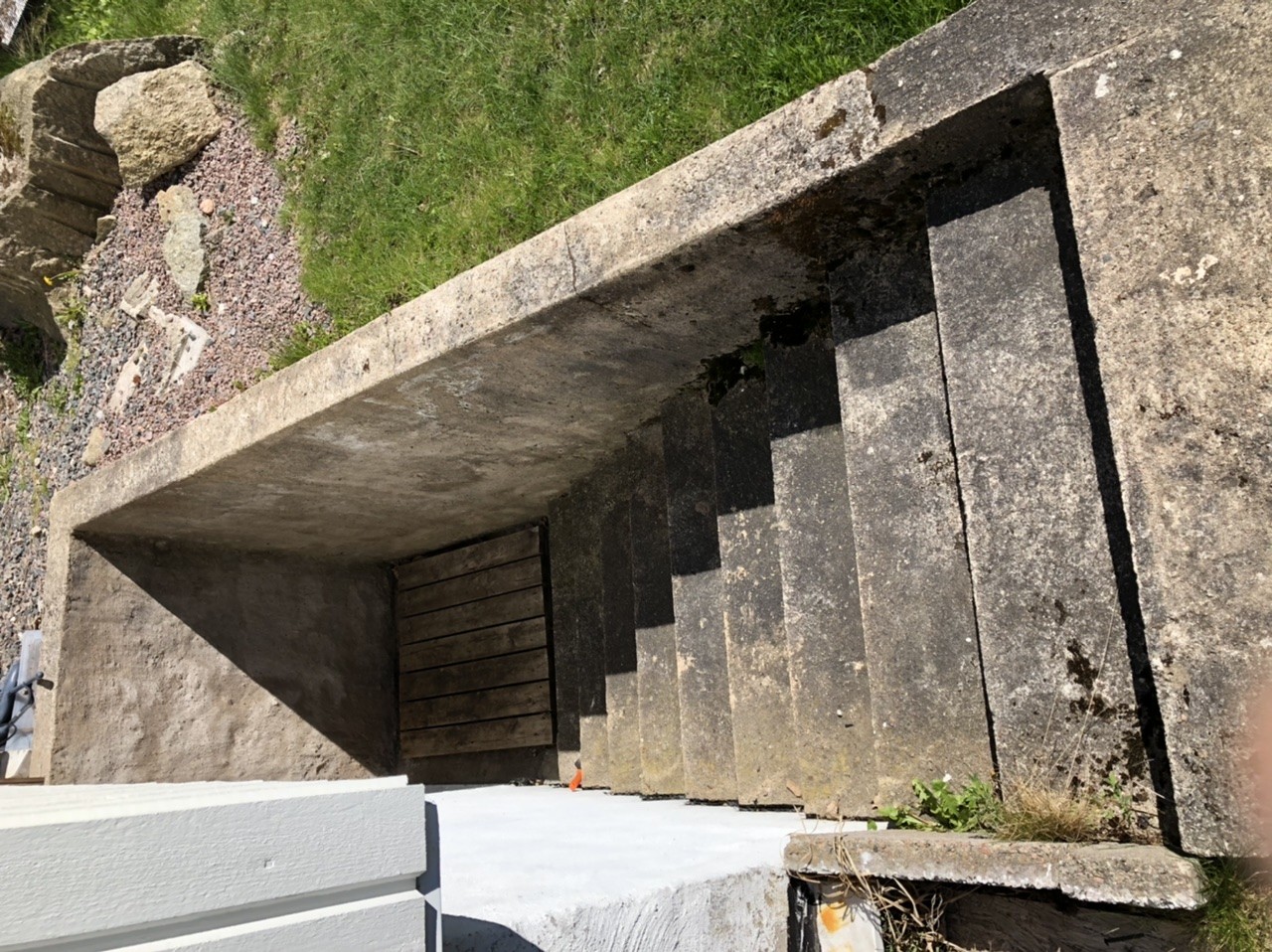

How many posts, what will the lateral load on the fence be, kids climbing, maybe swinging, it's important to have the longest possible downrods. Using post shoes usually creates wobbliness at the wood/shoe connection; ideally, there should be pipes going down at least 300 mm with wings on them where the crossbars are attached, and spindles on them, then it becomes strong.
I primarily need a guard so that one doesn't trip on the edge and fall into the hole. It's been like that for over 11 years now (since I bought the house), but now that I've redone the facade and everything, it's time to secure this.J jonaserik said:How many posts will there be for lateral load on the fence, children climbing, possibly swinging; it's important to have posts as long as possible. Those with post shoes often become wobbly at the wood/shoe connection, ideally there should be pipes going down a minimum of 300 mm with wings on them for attaching crossbars and spindles, then it will be strong.
I was thinking about one post per meter approximately, and then the fence should follow the wall towards the house wall so it will form a 90-degree angle that can stabilize at least where the stair opening is deepest.
No kids causing a fuss, it's probably mostly me who might sit on the fence and lean against it. Possibly, I want to make a rain shelter over the cellar door resting on some of the posts, but we'll see...
I can imagine something similar to the picture in the Do it yourself article: https://images.bonnier.cloud/files/gds/production/20170814185954/sikker-trappe_5.png
With a regular carbide drill of the right diameter, they should be at the top. The best is to take some boards and assemble them into a U shape over the wall with holes that match the drill. You can clamp the matrix in place so it doesn't move, as you might hit a joint and the drill can veer to the side. Drill slowly down and clean out the hole by occasionally lifting the drill (you'll usually feel when it starts to get a bit tough). Then just move the matrix to the next place and drill; let the shoe sit a couple of centimeters above the top so there's no debris underneath. A tip for aligning the shoe and preventing it from twisting: when casting/attaching, put a board in and fasten with a screw on each side, then you can also place something between them for height adjustment. Are you following the explanation?
Jonaserik
Jonaserik
I think I get it, an upside-down U I assume where the vertical parts are on each side of the wall? No impact on the drill?J jonaserik said:With a regular carbide drill of the right size, they should be upright. It's best if you take some boards and assemble them into a U over the wall with holes matching the drill. You can fasten the template with a clamp so it doesn't move. You might hit a joint and then the drill shifts sideways, drill slowly down and clear the hole by pulling the drill up occasionally (usually feels when it starts to get a bit heavy). Then just move the template to the next spot and drill, preferably letting the shoe sit a few cm above the top so there’s no mess underneath. A tip to get the shoes aligned and not twisted, when you're casting/securing, place a board in and fasten with a screw on each, then you also have the option to put something in between for height adjustment. Do you follow the explanation?
Jonaserik
That's correct as leca is a porous material, and regarding the U-shape, you've got it. Clamp it over and tighten so the fixture doesn't move. Drill a little short and test with the joist hangers to ensure they are level with each other, about 1 cm free between the hanger and the top of the wall. If there's a slight difference, you can drill a few mm deeper on the one that's higher. It's much easier to align if the joist hangers are at the bottom of the hole and a beam crosses over for absolute alignment.P Prosit said:
Click here to reply