
I am going to install door casings in a hallway/corridor we are renovating. 7 doors that will have new casings around them. The problem is that the door frames do not always align with the drywall/wall next to them. On the same door, it can align on the right side but not on the left and top. Therefore, I do not want to use rabbeted casings.
Is there a good simple way to even out between the frame and drywall/wall so I can put smooth casings everywhere? Putty, caulk, etc.?
Is there a good simple way to even out between the frame and drywall/wall so I can put smooth casings everywhere? Putty, caulk, etc.?
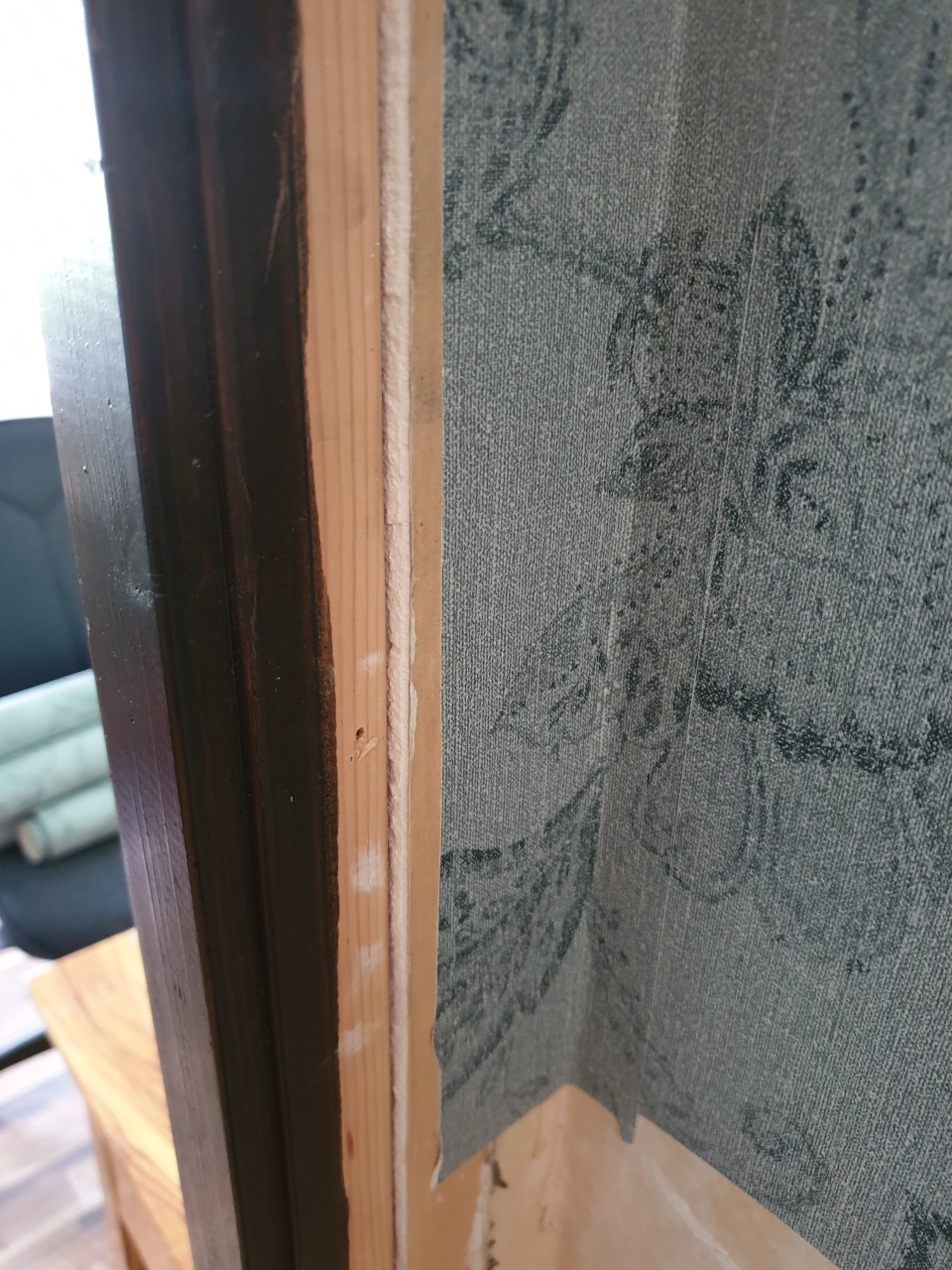

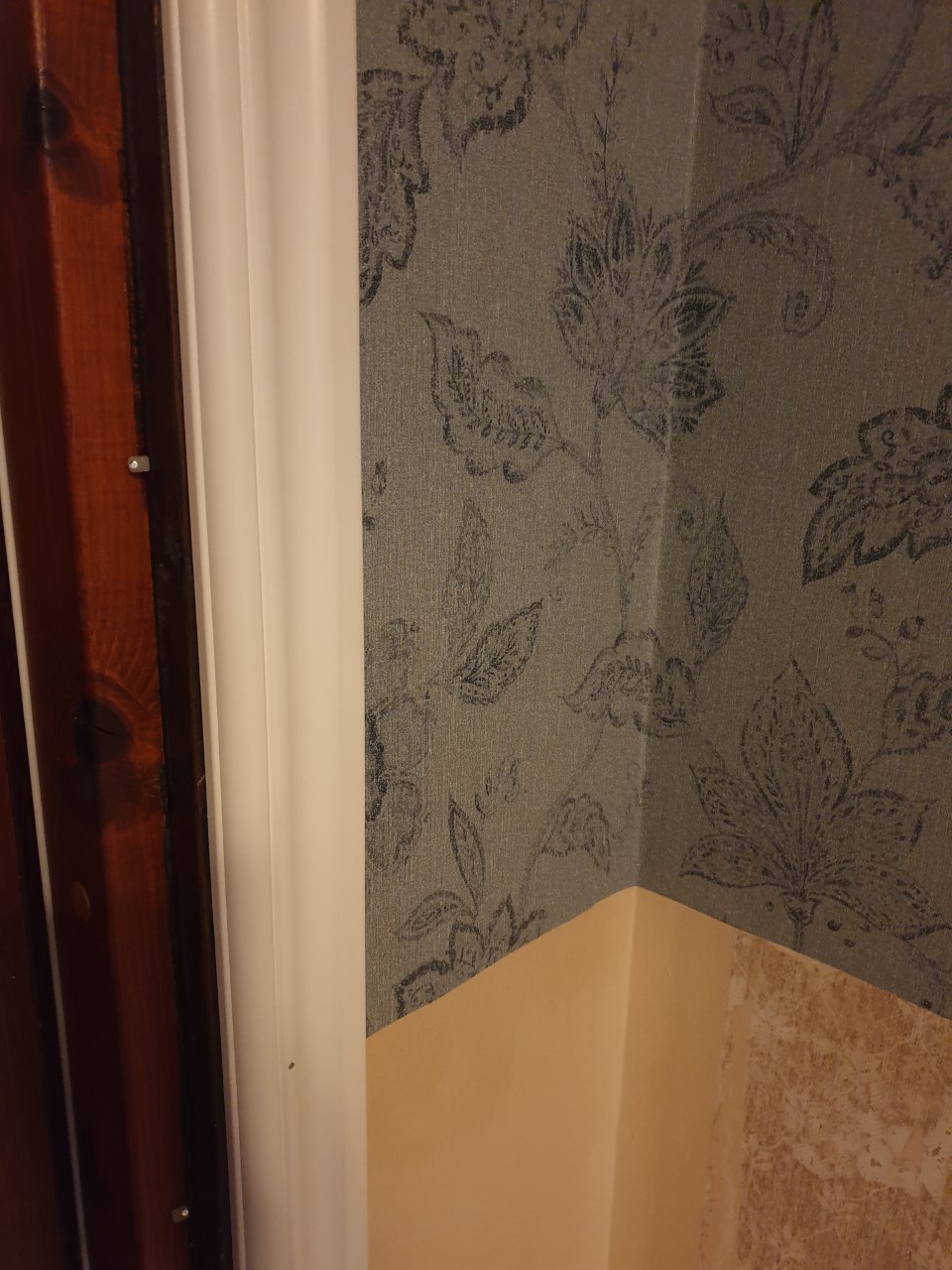
Seems to look like it usually does.
Sneak a glance if there's a big difference. Most of the time it works without special measures as long as you make sure the trim doesn't rest on any edge so it's tight on both sides.
No one thinks about the "mistake" when/if the trim is nicely mounted.
Edit: Most trims have a concave back precisely to handle minor differences in level between the frame and the wall.
Sneak a glance if there's a big difference. Most of the time it works without special measures as long as you make sure the trim doesn't rest on any edge so it's tight on both sides.
No one thinks about the "mistake" when/if the trim is nicely mounted.
Edit: Most trims have a concave back precisely to handle minor differences in level between the frame and the wall.
Last edited:
If it's 8mm, then an 8mm smyglist fits perfectly. Unfortunately, there is a poor selection of thinner lister. I just tried buying a hörnlist and sawed off the corner so that I got two pieces to attach on the frame. They are about 4-5mm thick. However, they become flimsy, so you have to be gentle when sawing.
Easier to saw trim moldings yourself from planed pine, 21mm thick is sufficient as the width of the molding. You can also saw a wedge-shaped molding for the door header if it varies from side to side https://www.byggmax.se/21x69-planhy...k_WQdFQ3BI3zQ7w3f0Ovk7PMER7Lrn-BoC0moQAvD_BwE
If I understand you correctly, you mean that the trim should act as a stop instead of a stop molding? See my quick paint image for an attempt.S Stuff said:If it is 8mm, then an 8mm trim fits perfectly. Unfortunately, there is a poor selection of thinner trims. I just tried buying a corner trim and sawed off the actual corner so that I got two trims to use on the frame. They are about 4-5mm thick. However, they become flimsy, so you have to be careful when sawing

Yes, exactly. In that case, you often putR Robin_ said:
Exactly, but then you don't place them edge to edge. The smyglist has one side that is rounded, just like the rounded edges of the trim. You have that rounding visible as a small "step" and accordingly move the trim out a little bit. How much or little is a matter of taste, but I usually just show the rounding and an additional millimeter or so of the list.R Robin_ said:
S Stuff said:Yes, exactly. In that case, you often set
Exactly, but then you don't lay them edge to edge. The smyglist has a side that is rounded, just like the rounded edges of the trim. You have that rounding visible as a small "step" and therefore move the trim out a little bit. How much or how little is a matter of taste, but I usually just show the rounding and a few additional millimeters of the list
Click here to reply
Similar threads
-
Problem diskmaskin i40
Vitvaror -
Aduro H1 Hybrid problem
Ved, Pellets, Flis -
Making door trim problems
Building Materials and Construction Technology -
Correct way to fix issues with thick door linings so doors can open all the way?
Building Materials and Construction Technology -
problem med dörrfoder i nytt badrum
Badrum