It's about time to install the joists for the loft in my Attefall project. I have been looking for suitable descriptions on how to proceed, but I can't find much good material.
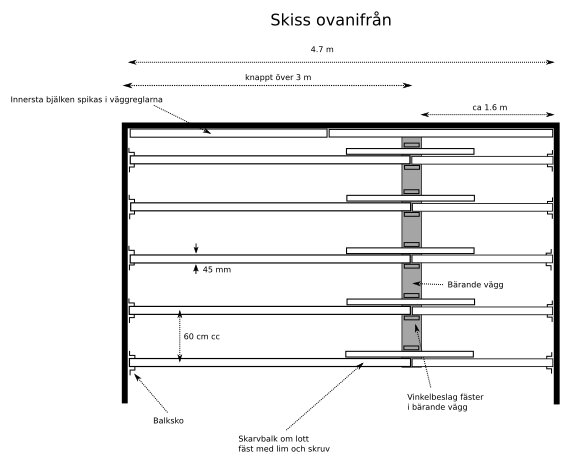
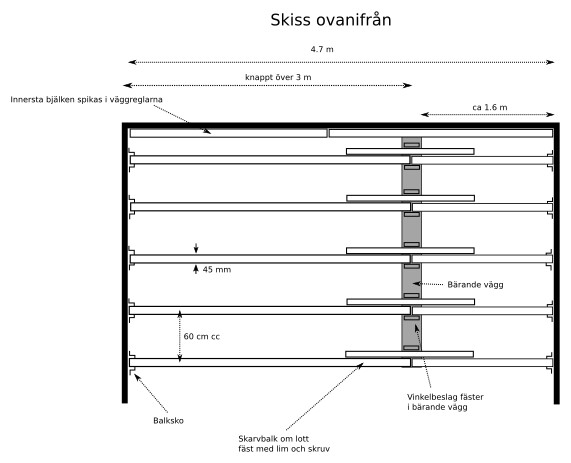
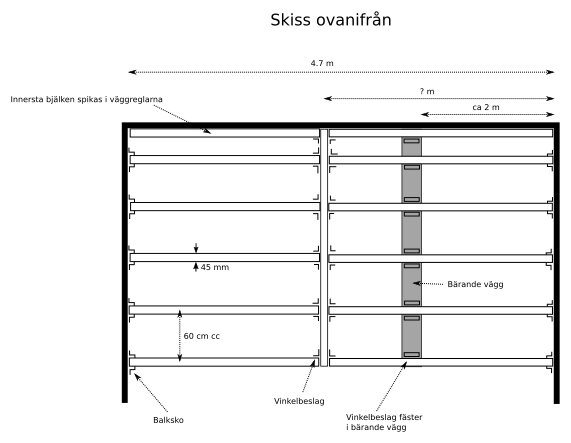
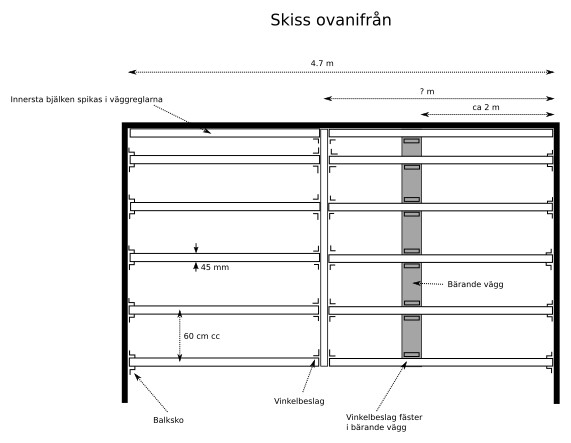
Below is a sketch of my current plan. The joists are 195x45 mm. The sketch is not to scale. Am I thinking correctly?
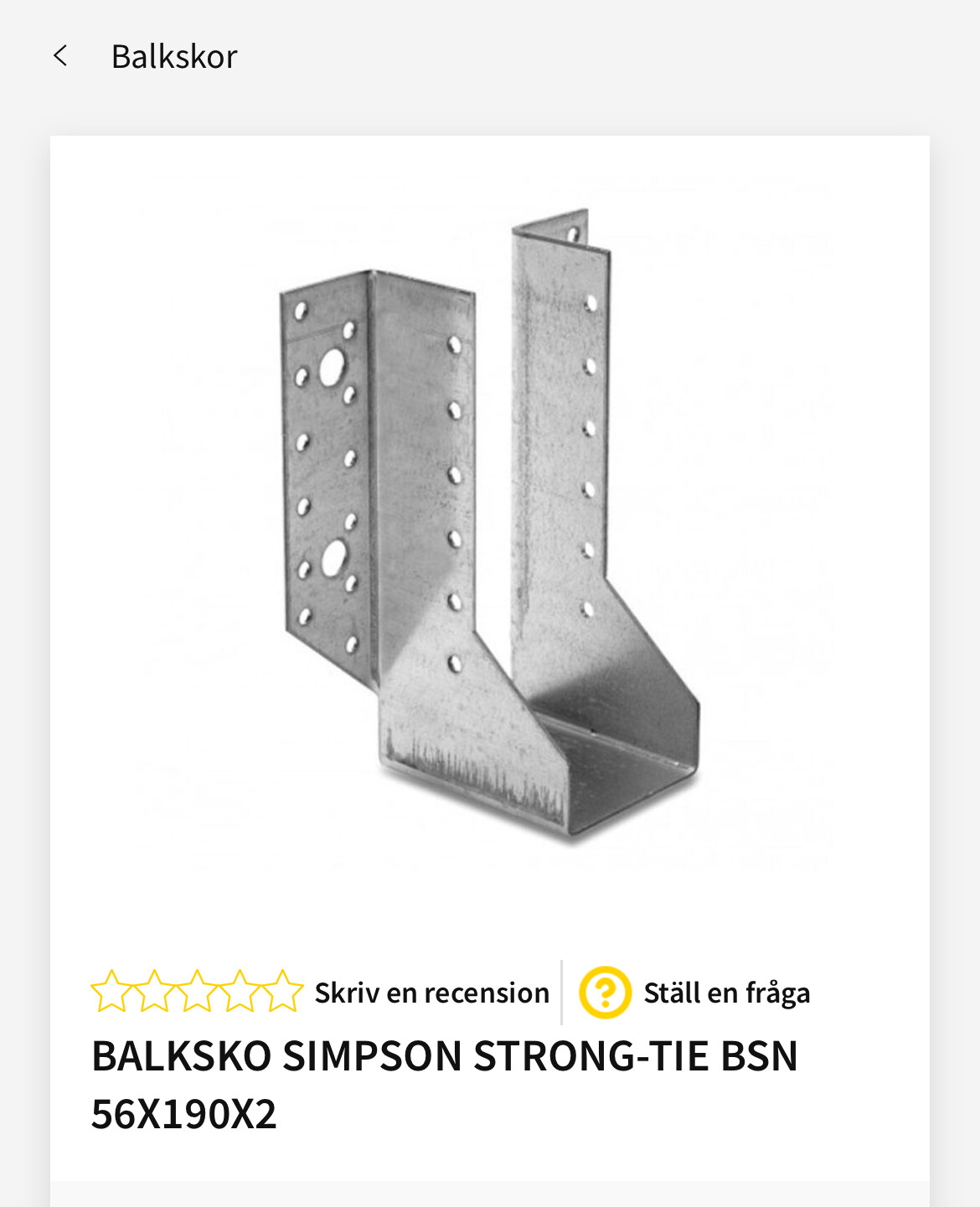
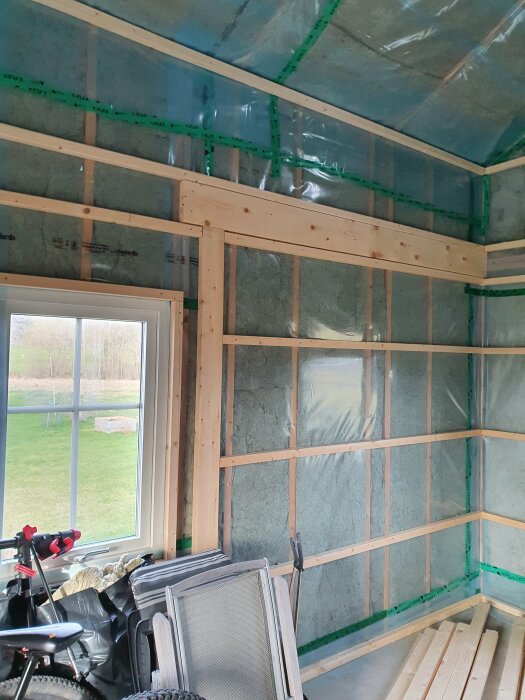
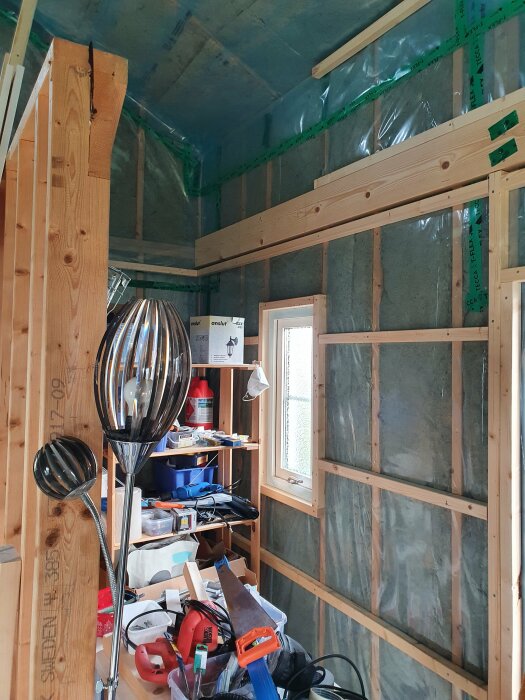
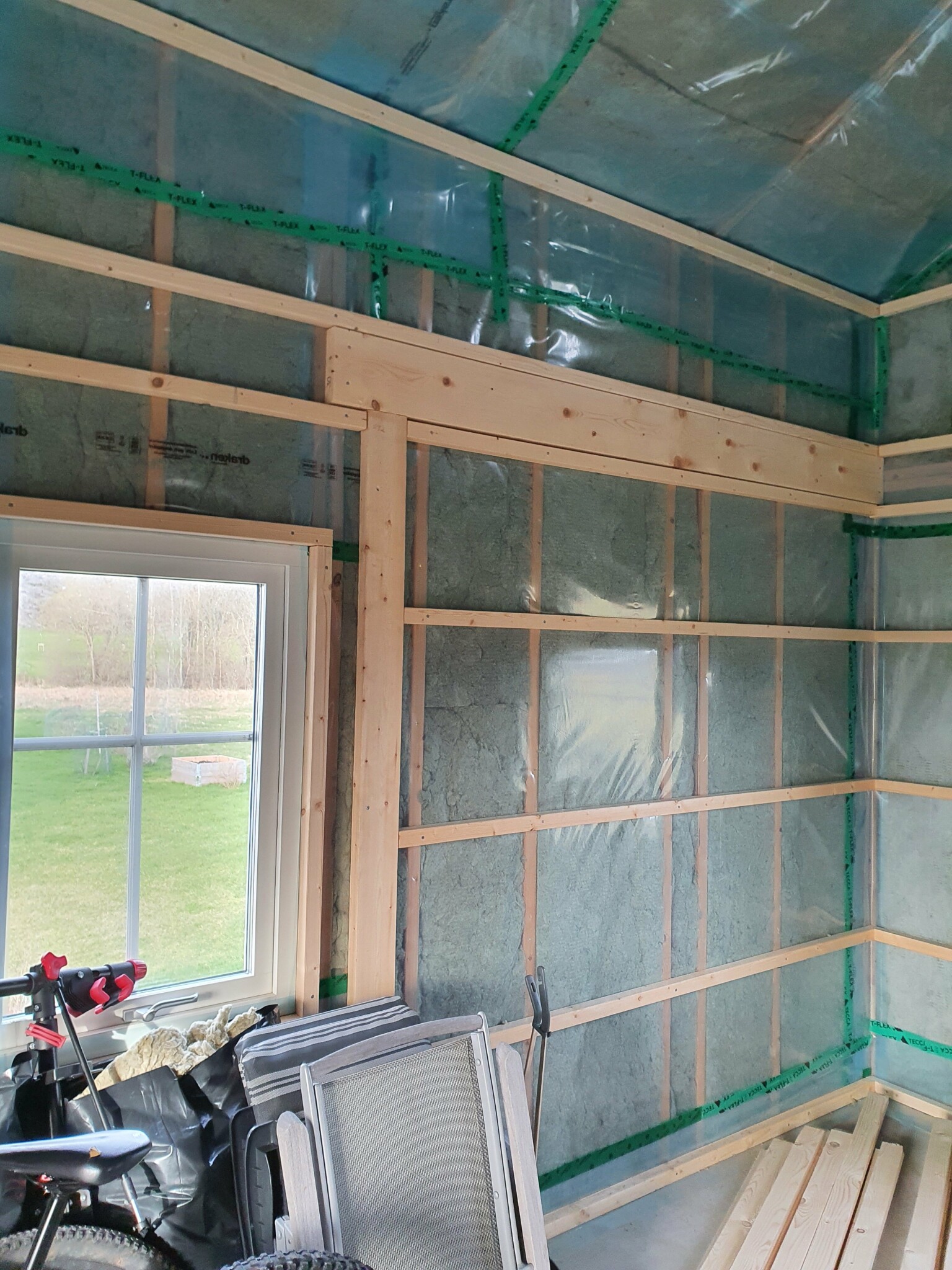
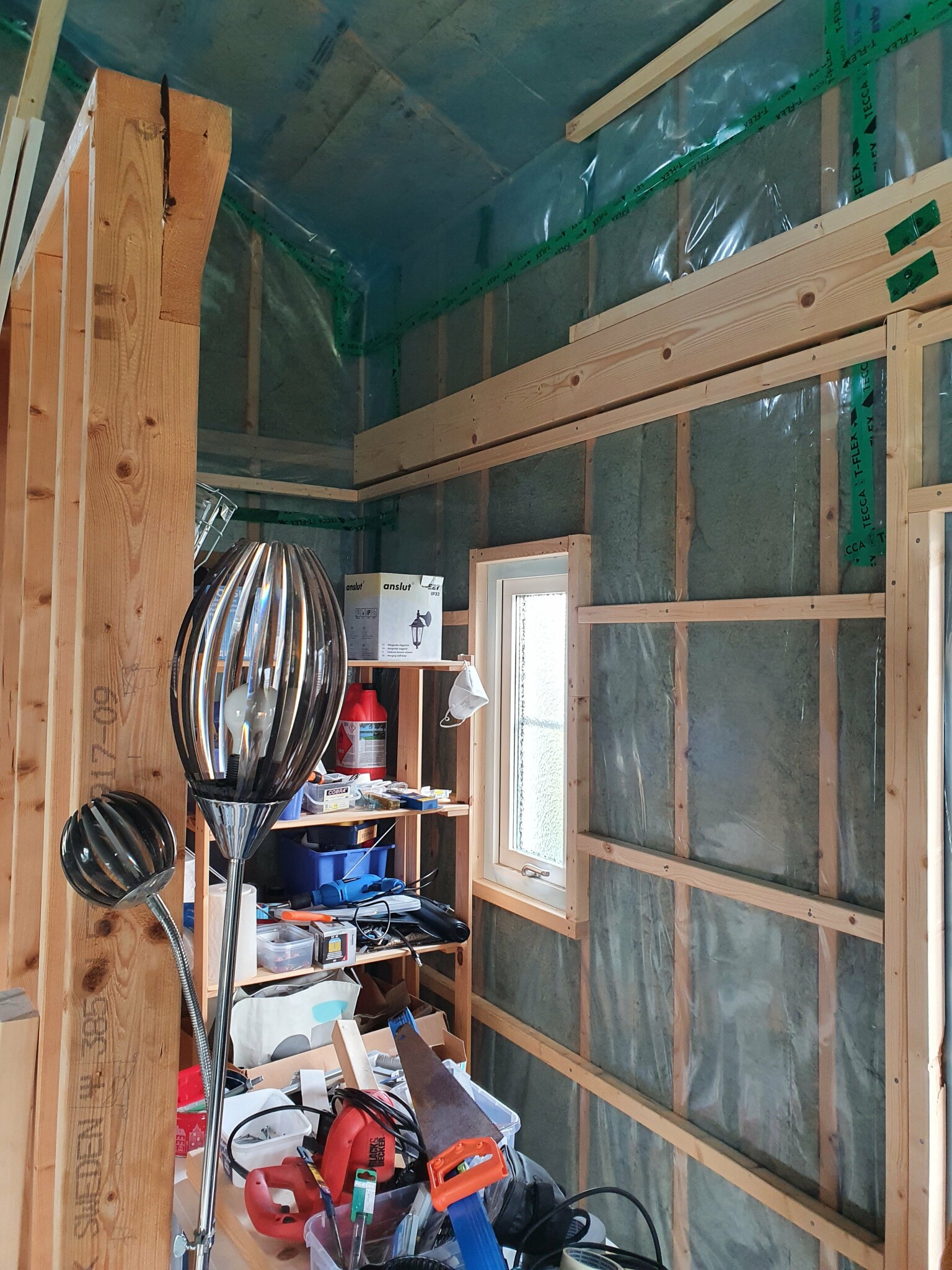
Attached are also pictures of the 195x45 joists that are attached to the wall studs where I plan to attach the joist hangers. In one of the pictures, you can also see the load-bearing wall that the loft will extend over.
I especially wonder exactly how the joint should be designed:
Where should the joint be placed? The joists are max 4 m, I believe. Should I aim for the middle between the load-bearing wall and the opposite side?
Should one have through-bolts through the crossbeam?
Should one perhaps do it in a completely different way?
I would have skipped that seam in the middle, at least that transverse solution with joist hangers is not good and also complicated and unnecessarily expensive.
If you can't buy studs that span the entire width, it's better to join them two by two. Side by side with glue and screws. The longer the overlap at the seams, the stronger and better.
I would have skipped that joint in the middle, at least that transverse solution with joist hangers, it won't be good and furthermore complicated and unnecessarily expensive.
If you can't buy beams that span the entire width, it's better to splice them together two by two. Side by side with glue and screws. The longer the overlap at the joints, the stronger and better.
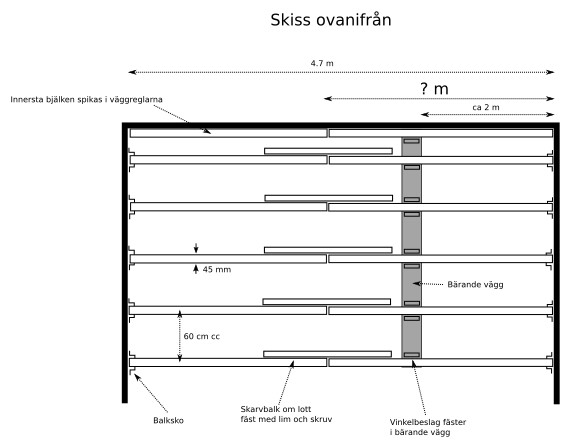
Thanks for the response. Something like in the new picture below? Alternatively, the joint could be directly on the load-bearing wall as someone suggested in the thread. Do you need any special type of glue and screws for this type of joint?
Thanks for all the other responses in the thread too.
The measurement for the joint should be a question mark, not 7 m.
The reason I chose 45x195 beams is that I consulted with a carpenter early in the project who suggested 195 would be sufficient.
I understand that it would be easier to use beams that span the entire length. But I simply haven't seen any of those in the hardware stores I've visited. The longest I've seen have been 4.0 or 4.2 m I think.
Surely it's enough that the joint is placed on the load-bearing wall? The span is only about 2.7 m.
I'm not on site to measure right now, but I think the span is just over 3 m. The approximate measurement to the load-bearing wall is probably closer to 1.5 m than 2 m when I think about it. But regardless, it works that the joint is placed on the load-bearing wall if that would be an advantage.
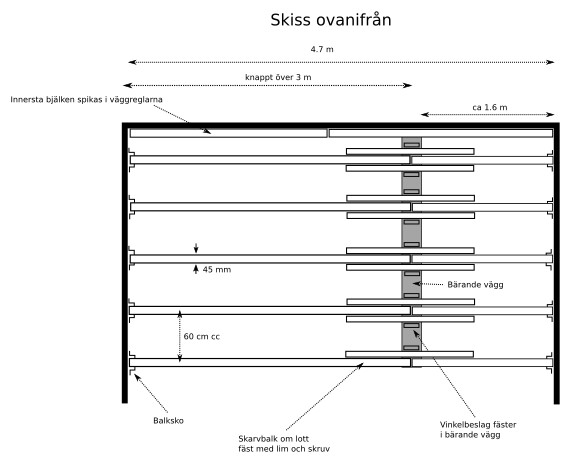
It seems that many agree the splice should be placed over the load-bearing wall, so here is a new version of the sketch where I have also corrected the measurements.
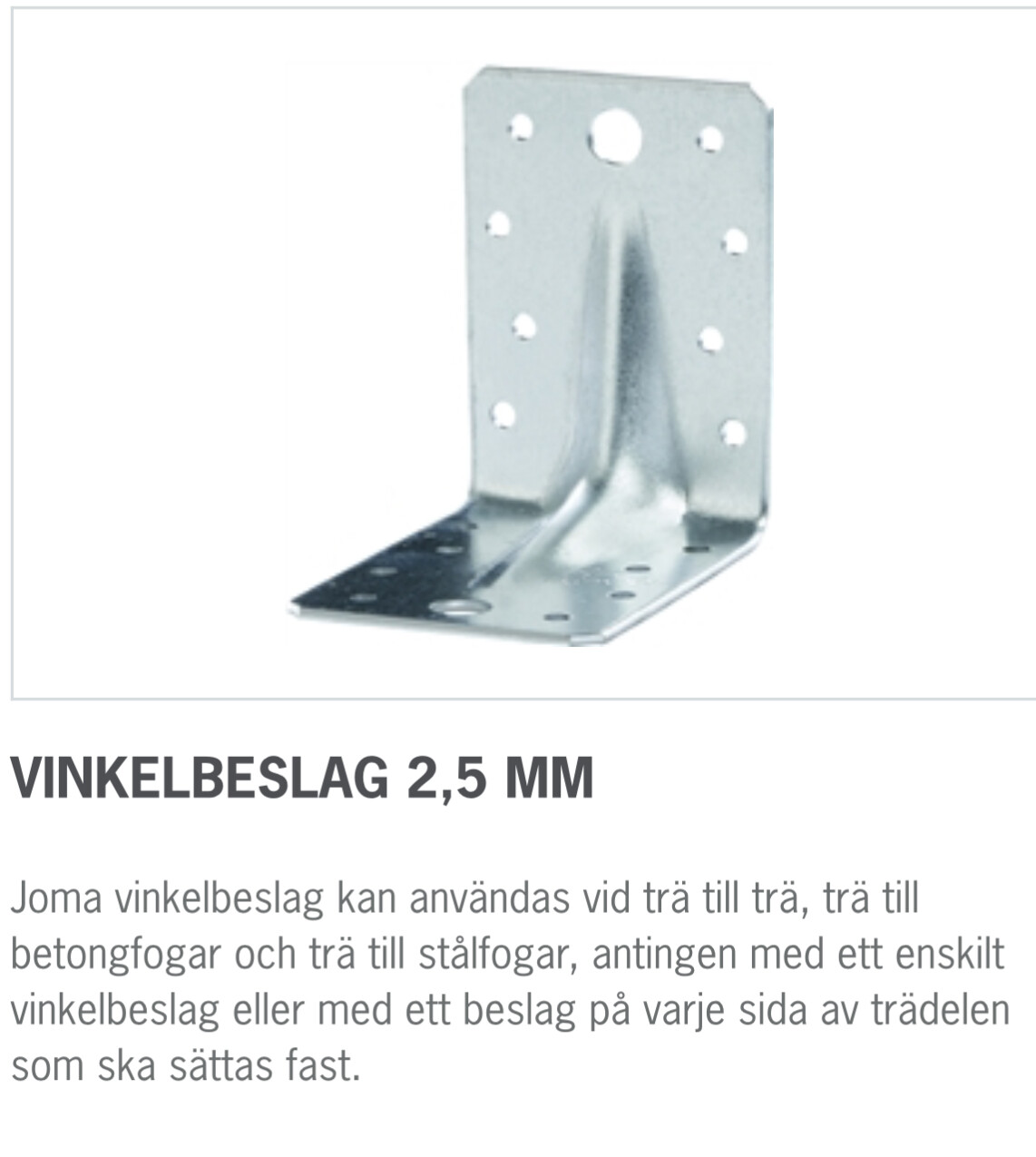
Should one consider anything when attaching the beams to the load-bearing wall? Are angle brackets and screws sufficient?
Beam shoe is preferable and it's good to have a splice on each side of the beam you have drawn since you only have one on one side..
Thanks! The plan is beam shoes against the outer walls. I was mainly considering the attachment to the load-bearing wall at the joint. I don't see how a beam shoe would be applicable there.
Then we'll aim for splices on both sides. Except maybe for the very outer beam? Wouldn't it look odd with a splice on the outside there? Or is it worth the slightly unsightly appearance for a stronger joint? What is a suitable length for the splice, 1 m?
Thank you! The plan is to use joist hangers against the outer walls. I was mostly thinking about the attachment to the load-bearing wall at the joint. I don't see how a joist hanger would be applicable there.
So we'll aim for splices on both sides. Except perhaps for the outermost beam? There it might be awkward with a splice on the outside? Or is it worth it being a bit ugly for a stronger joint? What is the appropriate length for the splice, 1 m?
[image]
On the load-bearing wall, a simple angle bracket is sufficient.
We usually splice with 34x170mm timber if you have 45x195 joists, length 1800mm..
Against the outer wall, one is enough..


Centano said: