
1,581 views ·
69 replies
2k views
69 replies
Claystone - insulation value?
The inside has not yet been renovated, and today consists of a mix of tree fiberboard, plasterboard, and plaster. The intention is to clay plaster the inside into condition. There are various options, but the heating system and electricity are also affected, so it requires an overall approach.13th Marine said:
As @Oldboy points out, clay is a heavy and slow material with good properties for soundproofing, moisture balancing, etc. Apart from the fact that clay's theoretical u-value is debatable in a specific house, you cannot compare a stud wall with mineral wool and a wall of clay based only on the u-value.
How do you know that the walls of the house are clay bricks? In the past, people used the material that was locally available, were really modern and reused materials, and it often became a mix, also depending on building, extending, patching, and repairing during different time periods. For example, our walls did not always look as we had assumed before they were opened up.

Kan själv!
· Trelleborg
· 20 196 posts
I read further down:J jawen said:A few lines from the study.
Demir (2008) showed that sawdust, tobacco residues, and grass can be used to enhance the thermal and mechanical properties of adobe bricks. The insulation capacity of the brick increases with increasing porosity of the clay body. Additions of organic residues were found to be effective for pore formation in the clay body and the clay retained acceptable mechanical properties.
Fiber-reinforced adobe houses result in a temperature that is 56.3% cooler than concrete brick houses in the summer and 41.5% warmer in the winter.
In warm countries, this is beneficial for "poor people" & has many good properties.
But in the Nordic region, the "problems" & climate are completely different.
Here is an example of a wall consisting of mixed clay stone and burnt brick:
https://www.byggahus.se/forum/threads/varannan-tegelsten-och-lersten-varfor.486972/
https://www.byggahus.se/forum/threads/varannan-tegelsten-och-lersten-varfor.486972/
Kan själv!
· Trelleborg
· 20 196 posts
What about the exterior?Microkatten said:
Sure, I can't be completely certain, but the farm has been in the family's possession since 1902, and my father-in-law has not suggested it would be anything else in the current building.As @Oldboy mentioned, clay is a heavy and slow material with good properties for sound insulation, moisture balancing, etc. Besides, the theoretical u-value of clay is debatable in a specific house, so you can't only compare a stud wall with glass wool and a wall of clay based on u-value.
How do you know the walls in the house are made of claystone? In the past, people used the material available locally and were quite modern in reusing materials, which often resulted in a mix, also depending on construction, expansion, patching, and repairing during different periods. For example, our walls didn't always look like we expected before they were opened up.
The first farm building from 1885 is partly constructed of claystone, with the weather-exposed west and south sides in burnt brick, while the second farm building from 1902 is entirely made of brick.
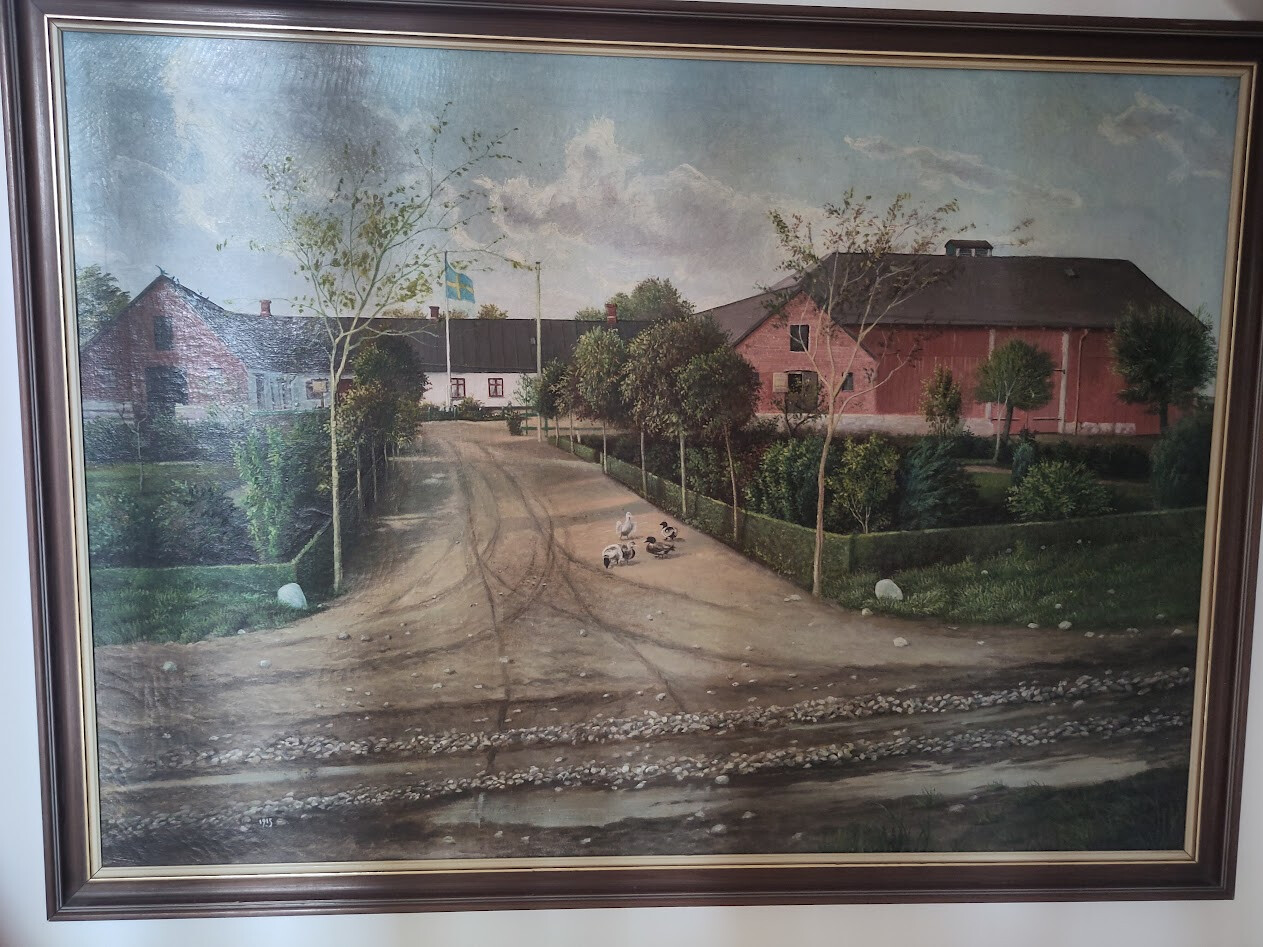
Here is a depiction from 1913:
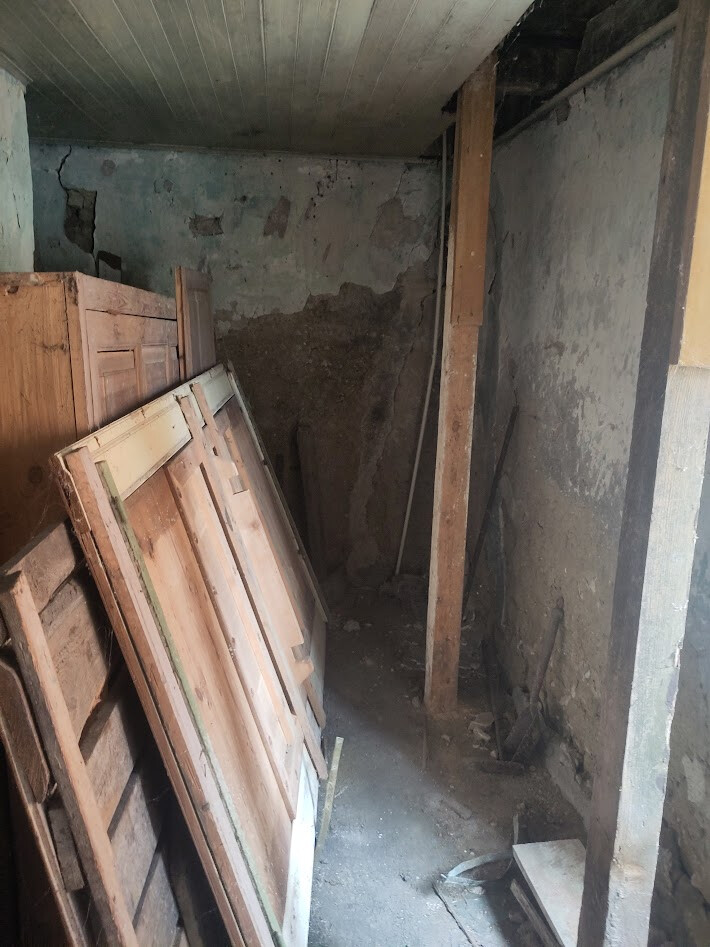
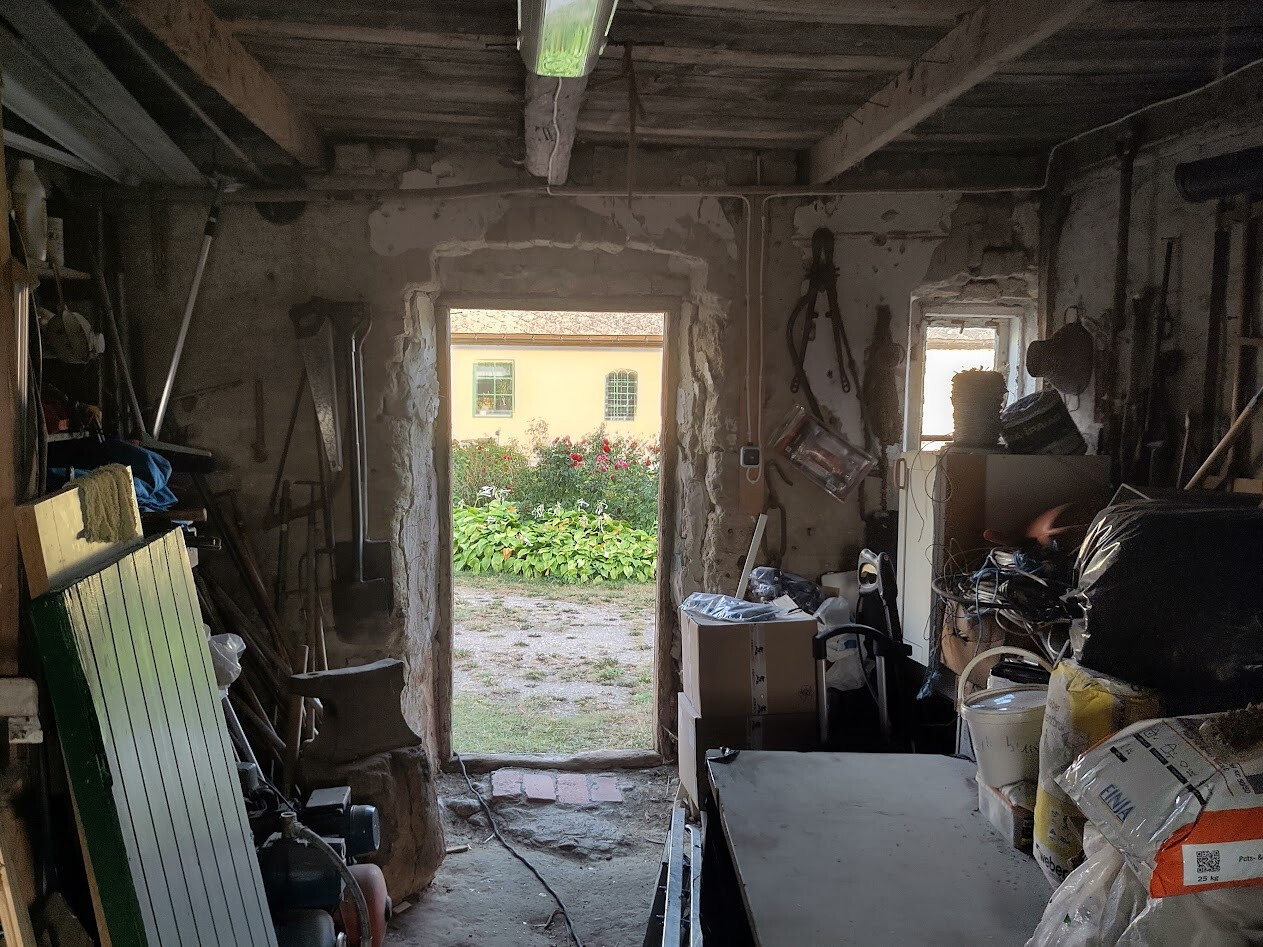
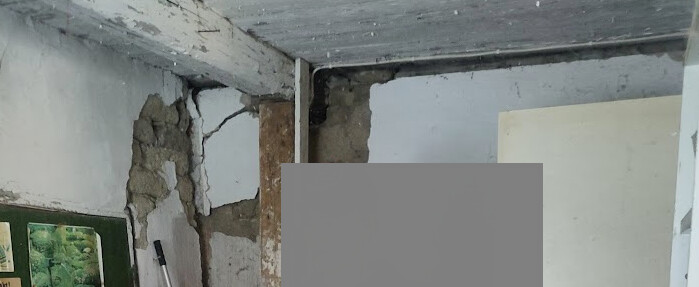
In the places where the wall is visible, I've only seen claystone:
Kan själv!
· Trelleborg
· 20 196 posts
Ah, I misunderstood and read "hempcrete," but now see it only says hemp.
So, with furring on the outside with hemp insulation and then paneling?
It's going to be very exciting, but we've also concluded that we're crazy for taking this on 😅
Looks fantastic!
My family on my father's side are "dalmasar" from an area between Sälen & Särna.
Same large farms but all in timber.
My "feeling" is that your buildings contain "all the stone they could get their hands on," and that it is mainly different pieces of brick that "created the load-bearing capacity." Then "they bake these pieces" with the clay/lime/binder that was available.
Yep! We have pictures of the original appearance and are trying to recreate it as best as we can.
You probably have to be a bit crazy and geek out if it's going to turn out well, but it's very exciting and fun too! 🤓
Kan själv!
· Trelleborg
· 20 196 posts
A slightly different look today though:J jawen said:
It was rebuilt in 1937, presumably the frontispiece and the asbestos roof were added then.
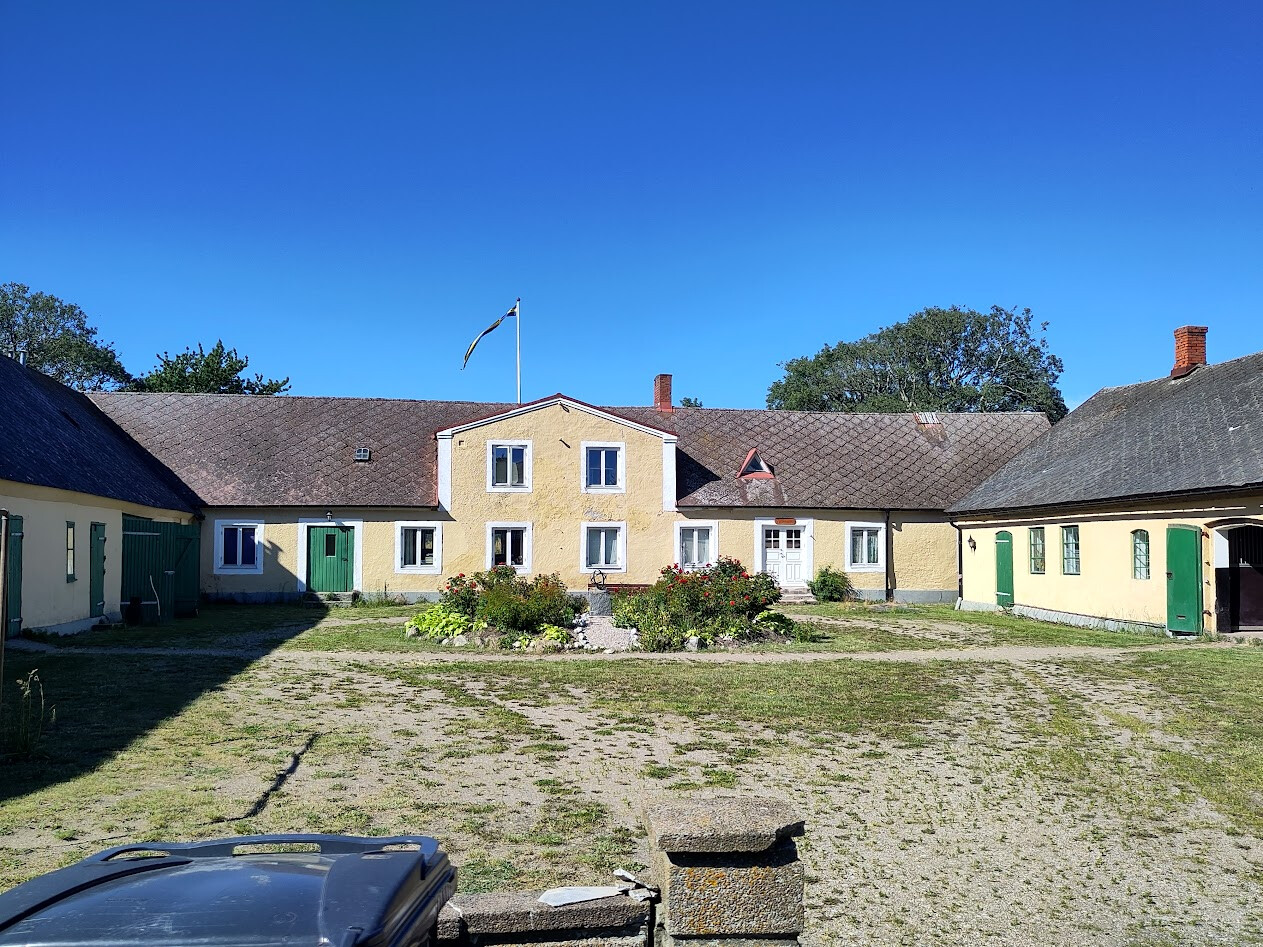
There's a risk, but that's not quite the feeling I've gotten when I've been there, but I'll see when I get into it.J jawen said:My family on my father's side are dalmasar from an area between Sälen & Särna.
Same large farms but all in timber.
My "feeling" is that your buildings contain "precis all sten dom fick tag i", and that it is mainly different pieces of brick that "created the load-bearing capacity". Then they "bake these pieces in" with the clay/ lime/ binder that was available.
I've looked at other farms for sale, and some are built of flint instead.
Kan själv!
· Trelleborg
· 20 196 posts
Fun! A bit like our painting.
I like how it looked in 1913, while the better half wants it how it's always been, yellow with a frontispiece that in my eyes doesn't quite fit.
I can easily get nostalgic and nerd out about the history, thought it was really fun when my mother-in-law showed the farm in an old "farm book."
At the same time, in the 60s, they decided it wasn't worth putting all the energy into the house, and built a new one instead, roughly where the painting "is taken."
So the farmyard no longer has this view of the sea:
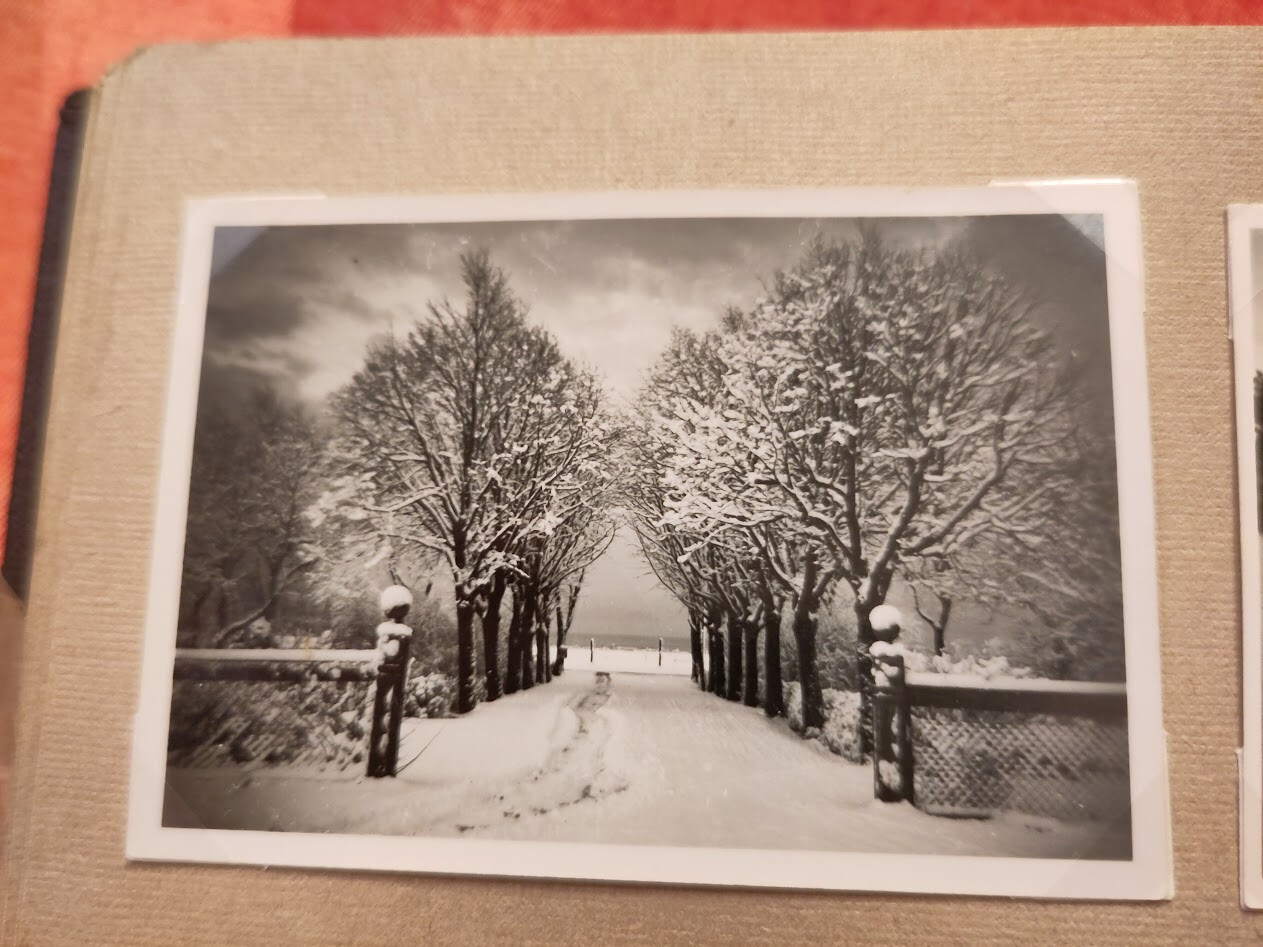
(Not that it would have remained anyway, there's a residential area in the way nowadays)
At the same time, I have to be realistic, how much will be left of the house when we're done, will it be worth the effort?
Wow!
Read there's a flint house in Klagshamn, but otherwise old houses/farms in Sussex and Norfolk.
The house you are considering seems very solidly built & even the roof ridges still look straight.
The cement roof can probably be dismantled in whole "pieces," which simplifies handling.
2-family building with associated stables & barns.
I think the whole farm seems to have "very good" potential 👌
It can be a dilemma which historical traces you want to keep or remove. I don't dare say what I think about your pediment, because then I might get it from one of you...😉
Another dilemma, what should be prioritized, and how much should it cost... I believe the ambition should be high, but the pace slow, that way you have time to ponder the state of things for a few years! Or build new, but that's not free either.
Kan själv!
· Trelleborg
· 20 196 posts
I have no idea how common it is, but I have noticed it. They are presumably older buildings.J jawen said:Oh dang!
Read that there is some flintahus in Klagshamn, but otherwise old houses/farms Sussex and Norfolk.
The house you are considering seems very solidly built & even the roof ridges still look straight.
The thatched roof can probably be dismantled in whole "pieces," which simplifies the handling.
I don't think it was a two-family house, even though it has two apartments today.J jawen said:
Based on the 1937 division, the right door was the kitchen entrance, while the left was the main entrance.
To the right of the right door is only used as storage today, but was a washhouse and has a baking oven, potato cellar, and coke storage.
As a true optimist, I also think it has potential =)
EDIT: It can be added that there's something about the roof trusses between the chimney and the "repair" to the right.
Kan själv!
· Trelleborg
· 20 196 posts
😅
I don't think any of us are particularly sensitive about that.
However, it has an advantage, it gives you a bit more space, because it's
If we choose to renovate, I have a plan on how we can do it, there's space so we can live without cramming too much and simultaneously renovate a large section at a time, the trickiest part will be when it's time to tackle the middle section.
After all, I have been pondering this for a year already 😅
We have the advantage of getting this as an advance on inheritance, and we have a not too heavily mortgaged house to sell.
But yes, building new will likely be more expensive, perhaps mainly because we would need to hire more people.
Based on what I see in your pictures, I believe that much of the house will "remain."
What is your approximate budget?
Kitchen, bathroom, windows (waterborne heating) are large items, but material costs generally account for about 30% of the total if you hire a construction company.
A tight timeline increases costs.
If you can do certain tasks yourself or gradually with friends, you "save" enormously.