
44,648 views ·
119 replies
45k views
119 replies
Challenge - who can build the most economical scaffolding on pallets?
Here are some pictures taken this morning. Yes, the handrail is not perfect, I had to patch it together with what I had, but it wasn't quite enough. And the posts ended up in the wrong direction. When I realized it, it was already too far along to fix it. I thought about reinforcing it afterward, but after trying a few solid body checks, I didn't think it was necessary. Enjoy! 
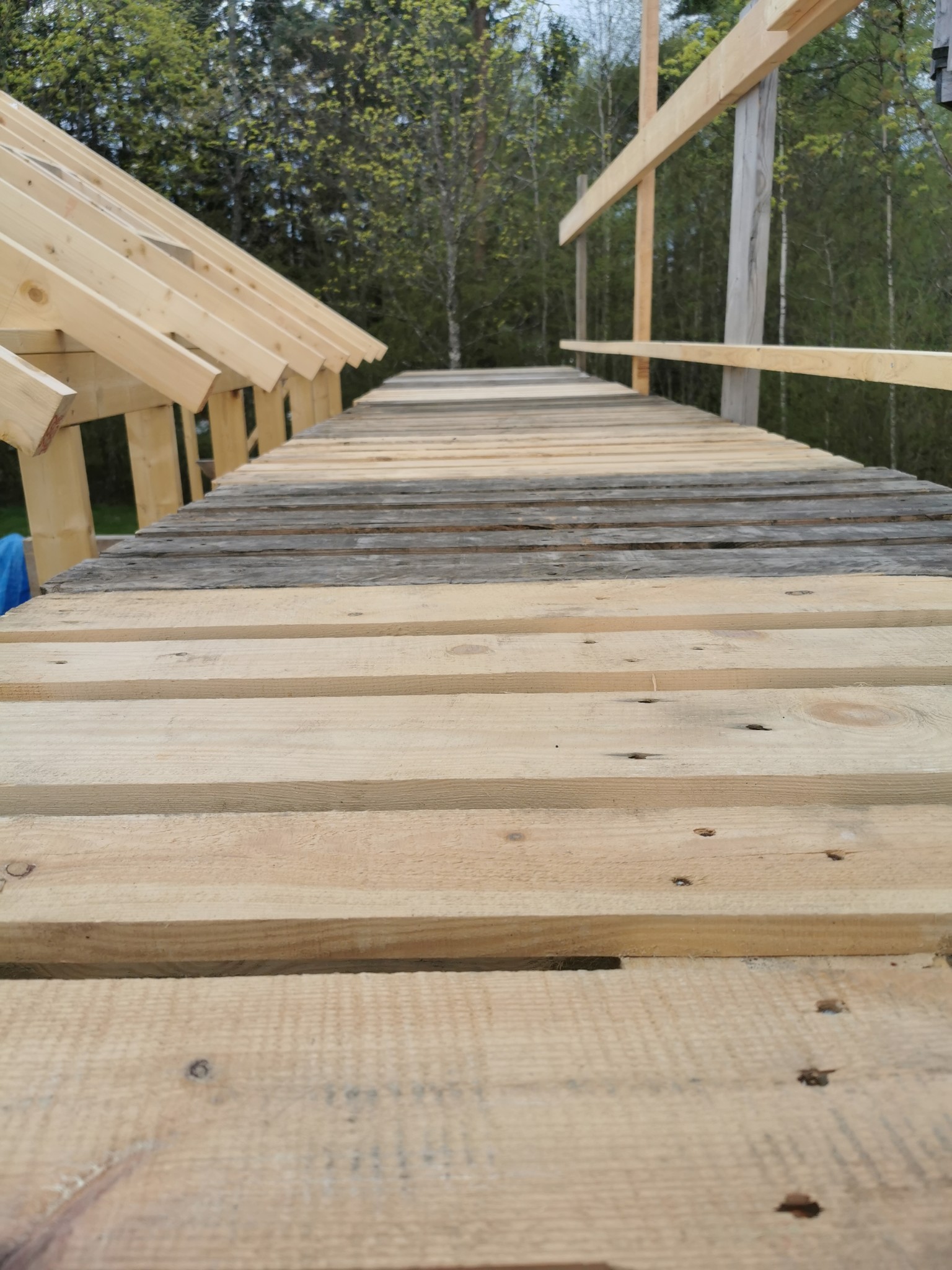
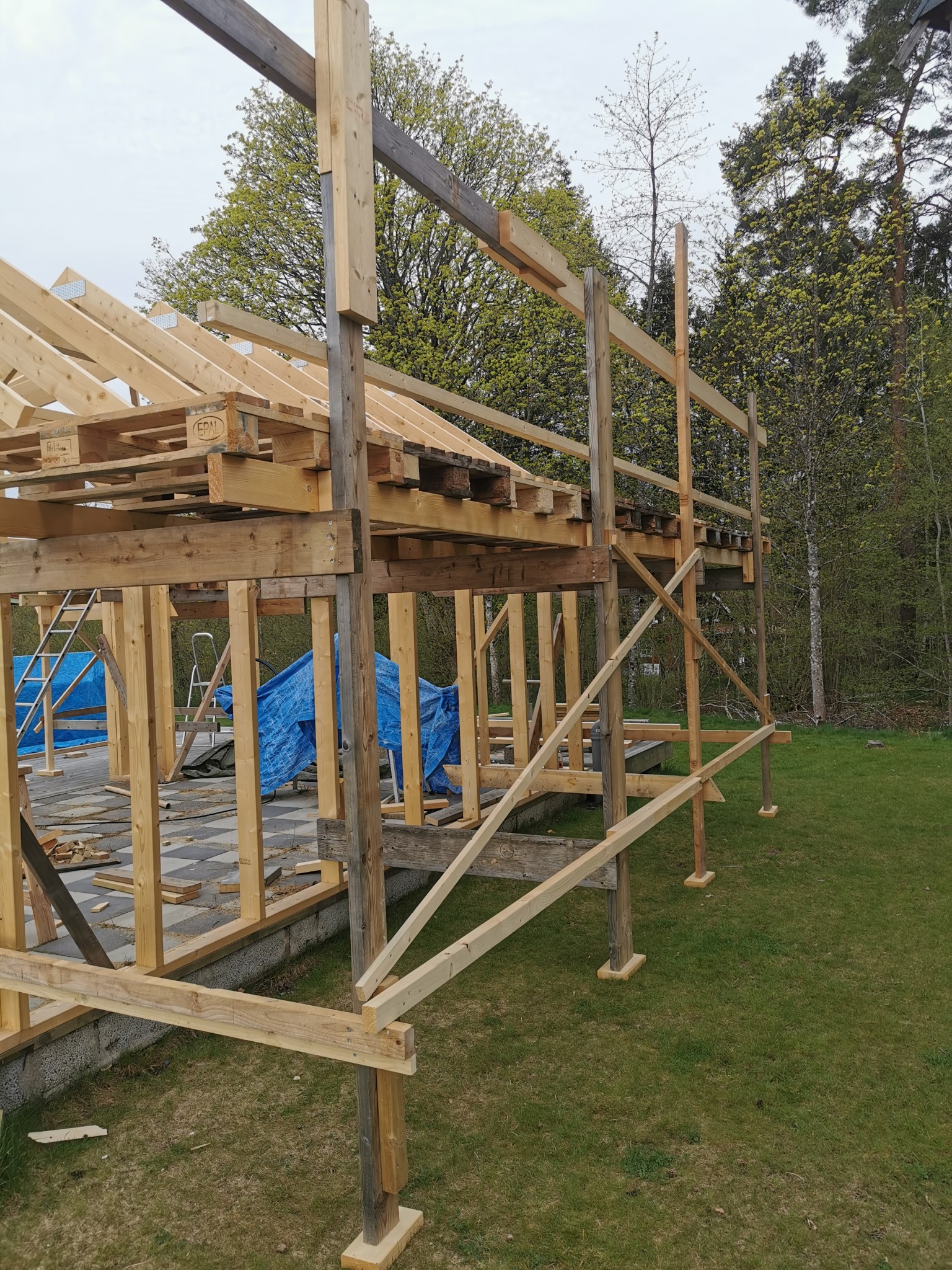
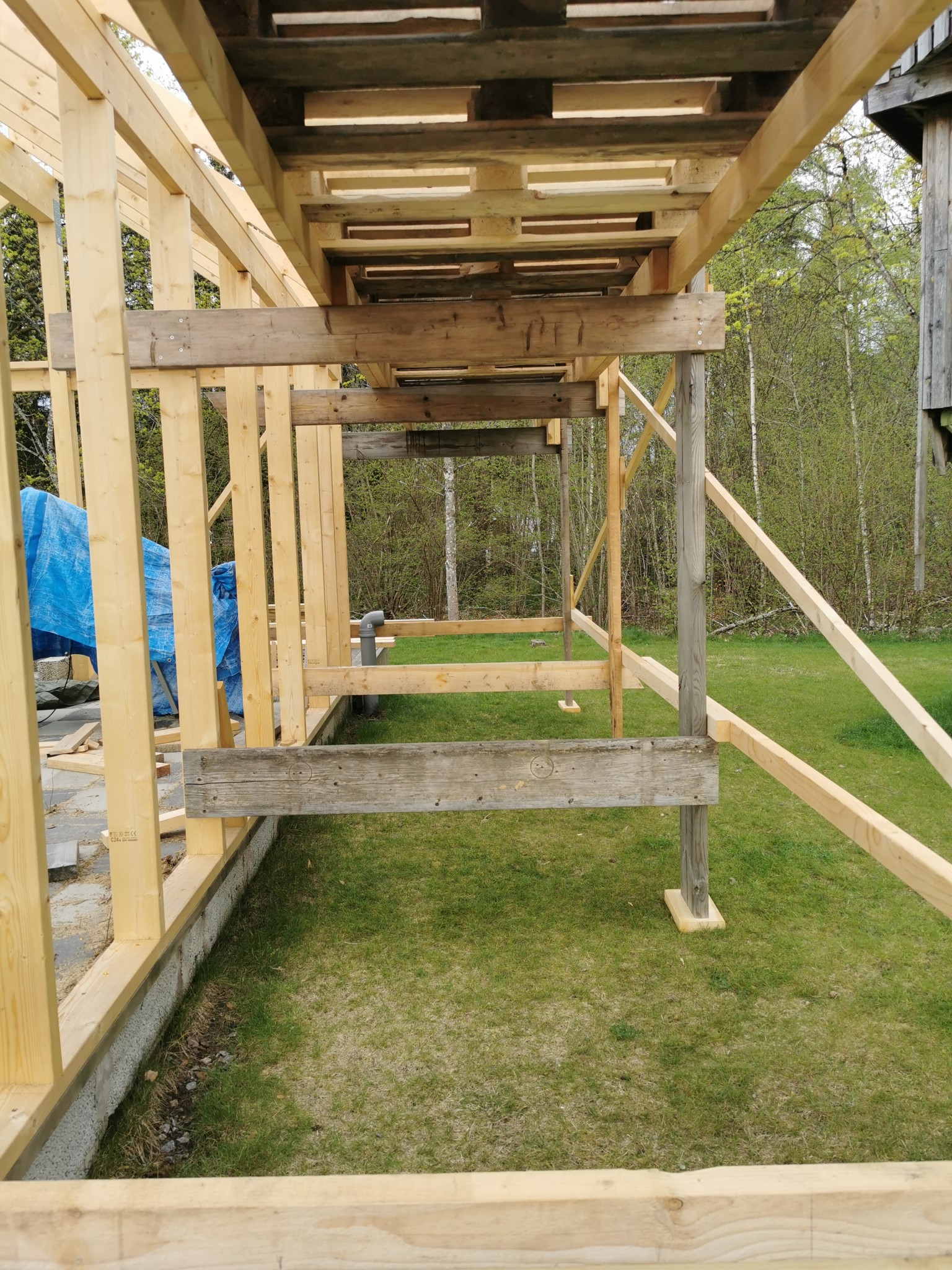

Nice! What was the final height of it in the end?

That's truly royal! Of course, you can build your own scaffold!! That's what people have done throughout the ages.



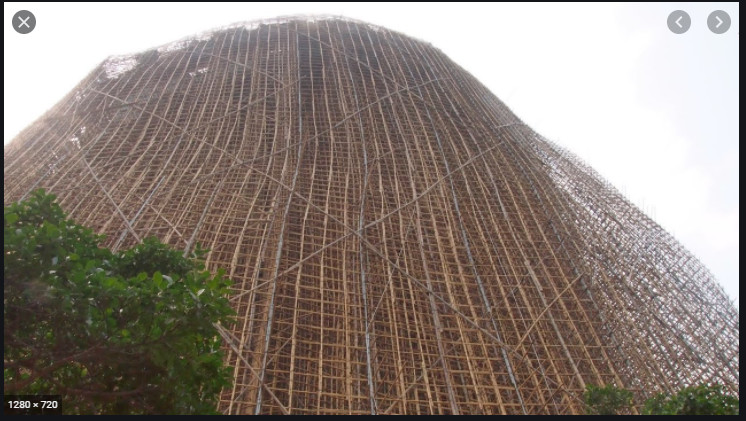

I've read that you shouldn't screw, but instead nail; nails usually don't suddenly break, but warn first, that is, give way gradually with various creaking.J Joakim V said:Built something similar out of scrap wood when I built a garage. But I used raw planks instead of pallets. It's good to think about how you screw it together so that it's easy to unscrew when you need to move it to another wall. There's also a risk of the wood cracking around the screws if the wood is too weak. Especially with the 25x5 beams. So watch out for that.

You need to have diagonal braces or anchor firmly to the wall.M Markus P said:Hello friends!
I'm currently working on a small house construction at home, and now that it's time for roofing, I'll need to build scaffolding. The usual approach is to rent scaffolding, but with the bad weather lately, I've had time to think a bit, and it occurred to me that it might be possible to build one myself. Has anyone tried this?
The advantages of building one myself, as I see it, are the following:
- The cost may be similar, but all the materials can be reused.
- A great way to use scrap wood from the construction site
- Always fun to build your own! =)
I have virtually unlimited access to pallets, so I thought I would try to use them to keep the cost down a bit. I'm thinking of something like this (see attached image). I've skimped on the wood as much as I dared; the challenge is to make it as cheap as possible! =). The wood in the image is as follows:
green - decking 28x120
yellow - stud 45x70
red - batten 25x5
If you go by the Buildmax prices, the price lands at about 1050 SEK if you buy all the wood new. In reality, of course, you use as much scrap wood as you have first. The cross decking, for example, can be replaced with the lengthwise wood in a pallet, which skips that cost, just dismantle a few pallets.
Can anyone come up with a better solution for the wall section in the example? And perhaps most importantly, would you dare to use this scaffolding?!

When we last painted the main cabin, we used boat stands of two different heights, along with higher and heavier planks, sturdy wood pieces, and extra wood pieces that we saved for various jobs in the garden. It's useful to have something that can be used for different jobs, like uprooting stumps or weighting down plastic on the ground during painting, to keep it from blowing away and being useless when painting. Additionally, a homemade bench on wheels, built by my father for carpentry work, and a wheeled stand I built for my mother's sink, were painted in the end. We also had to use a long prop to reach all the way up, with heights ranging from 2500mm to 5000mm and rocky terrain around the cabin on piers, with uneven ground around the house.K Krux said:

When I re-roofed, I built single-sided sawhorses with very long legs. The legs had braces between them like ladders. I leaned these four pieces against the house and attached them to the eaves. Between the sawhorses, I placed iron ladders and on them, walking planks. It became a very sturdy and durable construction at almost no cost. This can of course be complemented with a railing.
Click here to reply