I'm in the process of renovating a future "sunroom" and I've run into a bit of a problem. There's a section of stone wall (brick) where we planned to tile, but the wall was plastered, and the plaster was poorly attached. My idea was to remove the old plaster, apply new plaster, and then tile over it.
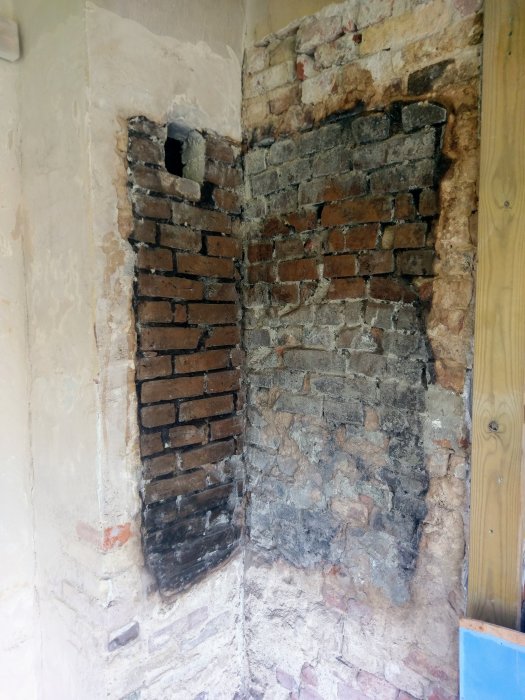
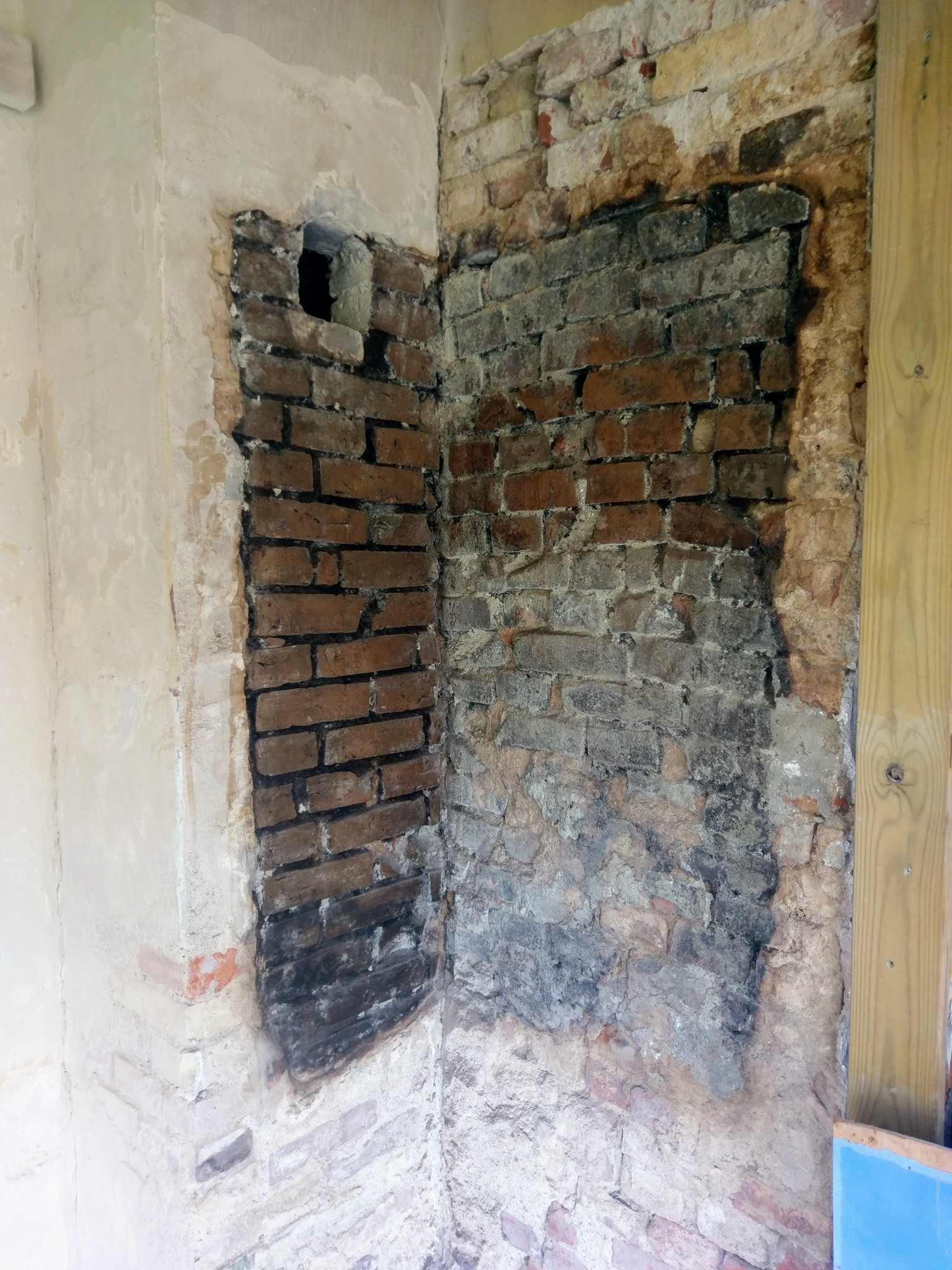
So yesterday I took off the plaster, and I understand why it didn't hold at all. It seems to be an old fireplace that was plastered, with soot and tar embedded in the bricks. If you try to wet the brick, it's like pouring water on a duck; it just beads off.
Is there anything that can be done to make something adhere to this, assuming we need a layer of plaster before the tiles?
unfortunately don't have a good answer but I'm facing almost the same problem, I have an old chimney that I want to tile but don't know how to handle the preparation. Was two minutes away from starting my own thread!
My thought is whether it's possible to put up drywall on the brick that you then tile on...
I'm renovating a future "conservatory" and have encountered a problem; there's a section of stone wall (brick) where we plan to put tiles. The wall was plastered, but the plaster did not adhere well. My idea was to remove the old plaster, apply new plaster, and then tile over it.
So yesterday, I removed the plaster, and I understand why it wasn't holding at all. It seems to be an old fireplace that has been plastered, with soot and tar embedded in the brick. Trying to wet the brick is like pouring water on a goose; it just beads up.
[image]
Is there anything that can be done to make something stick to this? I guess a layer of plaster is needed before the tiles?
Grateful for any help
"Plastering" is done inside chimneys when repairing old chimneys with so-called slip casting. This holds up well despite everything. They use a special mortar with extra good adhesion and heat resistance, e.g. RUDIMAL (https://www.soliduct.se/glidgjutningsmassa-25kg/p-1644.htm) <--- Googled it...
But I would think you could simply wash the wall with something that dissolves soot, like painter's soap or regular soap and a brush. After that, you plaster with regular C mortar. Keep in mind that plaster products are much better now than they were in the past, assuming it has been a few years since it was plastered, of course.. =)
If you want to be extra sure, use a plaster primer beforehand to increase adhesion...
unfortunately, I don't have a good answer, but I'm facing almost the same problem. I have an old chimney that I want to tile but don't know how to handle the preparatory work. I was two minutes away from starting my own thread!
My thought is whether it's possible to put up gipsskivor on the brick that you would then tile on...
You simply plaster it with regular mortar and then tile on it. First, clean off dust and loose material with a brush and/or broom. The surface should be slightly wetted beforehand to ensure good adhesion of the plaster.
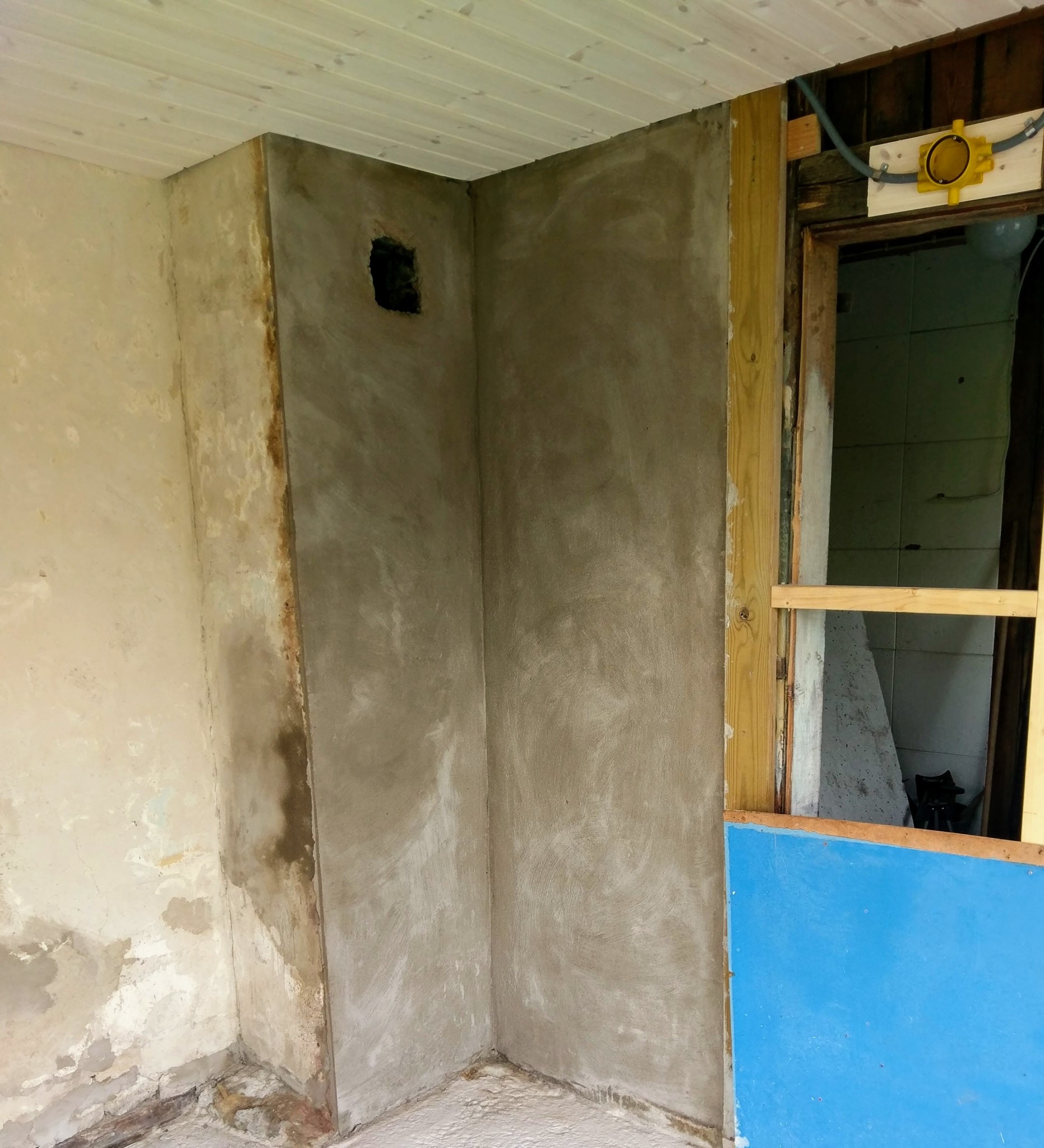
Now after a few layers of plaster and the occasional curse word, it looks like this anyway. I did as Thiger suggested, washed with paint cleaner and rinsed with the hose, didn't get clean, but cleaner Then, in principle, I brushed on a layer of thin plaster. After that treatment, it was possible to tackle the worst holes and fill these in first, then it was just a matter of continuing to work...
Now after a few layers of plaster and a few curses, it looks like this anyway. I did as Thiger suggested, washed with paint cleaner and rinsed with the hose, didn't get clean, but cleaner Then I basically applied a layer of thin plaster. After that treatment, I was able to tackle the worst holes and fill those in first, then it was just a matter of continuing to work...
Looks really good. Great job!
Click here to reply
Vi vill skicka notiser för ämnen du bevakar och händelser som berör dig.


major_tom said:
unfortunately, I don't have a good answer, but I'm facing almost the same problem. I have an old chimney that I want to tile but don't know how to handle the preparatory work. I was two minutes away from starting my own thread! Then, in principle, I brushed on a layer of thin plaster. After that treatment, it was possible to tackle the worst holes and fill these in first, then it was just a matter of continuing to work...