
16,509 views ·
26 replies
17k views
26 replies
Asbestos cement sheets including in bedroom indoors

Let the panels stay where they are, they do their job and pose no health risk. Eternit panels do not dust off where they are.
Those who got sick from asbestos were those who worked with it daily for several years, in manufacturing or assembly in industries or shipyards.
For example, standing and cutting without a respirator with a cigarette in the corner of the mouth.
Those who got sick from asbestos were those who worked with it daily for several years, in manufacturing or assembly in industries or shipyards.
For example, standing and cutting without a respirator with a cigarette in the corner of the mouth.


Yes, I admit I might have exaggerated a bit.Stina71 said:
But there have been asbestos panels used that of course have some binding agent, but not nearly as much as in Eternit (I have personally had a house with Eternit plates on the facade, so I know the difference between Eternit and other asbestos).
Real Eternit plates, or Sidiplates as they were called, were easy to recognize, as there were always pre-made nail holes when they were delivered. Three holes along the top edge of all plates. Because it is practically impossible to drill holes in the plates without them cracking. Asbestos is a strong fiber. Too bad it was so health hazardous

I also have asbestos behind the electrical central in the summer cabin, and unfortunately also behind/beside the stove.
And corrugated Eternit plates on the roof. Typical 50s construction
But luckily, none of us smoke.
OT
Asbestos was the fiberglass, Kevlar, and carbon fiber of its time. Used everywhere as reinforcement, not just as fireproof thermal insulation, unfortunately.
From http://www.maskinisten.net/viewtopic.php?t=26059
Applications for different types of asbestos
Chrysotile is the type of asbestos commonly used within the asbestos cement industry, which manufactured products with 5–20 weight percent asbestos. Chrysotile was used in friction elements (30–80 % asbestos) and gaskets (40–75 % asbestos). Long chrysotile fibers have been used for asbestos fabrics with 80–100 weight percent chrysotile. In the production of various flooring materials, large amounts of short-fiber chrysotile have been used as filler and reinforcement material, as well as in many paint, roofing, cladding, and plastic products.
Crocidolite was mainly used for filters, gaskets, insulations, etc., when acid resistance was required. Crocidolite can also be found in other products, partly in asbestos cement products.
Amosite was mainly used as insulation mixed with basic magnesium carbonate (magnesia alba). The mixture was used for insulating pipes, steam boilers, etc.
Anthophyllite asbestos, which is resistant to acid and alkali, was used as filler and reinforcement material in products that needed to be alkali- or acid-resistant, such as certain plastic products, asbestos paper, and cement and insulation compounds.
Tremolite asbestos and actinolite asbestos may occur as impurities in other important industrial minerals. Examples include talc and dolomite.
Last edited:
Building conservationist
· kristinehamn
· 18 posts
Don't even think about hiring a remediation company because it will cost a fortune. I work with asbestos remediation, and it never ceases to amaze me how much you can charge to clean asbestos. If you're just going to remove a single tile from the roof, the work is just as easy to do yourself and just as safe. Buy Tectyl, a spray that has a wide range of uses and binds asbestos fibers so that none come loose, and cover the tile with that paint. Take a transparent plastic bag and tape it with the opening around the tile so you can remove the tile from outside the bag and let it fall into the bag. One idea is to leave the Tectyl bottle inside the bag before taping it up so you can spray the surface where it was and the tile, avoiding any spread of asbestos fibers whatsoever. It's quite expensive to dispose of, and you can get in a lot of trouble if you just throw it in the woods, so if it's not going to harm anyone, spray Tectyl on it to be on the safe side.
Isn't Tectyl a rust preventative?dundasessayez said:don't even think about hiring a decontamination company because it will cost a fortune. I work with asbestos removal and it's always surprising how much you can charge to remove asbestos. If you're just going to remove one slab from the roof, the job is just as easy and safe to do yourself. Buy Tectyl, a spray that has a wide range of uses and binds asbestos fibers so that none come loose, cover the slab with that paint. Take a clear plastic bag and tape it with the opening around the slab so you can gently remove the slab from the bag so it falls into the bag. An idea is to place the Tectyl canister inside the bag before taping it up so you can spray the surface it was on and the slab to avoid any spread of asbestos fibers altogether. It's quite expensive to dispose of, and you can get in a lot of trouble if you just throw it in the forest, so if it doesn't harm anyone, spray Tectyl on it if you want to be on the safe side.
Building conservationist
· kristinehamn
· 18 posts
Yes, it is used in many areas, a lot in maritime applications that need to be durable for a long time. The whole thing with it is that asbestos is bound in water, and tectyl binds moisture to the asbestos. If you need to break a tile, spray generously at the break point so that everything is bound before it spreads. If you're not the anxious type, you can carefully break it off and then just ventilate the house. Asbestos lingers in the air about as long as a fart, then it settles. So it's enough to ventilate everything out and encase the asbestos. I've done much larger clean-ups with asbestos insulation that dusts a lot, and even though everyone knew it wasn't 100% done, the air samples after a clean-up show acceptable levels.
If you are going to paint and bind any surface fiber that may be released, the so-called barrier paint works well for that. It is more or less regular paint but with more binders. I have successfully used Beckers' previous model which was Nafabase-based, it is now difficult to find due to workplace safety requirements. They have a replacement that is water-based and easier to paint with indoors. http://www.beckers.se/produkter/inomhus/grund/isolerfarg/ Prime with this over the surfaces you are concerned about and then finish with the topcoat you want.
But since you already have the surfaces painted, I am convinced that it is sufficient to paint a couple more layers with topcoat to bind any surface fiber that may come loose.
But since you already have the surfaces painted, I am convinced that it is sufficient to paint a couple more layers with topcoat to bind any surface fiber that may come loose.
now I haven't read the whole thread, but do you mean that there is newly produced eternit?stake said:It is also used today as protection against heat if you have flammable parts near the chimney. I have personally had to replace part of my wooden roof with eternit according to the chimney sweeper's orders. I cut the piece in the garden with an angle grinder with a face mask for safety.
Now that it's in place, I'm not going to do anything with it, because it is intact and completely harmless.

I myself would do absolutely nothing.Stina71 said:
Or well, nothing with the boards that is, I would continue as usual, cook, eat, peek a bit at BH, open a beer, watch some TV, go to sleep and try to feel good despite all the heavy traffic, the kids' nagging, and the difficult snow to shovel.
And then, during some possible future renovation in x number of years that involves the area where such a board is located, I would buy a cheap dust mask
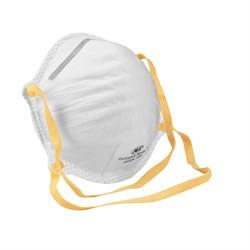
Here I am sure that I have done more than necessary to protect myself. But possibly even I would suddenly worry and buy a slightly better mask
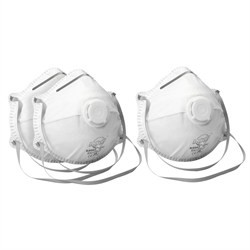
or maybe even something like this:
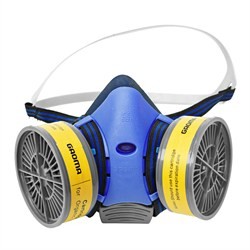
And single-use overalls are also available for a few kronor

But honestly, there is no real risk at all in handling a single board unprotected once or on a few occasions in life. You should stop driving/riding cars, walking in the city at night, traveling abroad, and eating chicken before you start worrying about some asbestos things in your house or handling these during possible demolition - if you're making a proper risk assessment that is.
I have previously worked with removing asbestos. If it's already up, there's no chance that it would release asbestos dust from any board. Asbestos is released when you cut or break the board. If they've started painting on the boards, continue with more paint to seal in any asbestos. As someone else wrote, it could just as well be concrete-based material.
I myself have pipes in the basement that are insulated with asbestos and would never consider tearing it down until the day I have to! Let it be! :wow:
I myself have pipes in the basement that are insulated with asbestos and would never consider tearing it down until the day I have to! Let it be! :wow:
Click here to reply