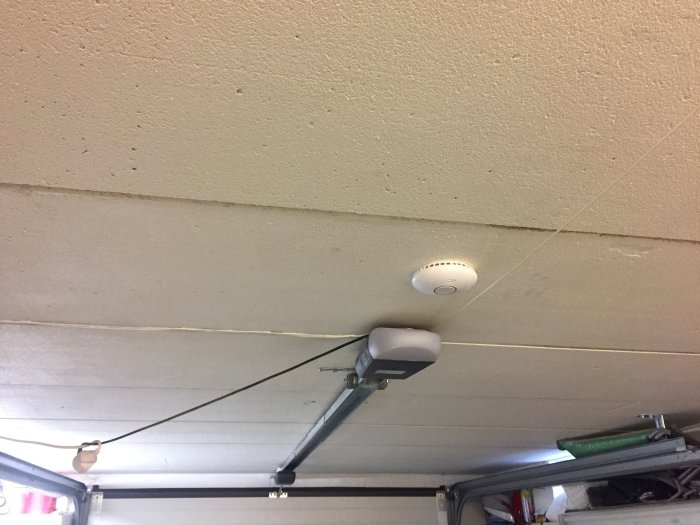
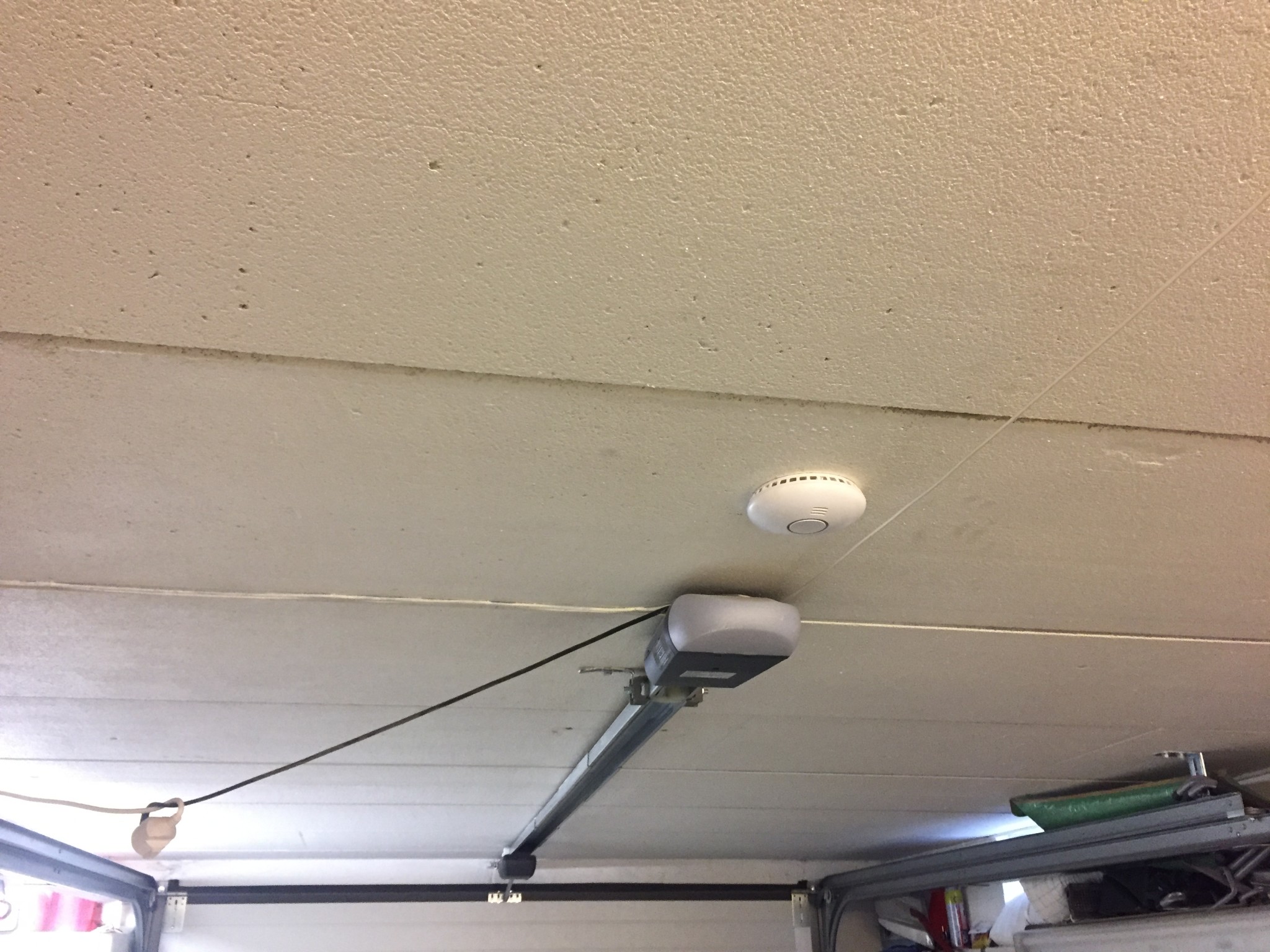
Our house is probably one of the most common types of houses in Sweden (see my signature) and has floors made of some type of lightweight concrete elements between the ground floor and the basement. Now I would like to fix an anchor point in the workshop that can handle at least 100 kg, so I can lift some engines and other stuff with a block and tackle.
I haven't drilled much in these lightweight concrete elements myself (and it was a few years ago now) but I seem to remember they are hollow. I'm a bit worried that a large piece of the flooring might collapse if I don't find a really stable solution for this.
Is there anyone who recognizes this type of concrete element and has tips on a safe way to mount some sort of anchor point that can hold at least 100 kg?
I have seen a solution to put up a type of I-beam with support on the outer walls, but I'm not too keen on that for various reasons... just to put it out there.
It's not easy to photograph a ceiling, but this picture gives an idea at least:
I think it will be difficult to achieve 100Kg of straight lifting force without mounting a plate on the other side of the light-weight concrete element.
I assume you're not keen on pulling up the floor above to be able to embed a plate with threaded rod?
An alternative might be to drill several holes and set anchor compound and threaded rod and attach a plate which will then act as the attachment to the block.
I'm thinking that 8 m6 screws should be sufficient, distributed over an area of perhaps 0.75-1m2. But as I said, I'm not a designer.
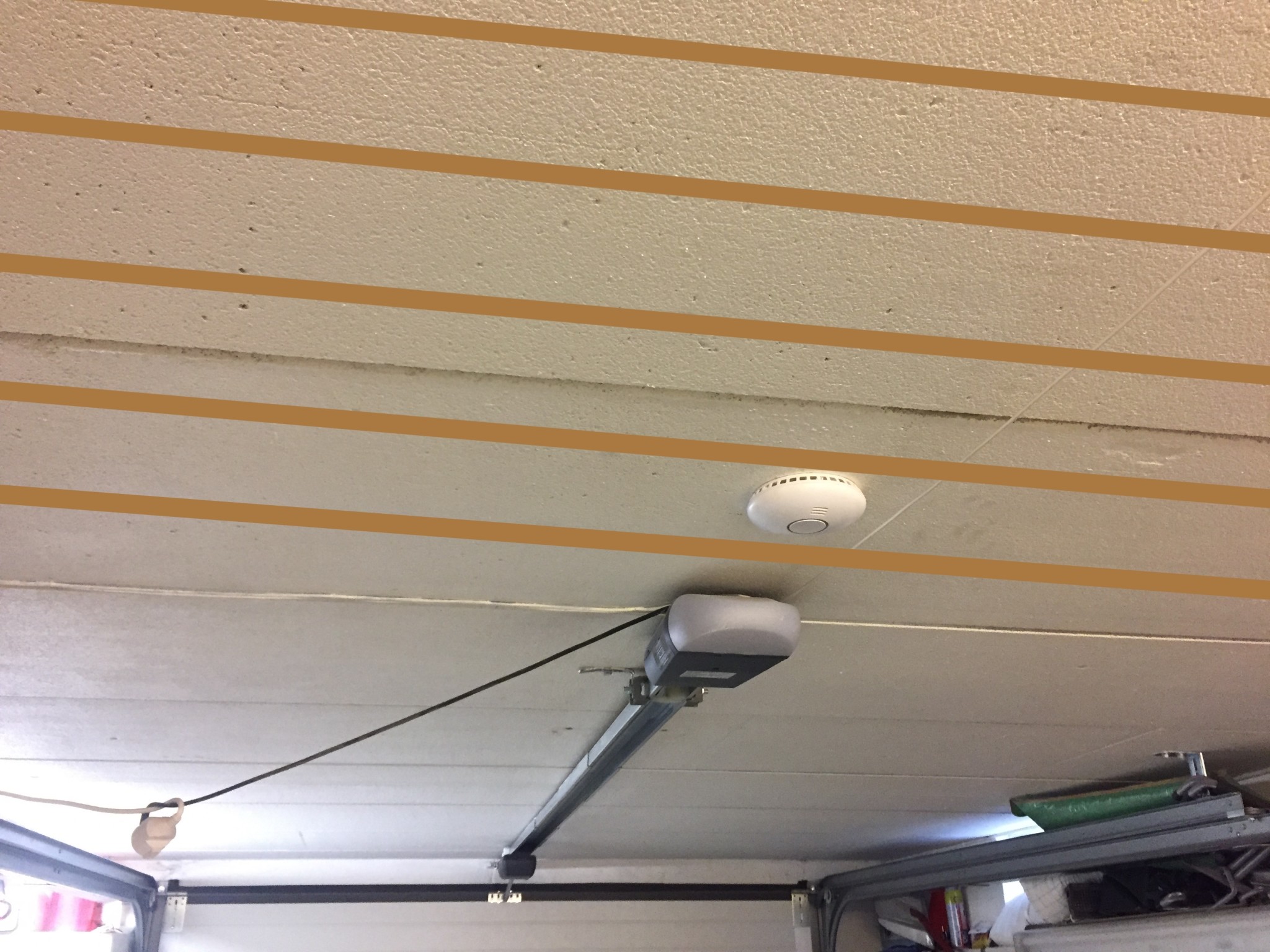
In those elements, there is reinforcement, so I would think it's best to make the attachment crossways as the elements are situated to thus distribute the weight over the reinforcement.
I assume you're not too keen on pulling up the floor above to be able to rout down a plate with threaded rod in?
Hehe...well...I'm not really eager to tear up the parquet in the bedroom above the garage...
XxLnT said:
In those elements, there is reinforcement, so I would think it's best to make the fastening across the way the elements are laid to thereby distribute the weight over the reinforcement.
Do you mean that there is reinforcement between the elements holding them together, across the seams that are clearly visible?
It's a bit frustrating when you buy an old house and don't know how things are constructed. For example, I also don't know how the brick facade is built. To find that out, things have to be torn down, and I'm not really into that.
Hehe...well...I'm not too keen on tearing up the parquet in the bedroom above the garage...
Do you mean that there is reinforcement between the elements that hold them together, across the joints that are clearly visible?
It's a bit frustrating when you buy an old house, not knowing how things are constructed. For example, I also don't know how the brick facade is built. To find out, things would have to be torn down, and I'm not too keen on that.
No, the reinforcement is embedded in the elements in the same direction, meaning along the joints. Unfortunately, I can't give you the exact center-to-center measure. So if you're going to attach something, attach it at 90 degrees to the joints, not along the elements/joints.
Bumping this thread to see if there is anyone else who has additional input on the matter. Once again, the need for a lift point in the garage ceiling has arisen, and it bothers me that I don't know 100% how these bjälklagselementen are constructed.
Click here to reply
Vi vill skicka notiser för ämnen du bevakar och händelser som berör dig.