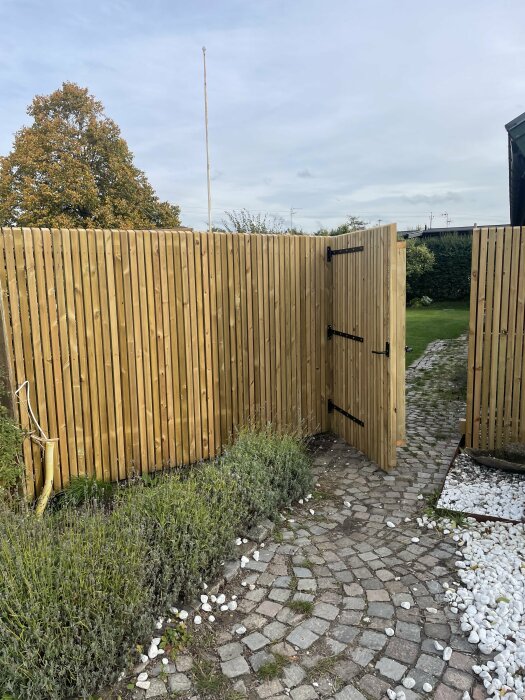
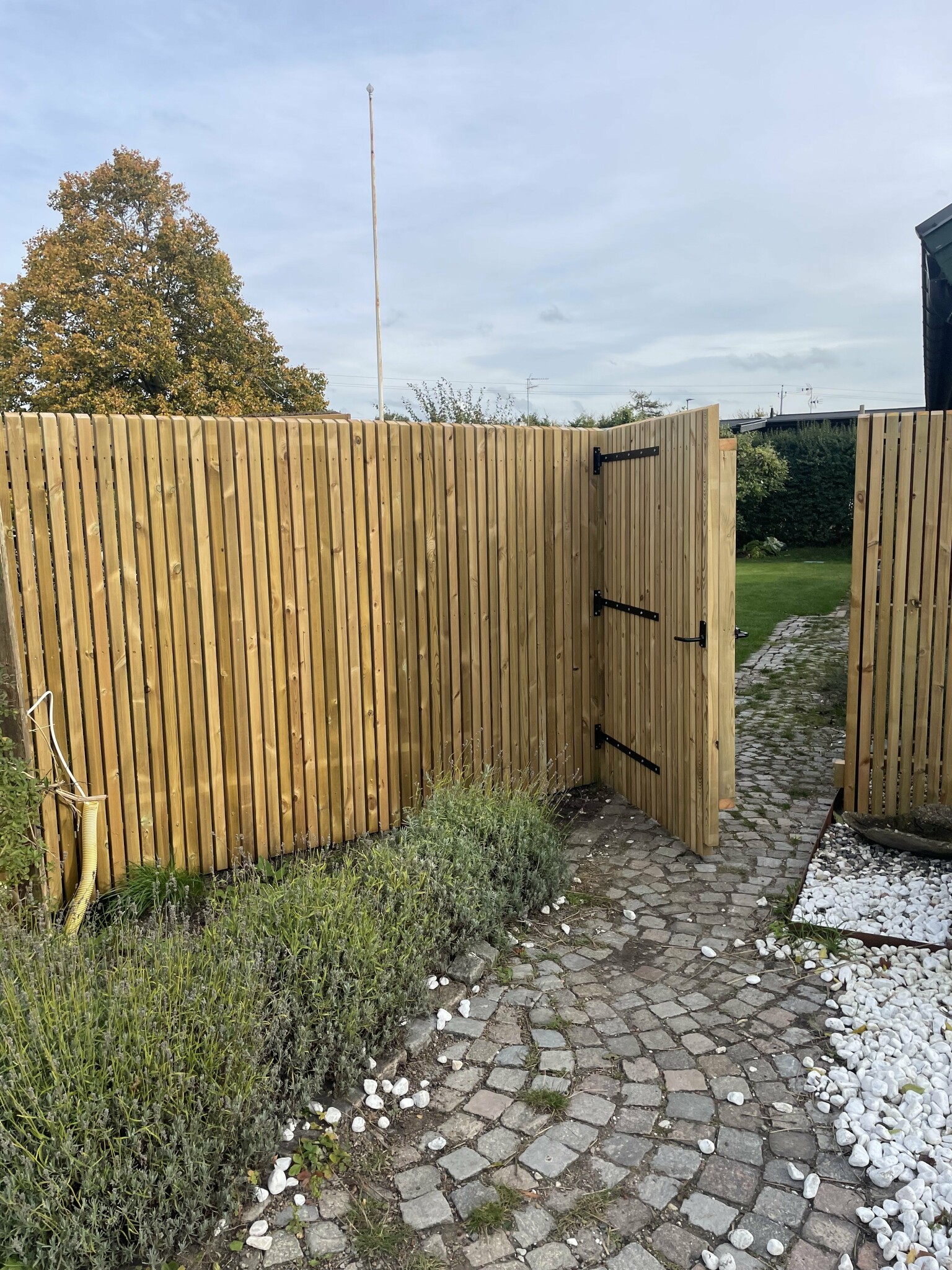
Didn't turn out quite right... or will it work?
The gatepost is bending under the weight so I have made a temporary fix that could perhaps be done more nicely. What do you think?
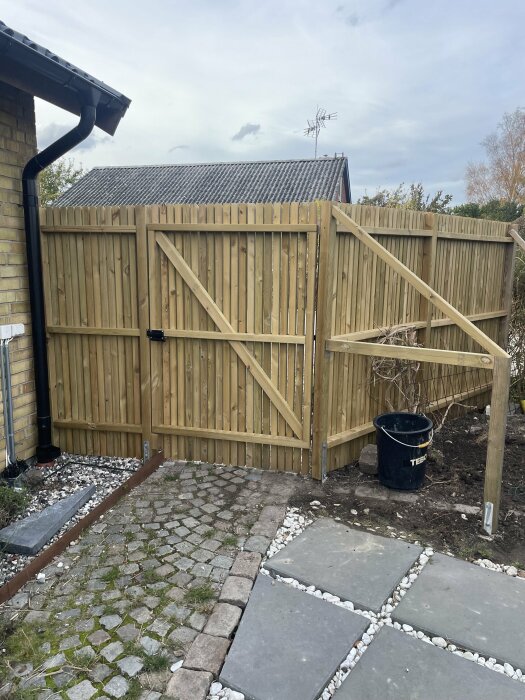
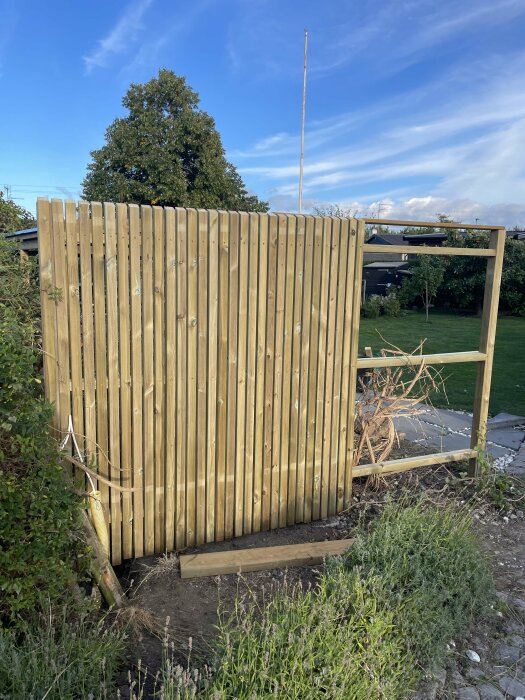
I placed a post a bit further out and added a brace. I thought of attaching a piece of reinforcement mesh and a climbing plant so we can hide the wheelbarrow etc. behind it.
Background: I replaced a fence at the same spot that was blown down (very old) with an upright 45x45 fence. The gate was built from the same. The posts are 70x70. Would 95x95 have handled the bending better?
I have a welder so I’m considering if it would look better to use square steel as the brace... or maybe it would look better to just have the brace go straight down to the extra foundation?
Or just say, it will be fine when the clematis or a similar plant grows up.
This didn't turn out very well... or will it work?
The gatepost is sagging under the weight, so I made a makeshift solution that might have been done more neatly. What do you think?
I placed a post a bit out and a diagonal brace. I thought of attaching a piece of reinforcement mesh and a climbing plant so we can hide the wheelbarrow, etc. behind it.
Background: I replaced a fence in the same place that had been destroyed by the wind (very old) with a fence made of standing 45x45. The gate was built from the same. The posts are 70x70. Would 95x95 have handled the sagging better?
I have a welding machine, so I'm considering whether it would look better to put a square steel as a diagonal brace... or maybe it would look better to just have a diagonal brace going straight down to the extra plinth?
Or just say, it'll be fine once the clematis or similar grows up.
[image][image][image]
I would have tried setting the diagonal brace, as seen in the picture with the bucket, all the way down into the plinth.
It's a heavy fence and the door/gate is quite wide, so it must be considerably heavy. If it's to be handled by just one post, it needs to be substantial, just like the concrete foundation/post. Gut feeling says at least a 6x6" post and perhaps a meter-deep and about 30 x 30 cm post, preferably with "wings" that further reduce the risk of ground movements.
Edit: And sturdy post irons (flat iron type 8x40mm or preferably stronger).
Technically, for maximum stability with the current construction, the diagonal support should go directly down to the post.
If it's stable enough now, it would be perfect with a clematis that covers the whole thing. It might not be according to the original plan, but actually better since it now provides a slightly more secluded place for the wheelbarrow.
It is a heavy fence and the door/gate is quite wide so it must be really heavy. If it is to be handled by just one post, it must be sturdy, just like the concrete foundation/pier. Gut feeling says at least a 6x6" post and perhaps a meter deep and around 30 x 30 cm pier, preferably with "wings" that further reduce the risk of movement in the ground.
Edit: And substantial pier irons (flat iron type 8x40mm or preferably stronger).
Technically speaking, for maximum stability with the current construction, the brace should go directly down to the pier.
If it is stable enough now, a clematis covering the entire thing would be excellent. It might not be according to the original plan, but it's actually better as it now provides a slightly more secluded spot for the wheelbarrow, you know.
Yes, now it doesn't sway, so I'll do the simple thing and just attach a piece of reinforcement net now and plant a clematis. There's a substantial one growing behind as well, so it would only take a season or so before it is covered. If not, I can replace it next fall...
Yes, now there's no sway so I'll just do the simple thing and attach a piece of reinforcement mesh and plant a clematis. There's a hefty one growing behind it too, so it will probably cover it in just one season. If not, I'll replace it next fall...
Oolofh said:
This didn't turn out quite right... or will it work? The gate post wobbles due to the weight, so I've rigged a temporary fix that could perhaps be improved. What do you think?
I placed a post a bit out and added a diagonal brace. Planning to attach a piece of reinforcement mesh and a climbing plant to conceal the wheelbarrow, etc. behind it.
Background is I replaced a fence on the same spot that had blown down (very old) with a fence made of standing 45x45. The gate was made from the same material. The posts are 70x70. Would 95x95 have handled the sway better?
I have a welder, so I'm considering if it might look nicer to use a square steel as a diagonal brace... or perhaps it would look neater to have the brace go directly down to the additional footing?
Or just say it will be fine once the clematis or similar plant grows up.
[image][image][image]
Agree with someone earlier in the answers that the diagonal brace would probably do more good going straight down into the footing without being an engineer. But depending on how high it is: can't you fit a beam between the hinge post and the short wall's post against the house "recessed" when the gate is closed? But maybe you might hit your head then? 🙂
Agree with someone before about the diagonal brace probably being more useful straight down into the footing without being an engineer.
But depending on how high it is: can't you get a beam between the hinge post and the short wall post towards the house "embedded" when the gate is closed. But maybe you would hit your head then?🙂
Yes, then you'll have to duck unfortunately. An alternative is to turn the entire gate so the hinges end up on the other side, as the inner post is attached to the facade. But it's a bit more work to modify the gate's Z board and a bit more.
We'll go with this and see how it goes. I was considering a wire down into the footing with a turnbuckle to tighten it...
I would place a diagonal brace from the upper part of the gate post down to pillar three (the first pillar is the gate post) in the fence. Possibly also cross/diagonal brace the inside of the first section of the fence while I'm at it and probably have leftover wood from the construction. A couple of beams/planks between the trellis and the fence also provide bracing. The inner part of the corner is of no use to you anyway when the vegetation starts growing, and you probably already have some half-meter pieces or longer leftover material.
You probably need to place a beam at the bottom of the trellis for the stabilization mat, and then you can place a parallel brace with the existing one, even if only for symmetry.
I believe it would be much sturdier if you just "turned off" a bit before the door to get a sturdy corner with the help of another post (blue) that is attached to, but a bit away from, the existing post (however, it means a slightly narrower door)
I think it would be much sturdier if you just "folded off" a bit before the door so that you get a sturdy corner with the help of an additional post (blue) that is attached to, but a bit away from, the existing post (however, this means a slightly narrower door)
[image]
Ah, you're probably right about that, smart. But quite a lot of work to fix. It goes into the learning account
If you attach a reinforcing mesh to the construction you have already built, it will become super stable as the mesh will stabilize everything just as if you had placed a board there. The reinforcing mesh must be attached to both vertical posts.
Click here to reply
Vi vill skicka notiser för ämnen du bevakar och händelser som berör dig.



Oldboy said:
It is a heavy fence and the door/gate is quite wide so it must be really heavy. If it is to be handled by just one post, it must be sturdy, just like the concrete foundation/pier. Gut feeling says at least a 6x6" post and perhaps a meter deep and around 30 x 30 cm pier, preferably with "wings" that further reduce the risk of movement in the ground.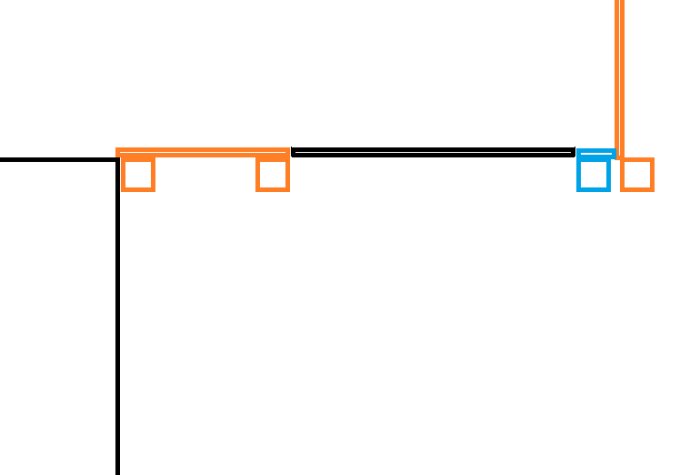

Bronken said:
