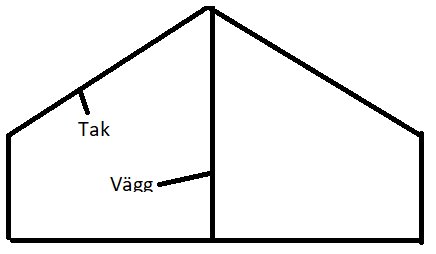
We are going to build a new house, open to the ridge but with a wall in the middle where one side is the living room, kitchen, and dining room. About 14 meters long and 5 meters wide.
It's going to have a large wall and I'm wondering what gives the best acoustics, an acoustic ceiling or an acoustic wall?
It depends on your specific situation and what you want to achieve with the acoustics in the room. Here are some advantages and disadvantages of both options:
Acoustic ceilings:
Advantages: Acoustic ceilings can help absorb and diffuse sound in the room, which can make the room's sound feel more pleasant. They can also help reduce echoes and sound reflections.
Disadvantages: Acoustic ceilings can be more expensive than acoustic walls and can be more difficult to install.
Acoustic walls:
Advantages: Acoustic walls can be cheaper and easier to install than acoustic ceilings. They can also be easier to replace or modify if needed.
Do a lap with a constructor who works with acoustics and see what it yields, but there's probably nothing preventing you from having damping in both the ceiling and walls?. The damping doesn't need to be visible.
The basic principle of acoustic regulation in a room is to add sound absorption on one of two opposing surfaces.
The formula is somewhat simplified: the right type of material in the right place in the right amount.
In a home environment, it is desirable to reduce the reverberation time in the speech area, which practically means that the sound absorber needs to be at least 50 mm thick. Textiles and carpets have virtually no dampening effect at all in the frequency range where vowels are located, and it is precisely this frequency range that is crucial to regulate if you want a good sound environment.
It is important to get a sufficient amount of sound-absorbing material into the room. As a rule of thumb, you can say that you will achieve a good effect with 50% coverage of the ceiling area. Since the ceiling is angled, measures on the wall will also have a good effect even if you do not address the ceiling because the ceiling reflects sound towards the wall. If you have the opportunity, you should address both wall and ceiling.
Click here to reply
Vi vill skicka notiser för ämnen du bevakar och händelser som berör dig.