Hi all experts
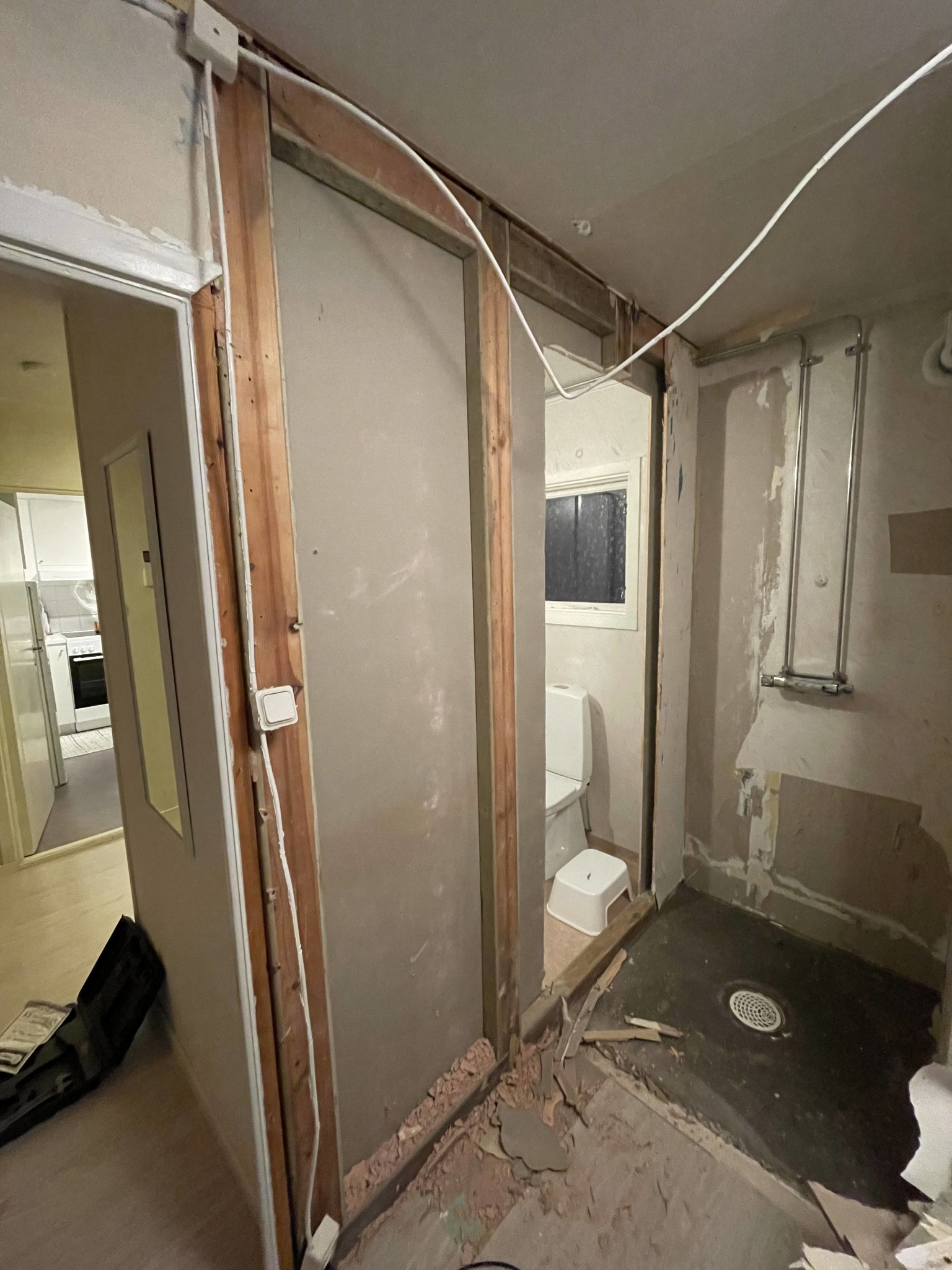
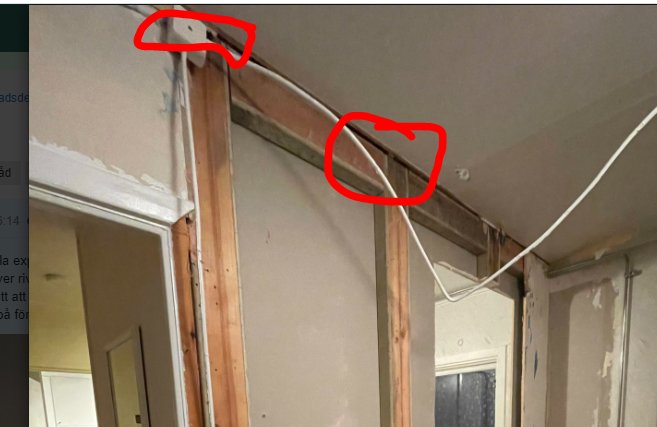
Need to tear down the road to the left in the picture. The cottage is from the 50s, wondering if there's an easy way to know if the road is load-bearing… something I can check in the attic?
Thanks in advance
The easiest way is to check which direction the roof trusses are lying in the attic. If they are parallel to the wall, it is likely not load-bearing (unless there's an upper floor). In the picture, you also see that the roof beam in the ceiling wall is recessed between the studs, which likely indicates that it is not load-bearing, but it might be interesting to see what the studs are attached to at the top regardless, so that they don't near something not visible in the picture.
The easiest way is to check the direction the roof trusses are laid in the attic. If they run parallel to the wall, the wall is likely not load-bearing (unless there is an upper floor). In the picture, you can also see that the top plate in the inner wall is recessed between the studs, which probably indicates that it is not load-bearing, but it might be interesting to see what the studs are attached to at the top regardless, so as not to miss anything not visible in the picture.
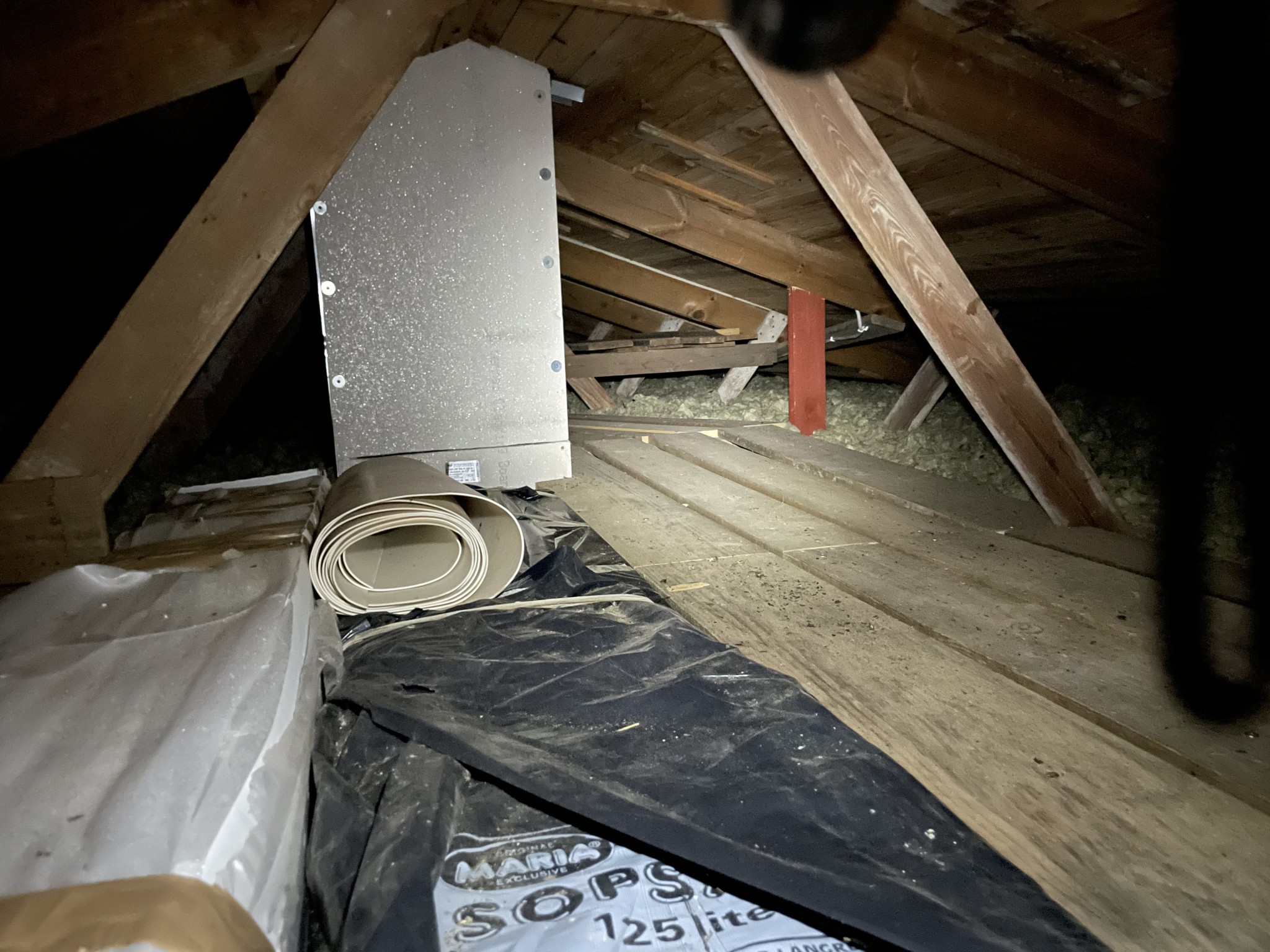
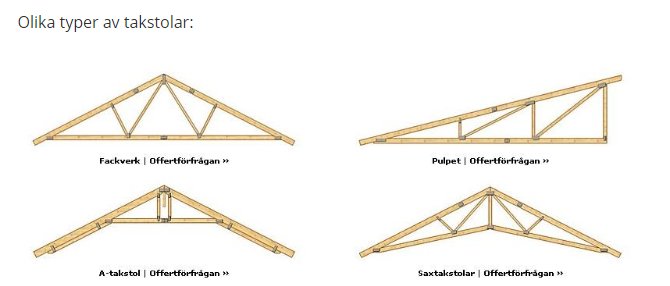
Also, the type of roof trusses, as lattice trusses usually mean that no wall on the lower floor is load-bearing.
Thank you both very much.
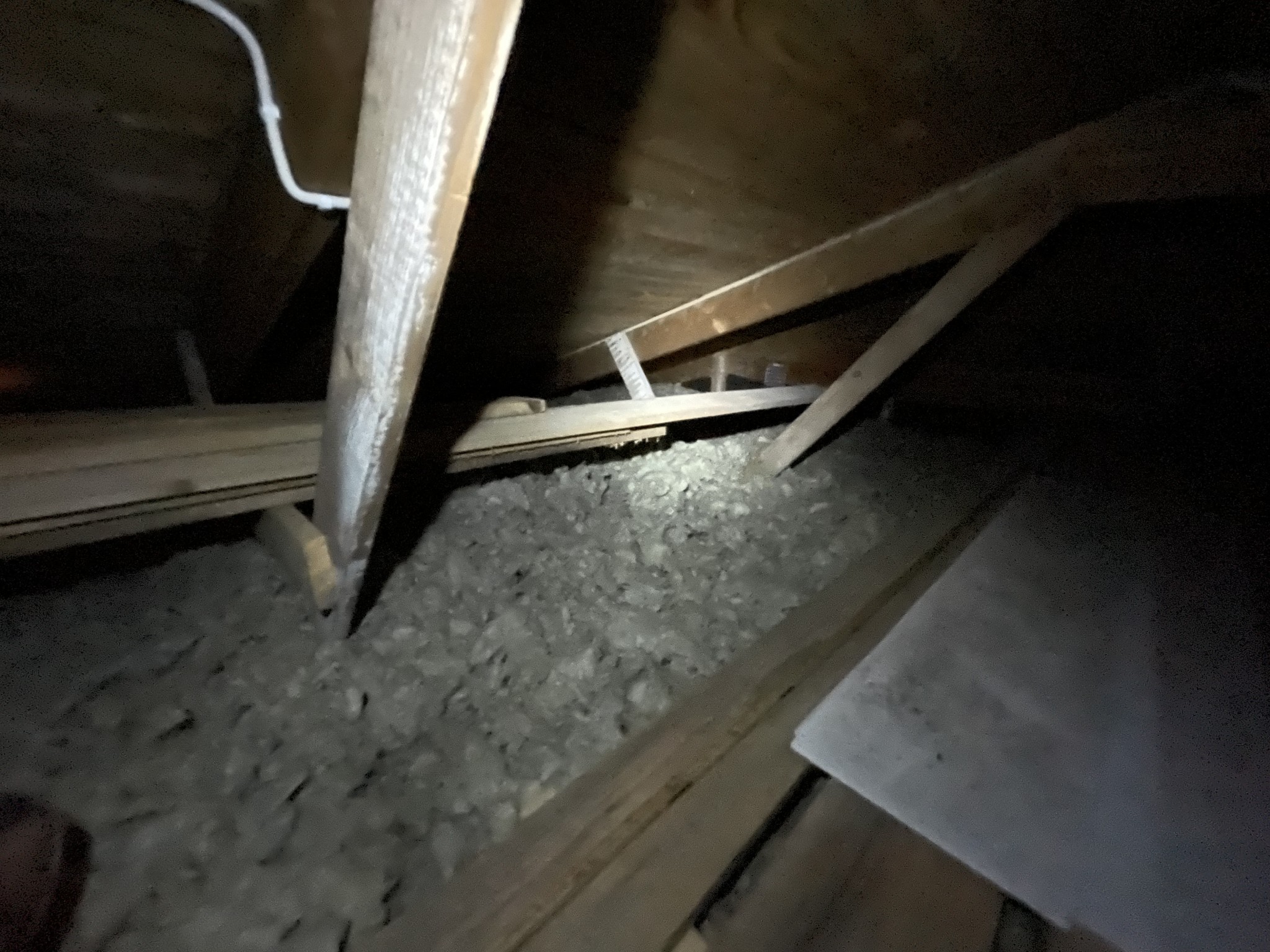
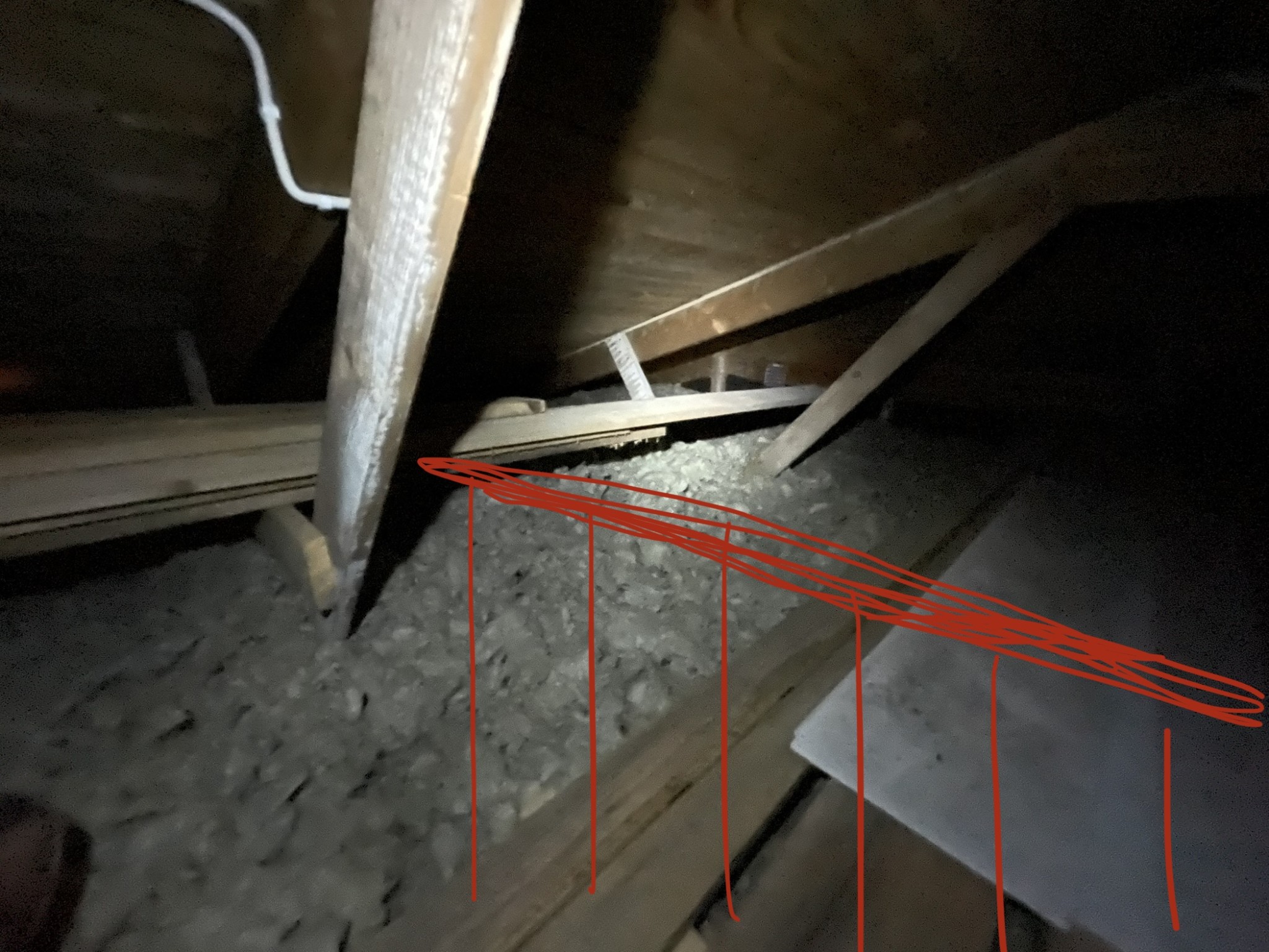
There is no upper floor, just been up in the attic and if you mean beams that sit "diagonally" then they are definitely parallel to the road.
It looks like the rule doesn't go all the way up? Then it can't be load-bearing.
One way to test is to simply saw it off. If the saw pinches, the wall is somewhat load-bearing even if it is level with the rafters.
By the way, the rafters are not each of the diagonal struts in the attic but a rafter is the whole triangle, so to speak, including the diagonal struts.
You have a simple truss rafter: