you cannot mount windows with frame screws. that means you are mounting directly into the stud, which you are not allowed to do
Allowed to do what, where did you get that from?
As far as I know, there is no mandatory regulation for building low-energy houses; if I'm wrong, can you show me the regulations?
Low-energy houses are built to minimize heat loss through the building envelope. I have a hard time believing that a few screws would destroy the whole concept.
you can't mount windows with frame screws. that means you're mounting directly into the frame, which you're not allowed to do
@oliven1 apparently doesn't realize that this is a forum for private individuals. You can mount your windows however you like, AMA is not a law.
You can nail the windows if you want, but I recommend following the manufacturer's instructions even as a private individual: screw what needs to be screwed, and insulate, draught-proof, and tape as instructed if you want a tight and well-functioning result.
"Allowed," it depends on how the wall is built. It works excellently with frame screws.
Yes, but you should avoid thermal bridges, it is incredibly important.
Frame screws mean you screw the window directly into the stud, which absolutely should not be done.
The window should be mounted in the insulation and the insulation should not contain any studs at all.
Then the frame should also be over-insulated, and so on.
@oliven1 apparently hasn't realized that this is a forum for private individuals. You can install your windows however you like, AMA is not a law.
You can use nails to install the windows if you want, but I recommend following the manufacturer's instructions even as a private individual: screw what needs to be screwed, and foam, insulate, and tape according to instructions if you want it to be airtight and functional.
it will work but will not work for low-energy houses.
it will work but it will not work for low-energy houses.
The concept of low-energy houses encompasses all types of houses that use less energy than what the Swedish National Board of Housing, Building and Planning requires. Often because it has a smaller heating requirement than a standard house. A low-energy house should be significantly below the Board's requirements, but how far below is not defined.
Today's requirements for small houses are 90 kWh/m2/year.. so if you build a house at 45 kWh/m2/year, it can be called a low-energy house..
because it's the same basis as low-energy houses, what's the problem?
That you condescend and write that you "can't" and "aren't allowed."
The OP is considering a summer cottage on stilts, and your experience with buildings of thousands of square meters is probably neither applicable nor requested.
The concept of low-energy house encompasses all types of houses that use less energy than what the National Board of Housing, Building and Planning requires. Often because it has a lower heating requirement than a standard house. A low-energy house should be significantly lower than the requirements of the National Board of Housing, Building and Planning, but how far below is not defined.
okay, not for zero energy/plus energy/passive houses as discussed in the thread.
Satisfied?
That you lecture and write that you "can't" and "aren't allowed to."
TS is considering a summer cottage on pilings, and your experience with buildings covering thousands of square meters is probably neither applicable nor requested.
Yes, because the same concepts apply regardless of size.
same problem to solve.
some fundamental things for a passive house (call it what you want):
a lot of insulation
minimize thermal bridges
recovery
heating
tightness (plastic/tape)
utilize the terrain.
these must be solved in every detail, and you can't choose standard solutions for anything.
take anything, the wall construction can't look like a regular wall; it's not enough to just add more insulation, you have to completely rethink how the wall is built.
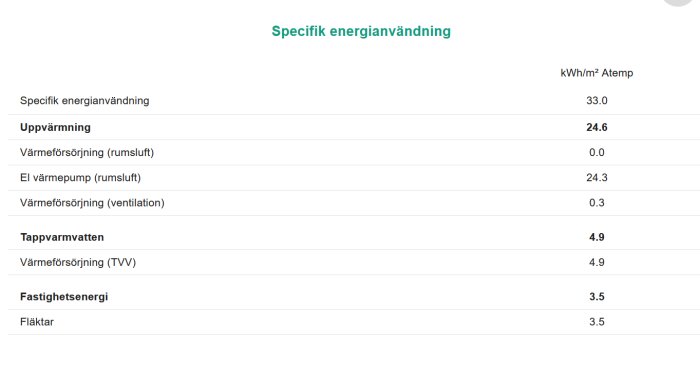
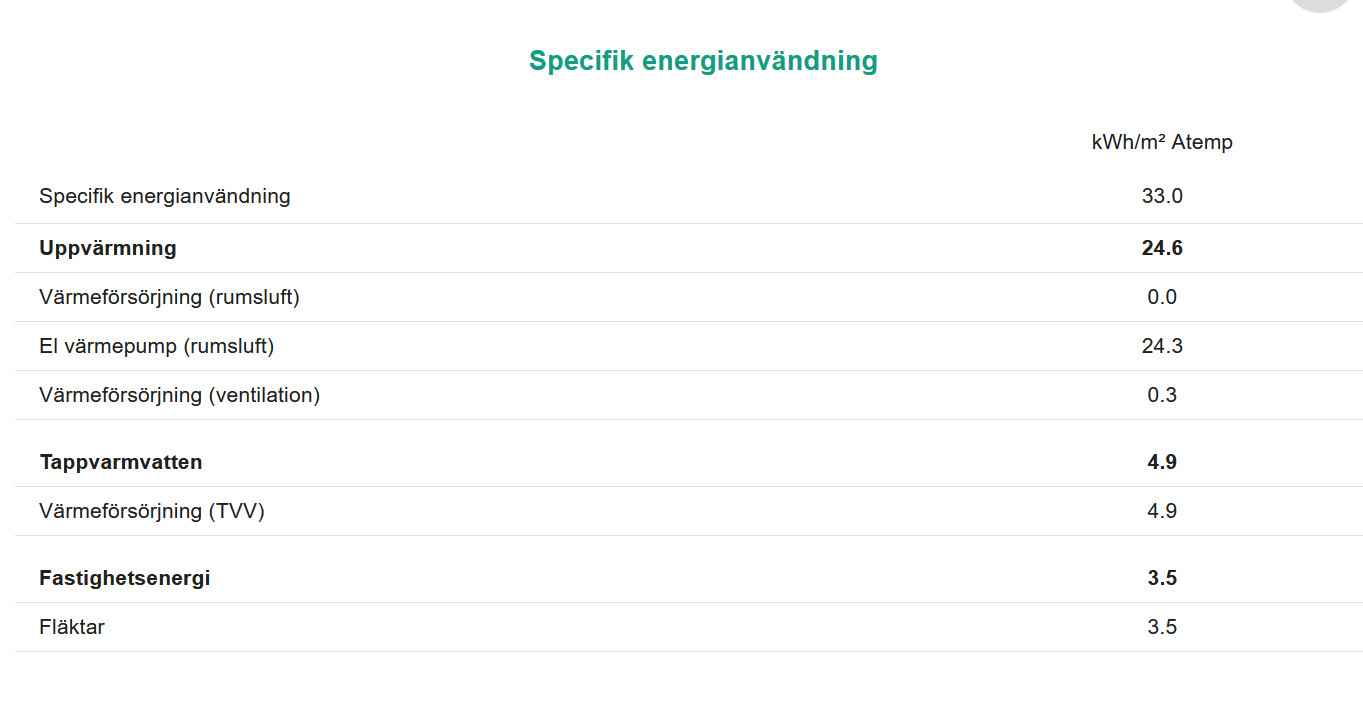
Here's how the house will be positioned in Stockholm. In the calculation, I have assumed that half of the hot water is produced by the fireplace. However, the entire heating process happens through LLVP, personal heat, and recovery. Windows with U-value 0.7. 200 mm PIR in the roof, walls, and floor.
Vi vill skicka notiser för ämnen du bevakar och händelser som berör dig.