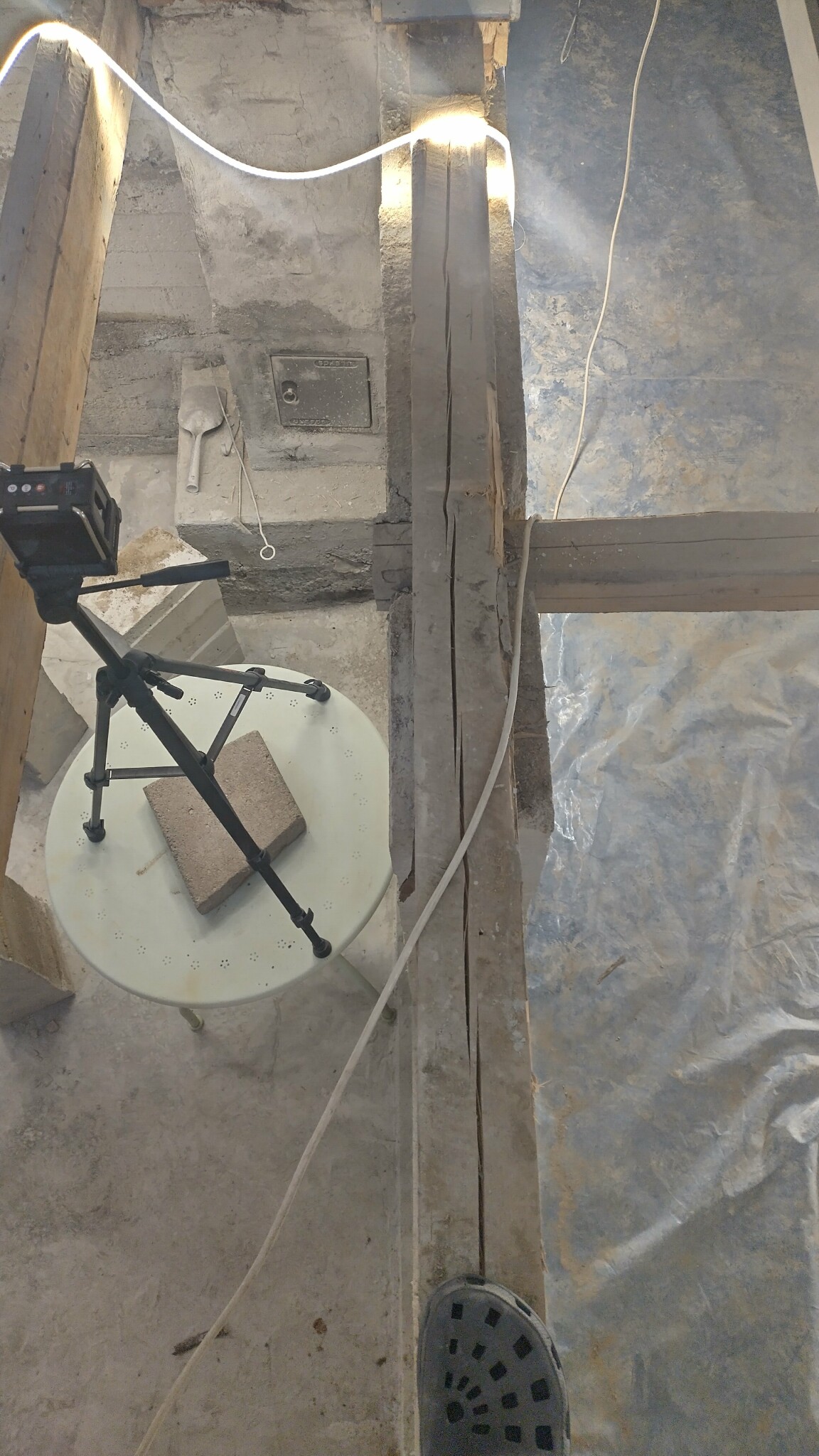
Two "crawl spaces," one with a 100-year-old concrete floor (used for cooking, baking, food storage, etc.) and the other not seen for 45 years but had plastic on the soil and was dry and nice (despite almost no ventilation). Someone thought it was a waste to pour a floor in the latter—but then maybe it's better to remove the concrete in the one so it can get plastic too (*). (<--- should I warn about a possible trap there? (*)). What does the comment section think? ("One must compare!" / My Life as a Dog.)
 
  • Wooden beams and concrete floor in a crawl space with a tripod and light. Plastic sheet covers part of the area.
  • Like
Biggle
  • Laddar…
B Ben47 said:
Two "crawl spaces," one with a 100-year-old concrete floor (used for cooking, baking, food storage, etc.) and the other not seen in 45 years but had plastic on soil and was dry and fine (despite almost no ventilation). Someone thought it was a waste to pour concrete in the other one - but then maybe it's better to remove the concrete in the first one so it can get plastic too (*). Should I warn about a potential trap there? (*). What does the comment section think? ("You have to compare!" / My Life as a Dog.)
If you're not going to use the rooms for anything, it's quite pointless to pour in a lot of concrete that you then can never remove. Plastic isn't entirely optimal as moisture from below can get trapped there.

Without knowing what you want the room for, I would suggest laying a ground sheet and gravel/grit on top and leaving the existing concrete.
 
Click here to reply
Vi vill skicka notiser för ämnen du bevakar och händelser som berör dig.