Hello all knowledgeable and unknowing yet happy people!
We are looking at a property where the main house is older. We haven't been able to enter it for a viewing yet.
Built sometime between the 1830s and 1860s with a crawl space foundation (not inspectable from outside).
There aren't many, but enough rooms for us, a wood-burning stove, tile stove, and the whole shebang, but the ceiling height is nothing to cheer about... Estimated at 1.85 in the kitchen and living room on the ground floor, somewhat higher in the rooms upstairs, although some have sloped ceilings. So this is low, even for the 1800s.
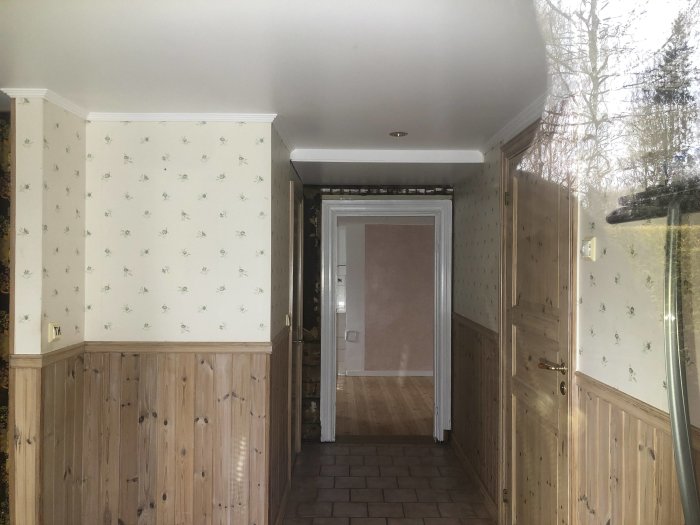
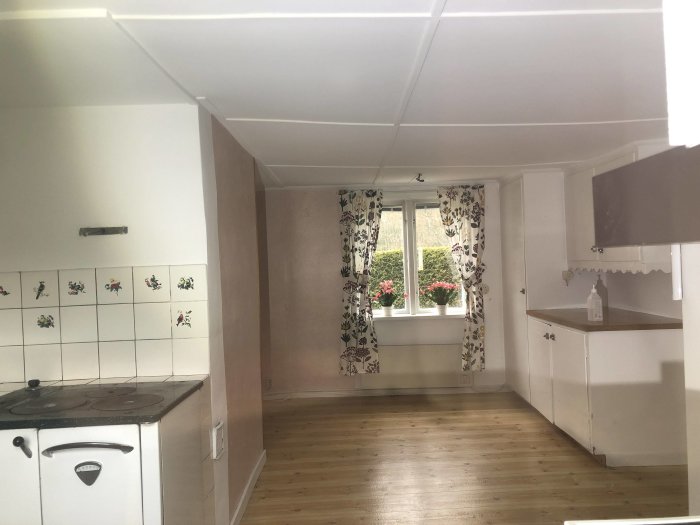
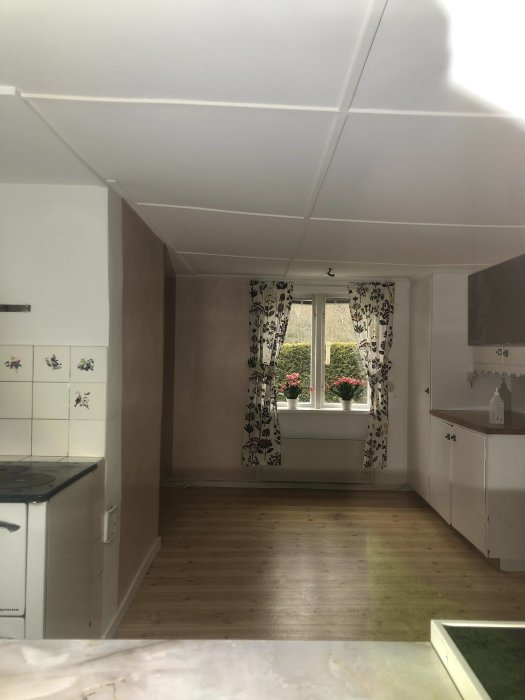
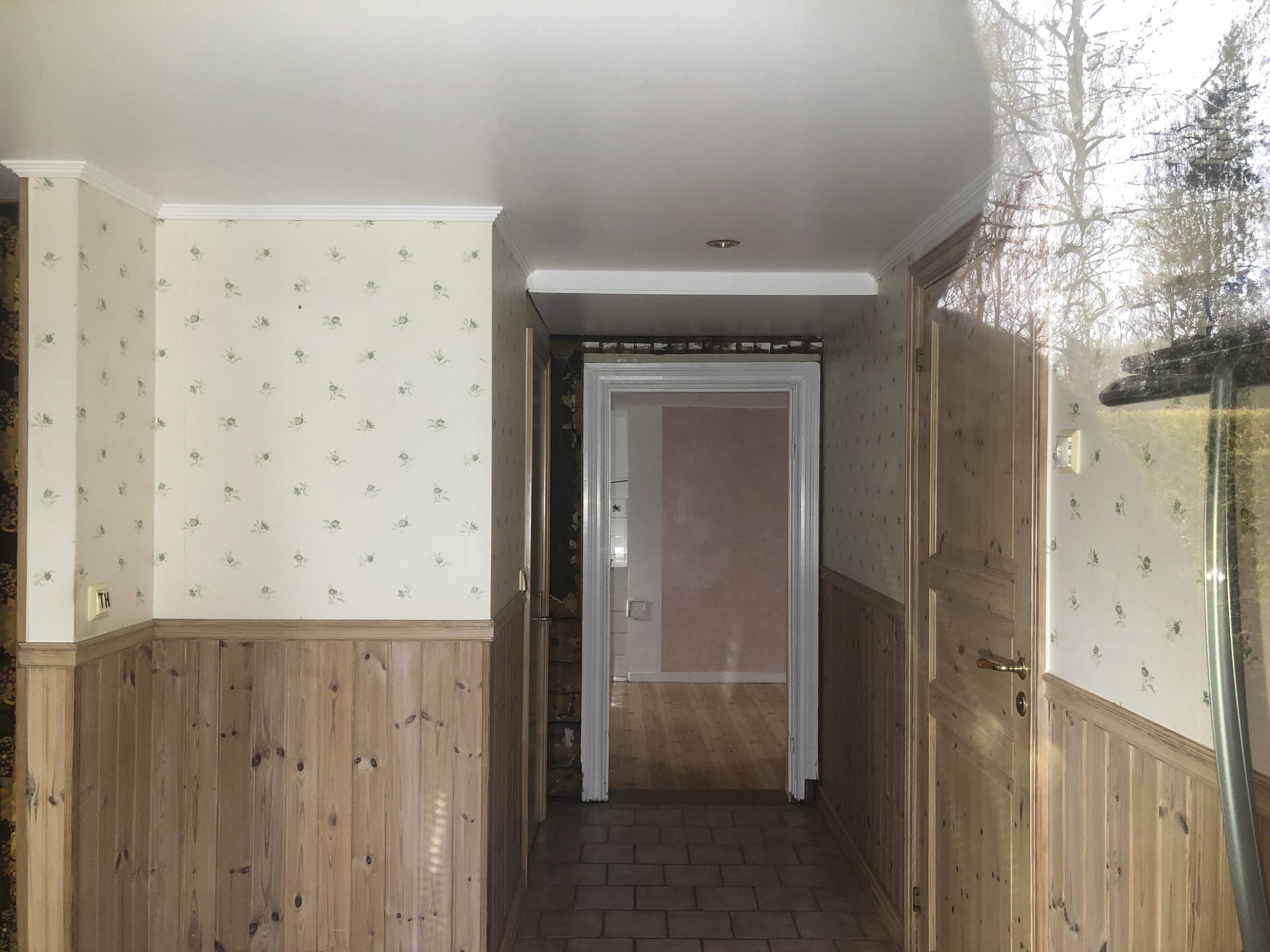
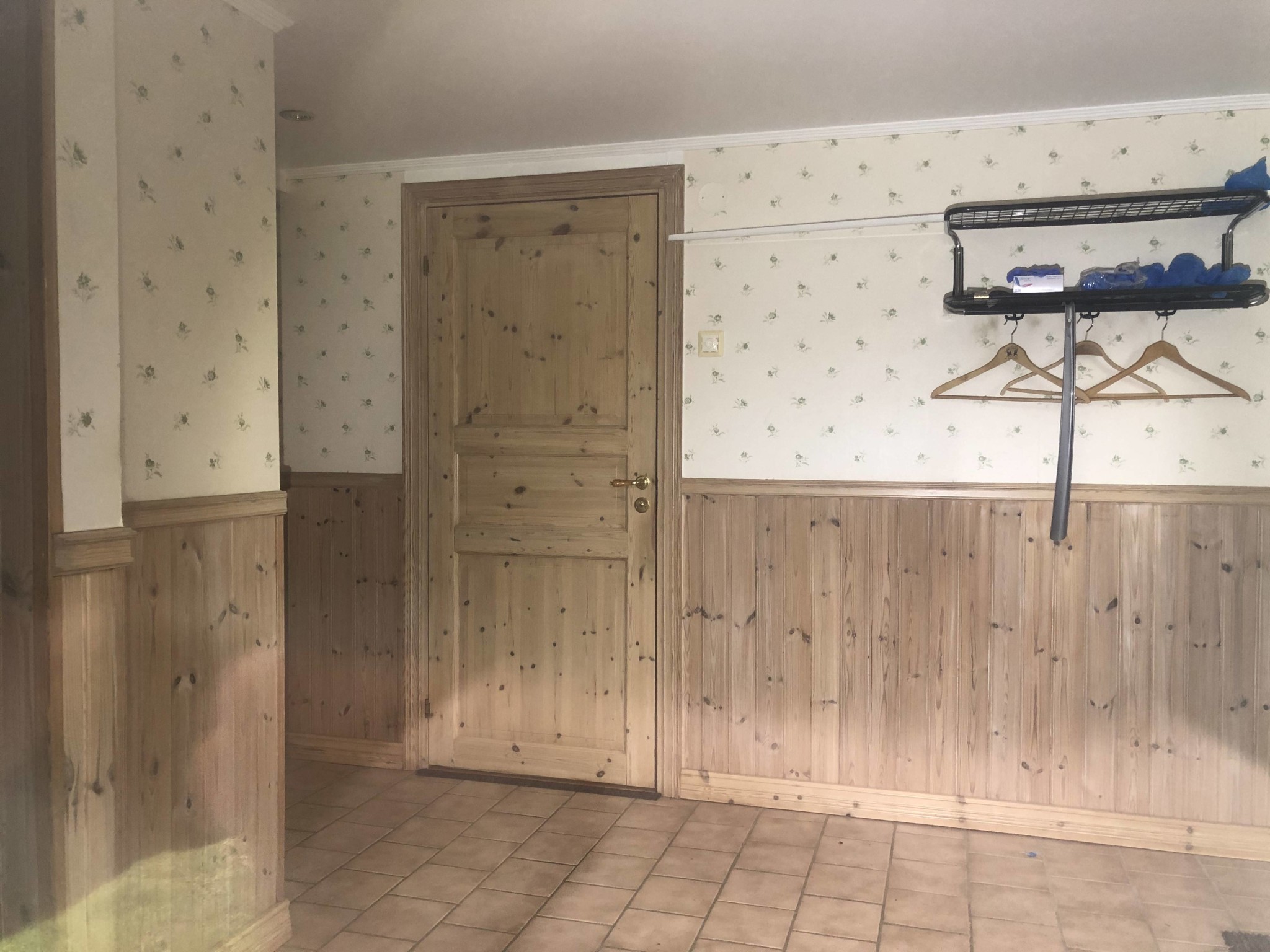
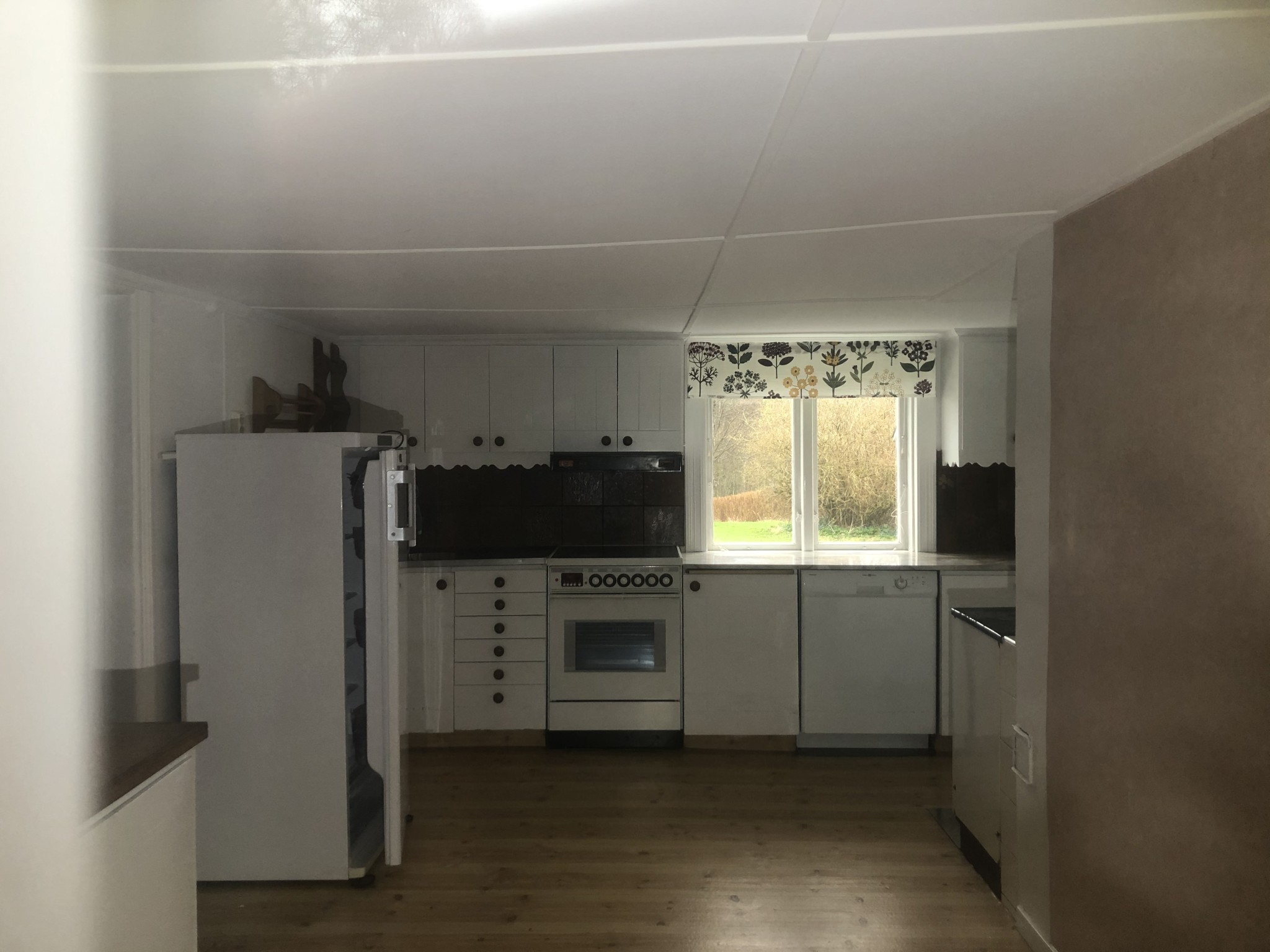
The funny thing though is that the hallway and bathroom have significantly higher ceiling height. Still low, but at least 2 meters and accessible. When you walk from the hallway into the kitchen, you immediately notice how the ceiling kind of dips down quite a bit. It's lower in itself, and it sags, which to say the least "enhances the impression."
I almost assume that the hallway/bathroom section was added at a later stage, which would explain the higher ceiling height.
I would guess there's a substantial plank floor between the ground and upper floor, and I understand it's not unusual for such floors to sag in houses this old. Back then, it wasn't uncommon for people to try to nail up the sagging planks with varying results, and eventually, boards ended up there. This house has that too.
Of course, it would be nice if one could raise the ceiling somehow. Now, I don't know how the house is constructed and if the plank floor/ceiling is a bearing part in itself, but I assume it is as it stabilizes.
I get the feeling that if one could at least fix the sagging, and "push it up" again, then the ceiling height could go from unacceptable to at least tolerable. The main house isn't the only thing of interest, so pros and cons must be weighed.
Grateful for input, thoughts, and ideas. Practical tips on how one might go about creating a bit more ceiling height, mainly on the ground floor. The upstairs has better potential there; for example, you could open up the ceiling a bit.
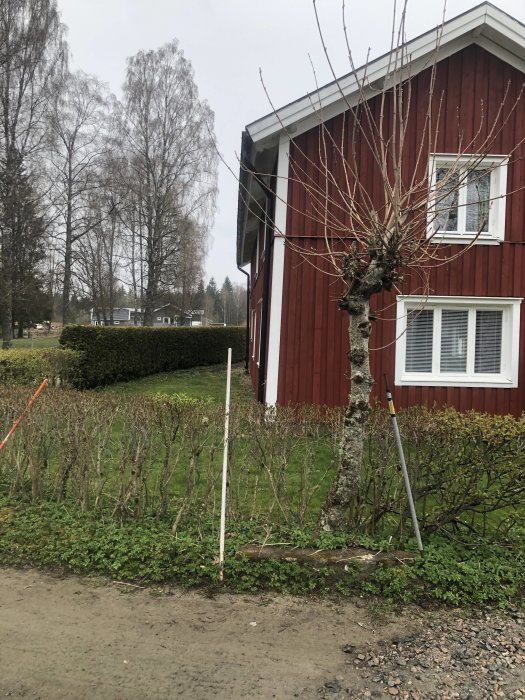
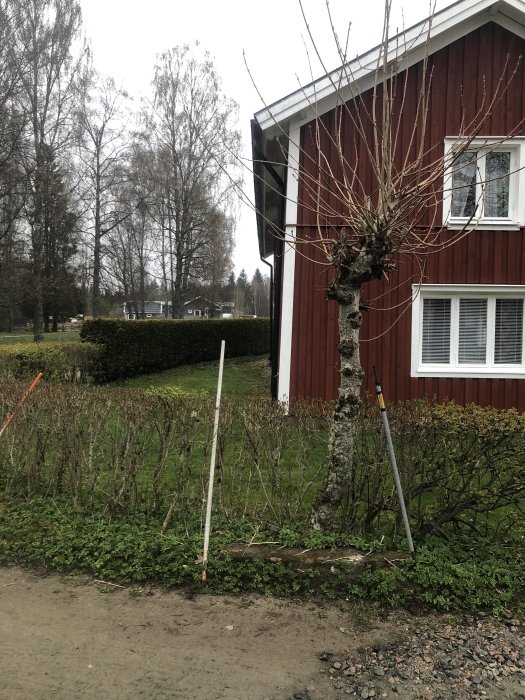
Attaching somewhat poor pictures taken from outside, so maybe someone understands better what I mean.
Hall door straight ahead, bathroom window to the right:
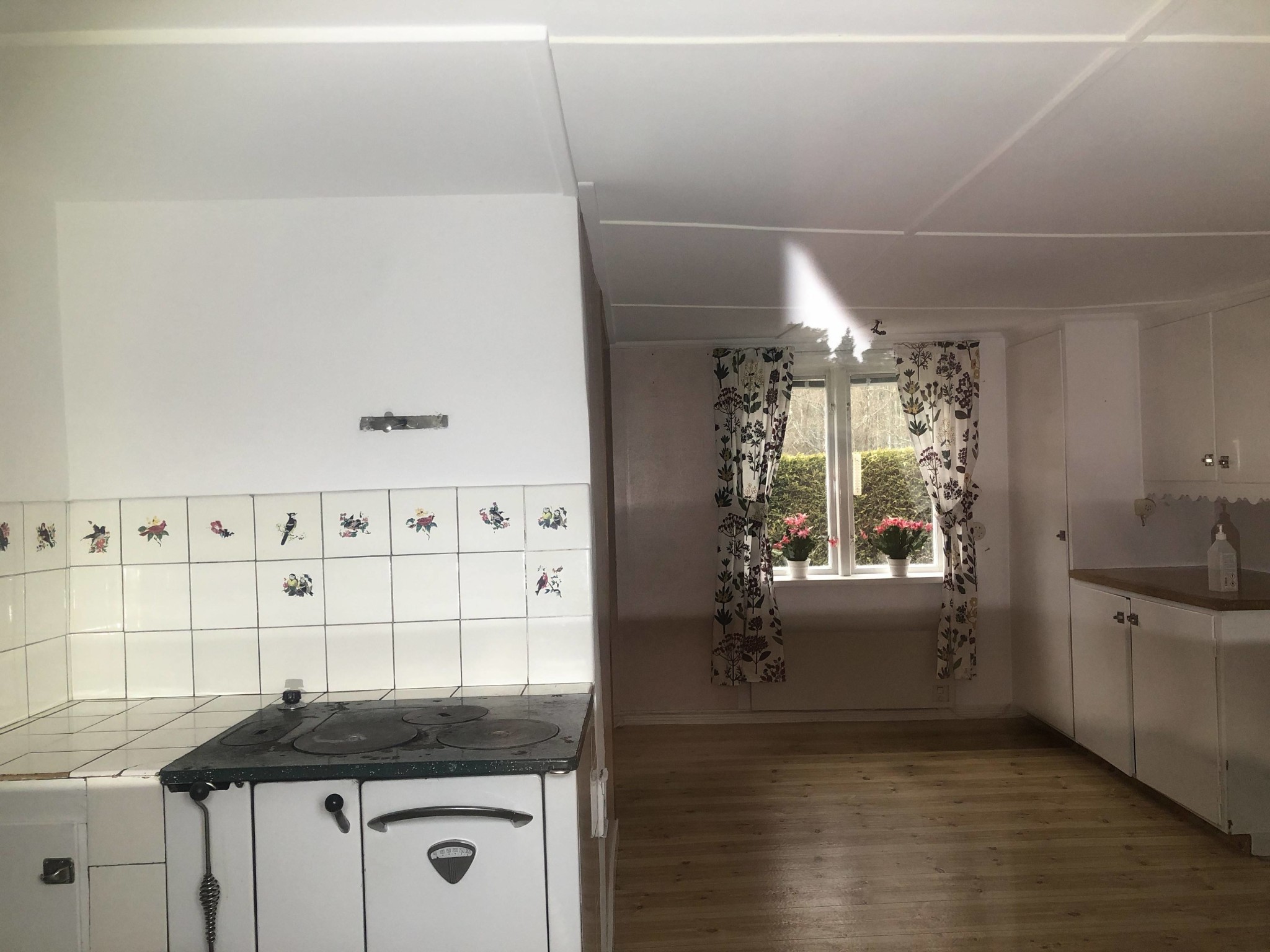
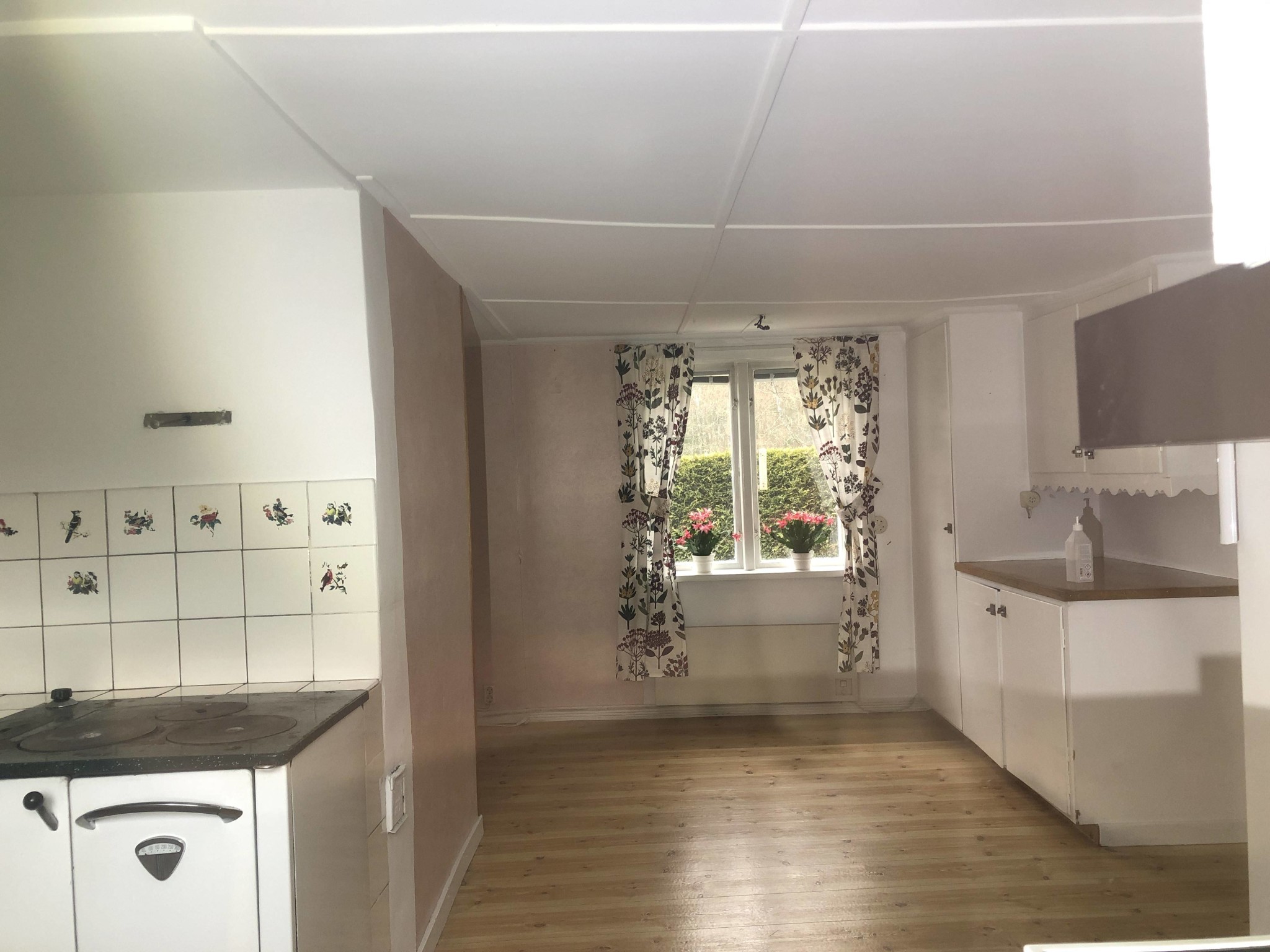
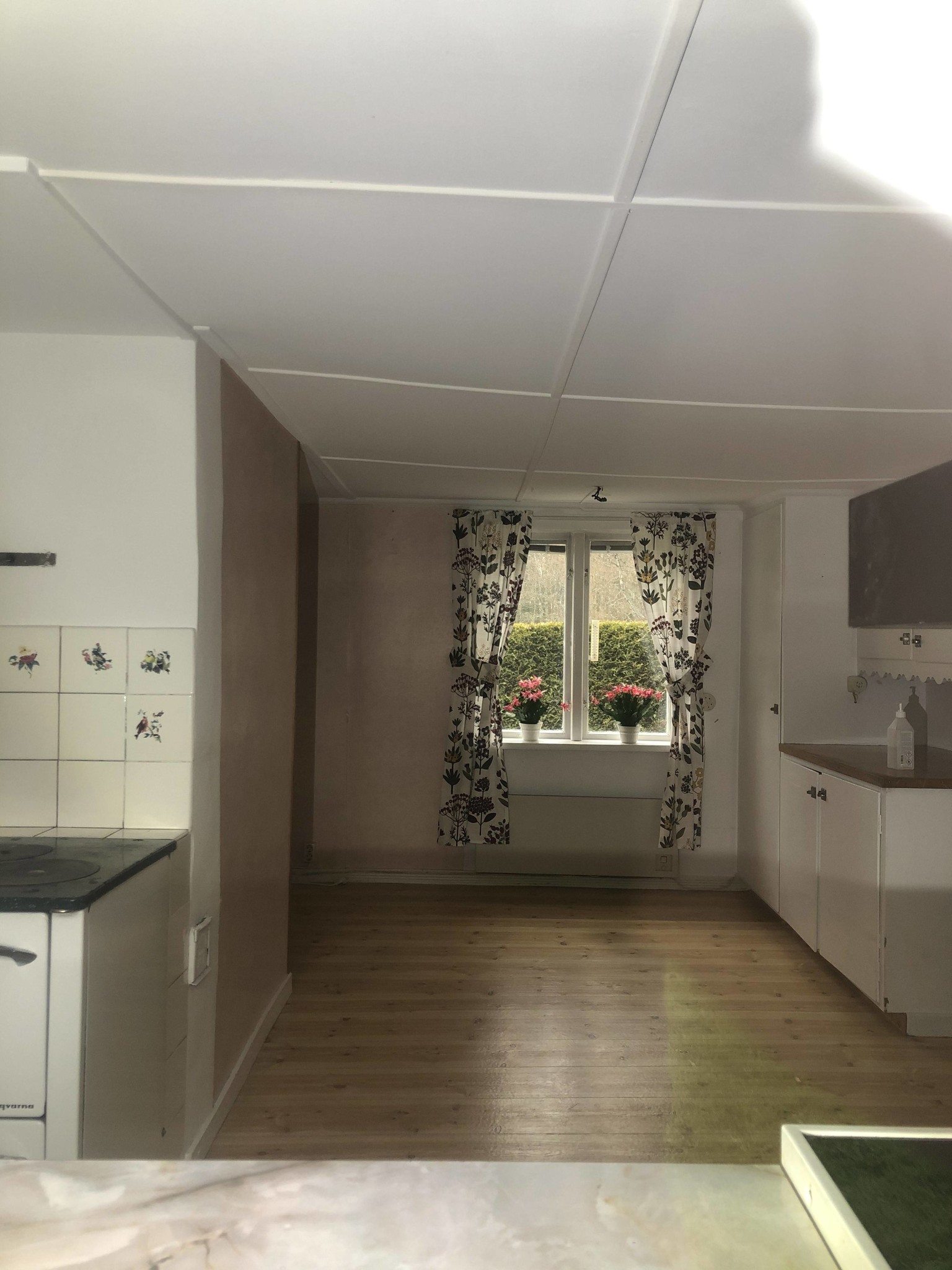
Taken in through the hall window. OK ceiling height until the kitchen door straight ahead. The kitchen ceiling almost hits you in the head. The attentive will see here how the plank floor/ceiling has sagged downward:
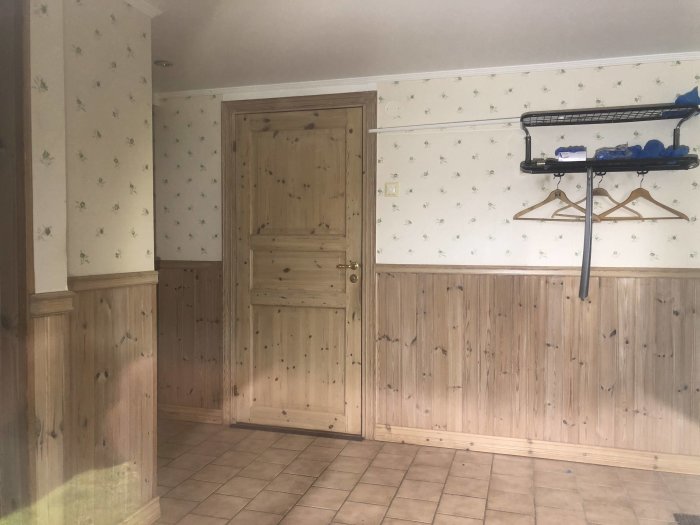
Picture taken from the hall door window towards the bathroom door:
Pictures taken into the kitchen through the kitchen window visible in the first image:
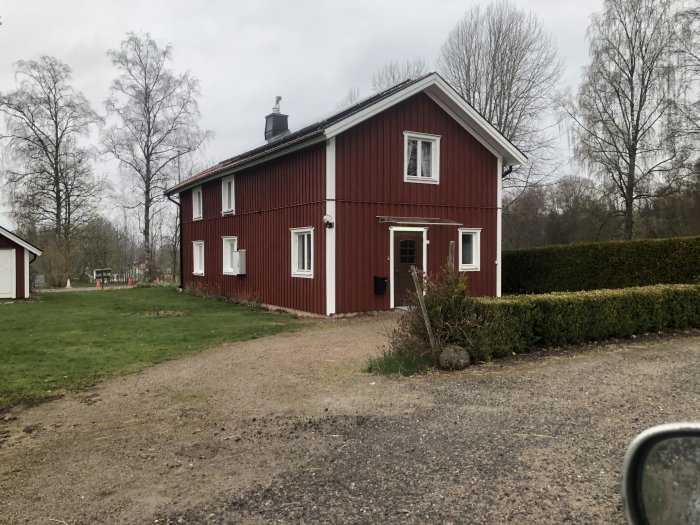
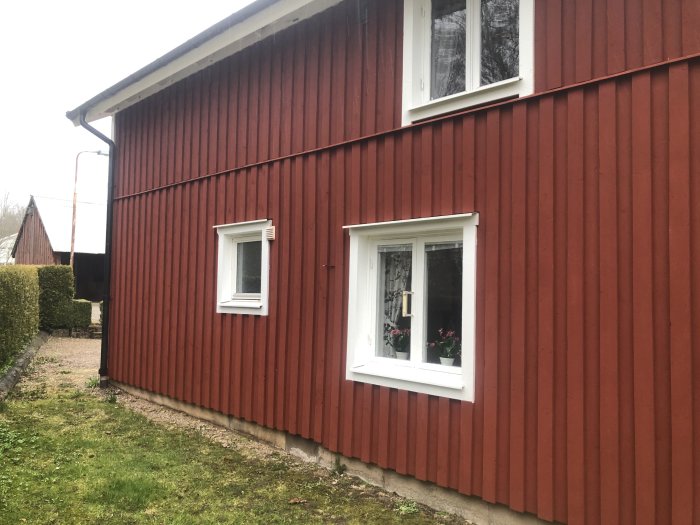
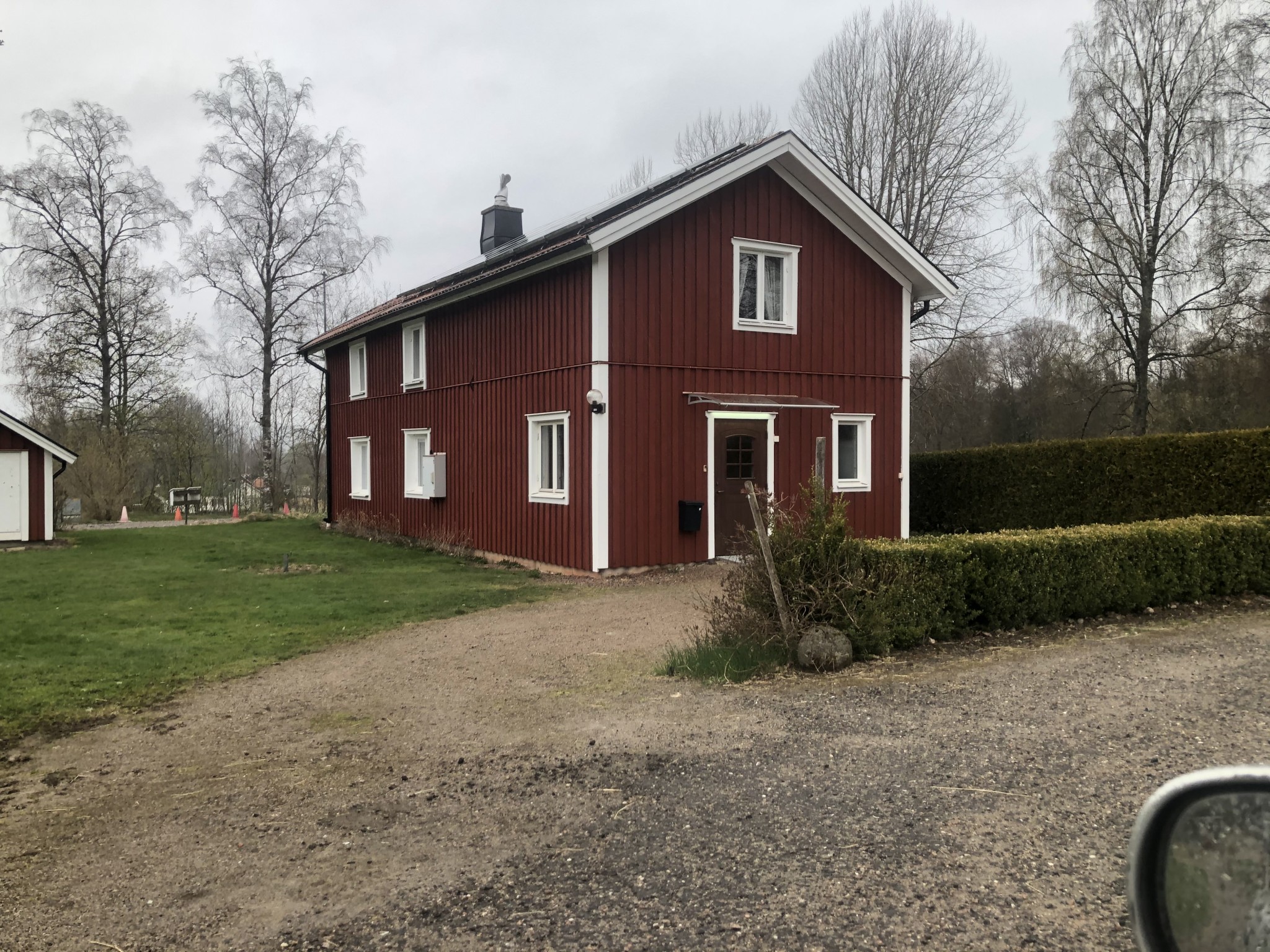
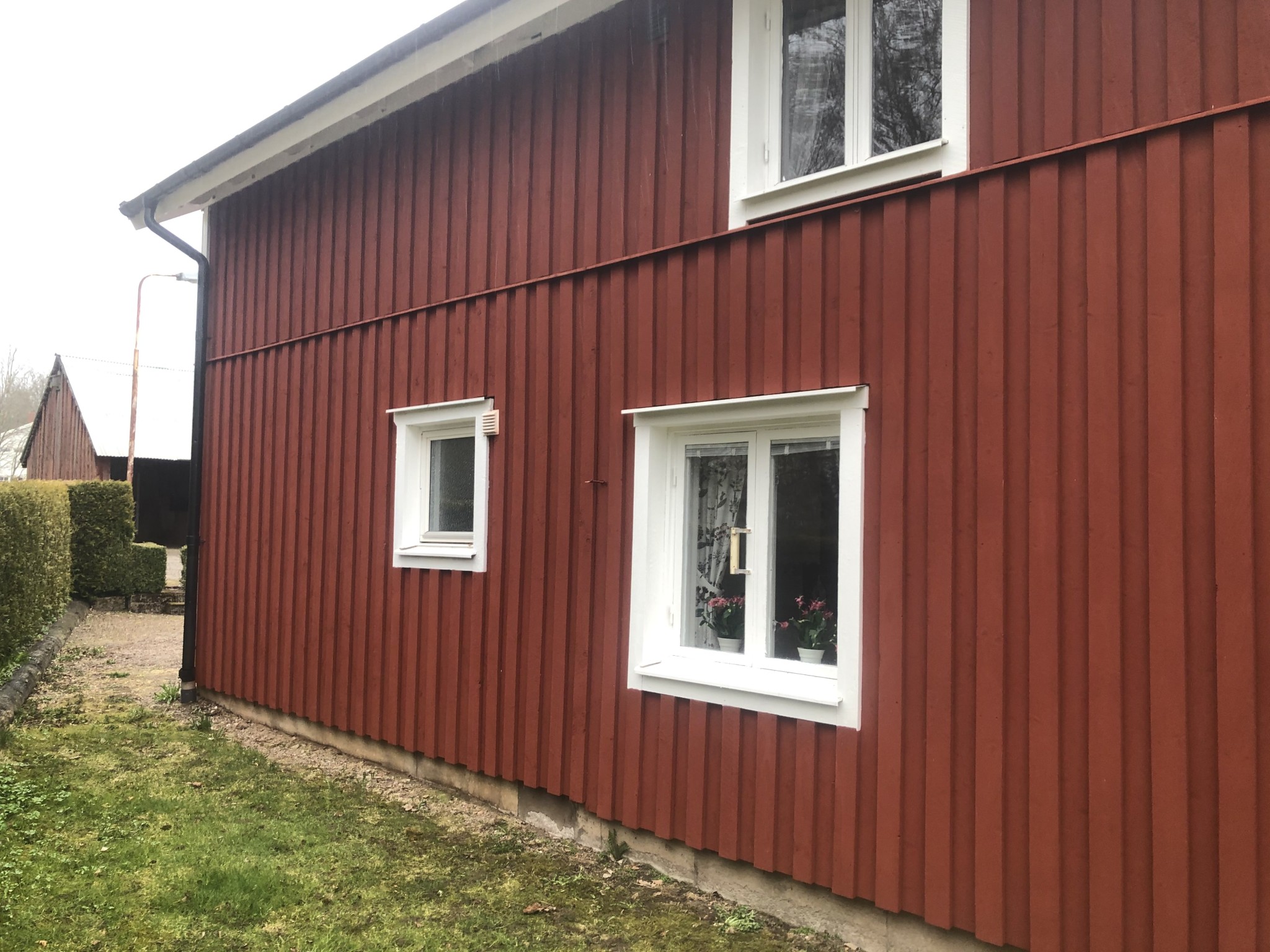
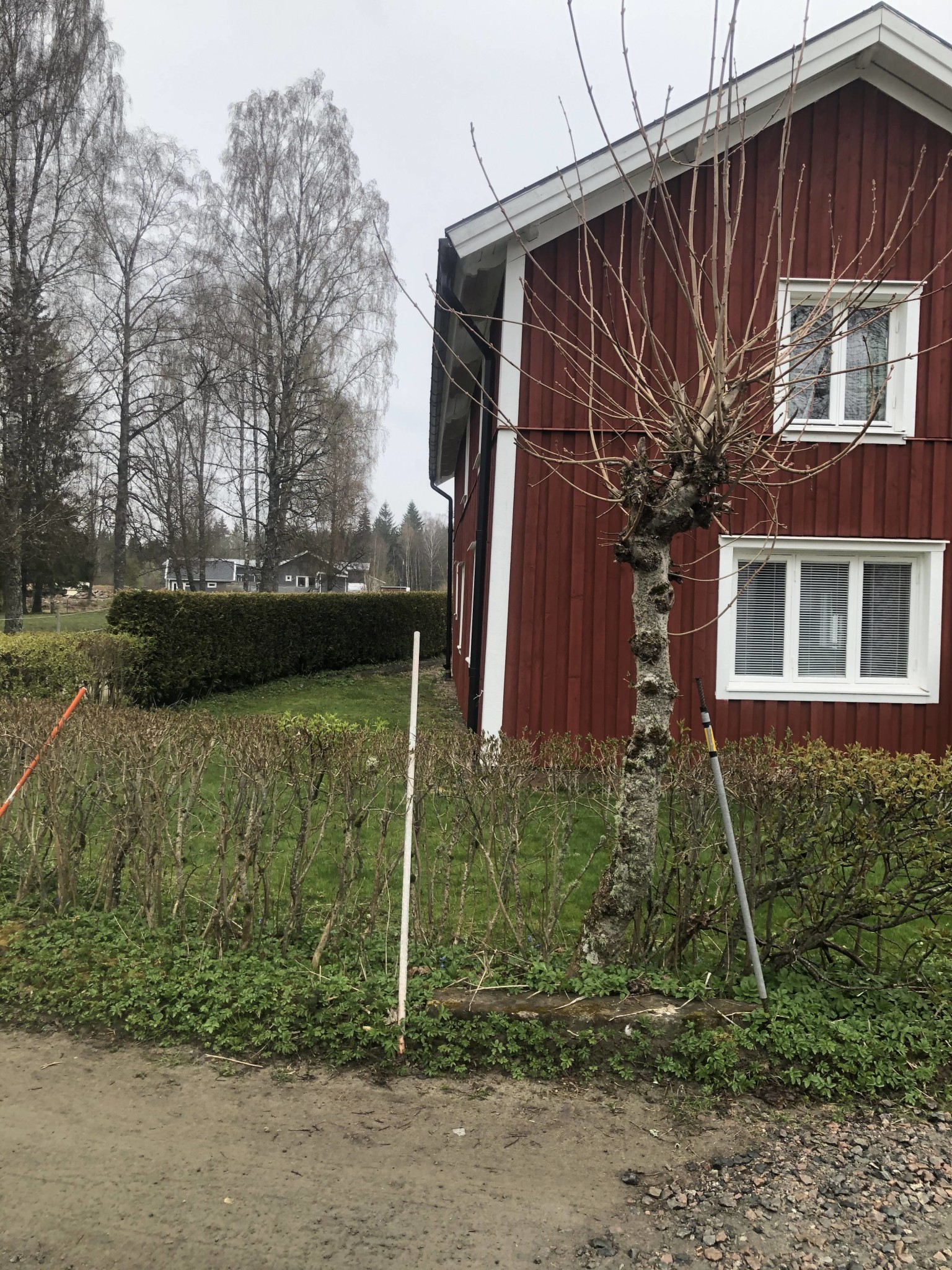
The other long side of the house:
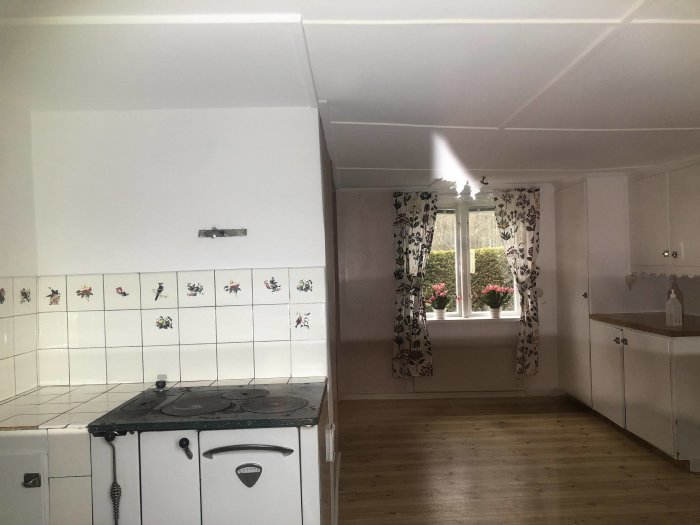
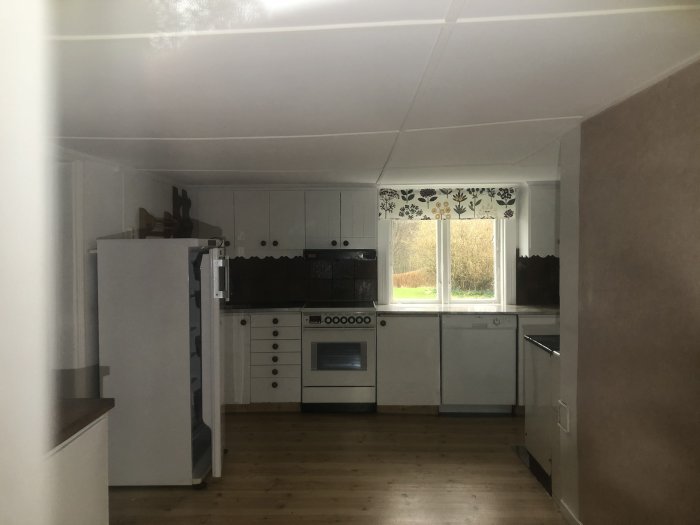
Picture taken into the kitchen through the window shown in the image above. Even the kitchen floor looks to have bulged downward here. The bonus question is then whether it is stable and firm or if it sags when you step on it...
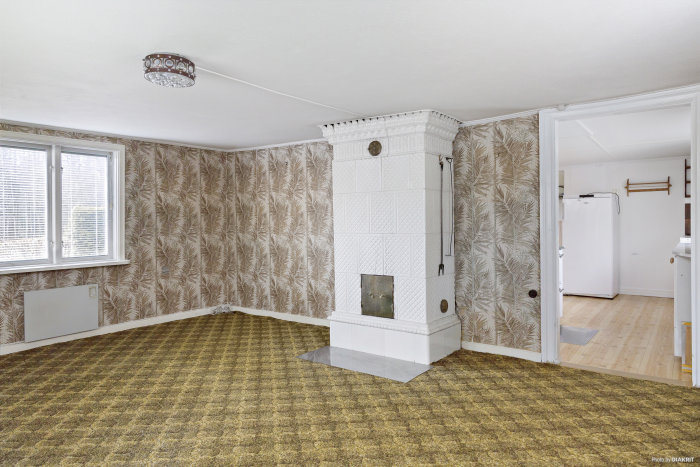
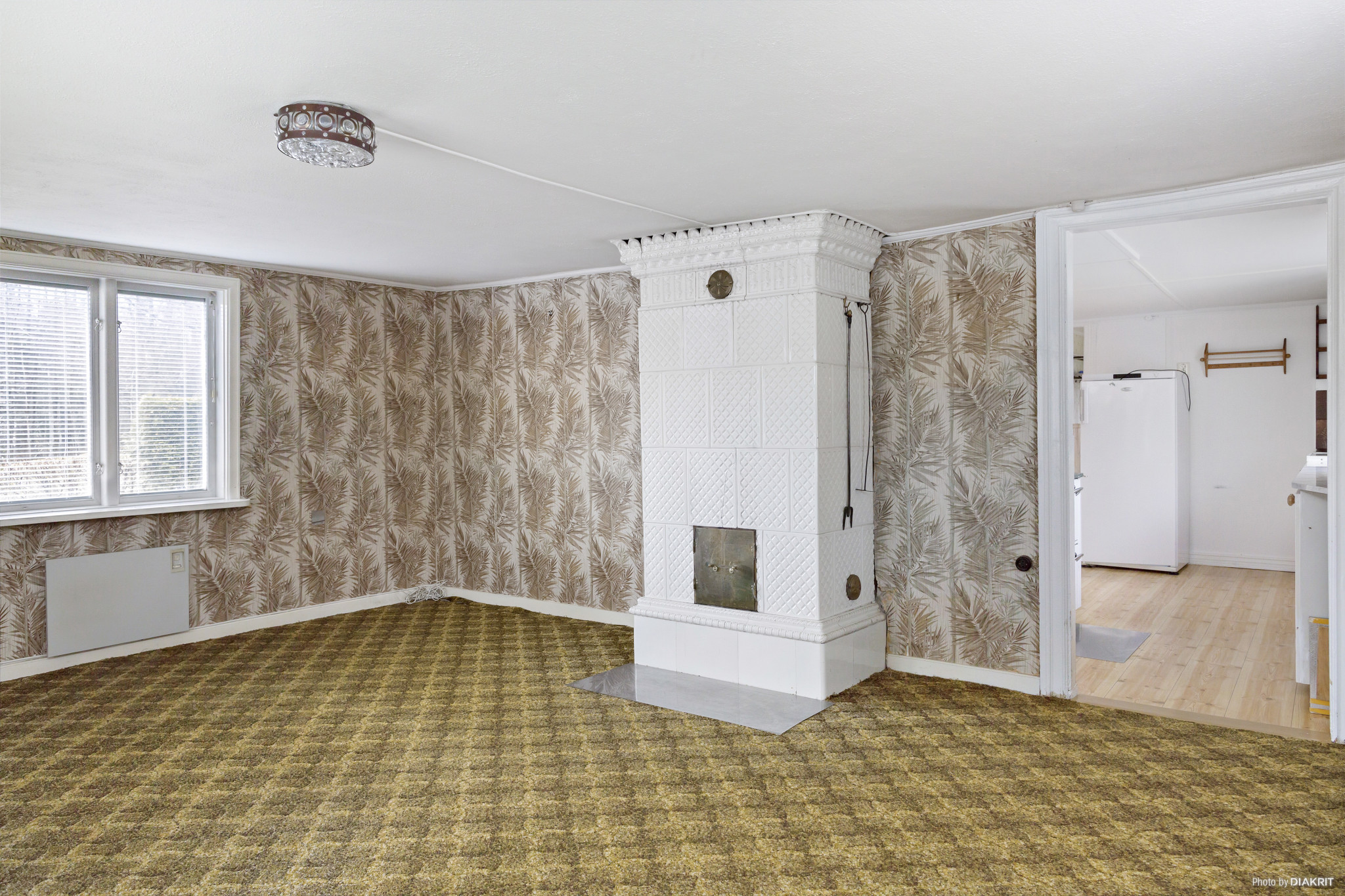
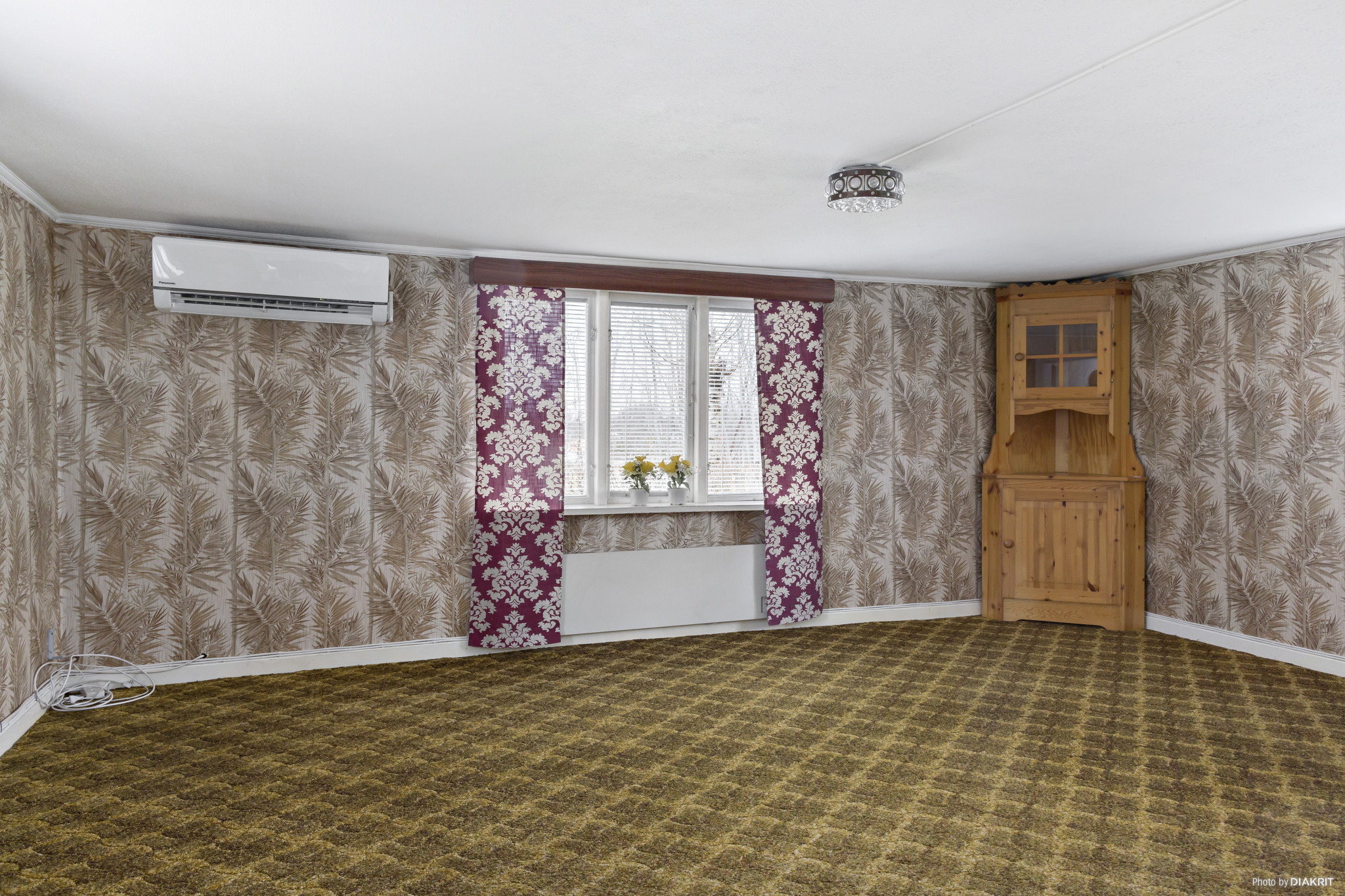
Living room with the tile stove (whose existence I suspect could complicate any ceiling-raising/lifting projects a bit. Since there is a chimney, perhaps it's not "just" a matter of lifting the house from the foundation and putting in "a few logs" to get more interior space that way):
As seen, it's hardly generous ceiling height in here either, but the ceiling looks straighter/flatter here. The coziness of the massively stylish and trendy rug might very well make up for the lack of ceiling height, but it would be great if it were still possible to raise it.
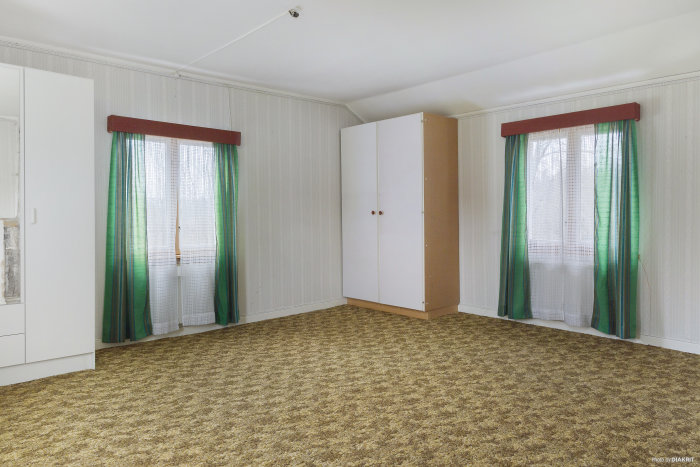
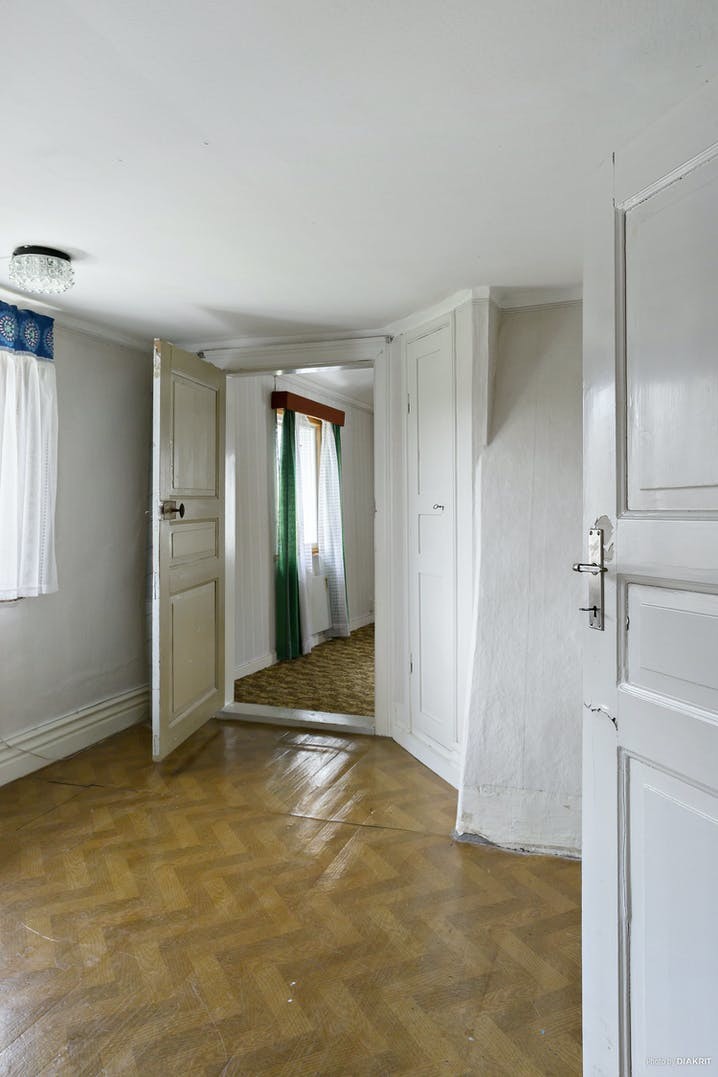
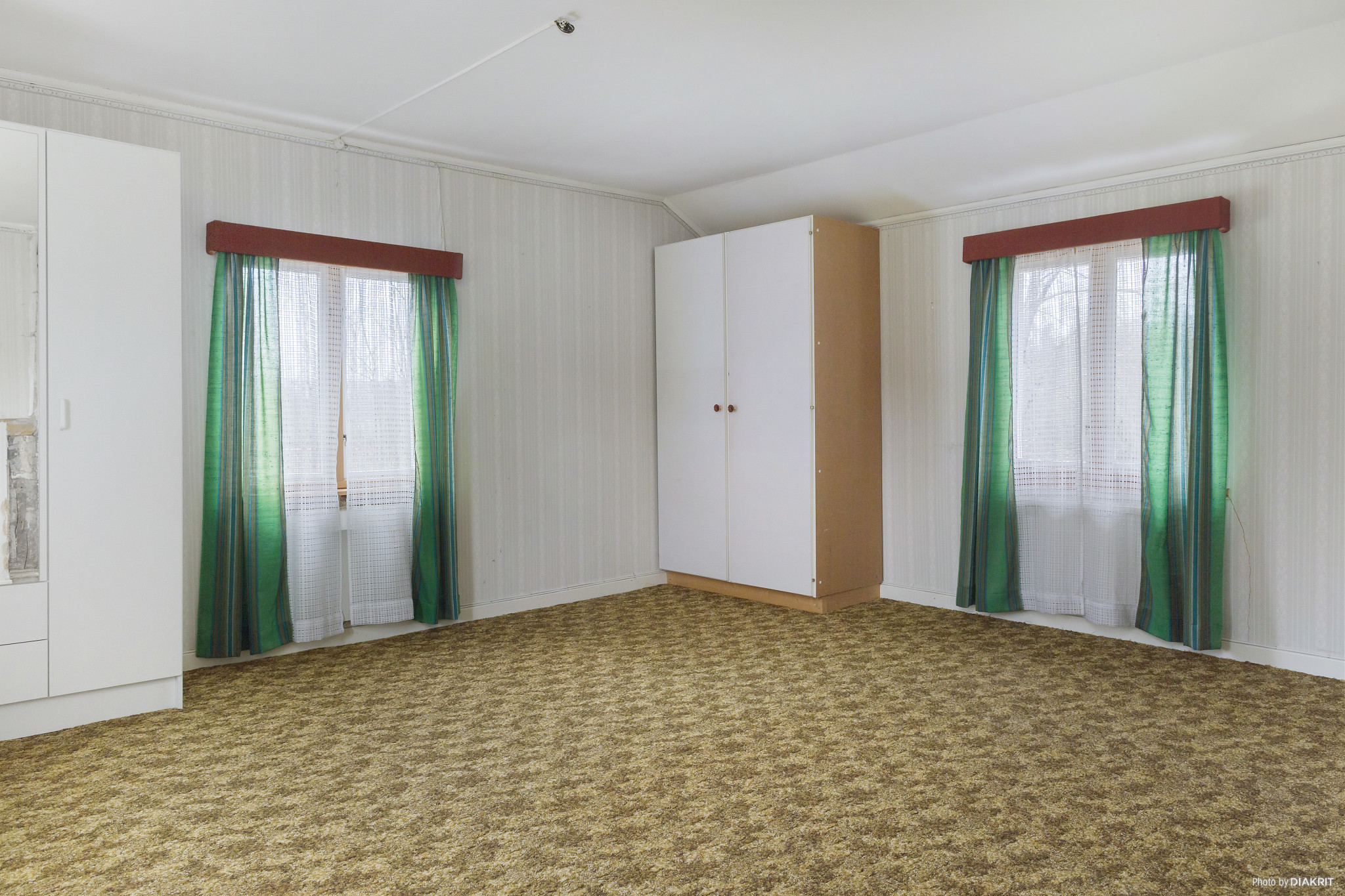
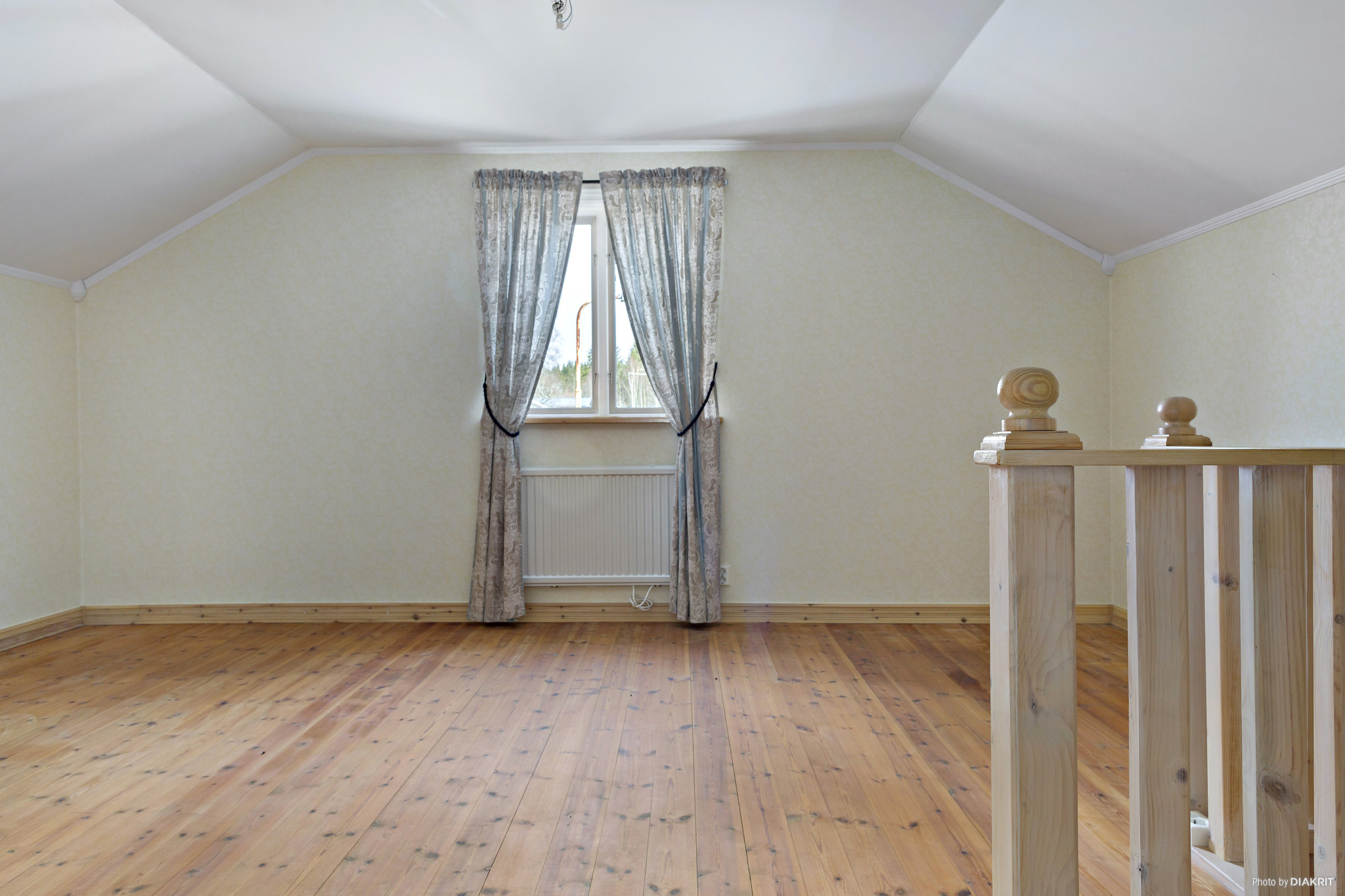
Upstairs it looks like this, the room right above the kitchen:
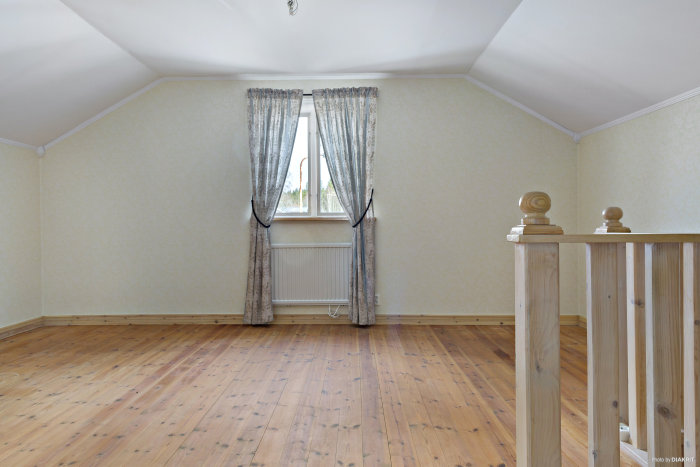
Room above the living room, offering more rug coziness:
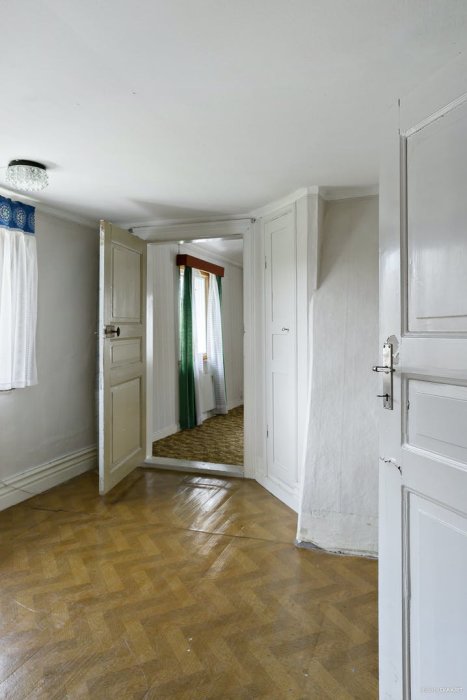
Room directly above the bathroom/hall:
It's unclear how well it shows in the pictures, but the house has twisted/settled/warped a bit. It's unclear if this has to do with the sagging floor. Compare the position of the white corner against the other gable of the house, so to speak:
Here a few pictures return, which I CANNOT manage to edit away, as they simply don't show until the topic is saved.
Retrieve previous building permits for the property. If you're lucky, the construction of the drawings will be included.
Otherwise, it can be anything under the roof. Everything from rough logs to supports that are reinforced in strange ways.
It is definitely possible to remedy, but it might require you to essentially build a new floor structure. It doesn't seem to be very large rooms, so a modern floor structure should be able to end up at a total of about 40cm.
I guess it is a floor with blocked logs. Then there are planks on the top and underside. Between these is filled with shavings. There is no easy way to raise the ceiling height.
It seems like the part housing the hall and bathroom was added later, hence the difference in room height. Additionally, it appears the house was insulated on the outside without the windows being moved out. It's probably not the floor planks causing the flexing but rather the floor joists that have unsuitable dimensions relative to the span. This is not unique; it applies to most houses from the same era. A common dimension is 6x6 inches. Additionally, they are significantly deformed. There are ways to reinforce them. You can only change the room height downward. The load-bearing part in the outer walls is certainly horizontal timber, presumably 5x7 inches. Then, there is one or more cross-supporting interior walls that are also load-bearing. The roof construction probably consists of horizontal ridges resting on the interior walls, not regular roof trusses. The only advantage of 185 cm in room height is that the tax value will be low. An easy way to read the house's history is to look at the foundation plinth. Are there joints there? Has the paneling been added externally?
I think it looks like a ceiling made of tension paper that is held in place with battens. Especially in the kitchen photos, it looks like the ceiling is sagging. It wouldn't surprise me if the real wooden ceiling is 5-10 cm higher than the current ceiling.
When it looks like that, it is usually masonite boards with slats over the joints. It seems to be typical in kitchens. The rest of the kitchen furnishings from the 1950s match that well too.
You can see it even more clearly in the photo with the kakelugn. It looks like the upper part of the kakelugn almost goes into the ceiling. It was probably not originally built that way. I believe you are dealing with a ceiling of stretched paper that can be torn out to gain more headroom. Be prepared, however, that the ceiling underneath will be quite ugly and require a lot of work.
Thanks to everyone who responded, the knowledge seems to be very high in certain areas of this eminent forum!
Unfortunately, I cannot contribute with any follow-up, as for several different reasons, the purchase did not happen. However, I guess the answer to the question is contained within the responses in this thread!
Click here to reply
Vi vill skicka notiser för ämnen du bevakar och händelser som berör dig.