
305,754 views ·
348 replies
306k views
348 replies
Why does everyone use OSB behind drywall?

Diversearbetare
· Göteborg
· 11 337 posts
The major advantage of chipboard is that you can screw-glue them to wooden studs and to each other's short sides. The walls become incredibly stable, and with a few tension tricks, you can also straighten a slightly skewed wooden stud. This is not possible with OSB due to all the wax and because the board moves (1197mm for 1200-module).

Homeowner
· Västerbottens län
· 775 posts
Don't you notice when the chipboard splits in the middle? What do you mean by crater? Now I'm getting nervous, since we have chipboard everywhere but haven't seen anything like thatMikael_L said:
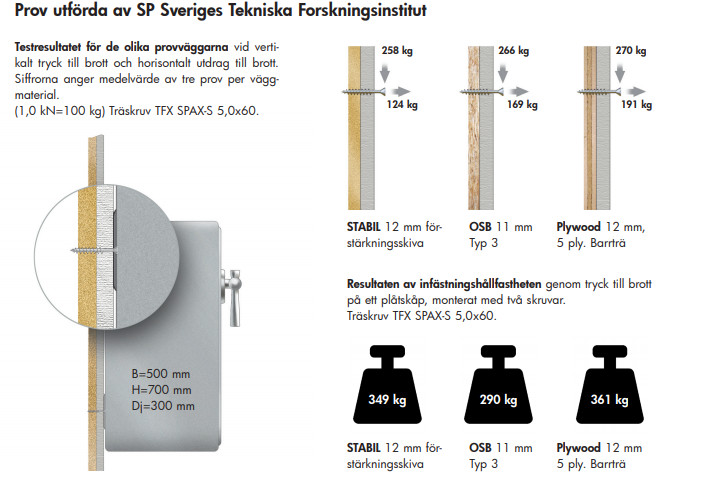
Well, OSB is only slightly stronger than a correctly fastened screw in chipboard.
However, the correct method is to pre-drill in chipboard before screwing in the screw to ensure the most durable attachment.
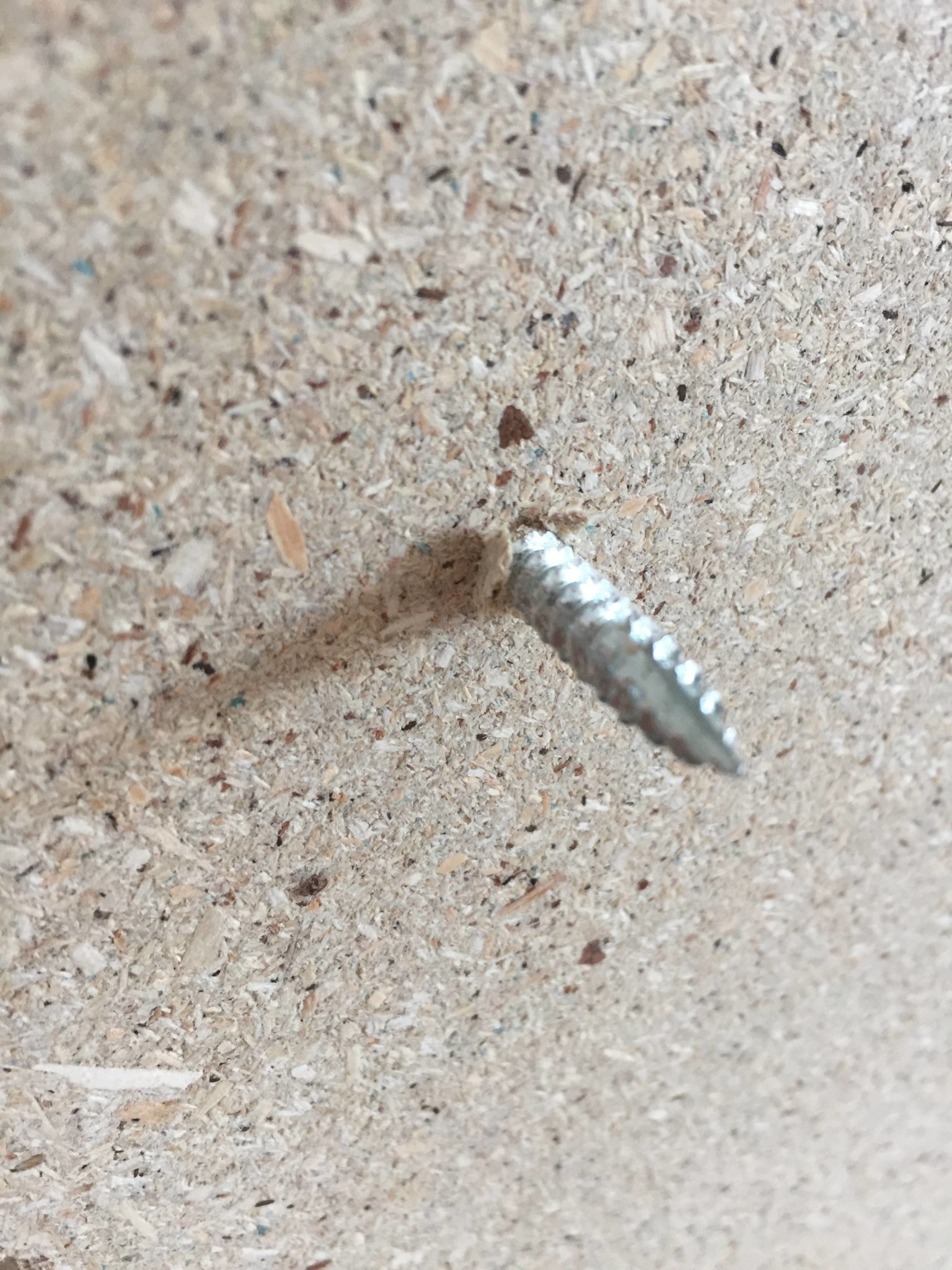
This is because chipboard sometimes splits in the middle and half of it disappears like a crater behind if you just force a screw in without pre-drilling.
So it's basically equally durable, but extra steps are required to ensure this perfect attachment.

The screw doesn't have a thread all the way to the tip, which means it pushes material in front of it. If you're unlucky, you don't screw through the entire board but press the last bit until it breaks, and it looks like a crater on the inside of the wall.



Homeowner
· Västerbottens län
· 775 posts
Do you mean when you're putting up the board or when you're starting to screw in things like for paintings and shelves, etc?P Poxeman said:
Shouldn't the plasterboard give way long before it becomes a crater in the chipboard?

Yes, when you screw into walls to hang up a TV, etc.
The screw first passes through the surface layer, then goes into the gypsum and through it, then into the chipboard. When the screw has gone a bit into the chipboard so that there is some material holding against the screw tip, the screw tip will push parts of the chipboard in front of it instead of drilling through. When the pressure becomes too great, the chipboard will break apart with a "crater" resulting in the wall's interior.
The screw first passes through the surface layer, then goes into the gypsum and through it, then into the chipboard. When the screw has gone a bit into the chipboard so that there is some material holding against the screw tip, the screw tip will push parts of the chipboard in front of it instead of drilling through. When the pressure becomes too great, the chipboard will break apart with a "crater" resulting in the wall's interior.
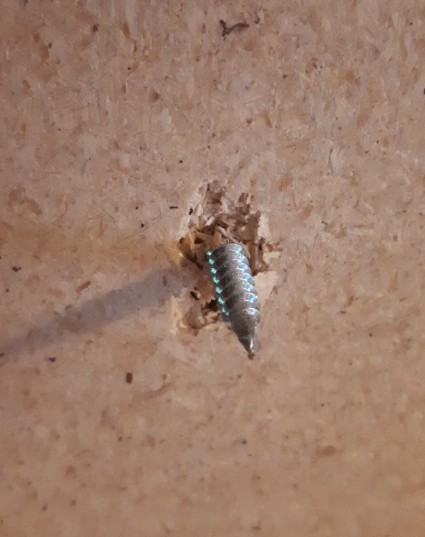
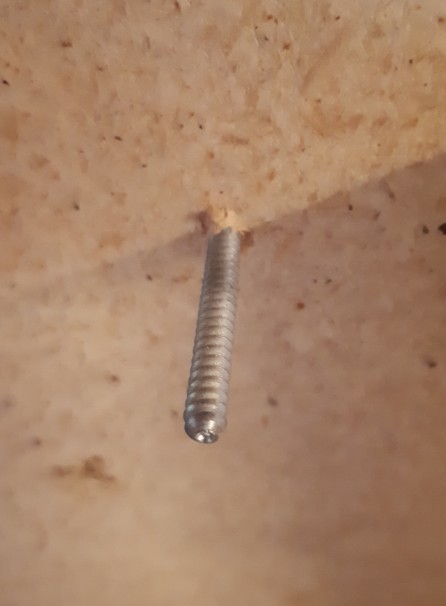
Thanks for that picture.
I was there last night and also tried screwing into a chipboard piece to demonstrate the "phenomenon." But chipboard comes in different qualities, and the one I found wasn't a standard 1.2 x 2.4 meter wall panel, but rather some small piece from who-knows-where, possibly a part of some chipboard furniture.
But despite a few test shots with screws, it didn't create that characteristic crater.
The cracking mainly happens in boards with a hard-pressed surface layer.
But regardless, you shouldn't generally be worried about not pre-drilling your chipboards.
This becomes a necessity only for the heaviest fixings. However, if you're going to mount really heavy items, it's recommended to pre-drill with a bit of a smaller dimension. A few mm smaller than the screw, perhaps like a 3 mm drill bit for a 4.8 mm screw. And 4-5 mm for an 8 mm screw.
(Ideally, the drill bit should be about 0.5-1 mm smaller than the screw's core).
I was there last night and also tried screwing into a chipboard piece to demonstrate the "phenomenon." But chipboard comes in different qualities, and the one I found wasn't a standard 1.2 x 2.4 meter wall panel, but rather some small piece from who-knows-where, possibly a part of some chipboard furniture.
But despite a few test shots with screws, it didn't create that characteristic crater.
The cracking mainly happens in boards with a hard-pressed surface layer.
But regardless, you shouldn't generally be worried about not pre-drilling your chipboards.
This becomes a necessity only for the heaviest fixings. However, if you're going to mount really heavy items, it's recommended to pre-drill with a bit of a smaller dimension. A few mm smaller than the screw, perhaps like a 3 mm drill bit for a 4.8 mm screw. And 4-5 mm for an 8 mm screw.
(Ideally, the drill bit should be about 0.5-1 mm smaller than the screw's core).



A few years ago, I looked at an almost new house that had chipboard on the walls, but no plasterboard. Then they had filled the joints and wallpapered directly on the relatively rough chipboard. Can you guess how it looked?
The builders probably ordered the house without any surface finish, i.e., without plasterboard as well. But luckily they didn't use OSB, because that would have looked even worse.
Of course, it is possible to wallpaper on chipboard, but it must be a completely smooth board and then you need to screw it in place tightly to avoid cracks in the joints. But I definitely wouldn't do it that way. In my parents' cabin, it was done this way, and the wallpaper tends to become a bit bumpy due to moisture migration in and out of the walls with the seasons. The summer cabin is heated year-round, but the humidity varies quite a bit.
The builders probably ordered the house without any surface finish, i.e., without plasterboard as well. But luckily they didn't use OSB, because that would have looked even worse.
Of course, it is possible to wallpaper on chipboard, but it must be a completely smooth board and then you need to screw it in place tightly to avoid cracks in the joints. But I definitely wouldn't do it that way. In my parents' cabin, it was done this way, and the wallpaper tends to become a bit bumpy due to moisture migration in and out of the walls with the seasons. The summer cabin is heated year-round, but the humidity varies quite a bit.
Homeowner
· Västerbottens län
· 775 posts
Homeowner
· Västerbottens län
· 775 posts