
988 views ·
9 replies
988 views
9 replies
What should I do with the basement wall
Hello, I know many similar threads have been made but I need advice. We bought a house with a shabby basement. The idea is to have a laundry room down there but nothing else. We just want to apply some paint so it looks a bit nicer but we are not going to install tiles or similar.
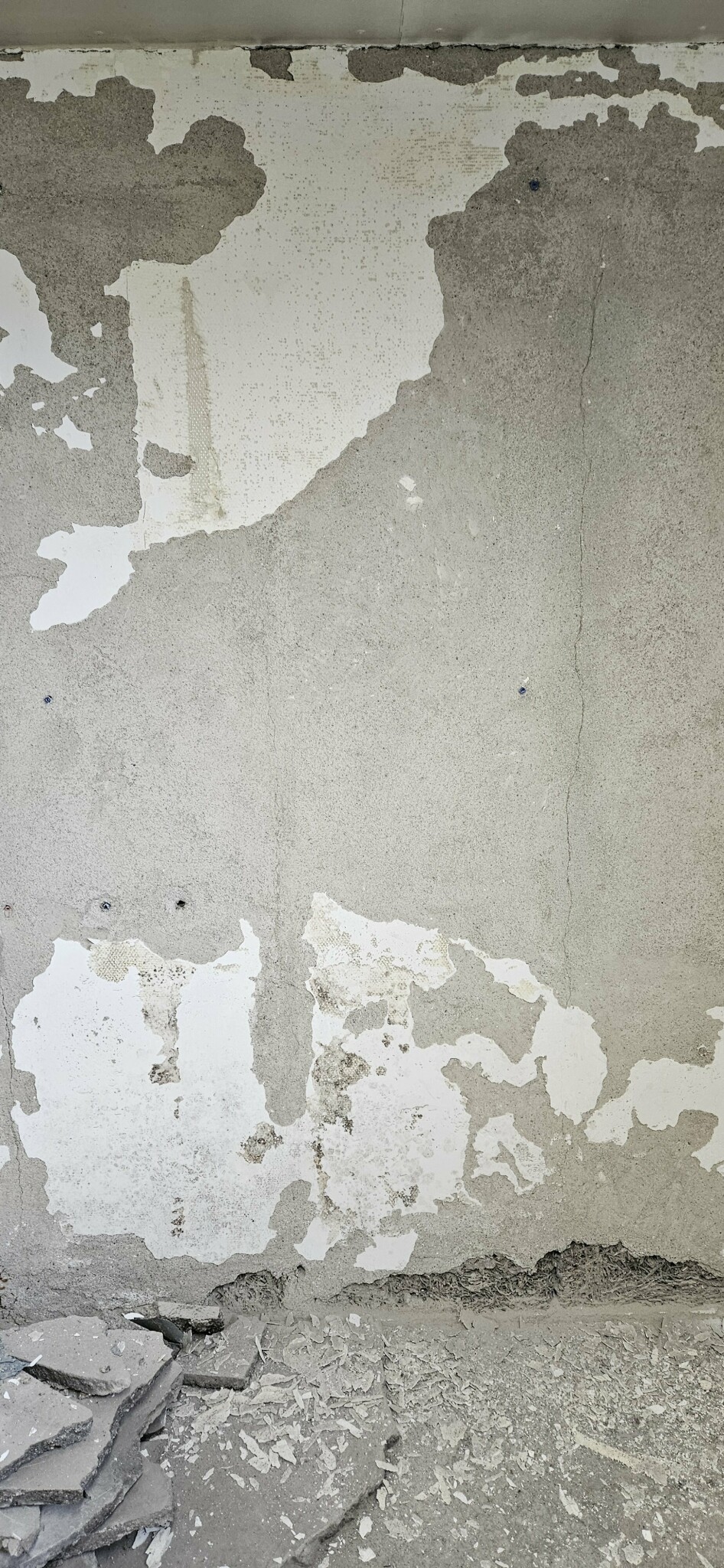
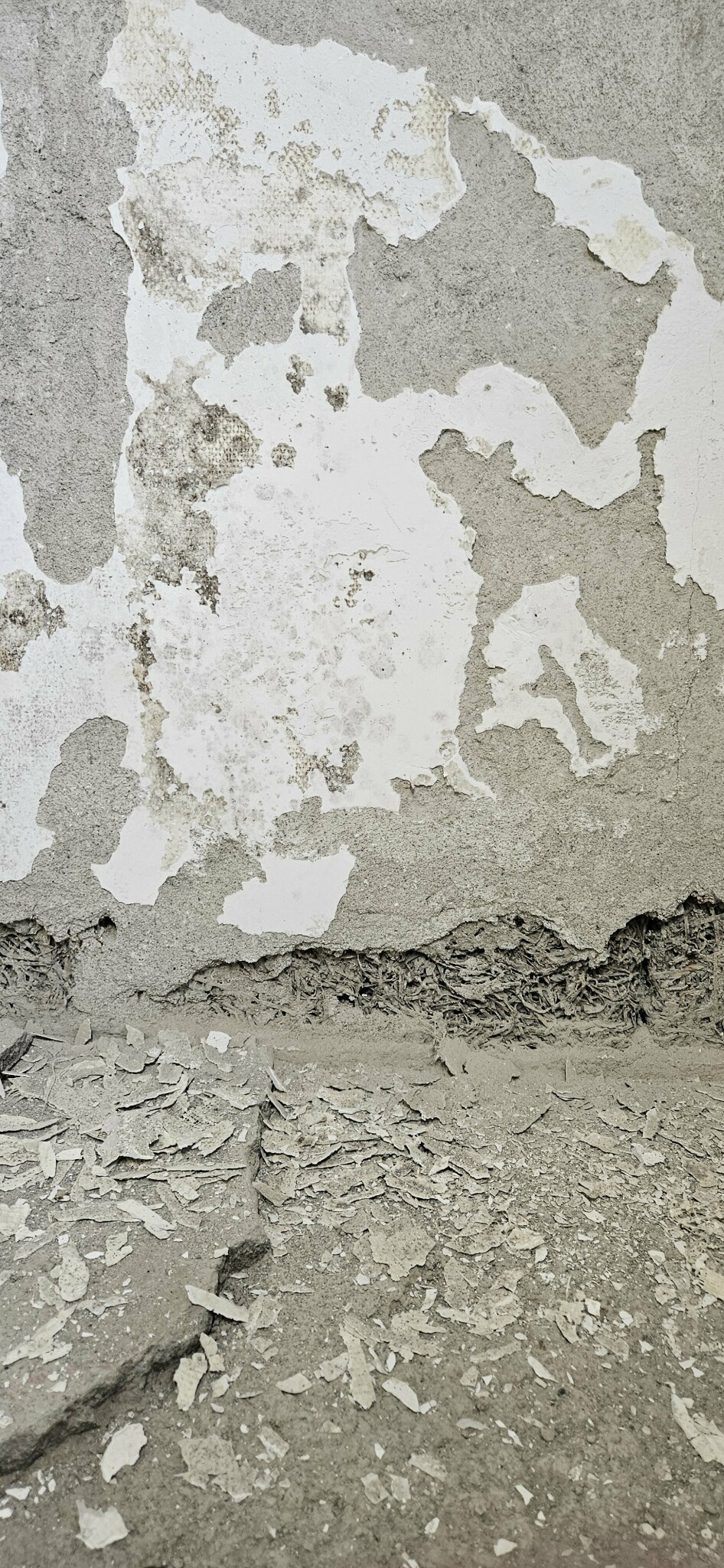
We have started removing the old wallpaper with diffusion-tight paint so the walls can breathe again. It looks like something (maybe the glue for the wallpaper?) has molded and of course, we'll remove that. It has been so damp that the material at the bottom crumbled when we started removing the wallpaper, revealing some kind of träullit. I don't know much about building and renovation so I'm trying to learn but I need help with the following:
1. Is the white stuff some kind of gypsum or lime plaster? It "dusts off" when I touch it. Do we have to remove everything (even what's firmly attached) before we apply new plaster? Or can what doesn't come off easily stay? It takes a heck of a long time to try to chip everything away.
2. What is the gray stuff laid over the träullit? Concrete? Or some kind of plaster as well? How do we best repair the holes that have formed at the bottom?
3. We are going to drain the basement in conjunction with an extension for which we are waiting for building permits. Is there any point in replastering and painting before it's completely dry, or could the new work get ruined? We will ensure, of course, that it remains diffusion-open.
Grateful for answers, eager to learn!
We have started removing the old wallpaper with diffusion-tight paint so the walls can breathe again. It looks like something (maybe the glue for the wallpaper?) has molded and of course, we'll remove that. It has been so damp that the material at the bottom crumbled when we started removing the wallpaper, revealing some kind of träullit. I don't know much about building and renovation so I'm trying to learn but I need help with the following:
1. Is the white stuff some kind of gypsum or lime plaster? It "dusts off" when I touch it. Do we have to remove everything (even what's firmly attached) before we apply new plaster? Or can what doesn't come off easily stay? It takes a heck of a long time to try to chip everything away.
2. What is the gray stuff laid over the träullit? Concrete? Or some kind of plaster as well? How do we best repair the holes that have formed at the bottom?
3. We are going to drain the basement in conjunction with an extension for which we are waiting for building permits. Is there any point in replastering and painting before it's completely dry, or could the new work get ruined? We will ensure, of course, that it remains diffusion-open.
Grateful for answers, eager to learn!
1. it could be some form of lime paint or silicate paint if it's on the outside of träulliten and under the wallpaper, if it's the plaster that's coming off just remove what is "loose" - the rest can stay
2. it's a plaster, probably lime plaster which is a bit more flexible than cement plaster
3. if you plaster and paint with a diffusion-open paint (which you should do) it doesn't matter.
2. it's a plaster, probably lime plaster which is a bit more flexible than cement plaster
3. if you plaster and paint with a diffusion-open paint (which you should do) it doesn't matter.
Of course, I forgot to attach the pictures, but you seem to have the answers anyway, thanks!T Testarn said:1. it could be some kind of lime paint or silicate paint if it's on the outside of träullit and under the wallpaper, if it's the plaster that's coming off just remove what is "loose" - the rest can stay
2. it's a plaster, probably lime plaster which is a bit more flexible than cement plaster
3. if you plaster and paint with a diffusion-open paint (which you should do) it doesn't matter.

Feels like older basements are just a big darkness haha!T Testarn said:
Thanks for your answers, I'll try to remove what comes loose and then just polish everything up!
In the past, basements were built to be just that, with storage, boiler rooms, bicycle storage, laundry rooms, and perhaps a workshop. Back then, materials that "withstood" moisture or at least could get wet and dry were used, but then it became a trend to create a recreation room in the basement or to make a bedroom in the basement. People wanted a nicer look and began installing wooden studs, Treetex panels, and chipboard floors with wallpaper and carpets that really couldn't handle the moisture in a basement (it was rarely insulated floors or had capillary-breaking layers under the concrete). Over time, plastic paints and vinyl wallpapers also emerged, which trapped moisture and led to mold and rot....
When we bought the house, I was glad that no one had "renovated" the basement to pieces, as it was quite original and untouched, so we didn't have to tear out a lot before we could freshen up a bit. We applied some epoxy on the floors and new silicate paint on the ceiling and walls.
Originally, there was an oil furnace that heated the basement (along with some postage stamp-sized radiators), but it had been "replaced" by an electric heater in the early 80s, so it was a bit stale and damp. When we installed the heat pump, we complemented it with a few more radiators, and after the drainage, it's much warmer, 4-5 degrees, and not at all damp like before. It also helps that we don't have a tumble dryer but instead a drying room with a dehumidifier installed — it works amazingly well. A normal load of laundry dries in a few hours, and if we fill the entire drying room with terry towels, it takes twice as long.
When we bought the house, I was glad that no one had "renovated" the basement to pieces, as it was quite original and untouched, so we didn't have to tear out a lot before we could freshen up a bit. We applied some epoxy on the floors and new silicate paint on the ceiling and walls.
Originally, there was an oil furnace that heated the basement (along with some postage stamp-sized radiators), but it had been "replaced" by an electric heater in the early 80s, so it was a bit stale and damp. When we installed the heat pump, we complemented it with a few more radiators, and after the drainage, it's much warmer, 4-5 degrees, and not at all damp like before. It also helps that we don't have a tumble dryer but instead a drying room with a dehumidifier installed — it works amazingly well. A normal load of laundry dries in a few hours, and if we fill the entire drying room with terry towels, it takes twice as long.
See it as a range of possibilities instead. Once it's clean and fresh, you can furnish a nice bright laundry room, have a cool pantry, a cool place in the summer heat, and much more. You can make new pipe installations under the basement ceiling if you, for example, want to rearrange the bathroom. You have space for a modern heating system.P pizzaslizze said:
All of this is missing in a "modern" house on a slab.
Epoxy on the floor, is it permeable? Was it to get a glossy finish?T Testarn said:In the past, basements were built to serve as storage, boiler rooms, bicycle storage, laundry rooms, and maybe a workshop. Materials that "tolerated" moisture or at least could get wet and dry were used, but then it became a trend to create family rooms or bedrooms in the basement. People wanted nicer finishes and began installing wooden studs, particle board, and flooring with wallpaper and carpets that couldn't handle the moisture in a basement (floors were rarely insulated or had capillary-breaking layers under the concrete).
Over time, plastic paints and vinyl wallpapers appeared, trapping moisture and leading to mold and rot....
When we bought the house, I was glad no one had "renovated" the basement destructively; it was pretty much original and untouched, so we didn't have to tear down a lot before we could start freshening it up. We applied some epoxy on the floors and new silicate paint on the ceiling and walls.
Originally, there was an oil furnace that heated the basement (along with some tiny radiators), but it had been "replaced" by an electric heater in the early '80s, so it was a bit musty and damp. When we installed a heat pump, we added some more radiators, and after drainage work, it's much warmer, by 4-5 degrees, and not damp like before.
It also helps that we don't have a dryer but a drying room where we've installed a dehumidifier - works great. A normal load of laundry dries in a few hours; if we fill the whole drying room with towels, it takes double the time.
That's true! We have a root cellar in another room in the basement, and I'm looking forward to using it. Thanks for the encouragement!T Thomas_Blekinge said:See it as a range of possibilities instead. Once it's clean and fresh, you can furnish a nice, bright laundry room, have a cool pantry, a cool place in the summer heat, and much more. You can do new plumbing under the basement ceiling if, for example, you want to move around in the bathroom. You have space for a modern heating system.
All this is missing in a "modern" house on a slab.
No, but the floor was painted with a paint that had worn down and flaked off, and since my brother works with epoxy floors and had a bucket of medium gray paint left over from a job, it felt perfectly okay to try it. It's semi-gloss and easy to clean, and made it brighter than the old red paint 😁P pizzaslizze said:
After almost ten years, it has come off in a few spots, but overall it has worked very well.
Click here to reply