
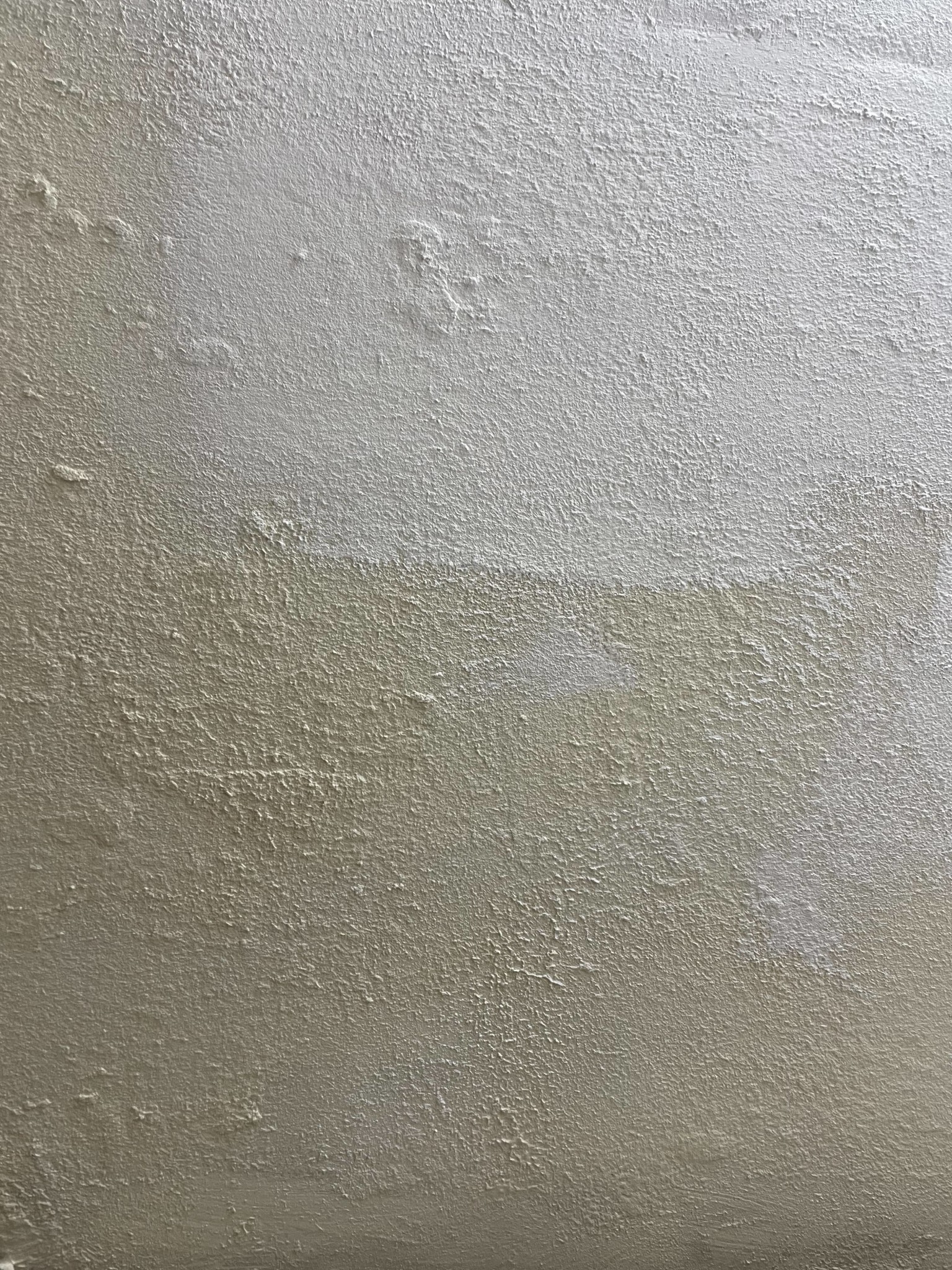
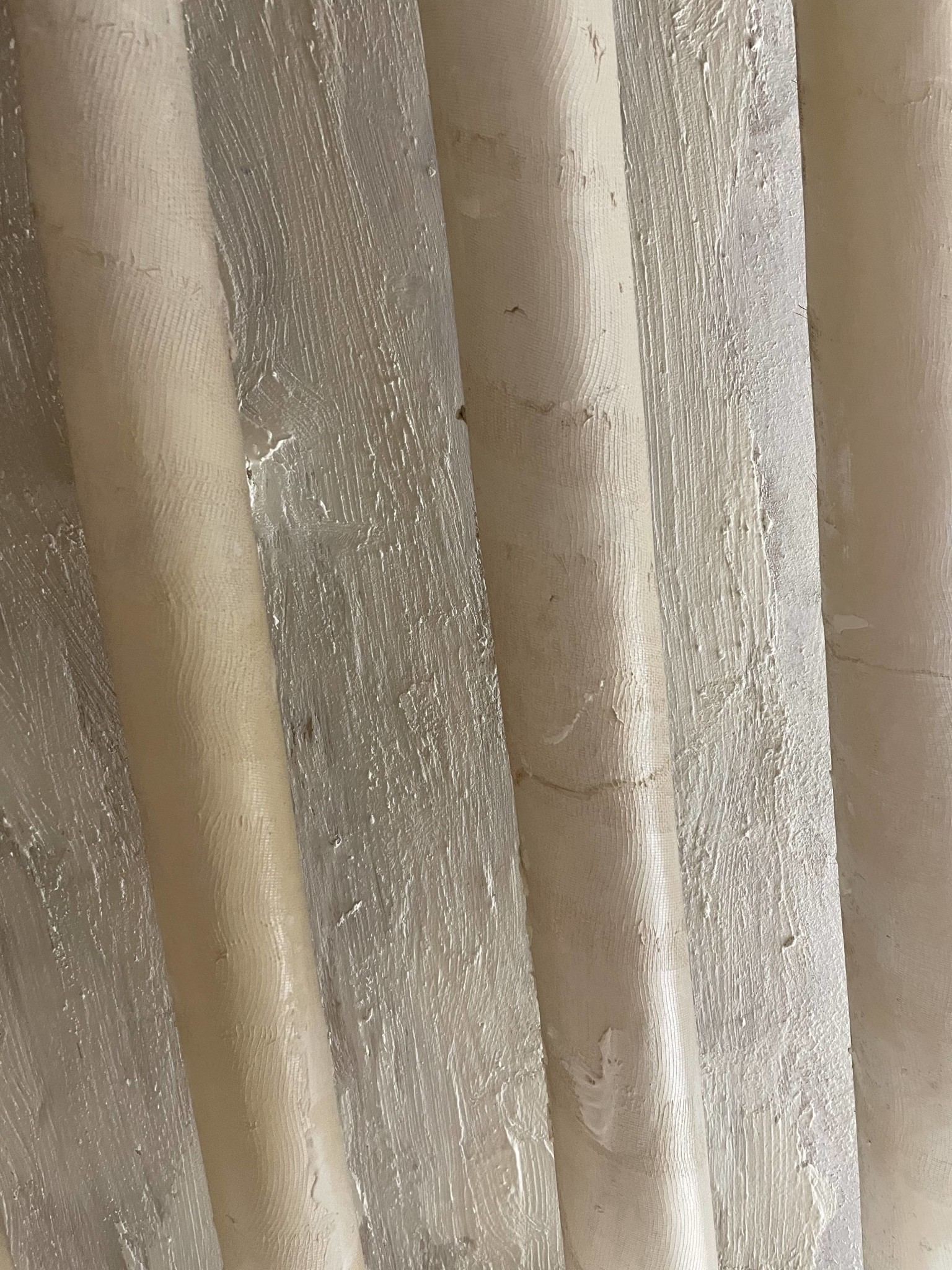

Not quite what you asked, but are you sure it's plasterboard and not eternitskivor?
Eternitskivor were common in boiler rooms because they are fire-resistant.
Regarding the paint, it mostly looks like they've quickly slapped on some cheap paint just to cover the surface.
Eternitskivor were common in boiler rooms because they are fire-resistant.
Regarding the paint, it mostly looks like they've quickly slapped on some cheap paint just to cover the surface.
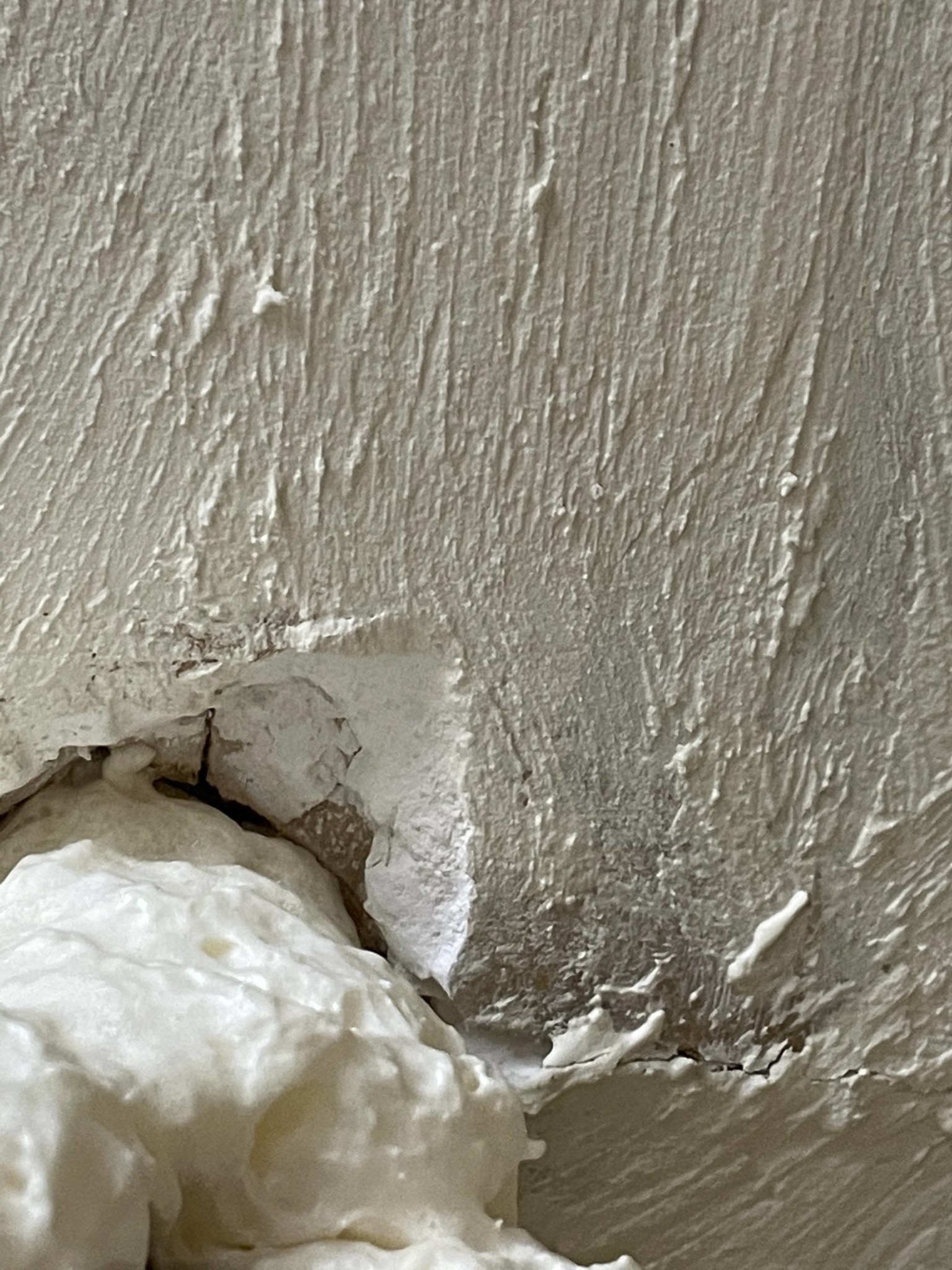
Yes, I am completely sure it is gypsum since an old water pipe was removed from the ceiling when we renovated the kitchen upstairs. You can clearly see the white gypsum and the paper layer.
However, I've read that asbestos could be added to paint and that it can give a texture.
In some places, it looks like lumps while in others completely smooth strokes. They haven't been particularly careful anyway.
However, I've read that asbestos could be added to paint and that it can give a texture.
In some places, it looks like lumps while in others completely smooth strokes. They haven't been particularly careful anyway.
BirgitS said:
 ?
? Immobil said:
Thinking maybe it was intended as fireproof paint on the drywall instead of putting up Eternit? But I have no idea. I know nothing
I believe that at some later point, they replaced something with drywall or they added drywall to achieve a better surface.
I had a relative with a townhouse from the mid-50s, and there was a concrete vault above the basement, where you could see the pattern of the boards that formed the casting mold, and then they just slapped on thick white paint to conceal the concrete.
I had a relative with a townhouse from the mid-50s, and there was a concrete vault above the basement, where you could see the pattern of the boards that formed the casting mold, and then they just slapped on thick white paint to conceal the concrete.
Click here to reply