
2,072 views ·
9 replies
2k views
9 replies
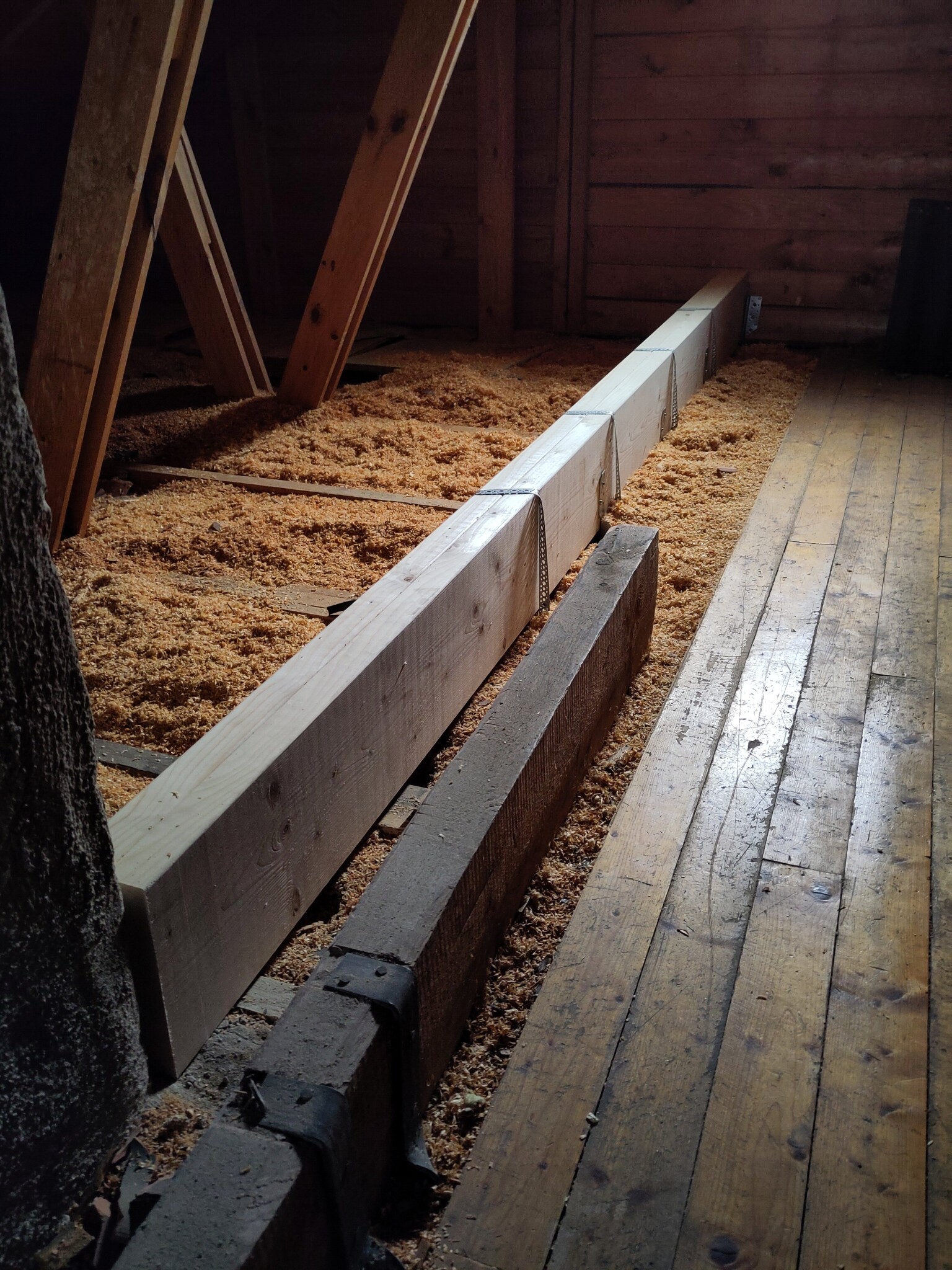
What is the purpose of this? Thick board on its edge on the attic floor.
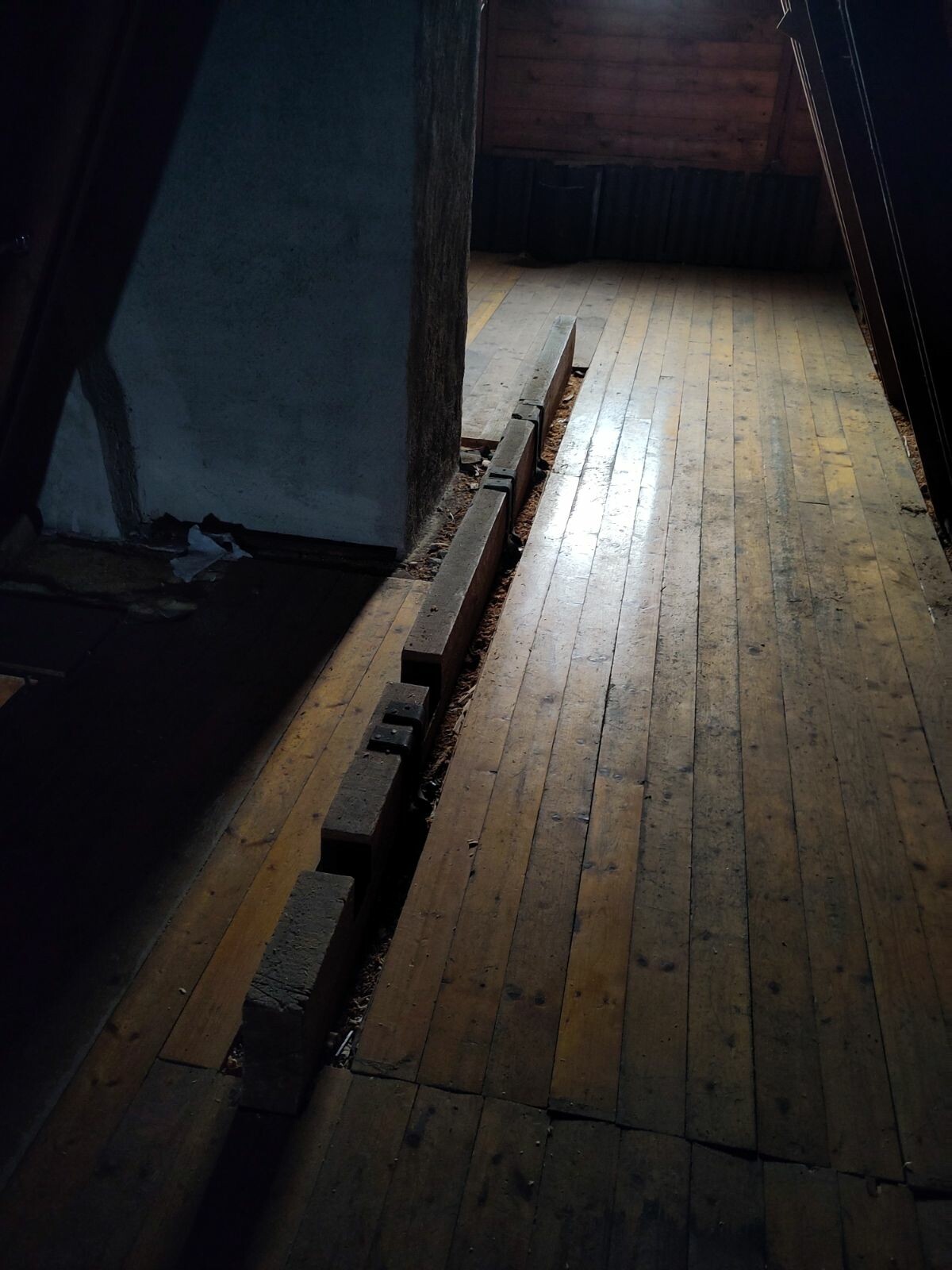
Now I've got some better pictures. It's terribly cold in the attic so I was a bit quick last time 😊
Thanks for the reply! If I understand correctly, the attic floor/underside of the rafters hang in the brackets that sit on the beam?
What I find a bit odd is that the beam doesn't clearly rest on anything, it lies outside the chimney stack and next to the wall below. The wall is at the red line. There must be something attached to the chimney stack under the beam that it rests on?
Thanks for the reply! If I understand correctly, the attic floor/underside of the rafters hang in the brackets that sit on the beam?
What I find a bit odd is that the beam doesn't clearly rest on anything, it lies outside the chimney stack and next to the wall below. The wall is at the red line. There must be something attached to the chimney stack under the beam that it rests on?

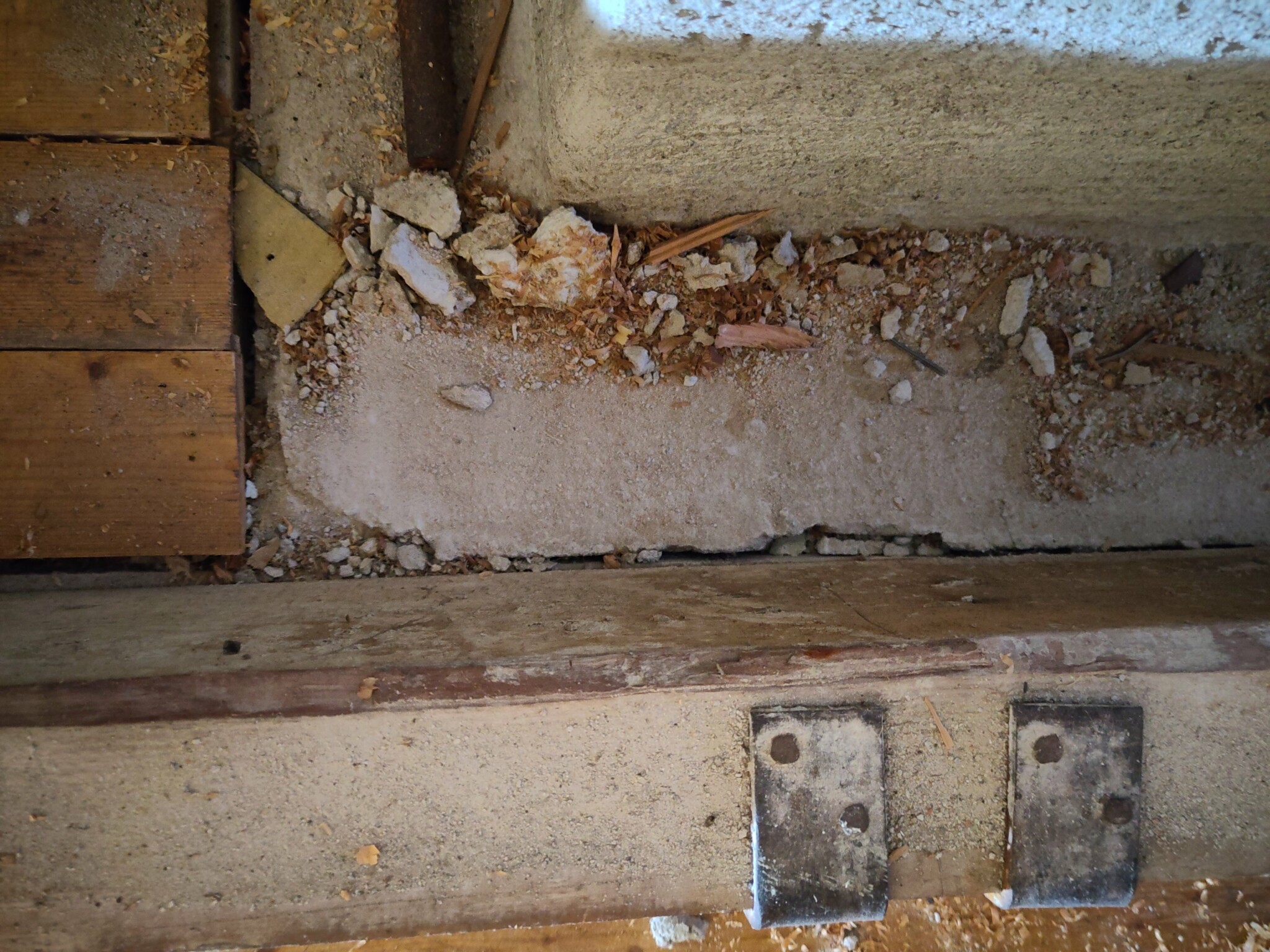
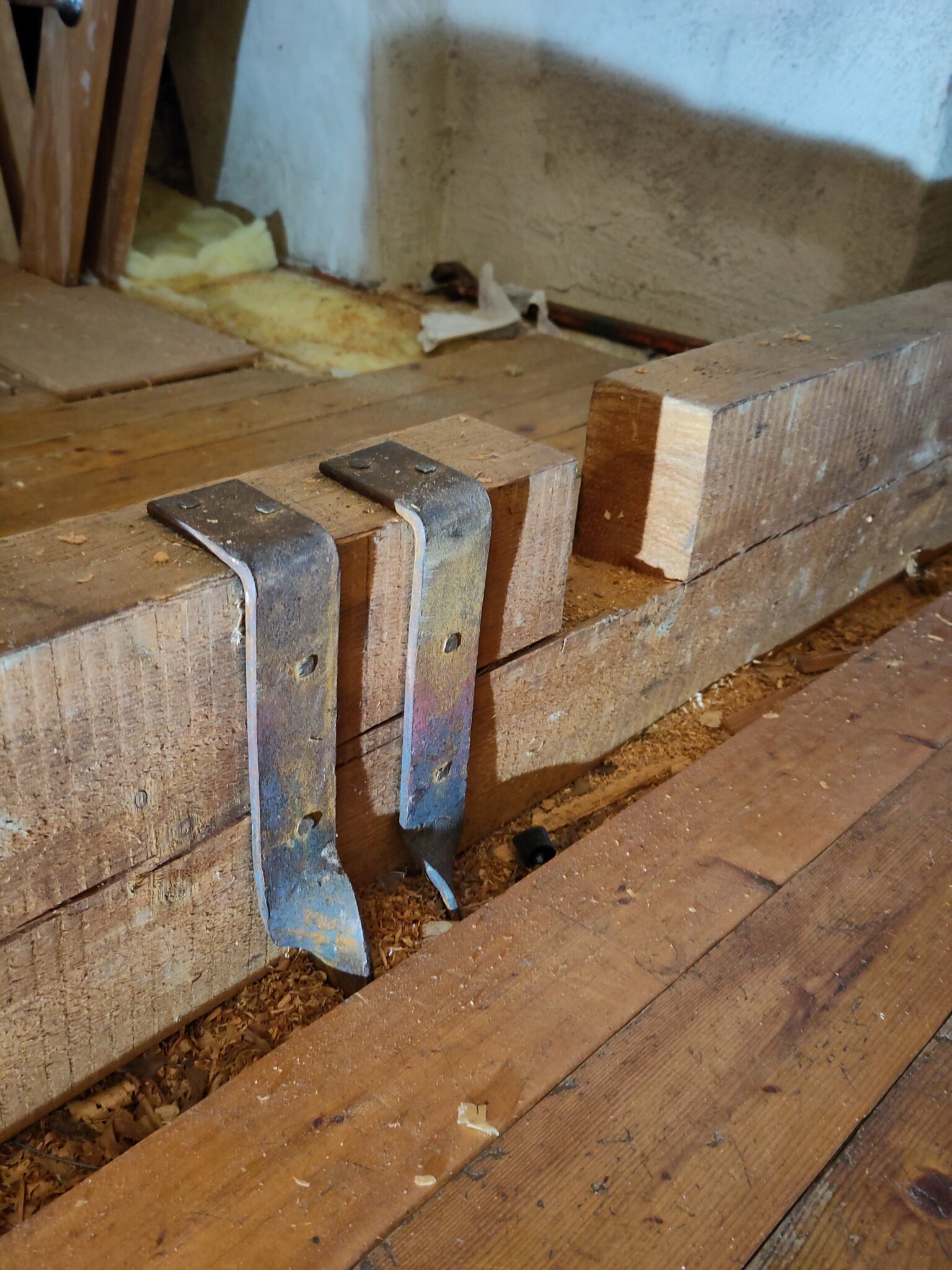

The most likely scenario is that one or two transverse floor beams run from the outer wall to the chimney and need a supporting structure near the chimney. In other words, the visible beam rests on adjacent floor beams and supports those "floating in the air" near the chimney.
In older houses, the chimney could support the framework, but this is no longer allowed due to fire risk.
If the beam has many years on it, it is probably not a problem, but the notches closest in the picture have significantly weakened the beam. As long as it is an unused cold attic, it is essentially only the beam's own weight + temporary live load when walking there that it should support. If the attic is to be furnished, the beam may need to be reinforced.
In older houses, the chimney could support the framework, but this is no longer allowed due to fire risk.
If the beam has many years on it, it is probably not a problem, but the notches closest in the picture have significantly weakened the beam. As long as it is an unused cold attic, it is essentially only the beam's own weight + temporary live load when walking there that it should support. If the attic is to be furnished, the beam may need to be reinforced.
Oh, I had missed that a response had come in! Thanks, now I understand.
Yeah, someone has really hacked it up, you can wonder why but I'll probably never get an answer to that 😄
Yeah, someone has really hacked it up, you can wonder why but I'll probably never get an answer to that 😄
A follow-up question! I have removed a wall that goes from the chimney to the gable as seen in the pictures. The idea was to install a beam similar to the one in the picture from the outer wall to the chimney and attach the floor joist to it so that we avoid having a support that comes down from the ceiling and looks unattractive. The plan is also to support the ends with studs and to attach with a joist hanger or similar to the outer wall. From the chimney, there is an extension that is one stone wide and 30-40 cm long which it can rest on at that end. It's not a very long span, about 2.5 m. What do you think about that?
Now I realized why the beam has been cut out. The ladder to the attic fits there when you fold up the hatch, I assume it has to go down a bit for the hatch to close.A Amatörtorparen said:
Best answer
Principally, the dimension/load-bearing capacity of a supporting beam depends on the load it needs to carry. A general first rule of thumb should be that a load-bearing beam should be at least the same dimension as the studs it is helping, and usually thicker. Then it depends on the span of the beam. The larger the span, the heftier the beam. 2.5 m is not such a long span, but presumably, it should then carry at least two roof beams? How much load they carry, in turn, depends on their span.A Amatörtorparen said:A follow-up question! I have removed a wall that goes from the chimney to the gable seen in the pictures. The idea was to place a beam similar to the one in the picture from the outer wall to the chimney and attach the floor joist to it so that we avoid having a drop beam from the ceiling that looks unattractive. The plan is to support the ends with studs as well and to attach it with a beam hanger or similar on the outer wall. From the chimney, there extends a small ledge that is a stone wide and 30-40 cm long to rest on at that end. It's not a very long span, about 2.5 m.
What do you think about that?
If it is an old house, perhaps the roof beams are 5x6" and have a span of 5-6m? The floor joist is probably not that heavy, so a guess is that a beam of perhaps 5x8" would work.
Note that these are just rough guesses. Everything depends on the conditions of your house. And, naturally, it is also crucial that the bearing ends are capable of supporting the load and its construction down to the ground.
This is the kind of thing you need engineers for, who can see all the relevant precise conditions on-site and then calculate what is required.
Now we have completed the exchange on the attic! In an ideal world, of course, we would have hired a structural engineer, but that's not possible for us right now. We used two pieces of 45*220, which doesn't entirely match the reasoning that @Oldboy presents in the post above, but we have thinner joists so I think it will work anyway. The ends rest partly on the outer wall, the outer wall is narrower in the attic so it was possible to place them there, and on a stud we have mounted on the wall below. On the other side, there is a masonry protrusion from the chimney stack, one brick wide and about 30 cm deep that it indirectly rests on. There is a joist in between. I started by using nail plates, but didn't think they tightened enough, so I ended up using brackets as well. Thank you so much for the help!
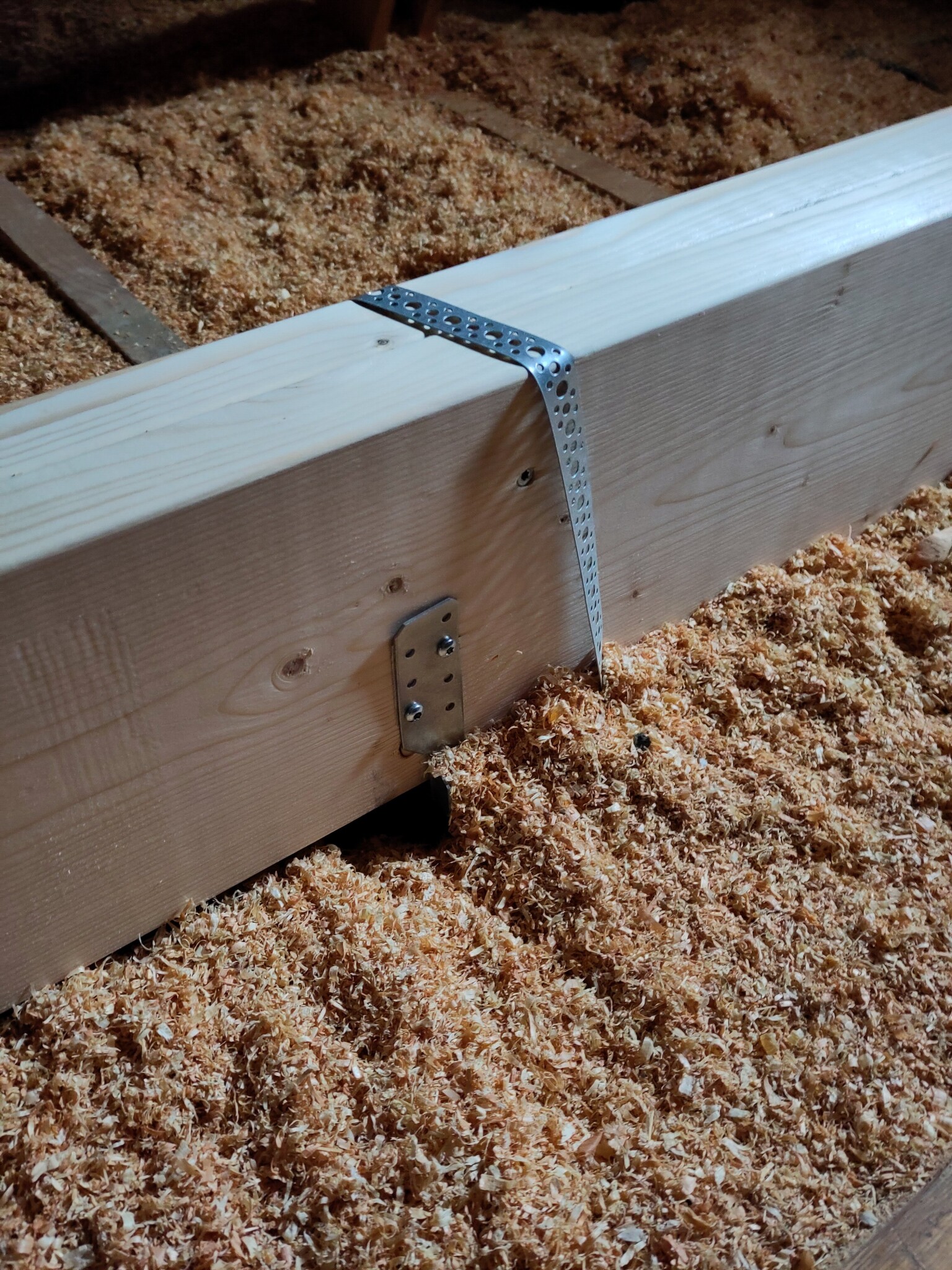
Nail straps are useless for hanging anything other than ventilation pipes. They break for nothing, so sturdy brackets are a must.A Amatörtorparen said:
Assuming the studs are nailed/screwed/glued together. It increases the breaking strength with a coarse continuous piece of wood compared to two unconnected thin studs, even if in theory it doesn't make a difference. (This is because wood is a natural material with defects such as knots that reduce load-bearing capacity. The coarser the timber, the less impact a large knot has on the load-bearing capacity since there is more sound wood around it).
Click here to reply