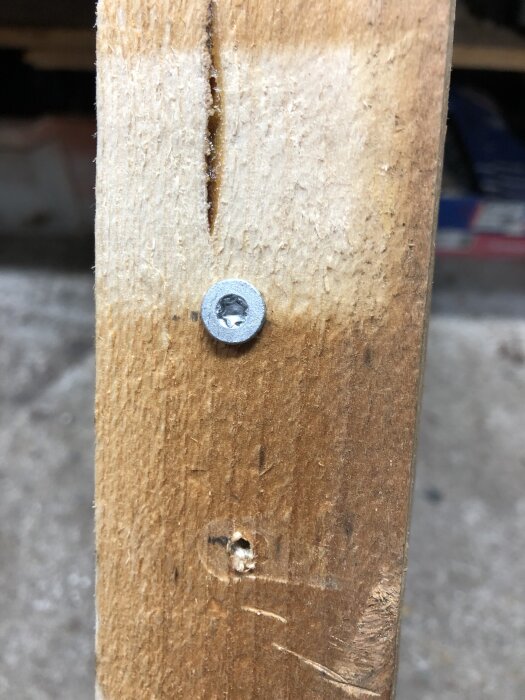
In the summer of 2024, I screwed a board to the wall inside my workshop/storage in the former barn. It has held a few smaller hooks for small items and was attached with three screws, likely from Byggmax.
Yesterday it was on the floor.
Dry plastered wall of lightweight concrete from the early 1900s, dry space, nothing else has rusted in there for 20 years.
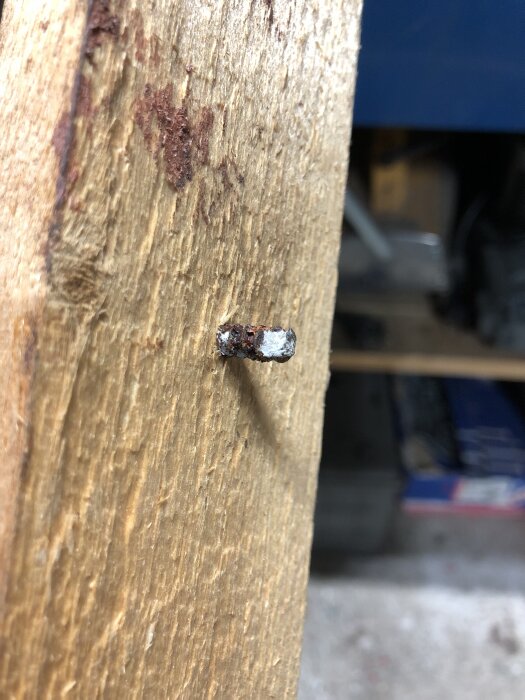
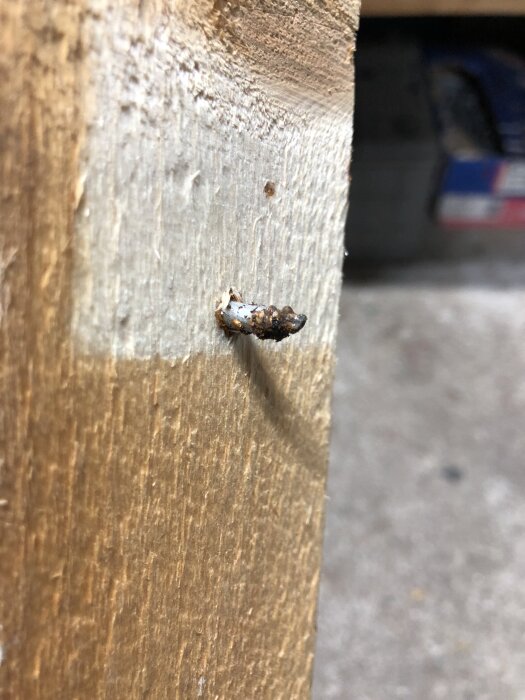
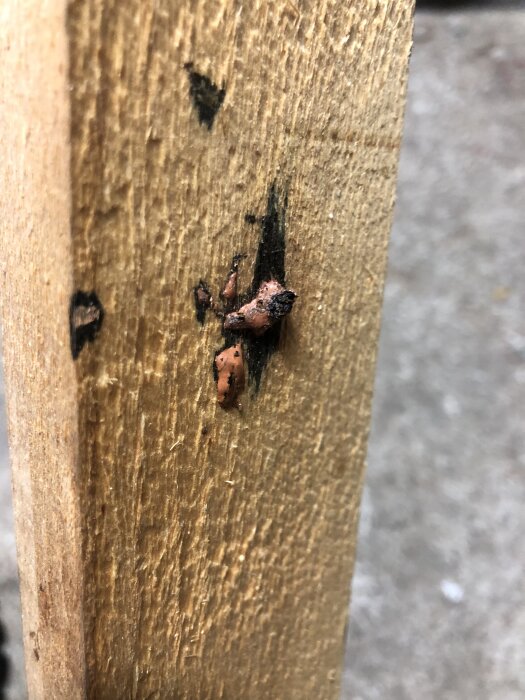
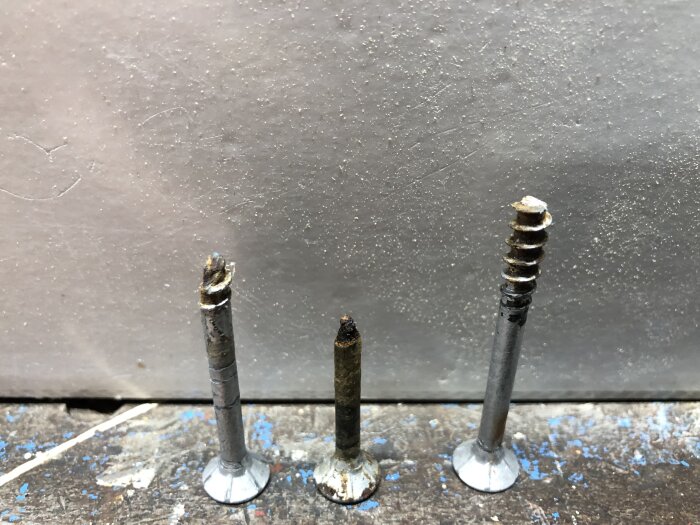
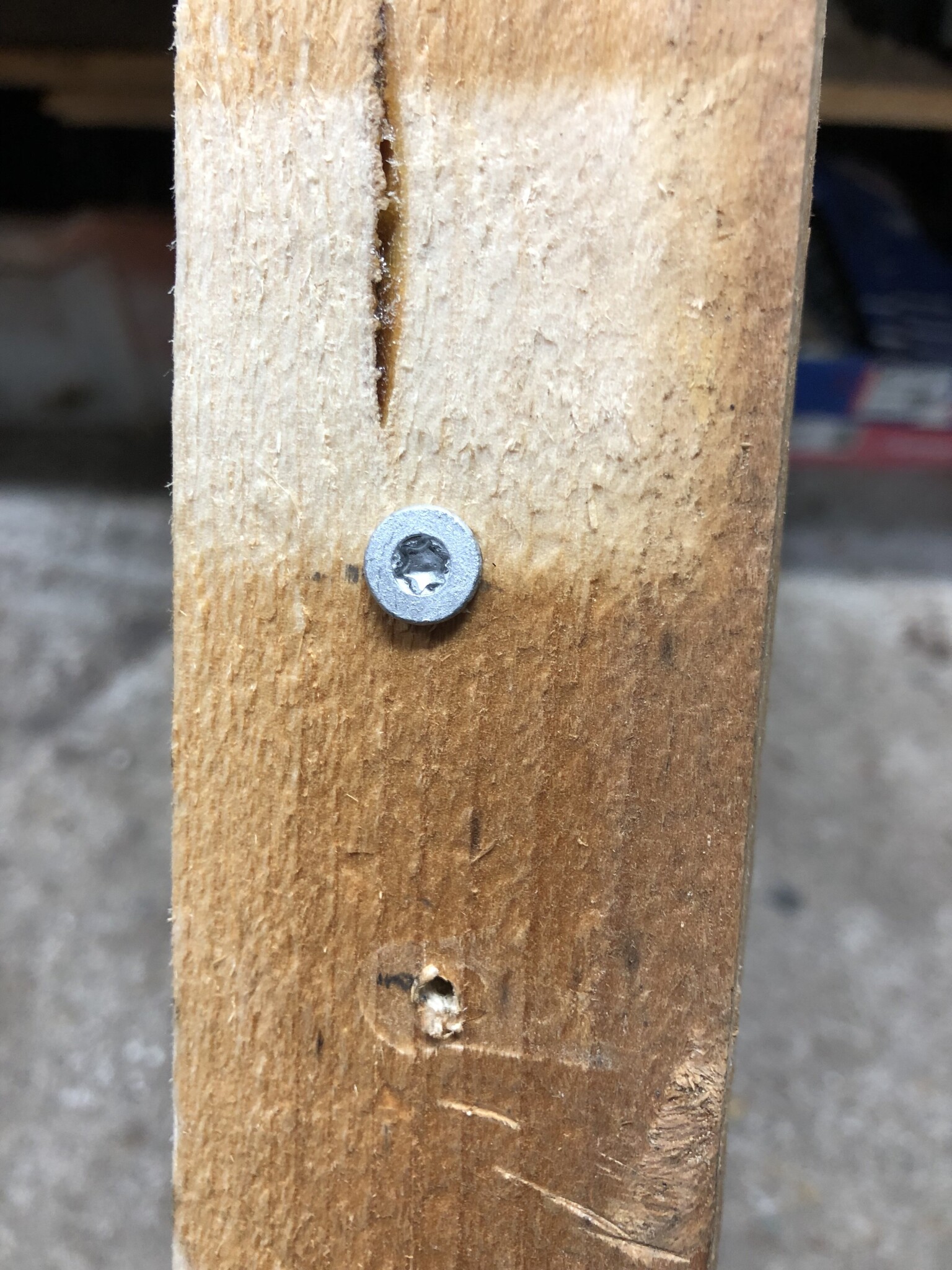
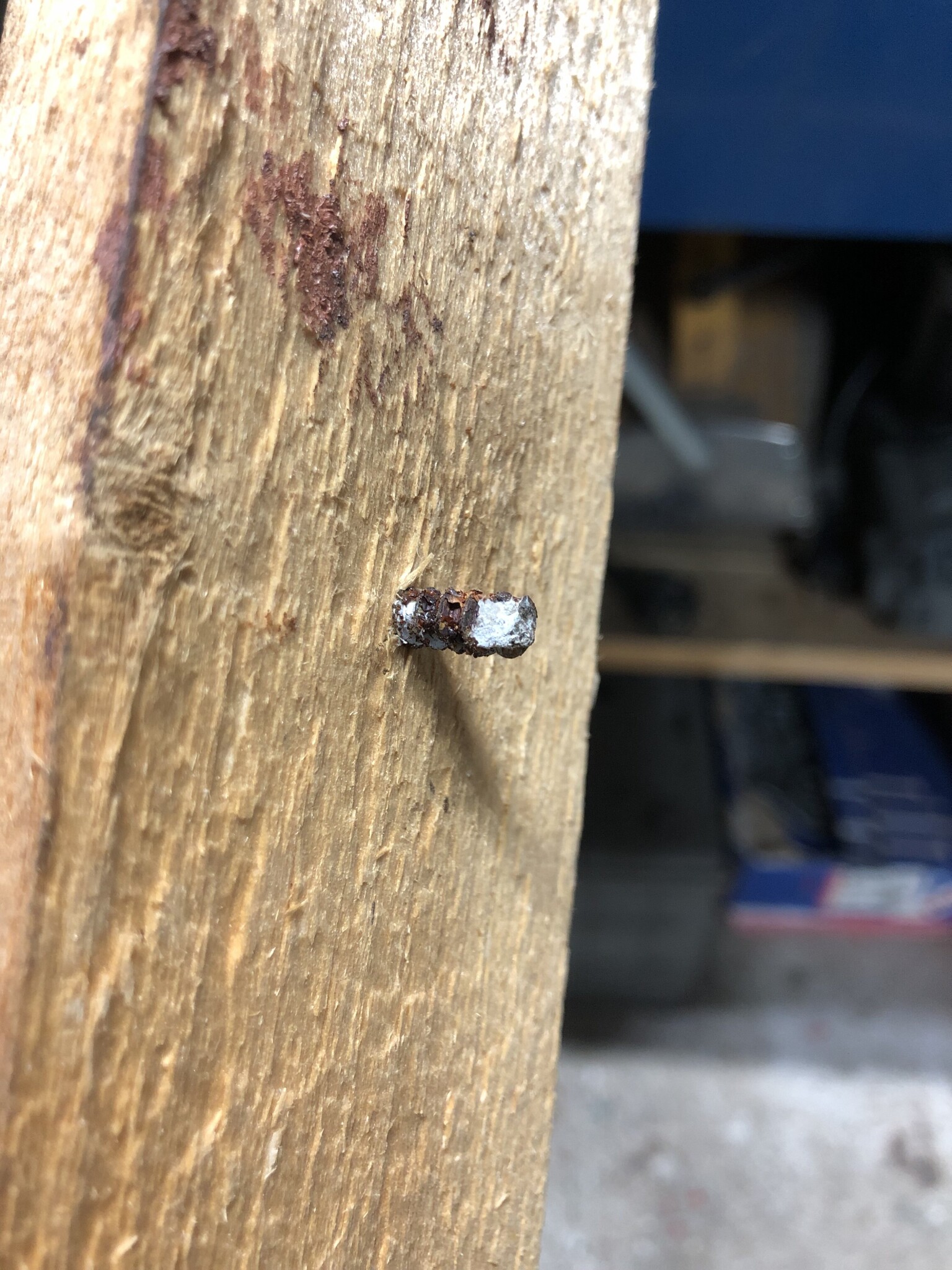
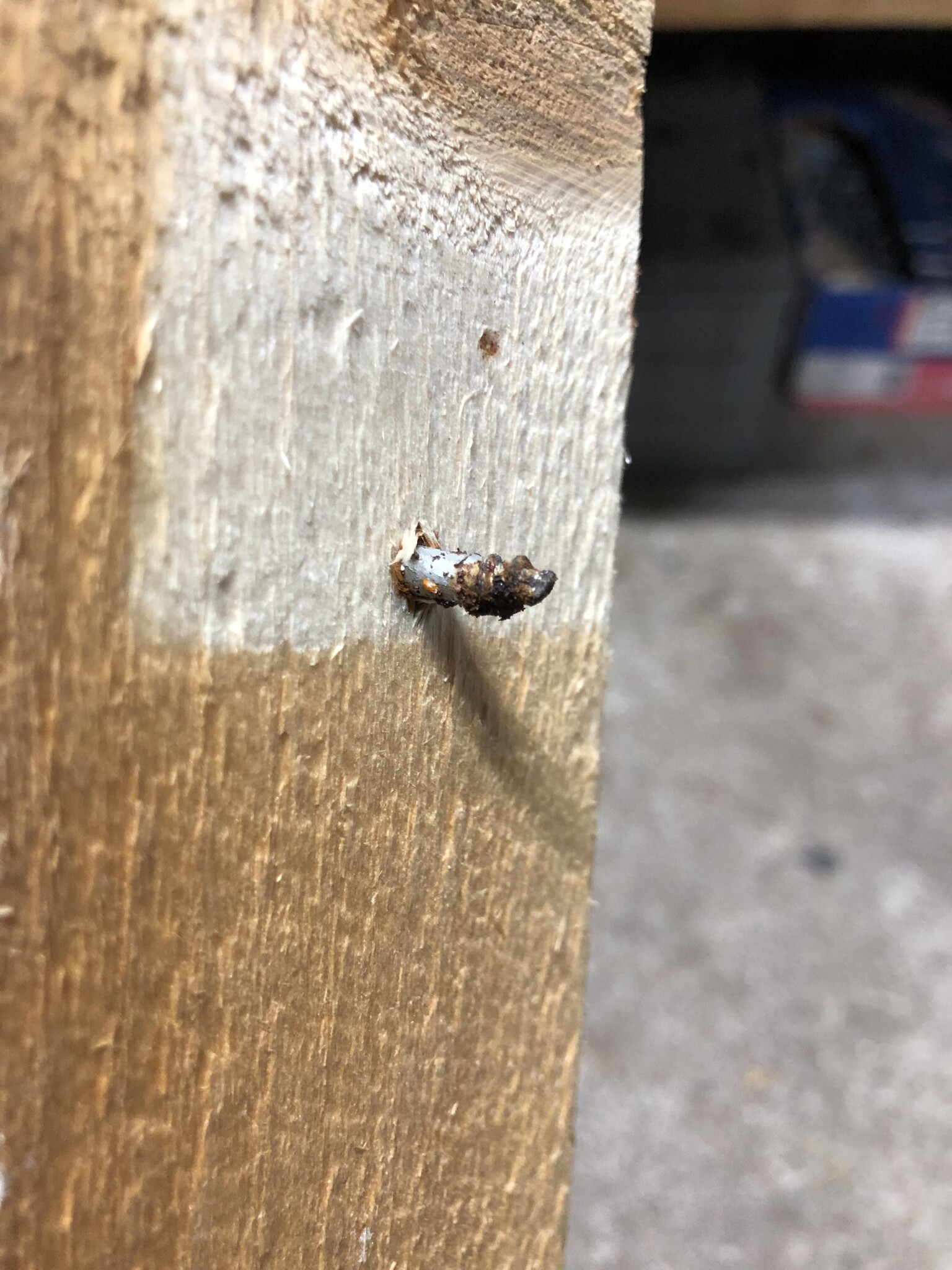
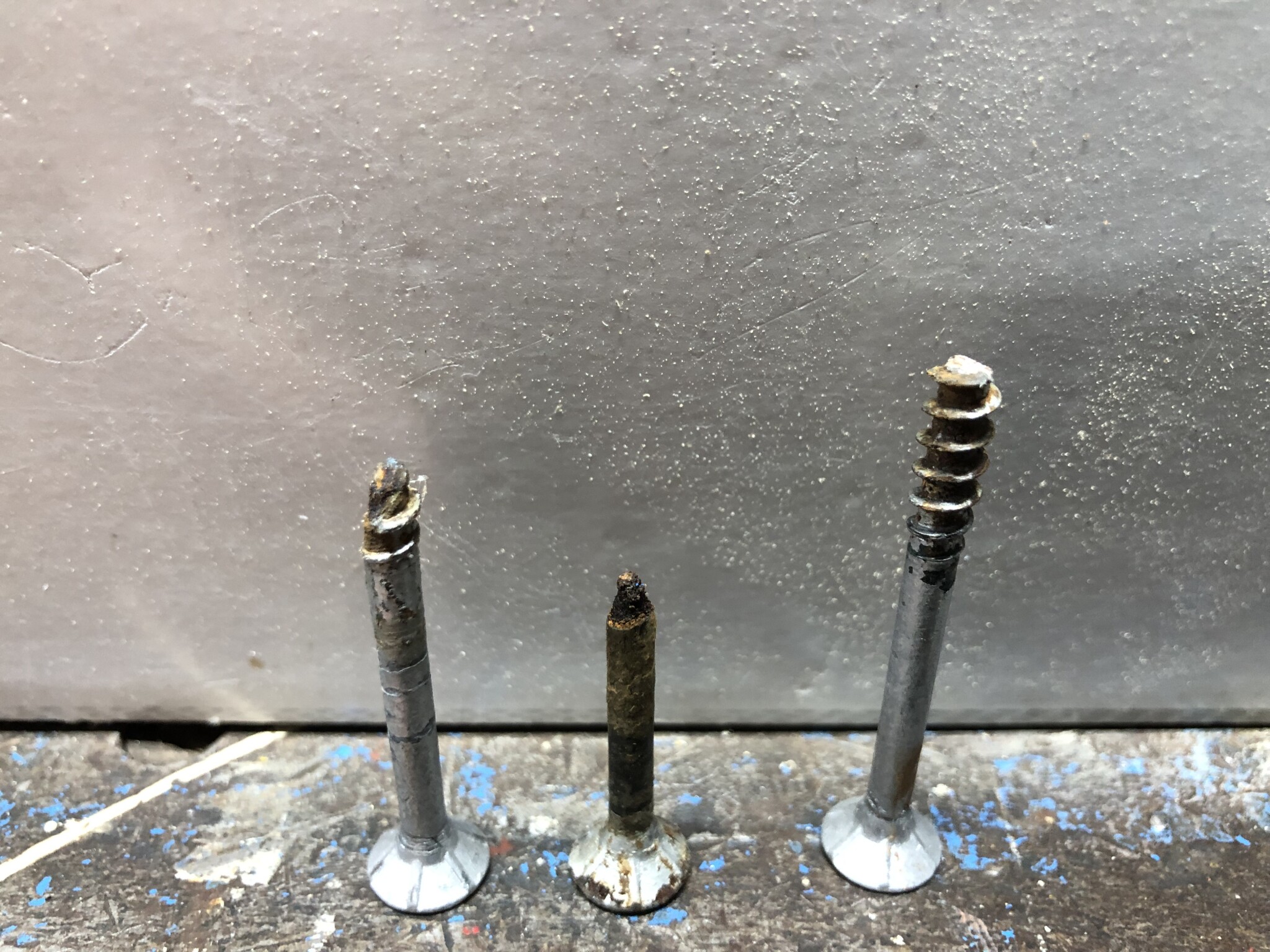
It's very easy to suspect that the screws are made of a very poor metal since they all seem to have corroded. Or that the surface coating was poorly applied.
Are you really sure that the concrete is as dry as you think? Or has someone used the board to do push-ups and the screws eventually became fatigued and broke?
I have used thousands of outdoor wood screws from Biltema in the garden where a few have broken due to uneven forces. But none of them have rusted as far as I remember; they've simply broken.
Well, as I said, I have other things in the walls and in the space that haven't rusted at all in 20 years.
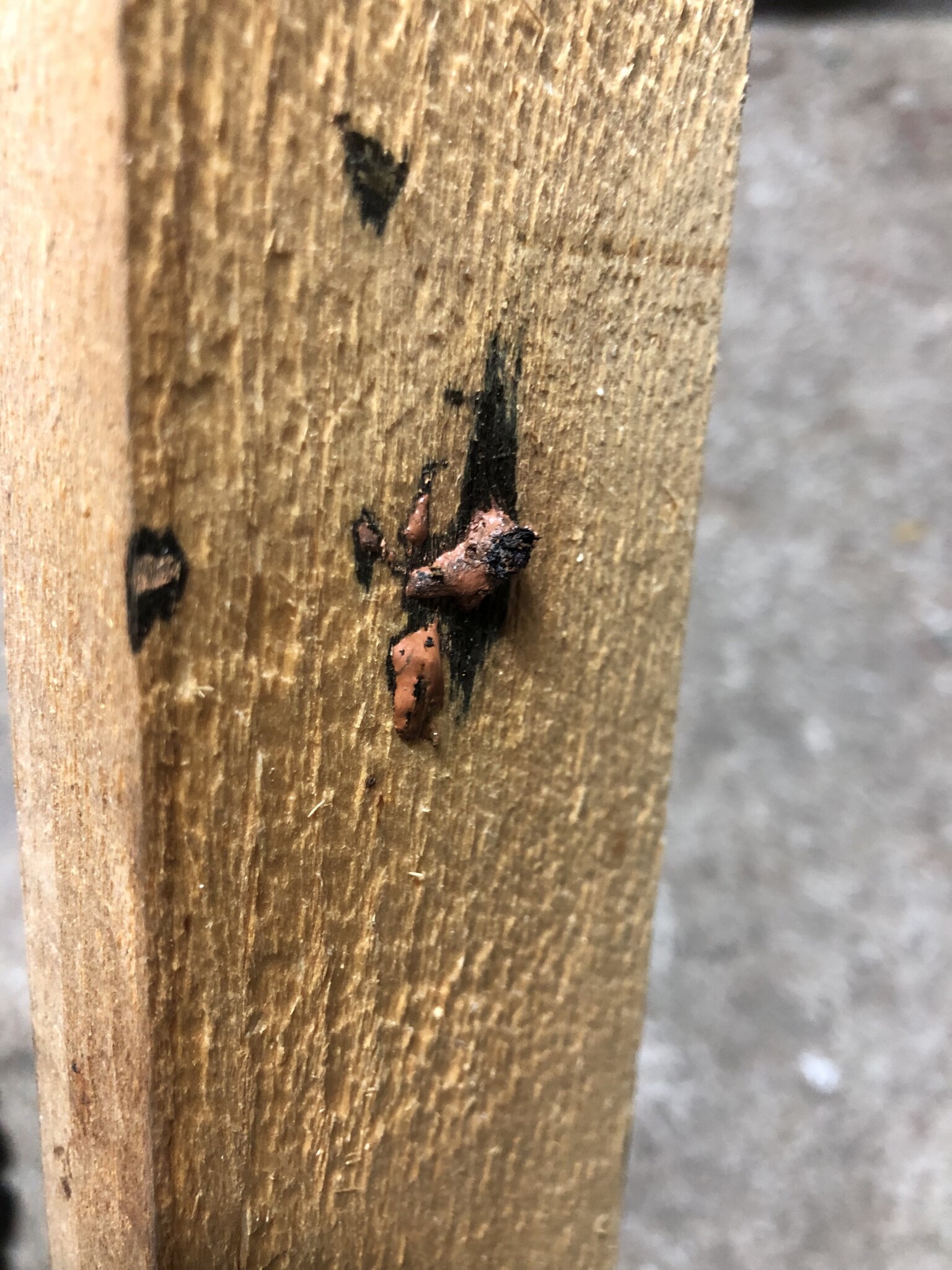
No one has tampered with the board either; they almost look like they've been attacked by acid, I've never seen anything like it.
Additionally, I've dismantled other screws (French) and nails from the wall that have been with wooden plugs for at least 70 years, and they are intact.
Then it must be a very poorly coated screw you used. The coating appears to have flaked off from the middle screw in the picture with the three that have broken. How the metal then corroded in the dry wall is for someone else to speculate about. Just hope that the same screws were used to fasten something important.
Well, as I said, I have other things in the walls and in the space that haven't rusted at all in 20 years. No one has tampered with the board either, they almost look like they've been attacked by acid, I've never seen anything like it.
I've also dismantled other screws (French) and nails from the wall that have been secured with wooden plugs for at least 70 years and they are intact.
It's the metal mixture in your screws that hasn't "tolerated" the humidity change that occurs in a barn over the year, since your lightweight concrete/Siporex/blåbetong blocks release lime, silica, etc. that react with "poor" metal mixtures.
In the past, when clip nails were used in lightweight concrete blocks, the nails were always of high quality. Back then, the nail was dipped in a strong salt solution before being hammered in because the chemical reaction that occurred meant the nail was already holding much better within hours. (when installing kitchen wall cabinets & the like)
Click here to reply
Vi vill skicka notiser för ämnen du bevakar och händelser som berör dig.


TorpAnders said:
Well, as I said, I have other things in the walls and in the space that haven't rusted at all in 20 years. No one has tampered with the board either, they almost look like they've been attacked by acid, I've never seen anything like it.