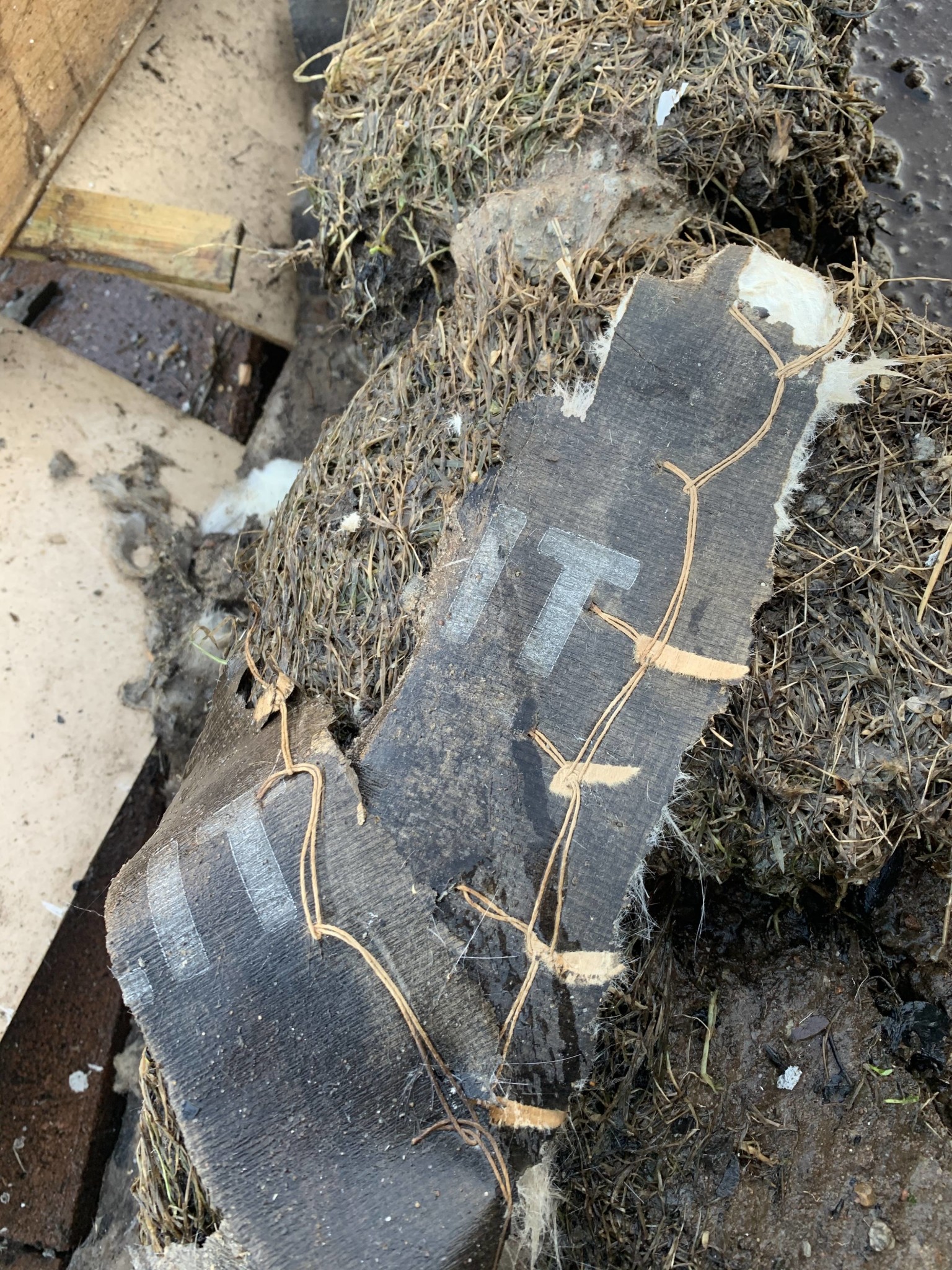
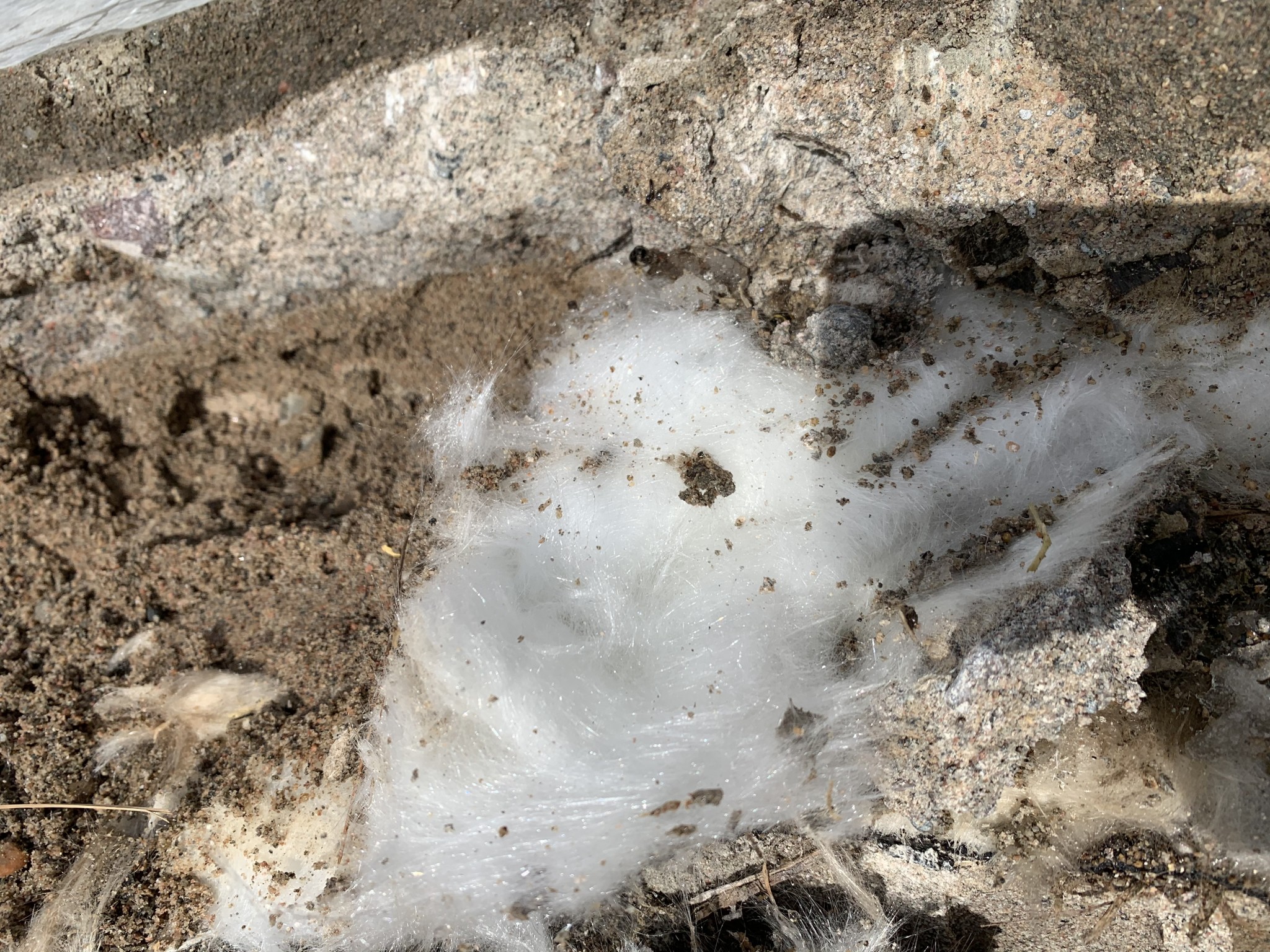
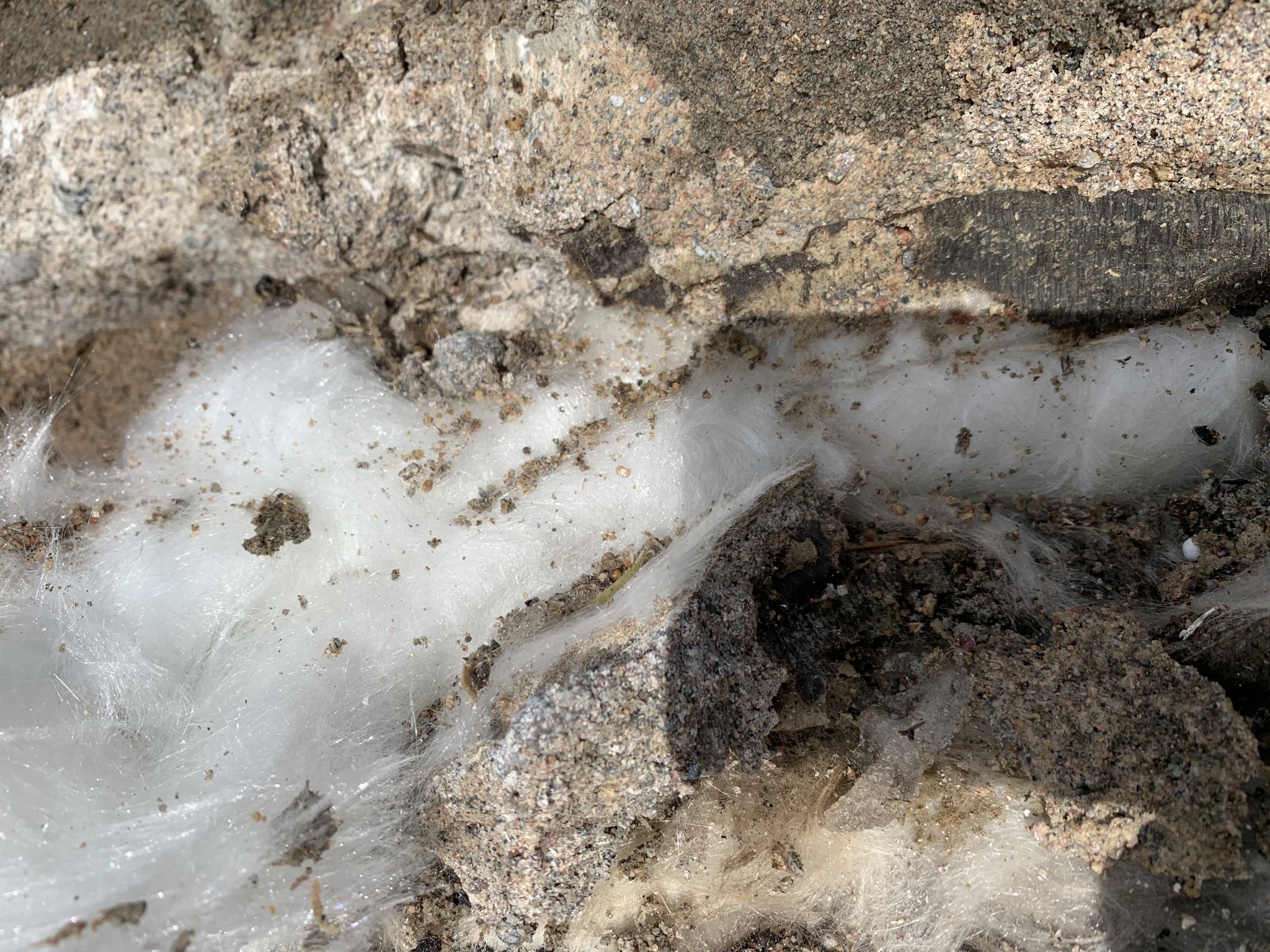
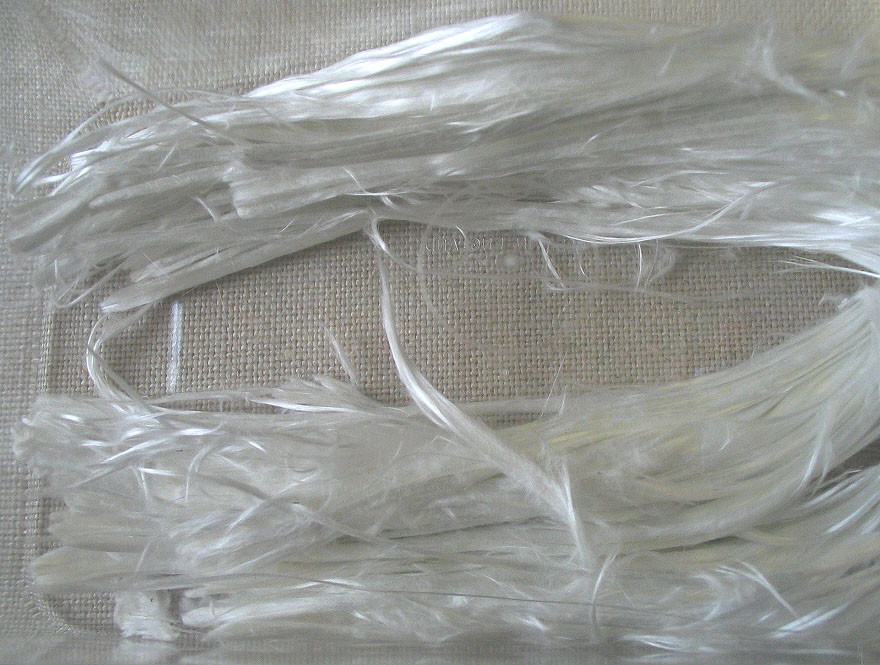
I'm in the process of demolition and will also be chipping away a concrete slab of 20m2. I found this white fibrous material (reminds me of fiberglass)
Does anyone know if it might contain anything dangerous, e.g., asbestos?
Well, it's vague. Hairy. Seems to be around the sill on the slab.
Glasullit, a terrible predecessor to Gullfiber. Was once up in an attic insulated with this. It was 20 years ago but it still itches.
Or it might be salt efflorescence.....
I have never seen pure asbestos fibers used in that way, so I also vote for an early variant of glass wool. But the only way to be sure is to send it for analysis.
Isn't it just a matter of trying with a candle flame?
Fiberglass melts easily, but asbestos fiber should fare better: Melting point varies between 1150-1550°C
Isn't it just a matter of trying with a candle flame?
Fiberglass melts easily, but asbestos fibers should withstand better: Melting point varies between 1150-1550°C
Fiberglass melts at about 700 degrees. Doubtful if a candle flame reaches that.
"The temperature in the dark zone is quite low, around 600 °C, and increases to about 1200 °C in the middle of the yellow area. The highest temperature, 1400 °C, can be found in the upper outer edge of the bright yellow part of the flame." https://www.umu.se/nyheter/nu-tandas-tusen-juleljus---ljusets-kemi_5822561/
"The flame in a candle, which is light yellow, almost white, is about 1200 ⚬C.".
chem-www4.ad.umu.se:8081/Skolkemi/Experiment/experimentfordjupning.jsp?id=157
"The temperature in the dark zone is quite low, around 600 °C, and increases to about 1200 °C in the middle of the yellow area. The highest temperature, 1400 °C, is found in the upper outer edge of the bright yellow part of the flame."
[link]
I actually tried burning just now with a small hand butane lighter, the hairs on those white ones melted instantly until they curled up into a compact ball, then they burned as long as I applied flame to them.
I also did this on a suspicious wind barrier and it completely burned up.





Demmpa said:
Yes, a candle can reach up to double that,