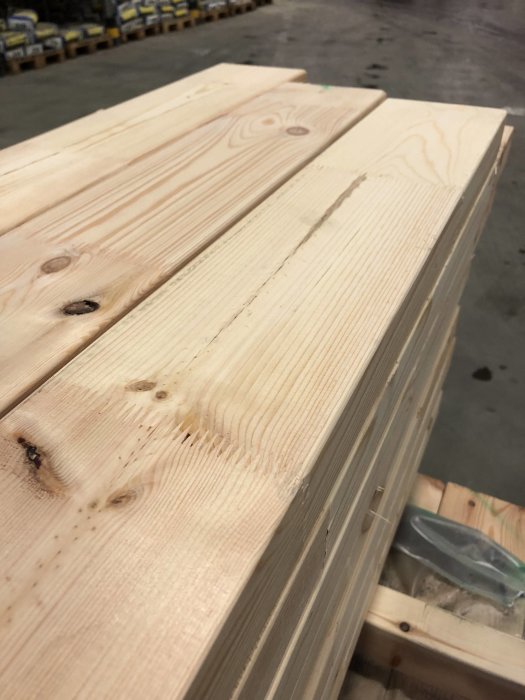
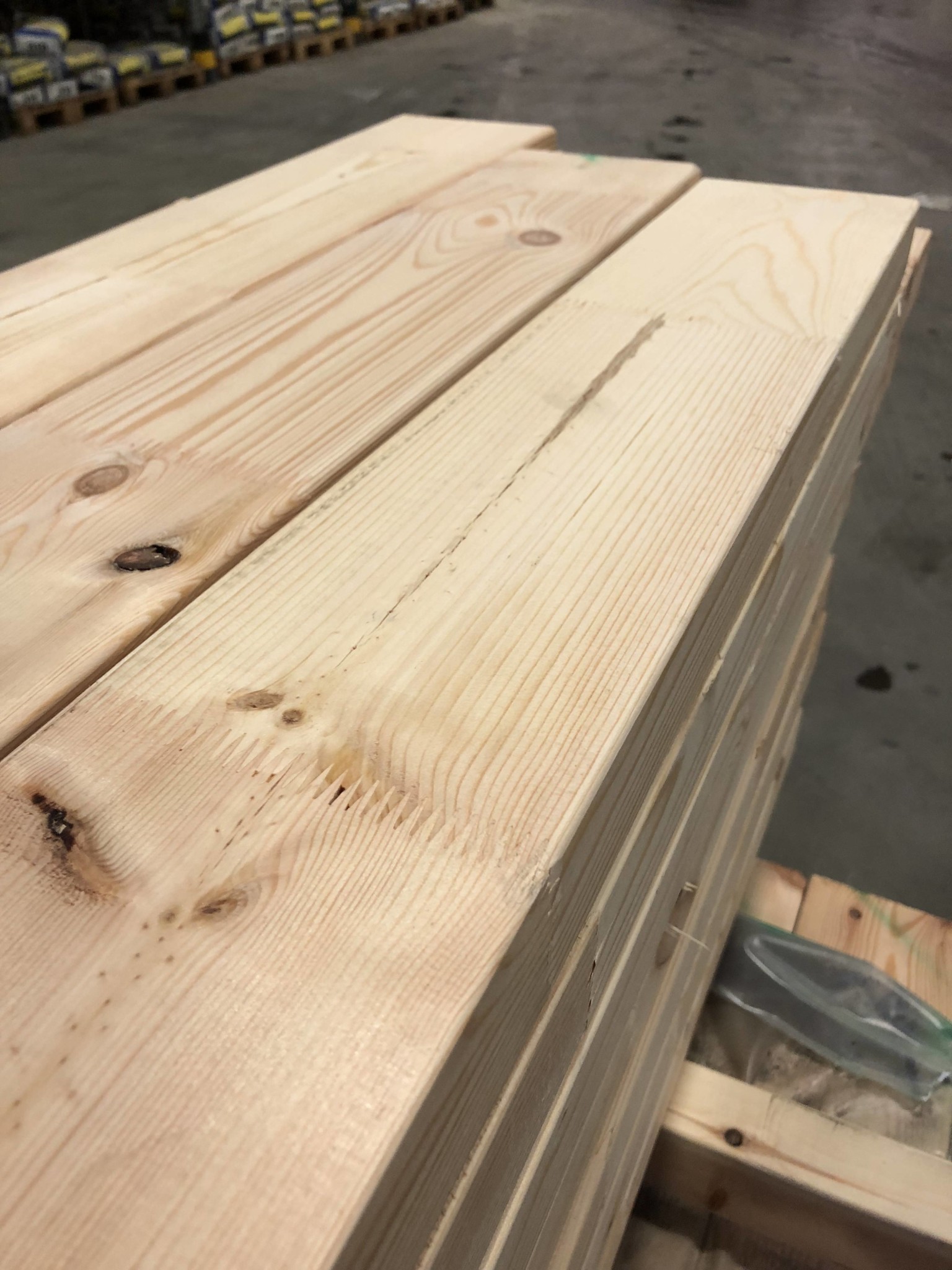
I'm in the process of building a stylish TV bench out of wooden beams. I buy a long beam, cut it into three equal parts, and then fasten them together with metal plates on the underside that are screwed in place.
The problem is that the wood is warped. One might think I've chosen a warped piece and should just go buy a straight one. But unfortunately, it seems more the rule than the exception that the wood is warped. I've tried several times to choose the straightest pieces possible, but they still turn out quite warped. There's about a one and a half cm height difference on the sides of the shelf, with one side tilting up and the other down.
What should I do? How can I find straight beams or make the ones I have straight?
Dried too quickly, don't buy anything that's been in the heat, then there's a bit of a science with timber, heartwood and sapwood tend to twist when they dry. How thick do you need for this, if you buy planed (quite a bit more expensive) you probably avoid that. Just remember not to place them on radiators or any direct heat, but let them be slightly cool for a while, and buy them in as close to the right length as possible.
How large is the board and what dimension of lumber are you using? The basic rule is that if you buy warped wood, you can't straighten it. You can buy a glued laminated board. Depending on the size, it can be called either a shelf or a countertop. These are flat and stay flat.
Buy sawn timber. Let it sit inside for a couple of months. Jointer plane the pieces on 2 sides, surface plane the other two sides. And glue them together, do not use perforated plates.
There are no shortcuts, building furniture from solid wood requires understanding how wood behaves.
One option that might work is to buy the straightest studs you can find, glue them together immediately (before they start to warp). Glue every other stud with the core side down and every other with the core side up.
If you want to increase the chances of a successful outcome, first split the studs in the middle and turn them 180 degrees against each other before gluing (reverse gluing). Then glue these glued studs together. Unfortunately, it will be noticeable that they are not whole studs.
Note that everything is based on them being glued together. The method does not work with plate connectors.
vectrex: Sounds interesting. I see now at Bauhaus that they also sell planed timber. I could buy that. But should one still glue? Why is gluing so important?
If you don't have the opportunity to obtain and process properly dried furniture wood, perhaps a glulam beam could be an alternative? I believe they have a significantly lower tendency to warp than regular studs. The thinnest ones seem to be 42 mm, then you can get almost any thickness.
[link]
[link]
That sounds great! Do you know what type of wood it is? Is it spruce or hardwood? I don't think iron vitriol works on hardwood, namely.




jac said:
If you don't have the opportunity to obtain and process properly dried furniture wood, perhaps a glulam beam could be an alternative? I believe they have a significantly lower tendency to warp than regular studs. The thinnest ones seem to be 42 mm, then you can get almost any thickness.