
162,868 views ·
317 replies
163k views
317 replies
Warning for Biltema's decking screw
Yes, it's just junk that comes from China...V Värmlandshusägare said:

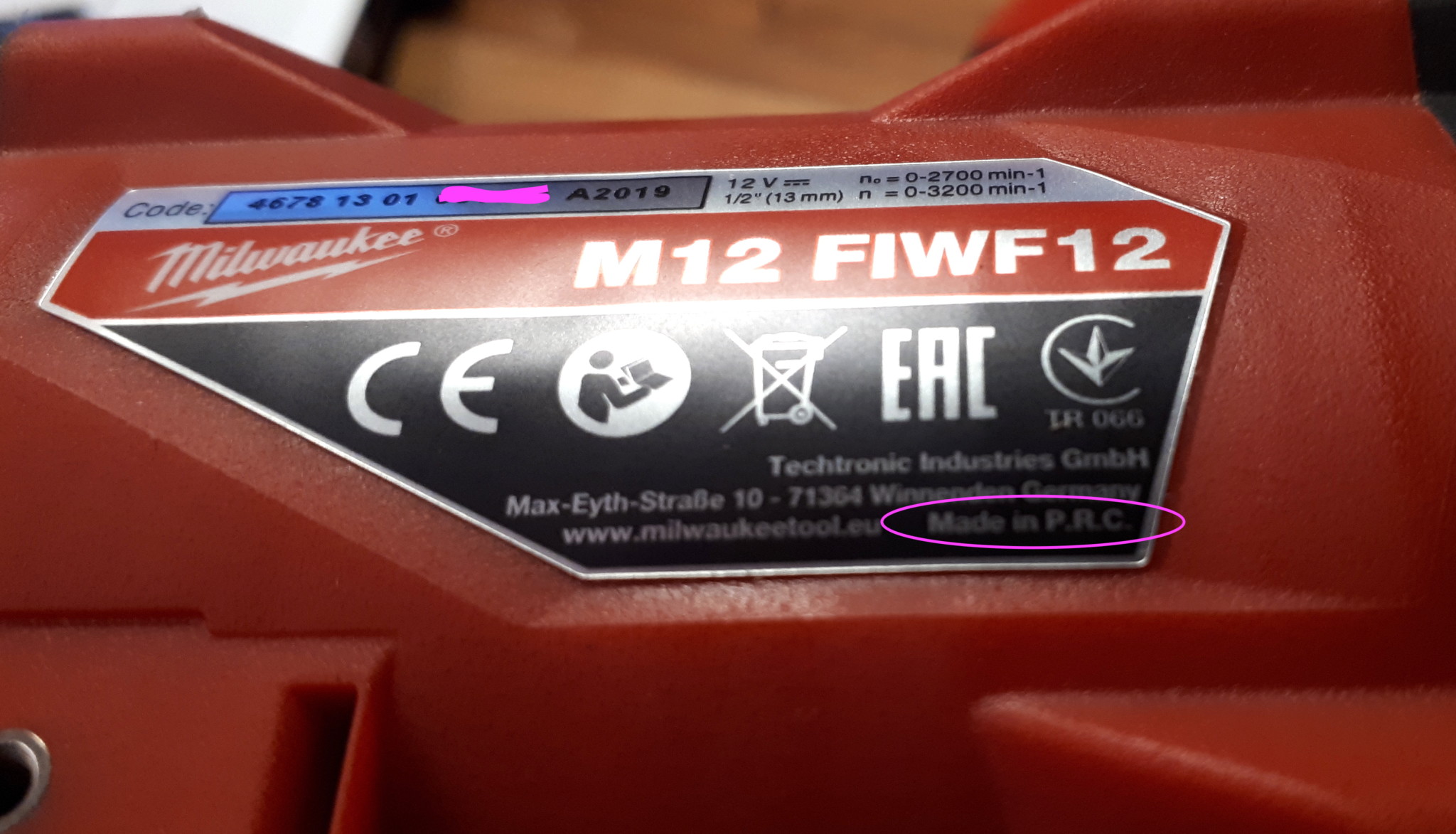
But seriously, the list of reputable tool manufacturers who have moved their production to China etc. can be made very long today. Definitely not just Jula and Biltema stuff coming from there, but there are big quality differences depending on what the purchaser's specifications and quality system are, as mentioned earlier in the thread.

Know-It-All
· Västra götaland
· 11 055 posts
There is nothing on the packaging that proves THAT the item is PURCHASED, nor WHEN it is purchased. A receipt is needed to verify the purchase, the label says nothing about whether you walked out with the box under your arm without paying, bought it cheaply at a flea market, or got it from your neighbor. The warranty also expires after a certain time from the purchase date, if you want to make a complaint about a product that is older than the warranty period, the retailer has the right to deny your complaint. The right of complaint is another matter, but it is usually difficult to win in ARN without a receipt. The fact that a bank statement with a date makes it possible to find a receipt is a way for the retailer to be accommodating, as far as I know it is the consumer's responsibility to keep track of the receipt.A adde321 said:Receipt is never needed for complaints as long as you as a customer can demonstrate that it is, like now for example, screws from Biltema, meaning that you bought the item from the chain to which you are making the complaint. And that's not so difficult since they have their appearance plus the packaging if you still have it. However, you can be denied a return if you lack a receipt, but that's a completely different matter.
Contrary to what you write, it is often easier to approve a return without a receipt, of course depending on many circumstances, but complaints are more serious.
A persistent myth that the packaging proves the purchase, which I don't understand where it comes from?
With that said, I wish all honest and disappointed consumers get their compensation!
You are using entirely the wrong term that I describe in my post. You must distinguish between RETURN and COMPLAINT. A company can require, and usually does, that you have a receipt to make a RETURN. That is, returning a functioning item for a refund.Keexet said:
There is nothing on the packaging that proves THAT the item is PURCHASED, nor WHEN it was purchased. A receipt is needed to confirm the purchase, the label says nothing about whether you walked out with the box under your arm without paying, bought it cheaply at a flea market, or got it from a neighbor. The warranty also expires after a certain period from the purchase date, if you want to complain about a product that is older than the warranty period, the retailer has the right to deny your claim. The right to complain is another matter, but it is usually difficult to succeed in ARN without a receipt. The fact that an account statement with a date can help find a receipt is a way for the retailer to be accommodating, as far as I know, it is the consumer's responsibility to keep track of the receipt.
Contrary to what you write, it is often easier to grant a return without a receipt, of course depending on many circumstances, but complaints are more serious.
A persistent myth that the packaging proves the purchase which I do not understand where it comes from?
With that written, I hope that all honest and disappointed consumers get their compensation!
A COMPLAINT is made when an item is broken or fails due to a construction fault or transport damage by an external supplier.
https://www.hallakonsument.se/frageforum/måste-jag-ha-kvitto-för-att-kunna-reklamera-1529315
"There is no law saying you must show a receipt to complain, it may be sufficient to show an account statement. However, you must be able to show when you made the purchase, from whom, and at what price. If you bought several items at the same time, it might not be possible to discern from the account statement which different items you have actually purchased. In such cases, you may need to show a receipt."
And
"It’s important to distinguish between return and complaint.
For a return, for example, if the store offers exchange rights or open purchase, the store can require you to have the receipt. This is because it’s optional for the store to offer these possibilities and they can set the conditions for how a return should take place.
When you want to make a complaint about an item supported by the consumer purchase act, if the store requires it, you must be able to prove that you bought the item there. The receipt is a good proof, but if you can prove your purchase in another way, that works as well. The store cannot deny you the right to complain simply because you lack a receipt if you can otherwise prove you bought the item there."
So yes, packaging and account statement is sufficient proof that you bought the item at Biltema and you therefore have full right to request a complaint.

You need to be able to credibly demonstrate that you purchased the item at a certain time and place, and you can do that with, for example, a bank statement, receipt, witness, etc., all are equally valid.
Quite a few products change their EAN code or appearance and this way the manufacturing date can also be determined. If it's a chain-specific product, then you have the date and purchase location. Sometimes labels/packaging are also stamped with manufacturing ID, date, etc.
Member
· västra götaland
· 92 posts
You don't need a receipt. The law states that you should be able to prove the purchase. And of course, a receipt is absolutely best, but a withdrawal from the account that they can compare against the data slip at the register almost always suffices. In principle, you can have a friend who was present at the purchase who can attest that it was right here and on that day you bought it. But there, you might have more problems getting it through...J Johan byggare said:
Provided that the account statement can show that this is the exact item you bought. You can't have purchased for 4355kr and prove that the decking screw for 49kr is from that purchase. The store may be accommodating and search for the receipt using the account statement, but just the statement is not proof. This is also stated by Hallå Konsument who you quote.A adde321 said:
Otherwise, the whole personal obligation falls apart. If you buy a wood splitter for 1999kr that breaks after 15 months, you can't go in, buy an electric bike for 7999kr, and show the account statement for the electric bike to complain about the wood splitter.

Mats-S
Construction veteran
· Sollentuna
· 3 712 posts
Mats-S
Construction veteran
- Sollentuna
- 3,712 posts
Screwed a 40sqm lake veranda in 2003 with Biltema decking screws, not one screw has broken, note that the entire deck is over water as well.
Seems incredible that they've just broken ... either a fault in the batch (which Biltema should be able to answer) or you have some very strange movements in your construction, but that's probably highly unlikely. I believe in a bad batch, should not be a problem to claim a warranty.
Seems incredible that they've just broken ... either a fault in the batch (which Biltema should be able to answer) or you have some very strange movements in your construction, but that's probably highly unlikely. I believe in a bad batch, should not be a problem to claim a warranty.
Last edited:
Mats-S
Construction veteran
· Sollentuna
· 3 712 posts
Mats-S
Construction veteran
- Sollentuna
- 3,712 posts
Tore down parts of my deck built in '17 this summer. About 10% were broken, 50% broke when I tried to pull them up. Stainless steel of unknown brand. Worse was that several of the screws in the frame were broken, 6×90 broken, unknown origin, but probably Byggmax. Tore down my deck at the previous house, at least 25 years old; thought it would be easy to pull up the nailed boards with a crowbar, but the galvanized nails were rock solid, and I ended up cutting it into pieces with a reciprocating saw instead, not a single nail was broken.
Mats-S
Construction veteran
· Sollentuna
· 3 712 posts
Mats-S
Construction veteran
- Sollentuna
- 3,712 posts
HAND-DRIVEN galvanized nails are practically impossible to pull out over time without destroying the wood they hold.Isakare said:
Machine-driven galvanized nails have a smooth surface, hold much worse.



I'm not confusing the concepts at all; my experience and knowledge of the industry are that it is easier to process a return without a receipt than a claim. Do you have a different experience? A receipt is essentially required in both cases, and much of this depends on the personal goodwill of the staff, the customer's behavior, and the value of the item.A adde321 said:Now you're using completely wrong words as I describe in my post. You must differentiate between RETURN and CLAIM. A company can require, and often does, that you have a receipt to make a RETURN. That is, you return a working product for a refund.
You make a CLAIM when a product is defective or breaks due to a construction fault or transport damage by an external supplier.
[link]
"There is no law that says you must show a receipt to make a claim (complain), it may be sufficient to, for example, show a bank statement. However, you must be able to show when you made the purchase, from whom and for what price. If you bought multiple items at the same time, it might not be clear from the bank statement which specific items you actually purchased. If that's the case, you may need to show a receipt."
And
"Here it is important to distinguish between a return and a claim.
In a return, for example, if the store offers exchange rights or open purchase, then the store can require you to have the receipt. This is because it is optional for the store to offer these possibilities and they can determine the conditions for how a return should occur.
When you are making a claim for a product supported by consumer law, you should, if the store requires it, be able to prove that you bought the item there. The receipt is a good proof, but if you can prove your purchase in another way, it also works. So the store cannot refuse you to make a claim just because you lack a receipt if you can prove in another way that you bought the item there."
So yes, packaging and a bank statement suffice as proof that you purchased the item at Biltema, and you therefore have full right to demand a claim.
The text you quote mentions that YOU as the consumer should certify the purchase, not the company! By searching for a receipt, the company becomes the one proving the purchase, and YOU still have no proof! Then it’s in the company's interest and obvious for a service-minded staff to help the customer as much as possible. But I'm no legal expert, so I admit I don't know the law.
But actually, that wasn't what caught my attention; it was the argument that the packaging is enough, THAT'S WRONG! There is so much shrinkage in the industry, and more often than you think, there are attempts by fraudsters to return (return/claim) stolen goods. It may be more common with returns than claims. But it is a very common misconception that the label would somehow certify the purchase.
The fact that manufacturing dates on these types of products are now common is good for being able to trace batches with defects, but often the lead times from when that marking is put on until the consumer uses the item are much more than a year, which is customary for warranty, so that does not serve as a time marker in claim contexts. Should a store with lower turnover have fewer claims because they have older tags?
Due to the aforementioned issues, digital receipts are now becoming an industry standard. A receipt printout upon request for those who want to file in a folder?