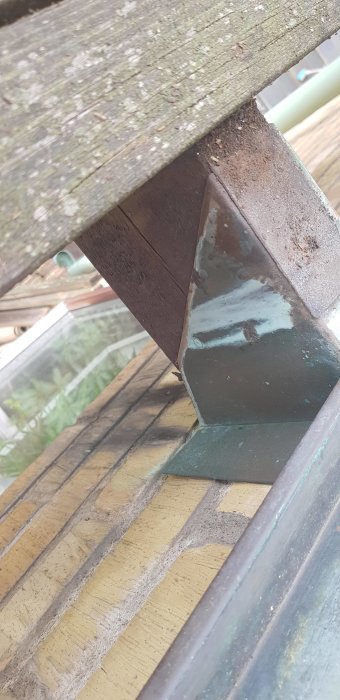
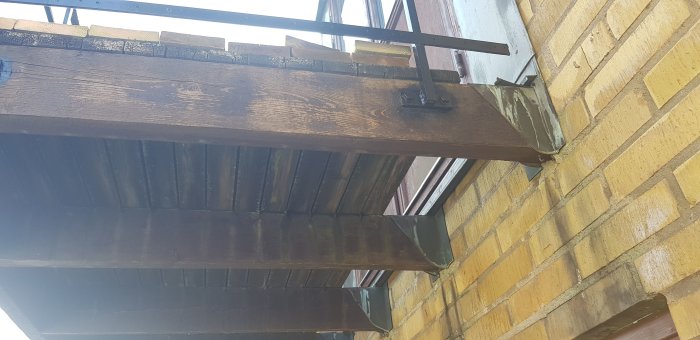
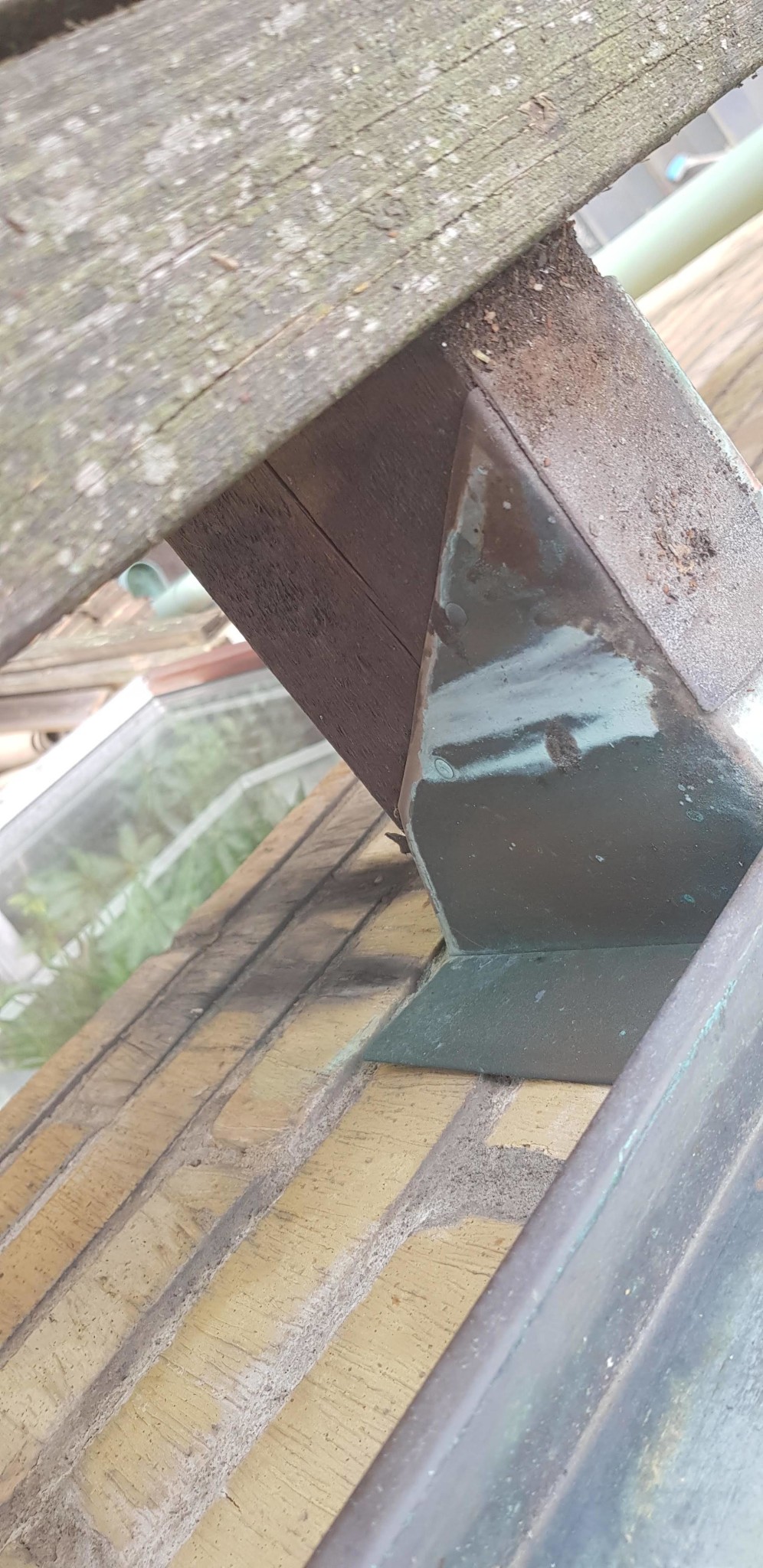
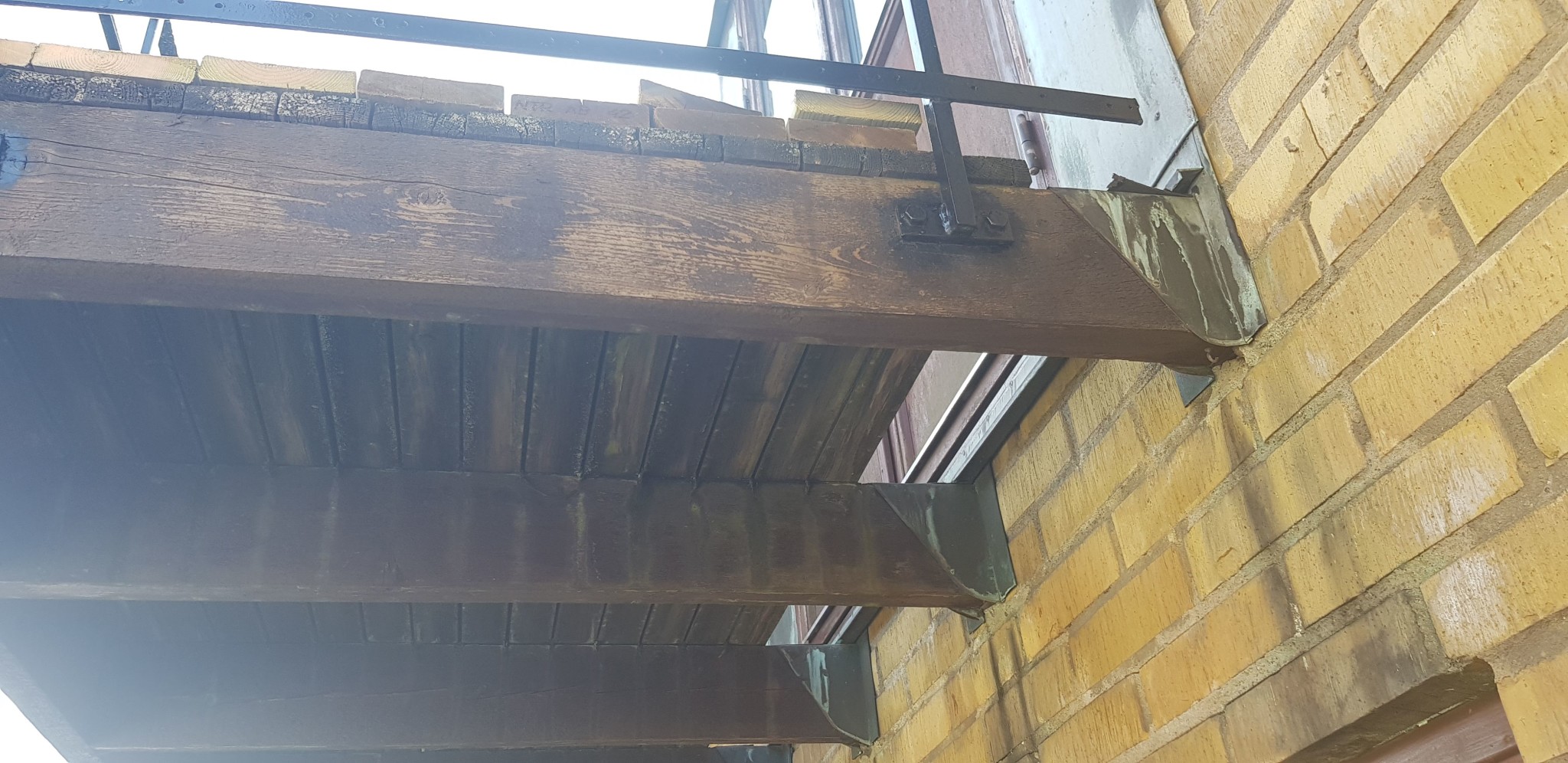
I am renovating a balcony, and I'm only going to keep the floor joists made of the wood. It consists of 4 floor joists that protrude from the wall, with a corresponding perpendicular one so that it forms a "frame". They are covered with sheet metal at the far end to the wall and when I feel them with a knife, they feel dry and nice. Besides the sheet metal, there is a narrow strip with a (mostly disintegrated) thin paper, cut along each joist. The house is from the 60s.
They have some algae on them so I scrubbed the outside with a regular brush and water, and I also removed some of the dark brown color.
I assume they are pressure-treated in some way (possibly just at the far end if that's technically possible), and also that they are glazed or something like that.
What should I do with them?
My plan was to first brush off the remaining algae. Then we talked about applying a layer of base oil. And then I guess I have to try to find a corresponding paper?
Do I have the right plan? Is the missing color a problem or just aesthetic? Does any stain work if I want to fix it? Should I try to fill in some of the old nail holes? Anything else I should think about?
At the beginning of the 1960s, pressure impregnation was not a commonly used method. I don't believe your balcony beams are treated in that way. However, some form of rot-protective treatment, like Cuprinol, was likely applied. The beams have survived due to other reasons: very good timber from the start, well-made sheet metal cladding (copper) closest to the façade and the roofing felt on top. The beams are probably joined with the floor beams inside the house. Replacing them is a very large operation, so it's good if they are healthy.
Appropriate measures: Carefully check with a thin sharp knife at several points that the wood is healthy. Brush clean. Oil with an oil that can penetrate well. Do not use any modern paints that can trap moisture. Apply new roofing felt to the top side of the beams. Check directly with the roofing felt manufacturer, Mataki or Icopal for example, to see what they recommend.
The right type of paint can help protect the wood from degradation due to UV radiation. The wrong type of paint accelerates degradation. Oil-based stain with a certain amount of pigment and distemper (like Falun red, though it doesn't have to be red) should work. The best solution would be if the deck boards could be attached without nail holes from above. Old nail holes that are covered by new roofing felt don't need to be filled.
Click here to reply
Vi vill skicka notiser för ämnen du bevakar och händelser som berör dig.