
14,750 views ·
34 replies
15k views
34 replies
Tracking in impregnated posts

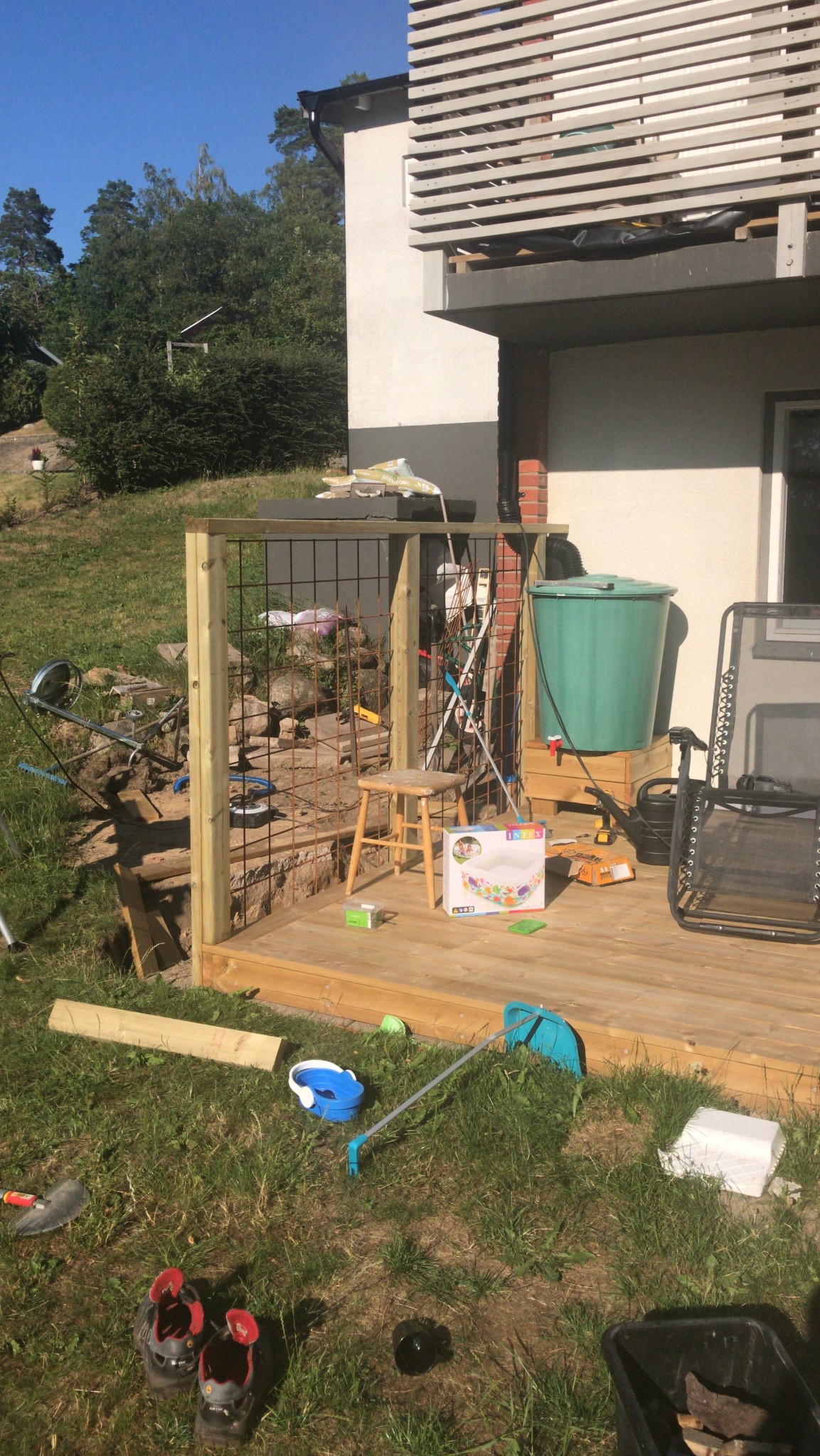
Terribly chaotic in the picture, but that's how I did it. Drilled with a 10 mm wood drill for the reinforcement mesh's pins. A bit fiddly but it turned out really good actually.
Crazy but I can still remember how incredibly hot it was that day when I took that photo.
Another option that I haven't read here is to take two 45x95 planks, i.e., clamp the rebar between these two.
Place the front one, screw in one or two screws so you can hang the reinforcement mesh, and then screw the next plank from behind.
Place the front one, screw in one or two screws so you can hang the reinforcement mesh, and then screw the next plank from behind.


Is 70x70 posts enough? Can you have a spacing of 225cm between them (as in this guide: https://www.hemtrevligt.se/husohem/artiklar/tradgard/20170802/lat-staketet-gronska/)?

70-posts are usually sufficient in terms of strength because the post foundation is the most important, but they can look flimsy aesthetically. Imagine the trellis becoming overgrown with the weight it brings, some rain, and then wind, it will become a windbreak if it is in an exposed location.
Ok, good, I can't find any 90x90 plinths and the 90x90 posts are much more expensive than 70x70. The appearance matters less in the long run since they'll probably be overgrown, but I'm also considering if it gets heavy with rain and wind.A AndersS said:
Do you need to pour concrete around the plinths or is it enough to just bury them?

It also depends on how high you make the trellis and getting down the ground anchors, i.e., not too many stones. I have tried using the model of ground anchors you drive down with a cross shape in rocky soil and had to give up. There's hardly any price difference, about 50:- for ground anchors and plinths 75:- it's not a difference to count on.
I plan to make the trellis 166 cm high, and the ground where the anchors will go is old farmland, so it's clay soil (I think). I have driven down anchors when I built a "fence" around the garbage bins and they went down without (larger) problems.A AndersS said:Depends also on how high you make the trellis and getting ground anchors down, i.e., not too much stone. I've tried using the model of ground anchor you drive down with a cross design in rocky soil and had to give up. The price difference is barely noticeable, about 50:- for a ground anchor and 75:- for a pedestal, so there are no significant differences to consider.
The cost does not differ much, but if the ground is not rocky, then it's easier with ground anchors.
We have a reinforcement mesh that is indeed wind-protected and not full of ivy, but it stands with 45x45 posts and anchors.
We have a reinforcement mesh that is indeed wind-protected and not full of ivy, but it stands with 45x45 posts and anchors.
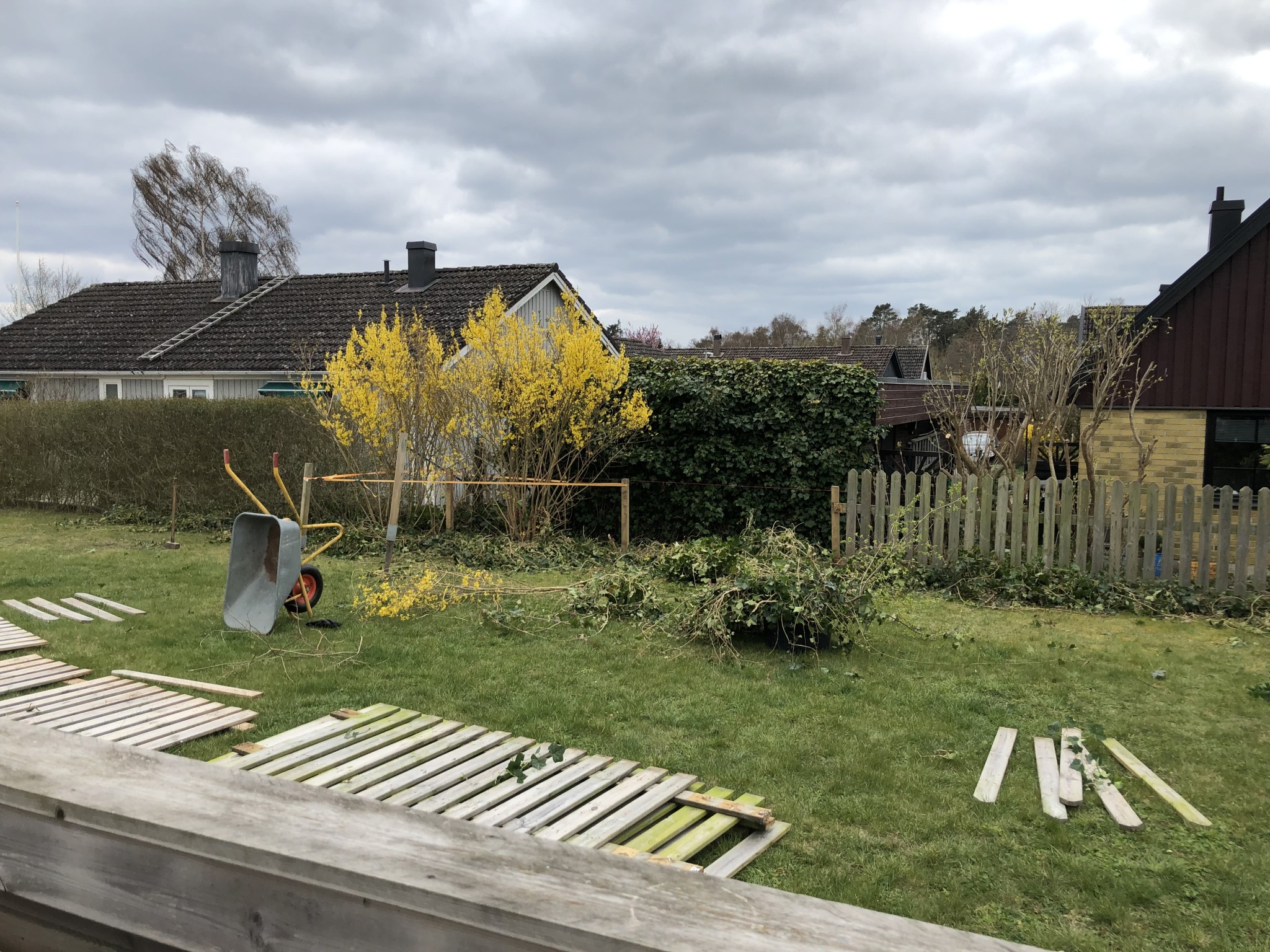
If you're worried about the digging, sacrifice a hand-operated ice auger. Alternatively, rent a motorized earth auger from Bauhaus or similar. Super convenient. I've tested both options. Worth every penny.
I will never dig a pier again with a shovel and crowbar unless it's too rocky for an auger.
Minor adjustments to enlarge the hole if the earth auger doesn't fit your pier dimensions from the start, but nothing compared to digging everything from the start.
I will never dig a pier again with a shovel and crowbar unless it's too rocky for an auger.
Minor adjustments to enlarge the hole if the earth auger doesn't fit your pier dimensions from the start, but nothing compared to digging everything from the start.