
2,882 views ·
4 replies
3k views
4 replies
To demolish or not to demolish blue concrete walls.
Hello.
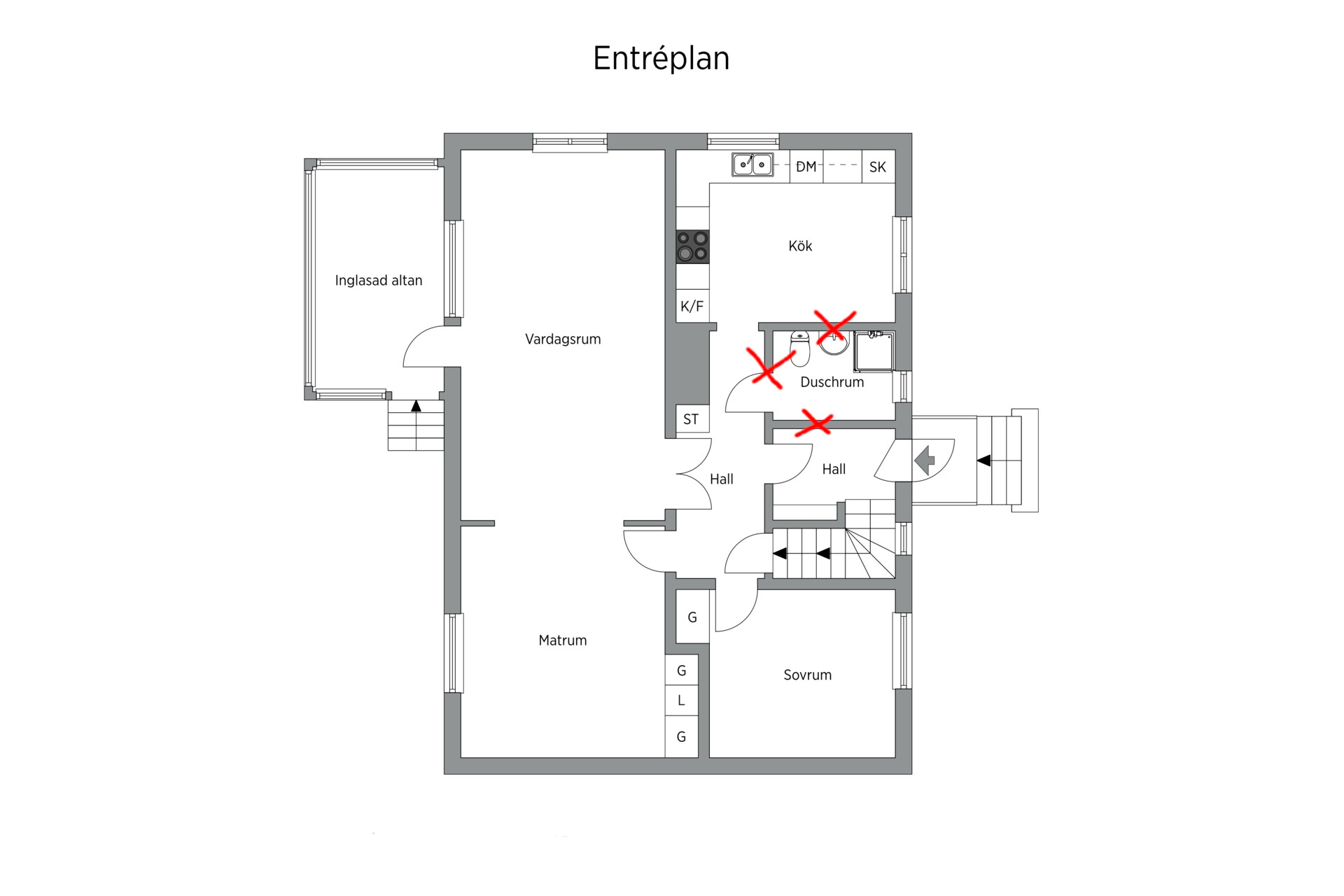
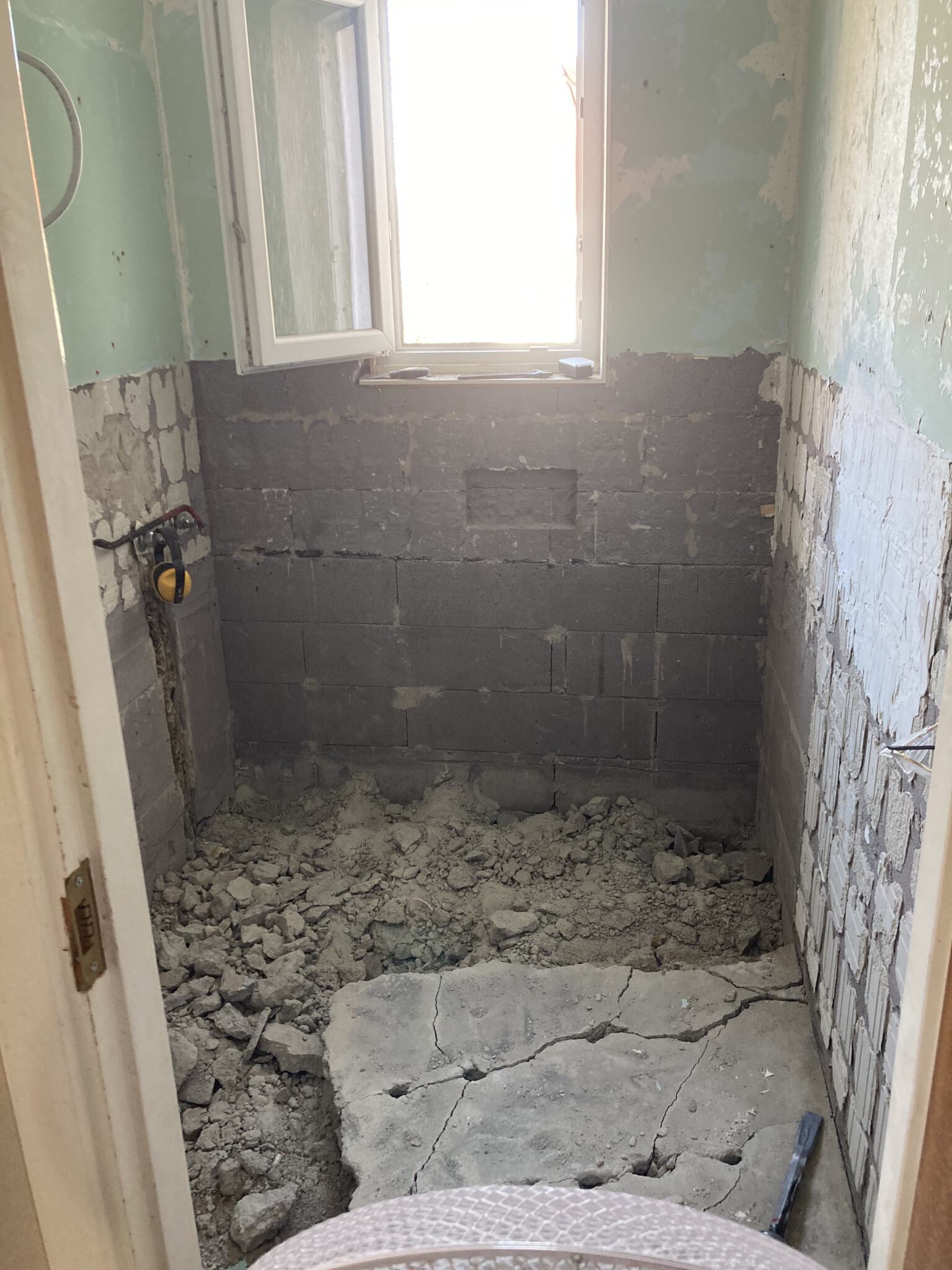
I'm a bit torn about tearing down the walls in the bathroom that is to be renovated. The walls are made of blue concrete, and the reason I want to tear them down is to reduce the radon levels in the house, of course. Which are currently at ~300 in the living room.
I've taken it upon myself to tear out the bathroom, and then a company will come and do the rest. Now, neither my partner nor the company are particularly keen on the idea of tearing down the walls, whereas I see it as an excellent opportunity to remove the walls and replace them with wooden walls since we're already tearing up the floor and removing everything.
I will need to build the walls myself, but how do I find out if these walls are load-bearing? Ask the company to check?
I'm thinking of reading up and following https://www.sakervatten.se/bygga-ratt/byggforetag/vatrumsinnervagg. I have no doubts about rerouting the electrical wiring, as I have the knowledge for that. But it's specifically the building of the walls that I'm not sure if I dare to attempt. (I will only build the framework with plywood sheets).
How would you reason? Stupid to take on the task or stupid not to seize the opportunity?
I'm a bit torn about tearing down the walls in the bathroom that is to be renovated. The walls are made of blue concrete, and the reason I want to tear them down is to reduce the radon levels in the house, of course. Which are currently at ~300 in the living room.
I've taken it upon myself to tear out the bathroom, and then a company will come and do the rest. Now, neither my partner nor the company are particularly keen on the idea of tearing down the walls, whereas I see it as an excellent opportunity to remove the walls and replace them with wooden walls since we're already tearing up the floor and removing everything.
I will need to build the walls myself, but how do I find out if these walls are load-bearing? Ask the company to check?
I'm thinking of reading up and following https://www.sakervatten.se/bygga-ratt/byggforetag/vatrumsinnervagg. I have no doubts about rerouting the electrical wiring, as I have the knowledge for that. But it's specifically the building of the walls that I'm not sure if I dare to attempt. (I will only build the framework with plywood sheets).
How would you reason? Stupid to take on the task or stupid not to seize the opportunity?


Demolishing such a small proportion of all the walls in the house probably doesn't affect the radon levels much; the most important factor in reducing radon levels is effective ventilation.
It's not very likely that these are load-bearing walls.
When was the house built?
Do you have a sectional drawing or can you check if there are trusses supporting the roof?
It's not very likely that these are load-bearing walls.
When was the house built?
Do you have a sectional drawing or can you check if there are trusses supporting the roof?
We have an FTX ventilation system but still get ~300 as mentioned.
The house is built in 1960 (120 sqm). Have tried to find sectional drawing but without success. Have also tried to look myself, and I would say it is this type of roof truss:
https://www.valbotra.se/produkter/52930.ramverks-takstol-oppen_takfot-modell_3.html
Guessing that under Span width U1, U2, U3 a load-bearing structure is needed?
ps. sorry for an extremely late reply, lots going on now .ds
.ds
The house is built in 1960 (120 sqm). Have tried to find sectional drawing but without success. Have also tried to look myself, and I would say it is this type of roof truss:
https://www.valbotra.se/produkter/52930.ramverks-takstol-oppen_takfot-modell_3.html
Guessing that under Span width U1, U2, U3 a load-bearing structure is needed?
ps. sorry for an extremely late reply, lots going on now
.dsYes, that's the norm, so the wall between the living room and the kitchen, for example, should be load-bearing.S swee said:
What airflows does it provide?S swee said:
Standard values:
0.35 l/s per sqm (ventilated area)
4 l/s per person in rooms where people spend a long time
15 l/s in bathrooms
10 l/s in toilets, kitchens, and laundry rooms
These are minimum values, so you can increase them to ventilate better.
Is the door to the basement stairs sealed?
So that poorer air in the basement doesn't come up into the living area.
Sorry it's taking me so long to reply, but I'm researching air flow measurement. It doesn't seem entirely easy.
Found this one that I thought was interesting:
https://www.byggahus.se/forum/threa...ometer-foer-vettigt-pris.480945/#post-5285061
There's also one you can buy that seems professional at least:
https://www.nordtec.se/produkt/mati...sto-417-matset-med-instrument-och-tva-stosar/
You can also hire an HVAC company to measure for you. I've looked a bit into renting one, but it's not available in my city. I'll research a bit further on how I should proceed.
Found this one that I thought was interesting:
https://www.byggahus.se/forum/threa...ometer-foer-vettigt-pris.480945/#post-5285061
There's also one you can buy that seems professional at least:
https://www.nordtec.se/produkt/mati...sto-417-matset-med-instrument-och-tva-stosar/
You can also hire an HVAC company to measure for you. I've looked a bit into renting one, but it's not available in my city. I'll research a bit further on how I should proceed.
Click here to reply