
1,852 views ·
9 replies
2k views
9 replies
Masonite/chipboard tear down or not
Hi!
Bought a house from '73. I noticed after the first few days that everything is some form of masonite or chipboard on the interior walls. It's about 11mm. The walls are quite thin otherwise between the rooms. So maybe there's nothing behind the panels other than space and studs?
Anyway, I've started putting up renovation plasterboard in a few rooms, and it's been working OK. The reason is that there's a lot of wallpaper from before that I do not want to tear down. However, I haven't taken the studs into account because they're 900mm apart.
The load-bearing capacity so far seems good. It doesn't crumble or anything (surely not tretex at least). The walls seem to be fairly straight. Except for the first time today, I noticed the plasterboard ended up at different levels in one spot. But maybe it can be adjusted anyway.
However, I think daily while tinkering if I should have torn everything down and started over (feels more proper and correctly done then). Which my partner thinks sounds totally crazy as does my father (plus the thousands of crowns already spent on renovation plasterboard). But it would feel good to have it clean from the start.
The downsides are the time to redo everything and tear down what’s already been set up in two rooms, and that it will take more space. Since then you'll probably want to put up OSB and thick plasterboard everywhere?
What would you have done? I can't really settle with this. A close acquaintance who is a craftsman thought I should continue as I have and not think too much about it.
Bought a house from '73. I noticed after the first few days that everything is some form of masonite or chipboard on the interior walls. It's about 11mm. The walls are quite thin otherwise between the rooms. So maybe there's nothing behind the panels other than space and studs?
Anyway, I've started putting up renovation plasterboard in a few rooms, and it's been working OK. The reason is that there's a lot of wallpaper from before that I do not want to tear down. However, I haven't taken the studs into account because they're 900mm apart.
The load-bearing capacity so far seems good. It doesn't crumble or anything (surely not tretex at least). The walls seem to be fairly straight. Except for the first time today, I noticed the plasterboard ended up at different levels in one spot. But maybe it can be adjusted anyway.
However, I think daily while tinkering if I should have torn everything down and started over (feels more proper and correctly done then). Which my partner thinks sounds totally crazy as does my father (plus the thousands of crowns already spent on renovation plasterboard). But it would feel good to have it clean from the start.
The downsides are the time to redo everything and tear down what’s already been set up in two rooms, and that it will take more space. Since then you'll probably want to put up OSB and thick plasterboard everywhere?
What would you have done? I can't really settle with this. A close acquaintance who is a craftsman thought I should continue as I have and not think too much about it.

It is probably building board, masonite-like material.
Is it a modular house?
If so, the walls can be/are built from modules that are probably joined in a special way. In that case, the building board is difficult to tear from the walls.
I have torn down all the interior walls by sawing them in the middle, then I built new walls with 45×45 studs and OSB+plasterboard, also added insulation in all interior walls.
Is it a modular house?
If so, the walls can be/are built from modules that are probably joined in a special way. In that case, the building board is difficult to tear from the walls.
I have torn down all the interior walls by sawing them in the middle, then I built new walls with 45×45 studs and OSB+plasterboard, also added insulation in all interior walls.
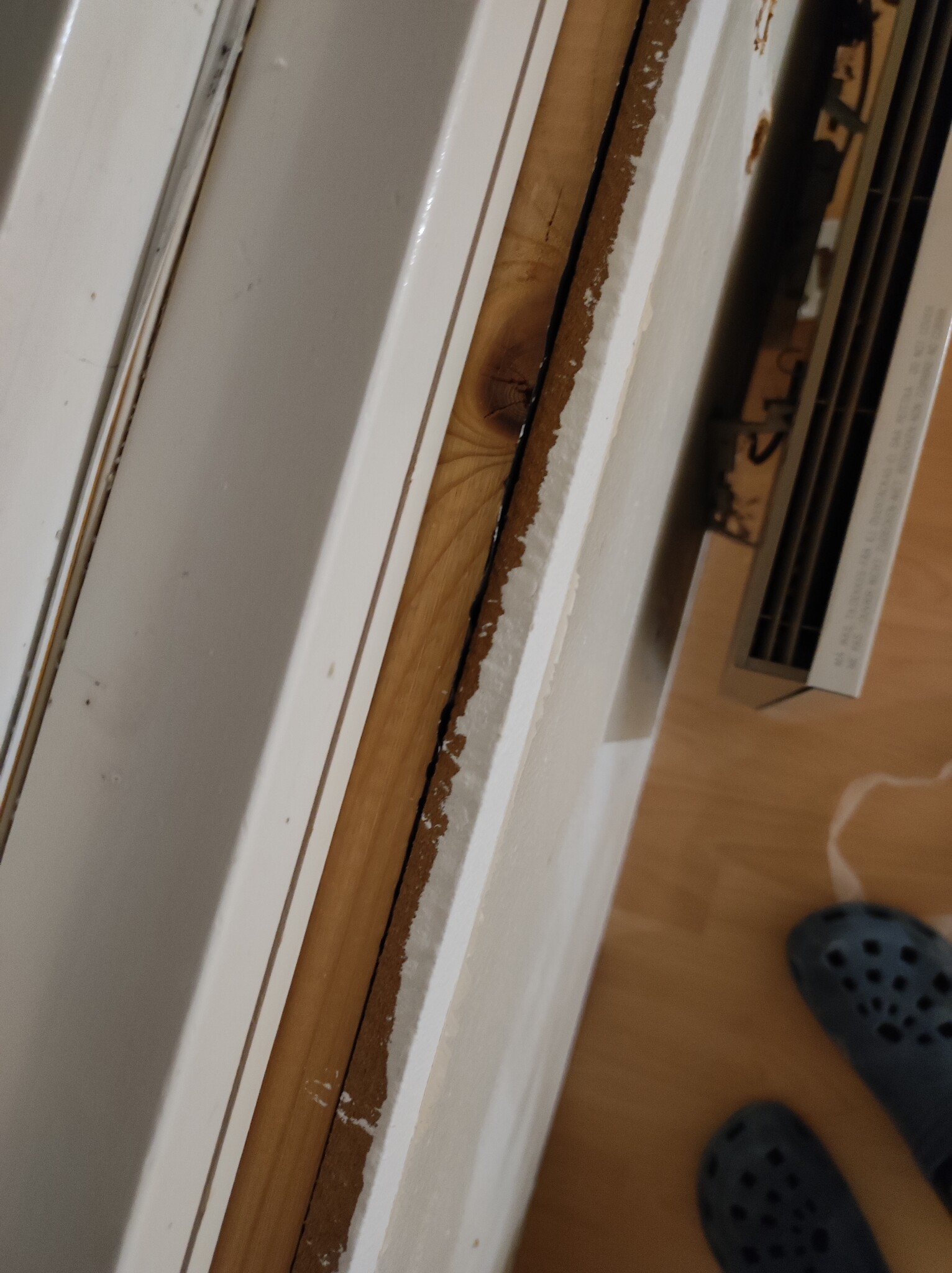

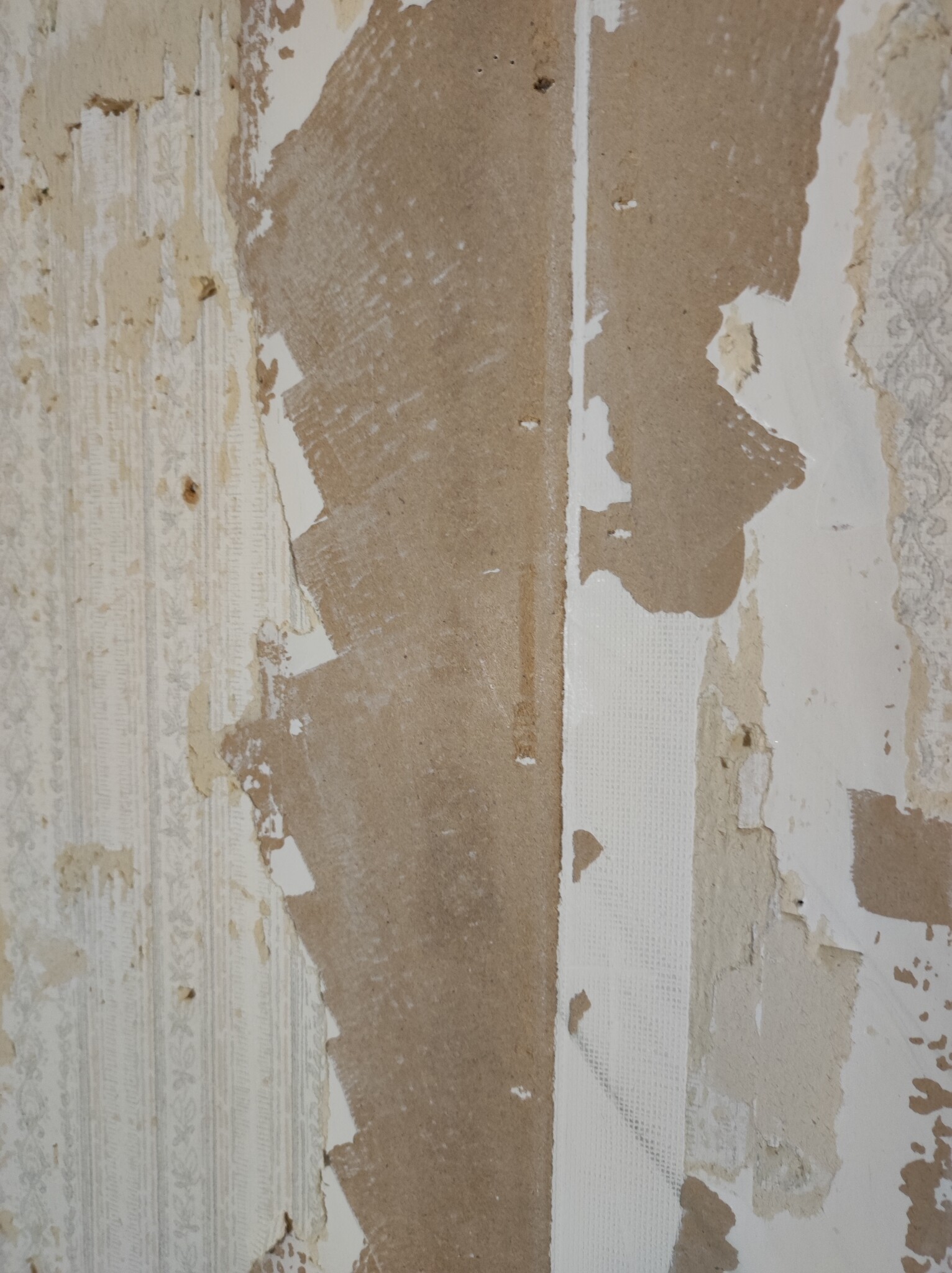
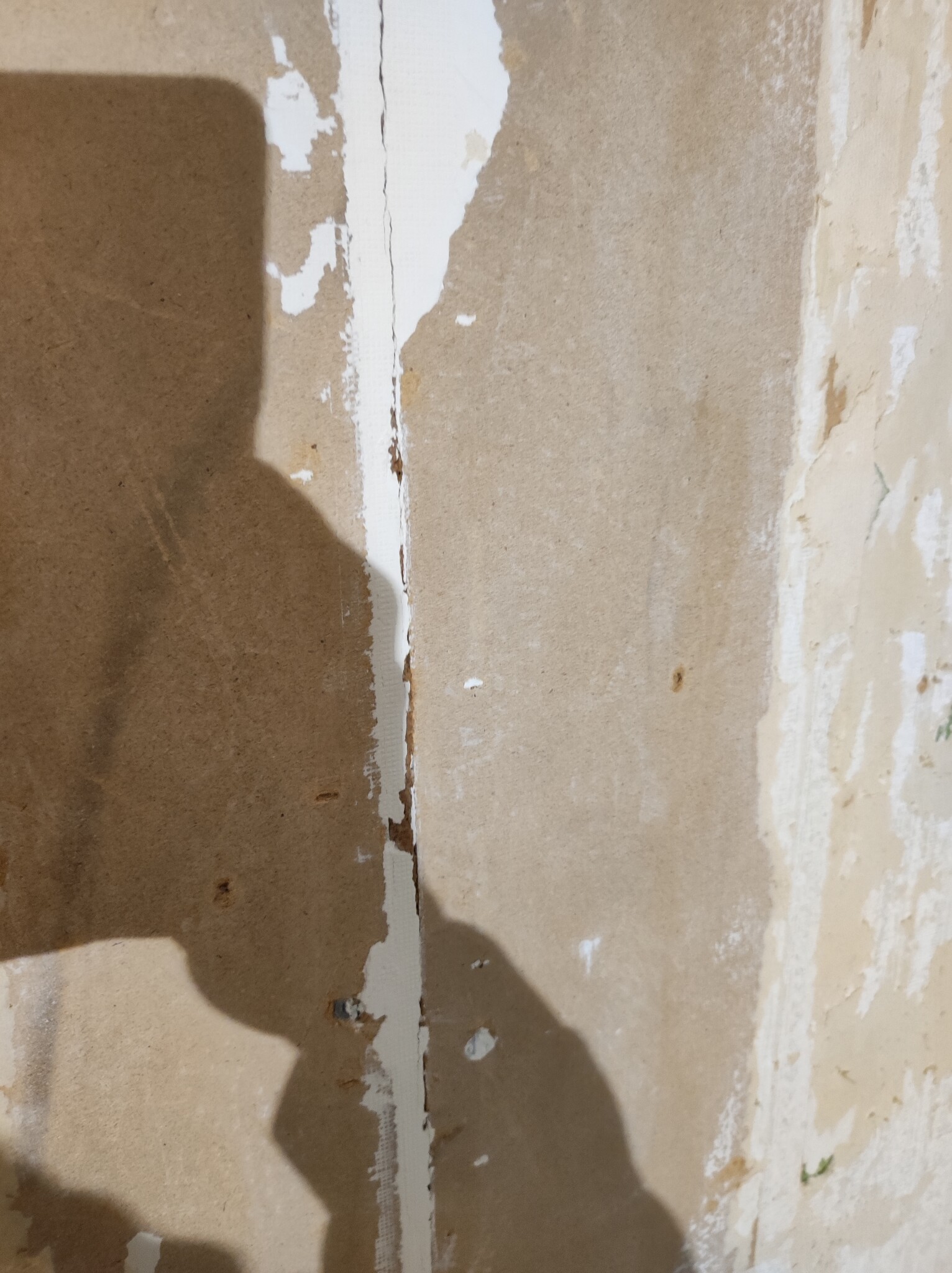
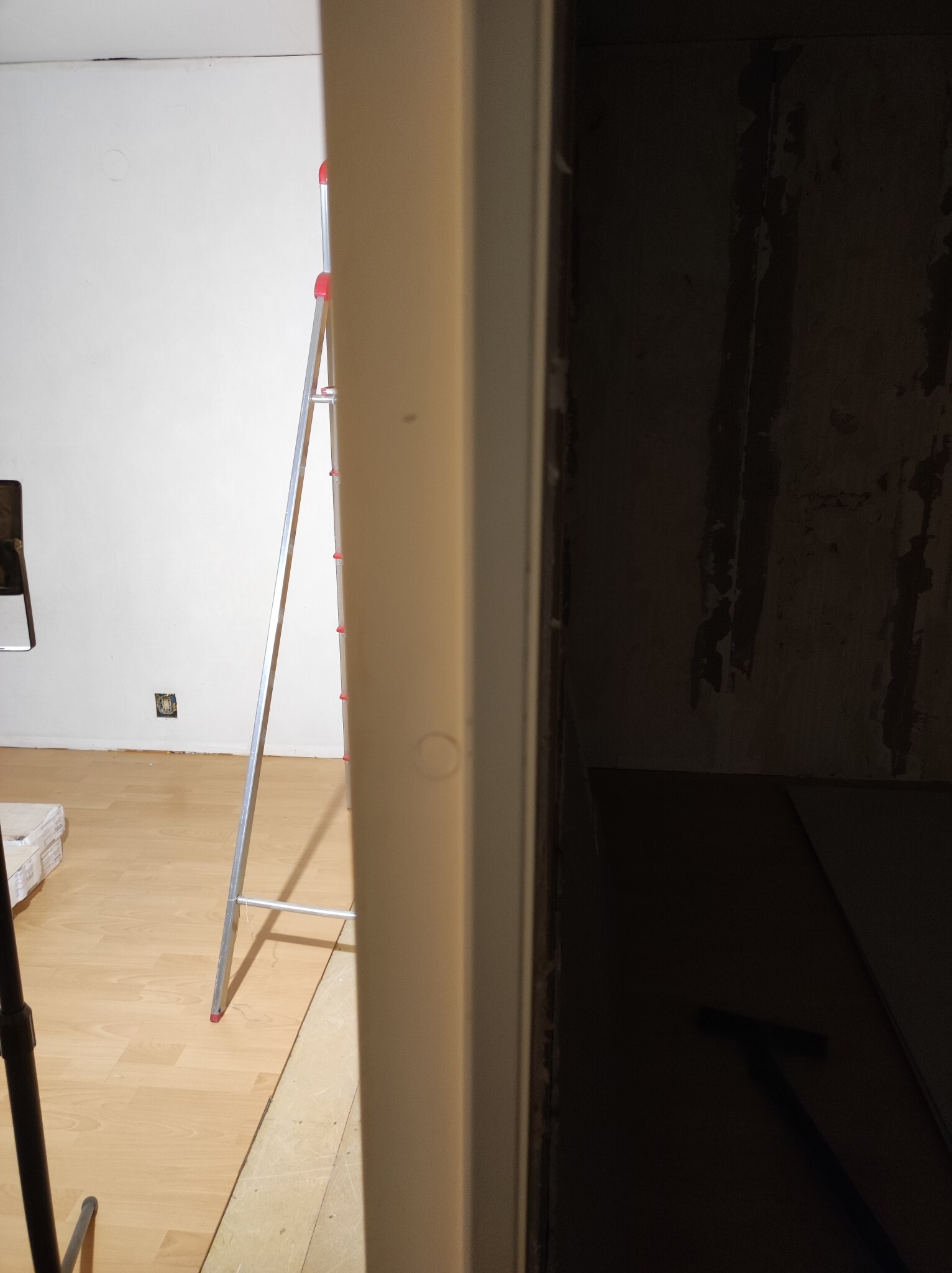
Hi! I've sent pictures in the thread.Demmpa said:
It is probably building board, a masonite-like material.
Is it a modular house?
If so, the walls can/be constructed from modules that are likely joined in a special way. Then the building boards are difficult to tear from the walls.
I have demolished all interior walls by cutting them in half, then I built new walls with 45×45 studs and OSB+gypsum, also added insulation to all interior walls.
Yes, I think it is a modular house, at least parts of it according to a carpenter are built as modules.
How are the joints different then, you mean?
Okay, I really don't know what to do. This wasn't the level of work I expected, that all walls might need to be torn down 😅
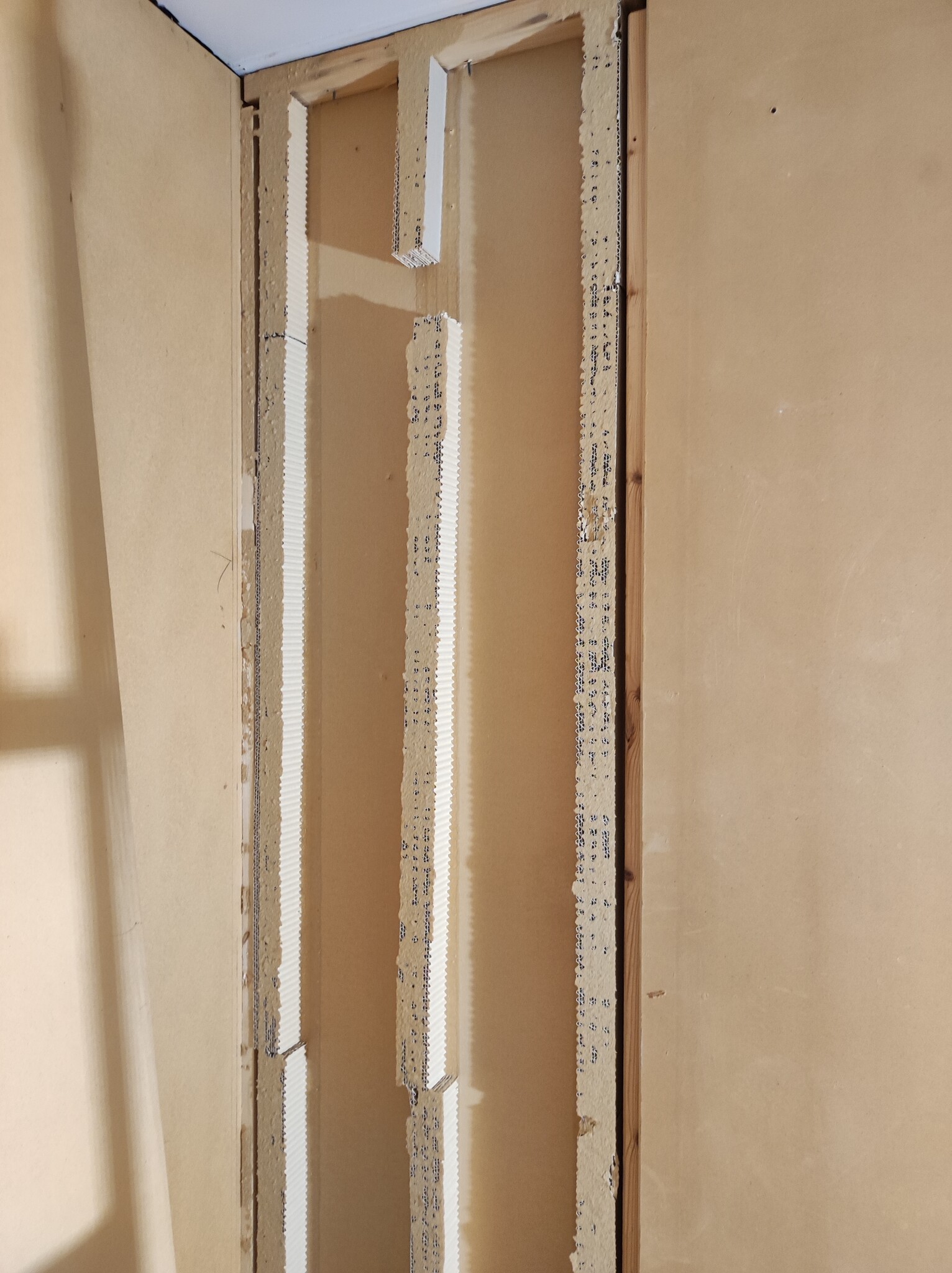
Similar to what I have upstairs in a house from '74. They consist of two chipboards 120x240, with cardboard studs glued from top to bottom every 20 cm, with glass wool in between. On the floor, there is a strip shaped like an upside-down T where the boards have been placed on the "ledge." In the ceiling, there is a 45x45 stud. The boards have been joined together and glued to each other. Then there is a 45x45 stud in the seam between the boards at 120cm intervals, but it's only to keep them reasonably even with each other and has no load-bearing function. It doesn’t even reach the floor, with a few cm gap at the top and bottom.
It was quick to build, and as long as you use molly or similar plugs, it works reasonably well to attach things to them. But it's a big project to take down part of a wall. The advantage is that it's easy to take down the entire wall.
I have not found any reason to take down walls that are in the "right place" according to me, but on the other hand, I have removed 70% of the walls upstairs (The walls downstairs consist of blåbetong).
It’s evident there was a severe hash abuse among designers of modular houses in the 70s...
It was quick to build, and as long as you use molly or similar plugs, it works reasonably well to attach things to them. But it's a big project to take down part of a wall. The advantage is that it's easy to take down the entire wall.
I have not found any reason to take down walls that are in the "right place" according to me, but on the other hand, I have removed 70% of the walls upstairs
(The walls downstairs consist of blåbetong).It’s evident there was a severe hash abuse among designers of modular houses in the 70s...
Hi!Dowser4711 said:
Similar to what I have upstairs in a house from -74. They consist of two particle boards 120x240, with corrugated cardboard studs glued from top to bottom every 20 cm, with glass wool in between. On the floor, there is a list shaped like an upside-down T where the boards are placed on the "heel." In the ceiling, there is a 45x45 stud. The boards are joined and glued together. Then there is a 45x45 stud in the joint between the boards at 120 cm intervals, but it is only to keep them reasonably aligned with each other and has no load-bearing function. It doesn't even reach down to the floor, but has a few cm gap at the top and bottom.
It was quick to build and as long as you use Molly or similar plugs, it works fairly well to attach things to them. But it's a big project to take down a part of a wall. The advantage is that it is easy to take down the whole wall.
I haven't found any reason to take down walls that are in the "right place" according to me, but on the other hand, I've removed 70% of the walls upstairs.
(The walls on the ground floor consist of blåbetong instead.)
You can tell there was a severe hash-abuse among modular house designers in the 70s...
It seems to be a bit different with my walls depending on the room, maybe. From what I can see on another wall (which, in fact, is an inner wall against the outer side of the house), it seems to be around 60 cm between each joint. Nails or staples with clamps, I believe.
I haven't planned to remove entire walls. I've removed one whole wall.
The rest is just to renovate the surfaces, and therefore I'm now puzzled about whether I should continue renovating with renovation plasterboard. Or if I should take down the boards and put on OSB+plasterboard, possibly insulating a bit too.
At the same time, it takes quite a lot more time...
Ah... Forgot to mention the nails they've used here...
Some kind of wire gun set to the exact wall thickness, so that chipboard 1, 45x45, and chipboard 2 are held with the same "nail" which also lacks a head and cannot be pulled out...
The walls have been up for 50 years.
If you apply renovation plaster, you'll have even more stable walls than before.
I would focus my energy on something other than replacing walls.
Some kind of wire gun set to the exact wall thickness, so that chipboard 1, 45x45, and chipboard 2 are held with the same "nail" which also lacks a head and cannot be pulled out...
The walls have been up for 50 years.
If you apply renovation plaster, you'll have even more stable walls than before.
I would focus my energy on something other than replacing walls.
Lovely anyway! Here they've gone a bit party and mixed staples with nails, etc.Ah... Forgot to mention the nails they've used here...
Some type of nail gun set to the exact wall thickness, so that particle board 1, 45x45 and particle board 2 are held with the same "nail" that also lacks a head and can't be pulled out...
The walls have been up for 50 years.
If you add a renovation gypsum, you'll get even more stable walls than you had before.
I would focus my energy on something other than changing walls.
Maybe it's not worth it after all. I'll think about it a bit more, and as you say, there are probably more fun things to do.
The current gypsum isn't screwed in with regards to studs, but I still think it holds well in the boards. My friend who is a carpenter didn't think it was something I needed to worry about either.
No, the fact that the drywall isn't screwed in with regard to the studs doesn't matter at all. You can just as easily glue renovation drywall. You're not attaching anything to the drywall. Either you use the studs behind the boards, in which case it doesn't matter how the drywall is attached. Or you attach it with anchors like molly bolts, and then you attach it through both boards, and again, it doesn't matter how the drywall is installed.
Take care of the walls the day you feel you've run out of more urgent things at home.
My guess is that's shortly after you've moved or been buried.
Take care of the walls the day you feel you've run out of more urgent things at home.
My guess is that's shortly after you've moved or been buried.
Click here to reply