I have acquired a house from 1947. It is a split-level house. The upper floor has a wooden frame. The lower floor/basement is built with some sort of concrete block. We started by renovating the upper floor and are working our way room by room downwards in the house. Now we have reached the stairwell where the wooden frame meets the concrete block frame. There was patterned hardboard panel glued to the wall before, we have torn it off and underneath is the old painted wall.
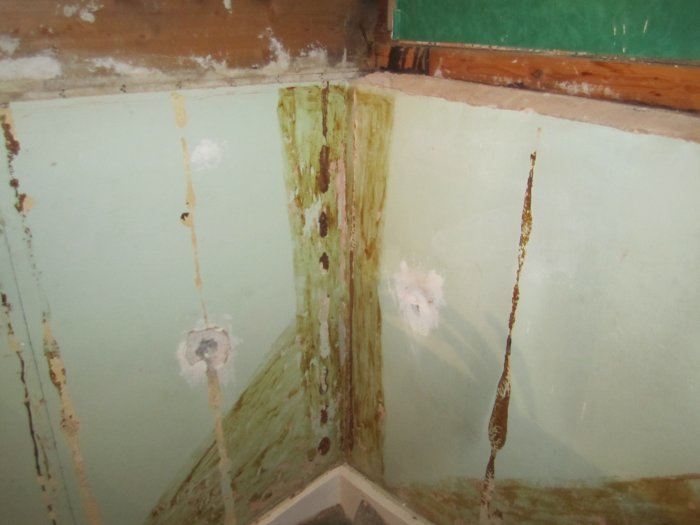
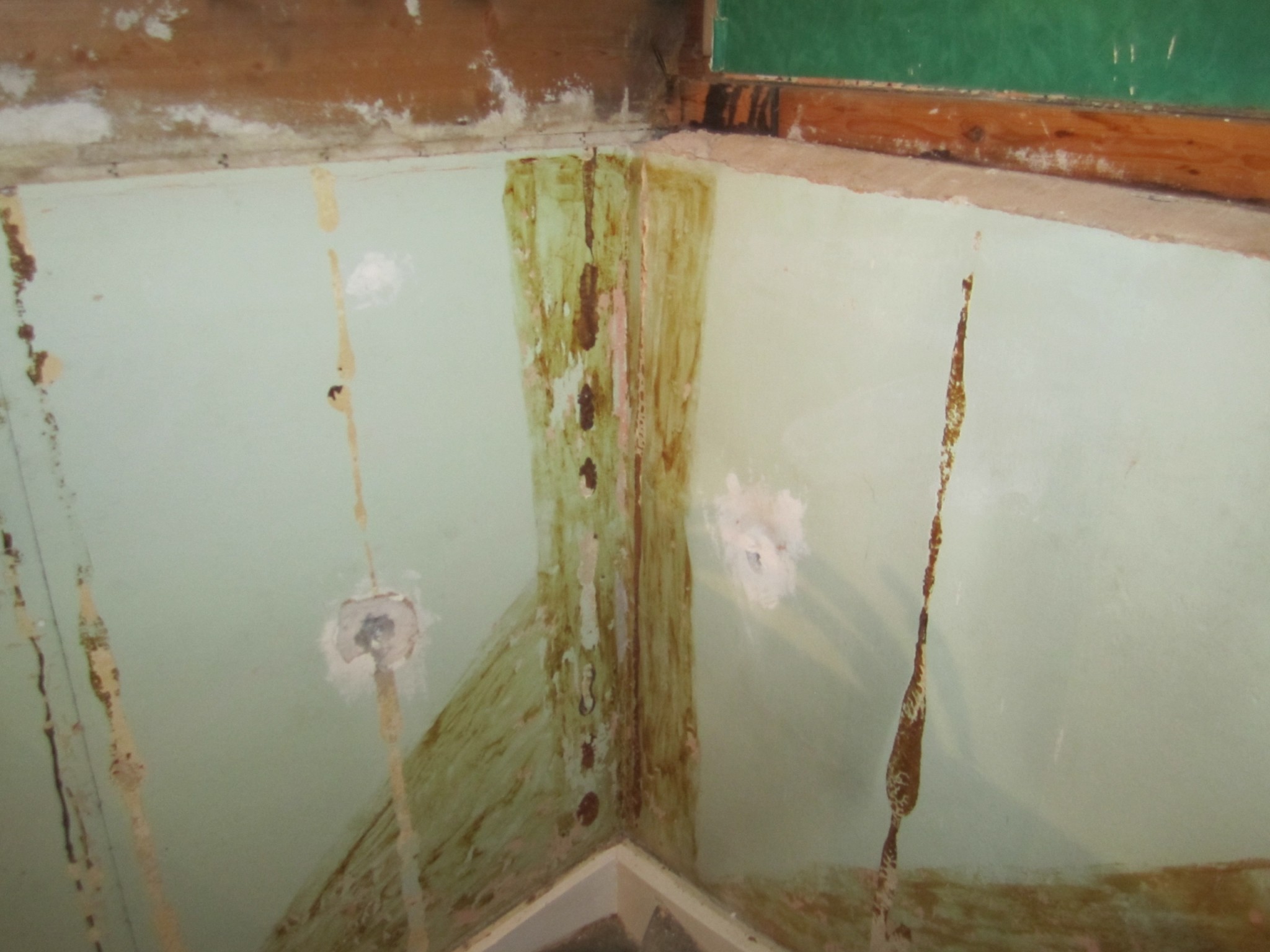
This is what the wall looks like. Painted in a light green/blue color and with glue residues from the old paneling.
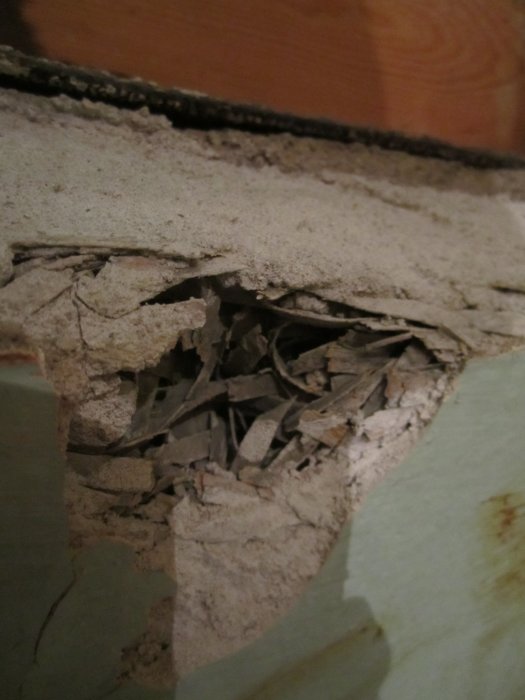
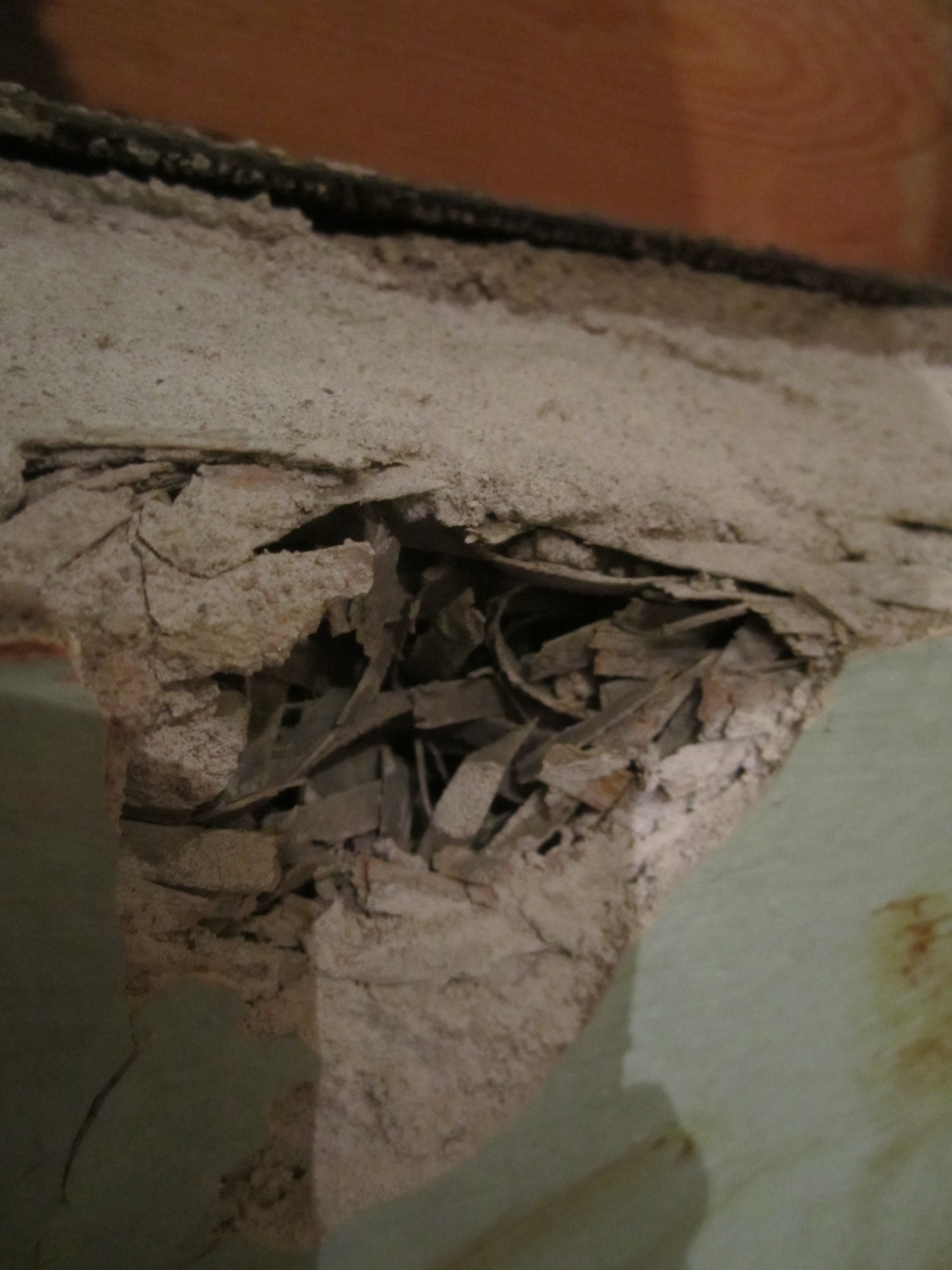
The old plaster that sits on the exterior wall is on something that looks like tangle or almost like tagliatelle. What is that?
What's the best way to proceed? I have no idea what type of paint the wall is painted with so I assume the paint must be removed before I re-plaster to ensure not trapping moisture in the wall (it’s an exterior wall below ground)? I'm a bit afraid that if I start scraping off the paint, all the "tangle" that the plaster sits on today will end up in a pile on the floor.
Does all the old plaster have to be removed? I was hoping to just have all the paint gone.
Should I use plaster mesh?
Is there a way I can find out what type of plaster is there today? Is it most likely lime plaster or lime-cement plaster in a house from 1947?
I am completely green in this area and could use a shove in the right direction.
Thanks in advance!
Yes, the paint will come off if the wall is below ground level. Is it drained? Otherwise, there might be reason to do that before you fix the walls...
Unfortunately, a lot of the plaster will probably disappear, but if you're careful, it might be enough to repair with something like "husfix". I used a sanding blade on a multi-tool (Fein) to scrape my walls clean...
Remove all paint then. Feels like a crappy job, but with the right tools, maybe it can go fairly quickly. I have a multimaster as mentioned above, but it feels like it might take some time with that?
Either just remove the paint or remove all the old plaster. I realize that the optimal is to remove everything, but is it worth the extra work?
If you remove all plaster, should Träulliten also be removed? What is the function of Träulliten? Was it installed to support the plaster? It should also have an insulating effect. And isn't the risk quite high that Träulliten will be damaged if all the plaster is removed?
I'm currently thinking that I might have the following two approaches to choose from:
Remove the paint but leave the old plaster. Plaster over the old plaster with a new layer. The new plaster must then be compatible with the old one.
Remove everything, install a plaster mesh(?) and plaster from scratch. The problem then is that I have to apply a thick layer to level it with the stairs.
PS: the drainage is "only" 10 years old and seems to work okay.
Wood wool is relatively or actually very moisture-resistant and both rot and mold inhibiting because the wood fibers are surrounded by cement and have a high pH value. So if it is not constantly exposed to water and has a non-diffuse tight plaster surface, it should probably handle a basement environment fairly well.
I would make sure to remove everything. Renovation planer?
Agree with Akahigi, go with a renovation planer but start first with a cleaning planer with "planing wheel" (Festool SAF 750 or similar), it is not as sharp as when you use a machine with a diamond cup, they can take incredibly much with fairly easy operation.
Agree with Akahigi, use a renovation grinder but start first with a cleaning grinder with "grinding wheel" (Festool SAF 750 or similar) it is not as sharp as if you use a machine with a diamond cup, they can take an incredible amount with quite easy run.
Agree back
Used one with a diamond plate on a concrete floor, worked great. Tried it on the lightweight concrete wall and then it ate a small hole...
Should be one of those grinding wheels...
Click here to reply
Vi vill skicka notiser för ämnen du bevakar och händelser som berör dig.