
9,981 views ·
22 replies
10k views
22 replies
Time Estimate for Plastered Interior Walls (New Construction)
Absolutely, if you are going to apply a base and then two layers of plaster. My calculation only considers one layer with bands and scrubbing, not including the base application. It is based on an occasion when my two colleagues and I, after two hours of pump trouble in the morning, decided to plaster by hand instead. The base coat was already applied (red base with funnel spray), the mortar pocket was filled, and the 300l mortar mixer was full.magnusmo said:
In six hours, we plastered and scrubbed about 90 square meters, and it was hard work, which is why I used the word "maximally" because I don't think one could have worked much faster than we did and still get a decent result. Now, it was C-mortar on red-based LECA indoors in a basement space, so a bit different from lime plaster on brick blocks though...
Last edited by a moderator:

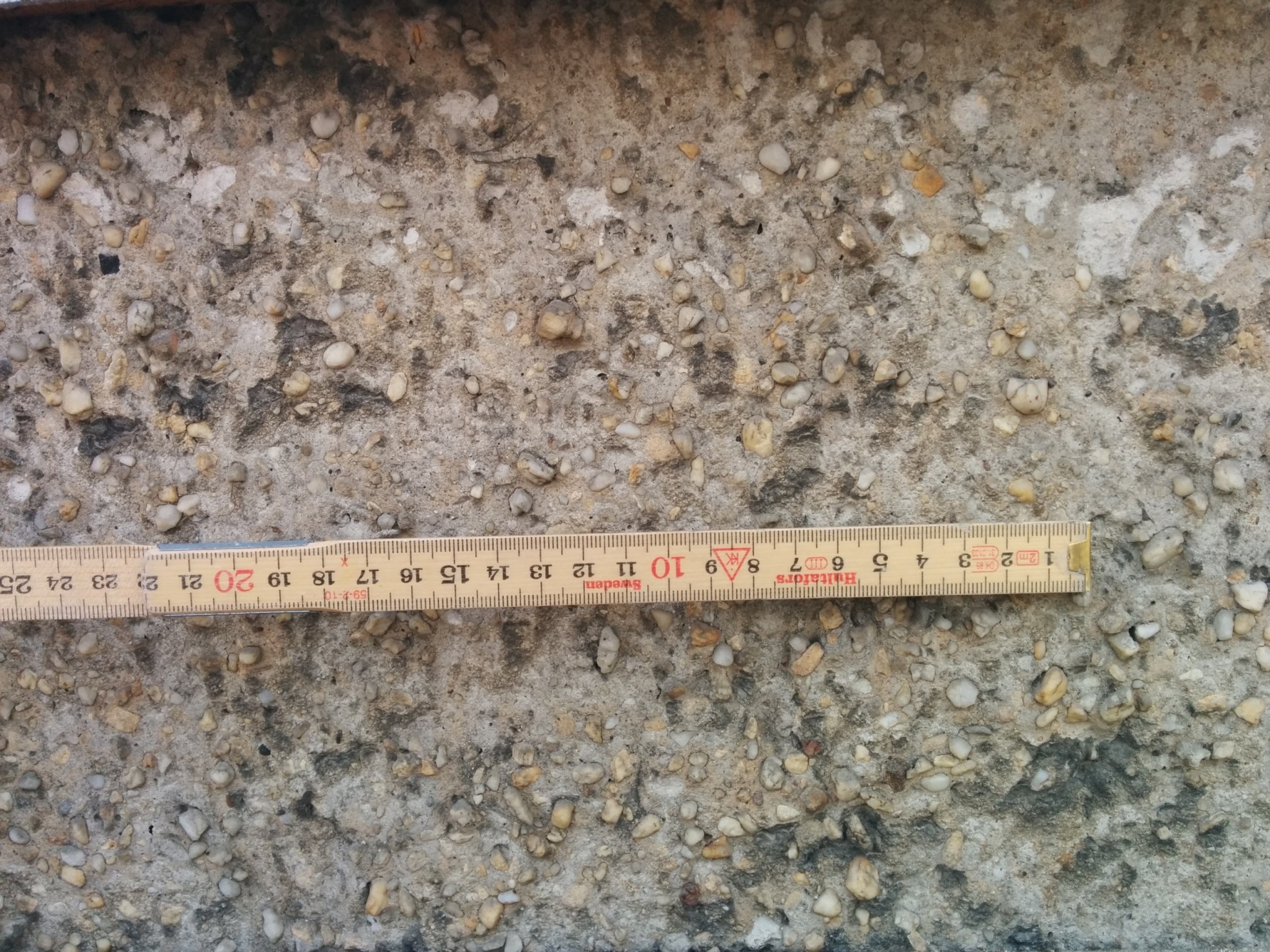
Borrowing the thread a bit; (sorry!) MaxPax, you seem to have plastered some walls before. Can I borrow some of your knowledge? Have you seen similar plaster before? It's on our house, and it needs some renovation. (The last time our house was plastered was in the 40s). What is the plaster called and how is the surface made? I guess the plaster is mixed on-site and scraped with a spiked board. The largest stones are ~15mm. Most masons who have been here suggest a fine plaster ~2 mm grain size. Unfortunately, not quite the same result, and I imagine that there could be future problems if cement-based plaster is used instead of lime-based. Thanks! MagnusMaxPax said:
Best to always create your own thread, just so you know, but as a quick answer:magnusmo said:Borrowing the thread a bit; (sorry!)
MaxPax, you seem to have plastered some walls before. May I borrow a bit of your knowledge?
Have you seen similar plaster before? It's on our house and needs some renovation. (The last time our house was plastered was in the 40s).
What is the plaster called and how is the surface made? I guess the plaster is mixed on site and scraped with a spike board. The largest stones are ~15mm.
Most masons who have been here suggest a fine plaster with ~2 mm grain size. Unfortunately not quite the same result, and I imagine you might face future problems if using cement-based plaster instead of lime-based.
Thanks!
Magnus
[image]
I think it looks like pebbledash, so old that the aggregate is exposed. This is because the coarse stones protrude so much. If it had been spike-scraped, I don't think they would have stayed like that, but photos are easy to misinterpret though.
Presumably, it is lime-cement mortar, but could possibly be lime mortar too, not entirely familiar with the German mason tradition. I would probably repair what is bad and pebble dash the entire plinth once to make it uniform.
Or change my mind to another procedure after visual inspection.

Edit: Pebbledash is applied with a splash of semi-wet mortar with decent force to get a coarse structure.
Last edited by a moderator:
Then it will probably be gypsum plaster I choose. What do you usually estimate in time for putting up regular plasterboards?MaxPax said:Yes, check with others. Feel free to follow up here with the numbers you get.
The film you link to is for gypsum plaster, not entirely different but still a completely different material. Gypsum plaster is quicker to work with than lime mortar. The procedure with lime mortar is more similar to this film, though probably without the mesh:
[link]
I'd be happy to do that. But first, I want to know the expected time so I can estimate the cost. I don't want a ceiling price of 800,000:-. 2 days for a "room" sounds more reasonable.Videonisse said:We have just finished plastering the inside of Leca walls. I'm not sure about the total square meters, but it took about 2 days per room. They applied the plaster by hand, and I asked them to be extremely careful since we will have grazing light on several of the walls.
But we're going with a continuous ceiling price. So if you know the guys and are confident they do a good job, why not do the same?
Thanks, it's not the base, but the facade that looks like that. A whole lovely 360 m² to tackle. I was thinking of practicing on the garage this summer because it's not entirely obvious how to make it look nice.MaxPax said:
Can you use lime plaster with a grain size of 0-8 mm and get the same texture? How thick do you apply the spritputs? I thought you normally apply 2-3 x the grain size, but if the plaster is very runny, isn't it hard to make it adhere without everything ending up in the flowerbed?
Can you mix pigment (Iron oxide black) directly into the plaster when mixing to then skip painting? Or does the color serve another purpose? (lime paint)
Very little spirits are consumed here, but a lot more beer. The guy who plastered inside for me became noticeably steadier with his hand after the first beer=).
Click here to reply