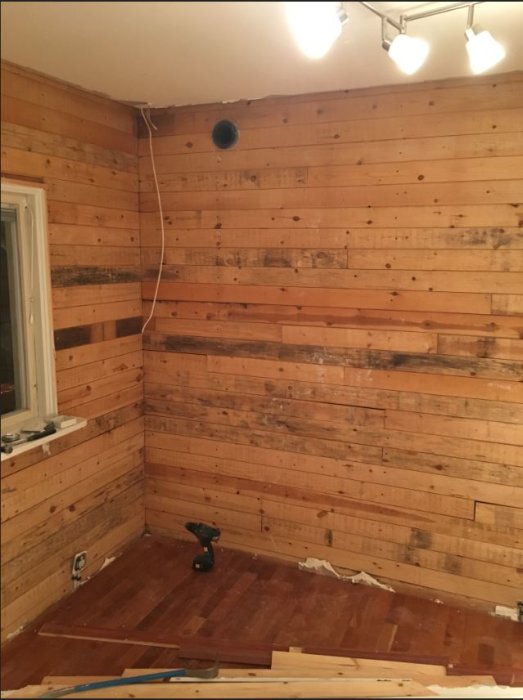
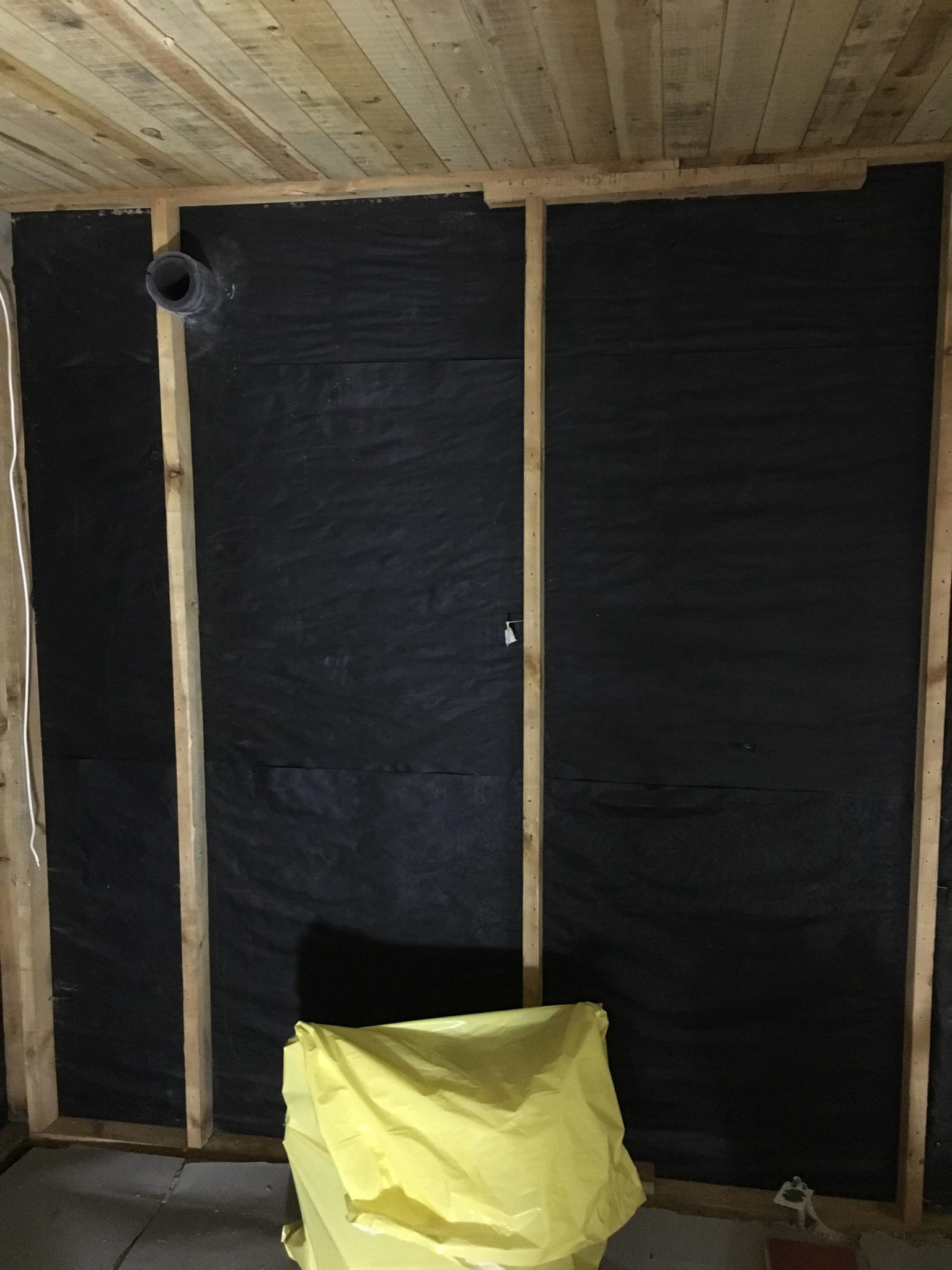
I need your help with tips and ideas. I have a house built in 1952, and I am renovating one of the bedrooms. I have previously noticed the air in this room becomes stale and smells like an old summer cottage, so I decided to tear down the existing gypsum walls and ceiling to take a look behind them. The room has two exterior walls, both clad in planks, and the same goes for the ceiling.
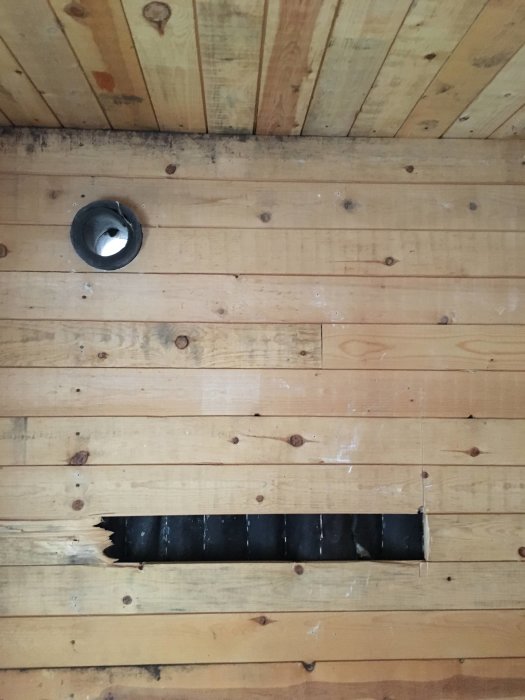
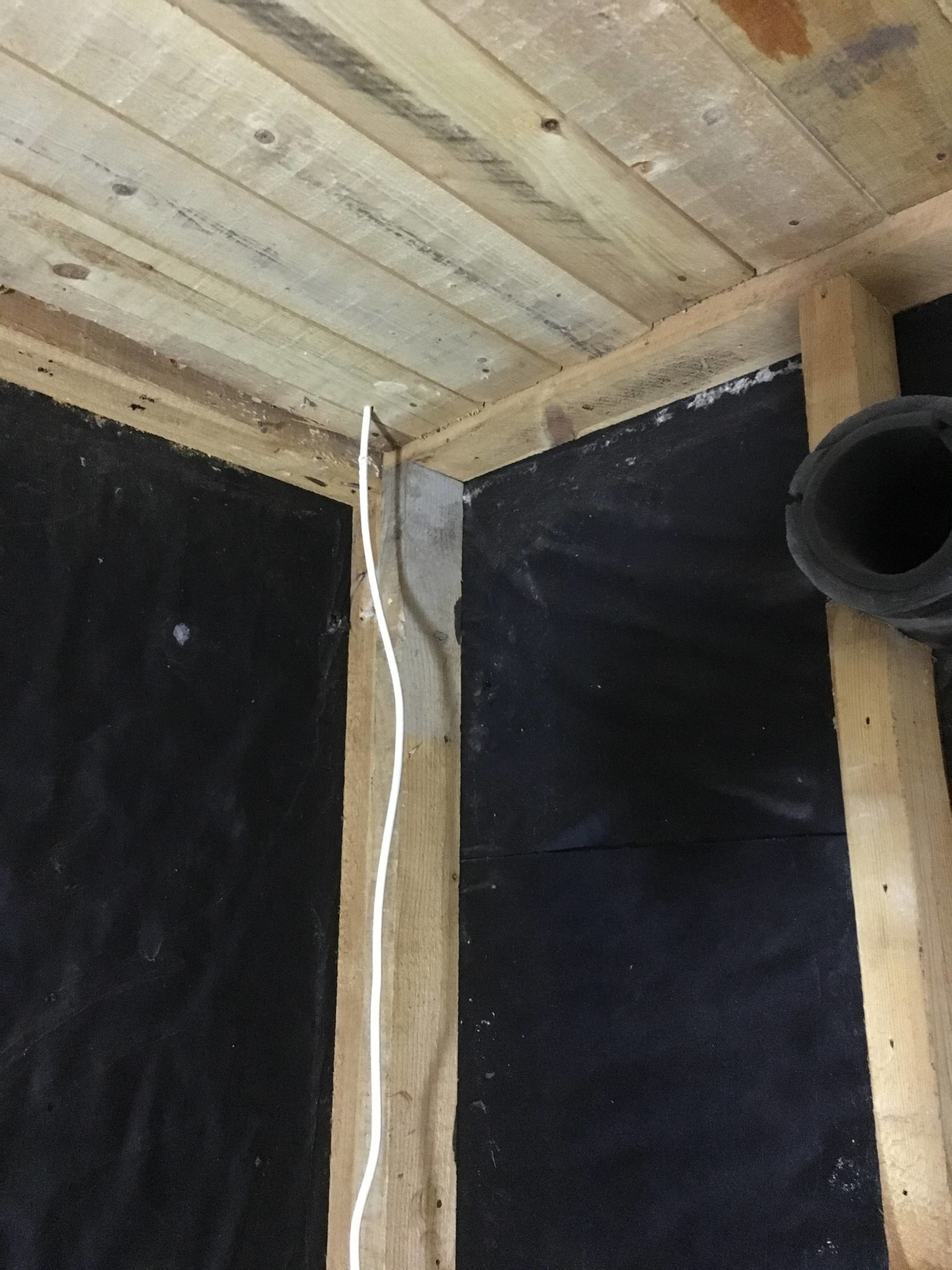
The plank wall looks partially affected, and up towards the ceiling (where the wall meets the ceiling), there are black spots in the corner against the exterior wall. I want to remove the old material and replace it with new. The planks, however, are dry.
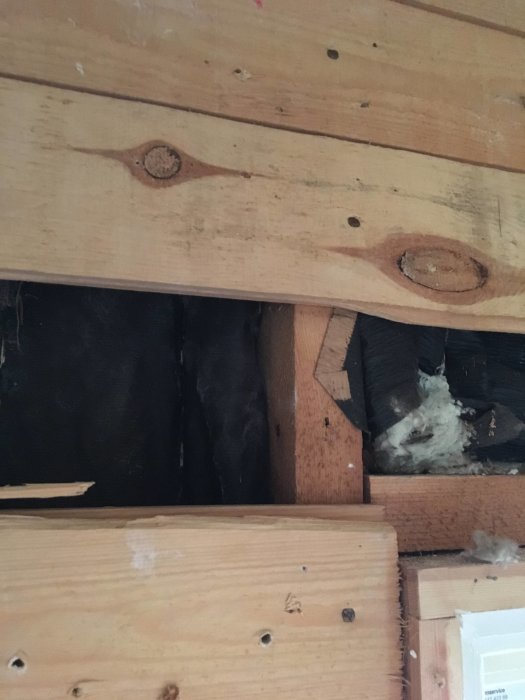
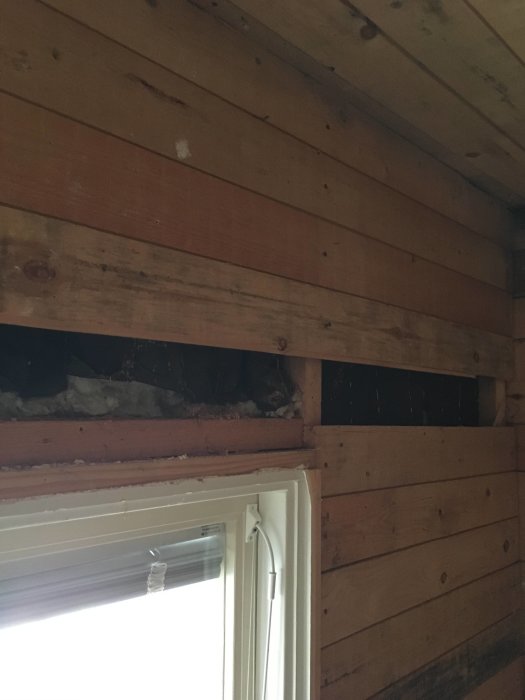
The wall is constructed as follows (from inside to outside): Plank wall - old thick paper/leather/insulation mixture - Plank - wind paper - Façade.
I removed a plank and noted that the existing frame is 75 x 45 mm.
I am considering:
1. Taking down all the planks.
2. Reframing and insulating in the best possible way.
3. Moisture barrier.
4. Installation layer.
I am aware that the use or non-use of a moisture barrier is highly debated. I've read up as much as I can and plan to use a moisture barrier and ensure sufficient ventilation with the help of mechanical exhaust.
I gratefully welcome your suggestions on how to renovate in the best way.
What is on your wall is usually not called plank but boards. Essentially like rough tongue and groove. The term plank is generally used for much thicker timber, usually between 50 and 75 mm thick.
I think the wall looks like a typical summer cottage construction from the 1950s. 75 mm insulation was already standard in 1952. Naturally, you have to remove all the interior boarding, add additional studs, insulate, install a vapor barrier, and new wall cladding. I assess it as unrealistic to have space for an installation zone. A vapor barrier assumes you are using mineral wool as insulation. The best approach is to use horizontal studs, preferably 45x70 mm. This gives you a total insulation of 70+70=140 mm. Much more insulation would likely make the room unusable.
That some boards are black is likely mostly due to how they were handled before they were installed. The black spots in the corner are certainly the result of condensation due to insufficient insulation.
Thank you for your response
It is entirely correct that it is a former summer cottage that has been renovated over the years into a permanent residence.
What do you think about the ceiling, which also consists of boards? Should I remove them at the same time and staple the plastic directly to the ceiling joists while I'm at it, or is that unnecessary?
Regarding the wall's load-bearing capacity, is it something that horizontal joists improve?
My first thought was to build on (thicken) the existing joists. But maybe that causes problems with thermal bridges instead and doesn't add much?
In the wall, there is old insulation wrapped in leather as it appears (placed on the outside of the joist towards the facade). Should I leave it be? As you can see in the picture, there is barely any insulation. I would probably be able to fit 75 mm of insulation as it is now between the existing joists (with the leather story staying), and then 70 mm more as you mentioned.
If you don't change the insulation, there's no reason to touch the ceiling.
45x75 mm studs (should be 50x75 since real inch measurements were used back then) are certainly sufficient to carry the roof loads. If you place the new studs horizontally, you avoid thermal bridges. The old insulation seems strange. Today's boards are probably 70 mm thick.
I have now taken down the old boards. In the corner on the rule, there seems to be something white, dust or mold, what do you think and what should be done?
Then there's the matter of the insulation. I thought I was sure about my choice of insulation, but I'm not. It's about both the floor joists against the crawl space and the wall. I'm torn between whether to go with
Vapor barrier / mineral wool
Vapor retarder / Cellulose
Variable Vapor retarder / Mineral wool or Cellulose.
How would you others have done it, and which products would you use?
The house currently doesn't have plastic, and the room previously had old mineral wool construction mats. The floor joists' insulation appears to be fiberglass. The roof has sawdust.
It is difficult to give advice remotely. The use of hygroscopic insulation materials (always preferable) reduces the need for plastic vapor barriers. At the same time, one must have a holistic perspective.
Click here to reply
Vi vill skicka notiser för ämnen du bevakar och händelser som berör dig.