
6,103 views ·
25 replies
6k views
25 replies
Thin, uninsulated floor with 2-meter span. What should I use?

If it's on 2 fixed supports, one wall and one glulam beam, I still think it would hold up well if you screw and glue it, the weight will be about 50kg/sqm, a total of 300kg not too bad.P Pagno said:
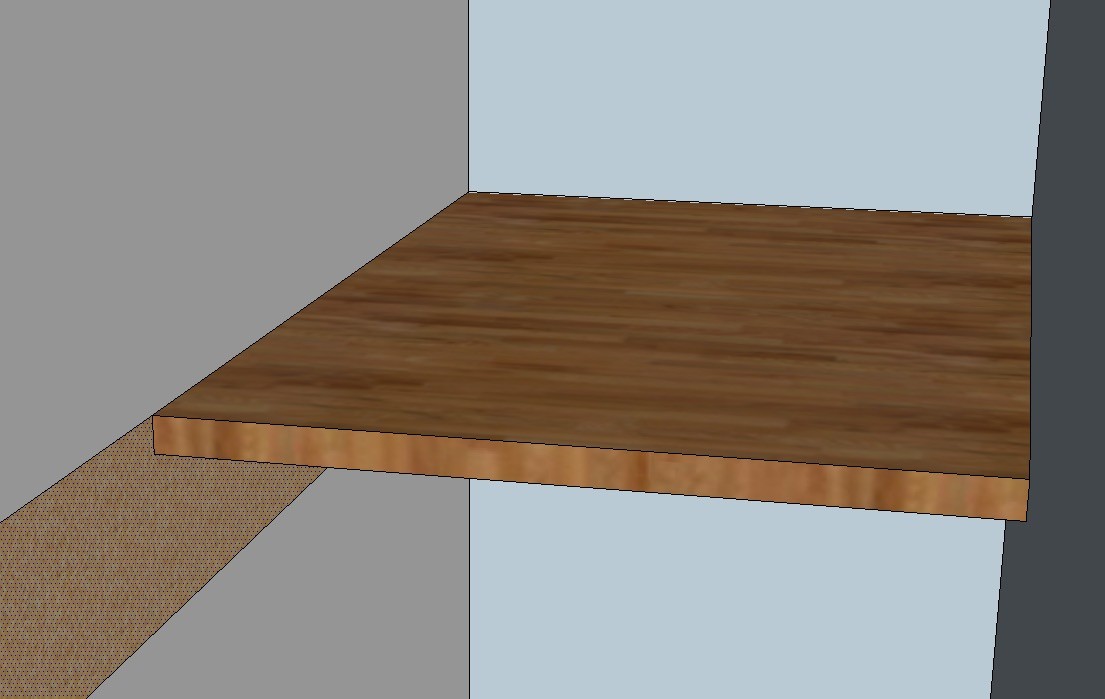
Last edited:
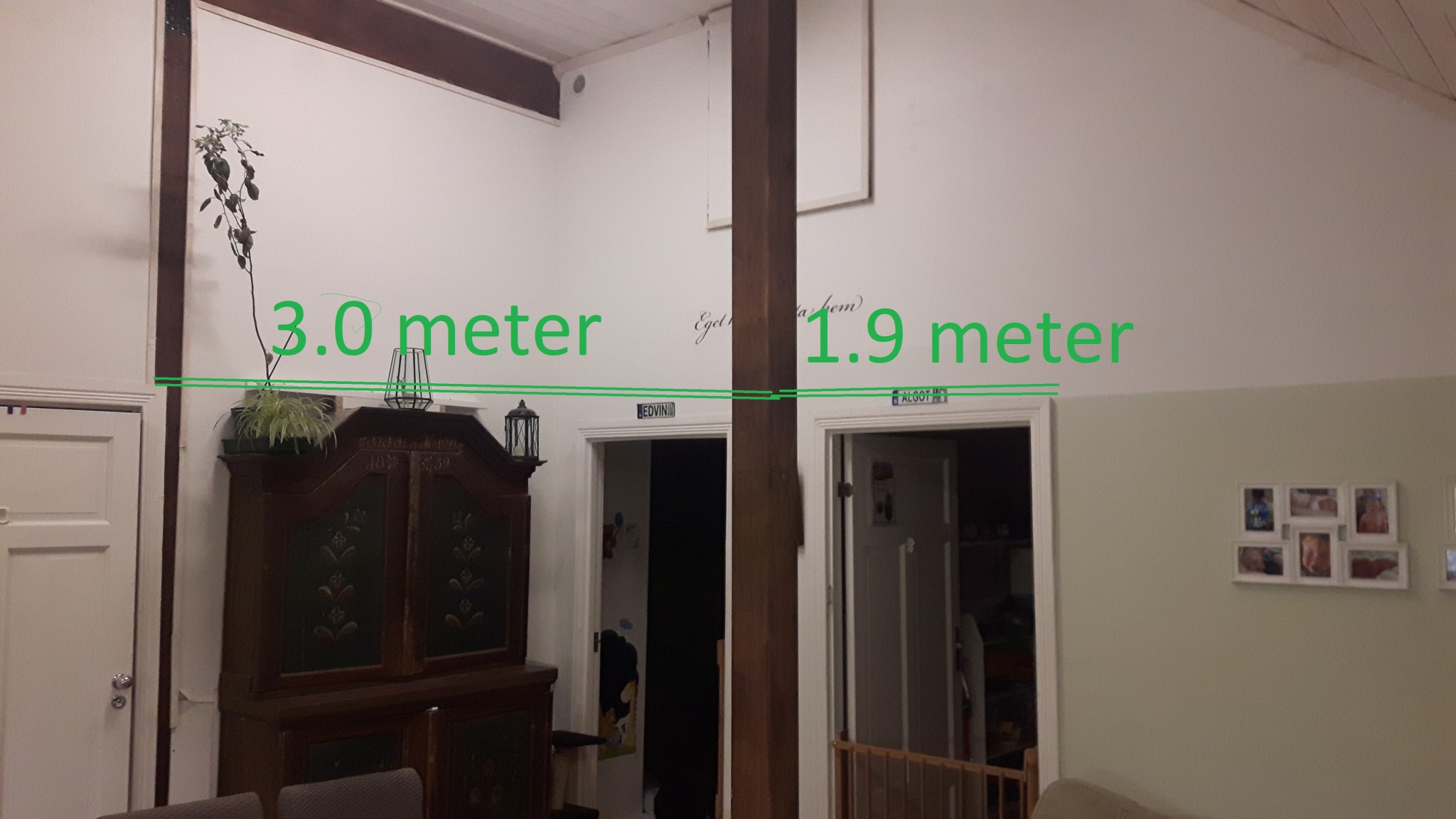
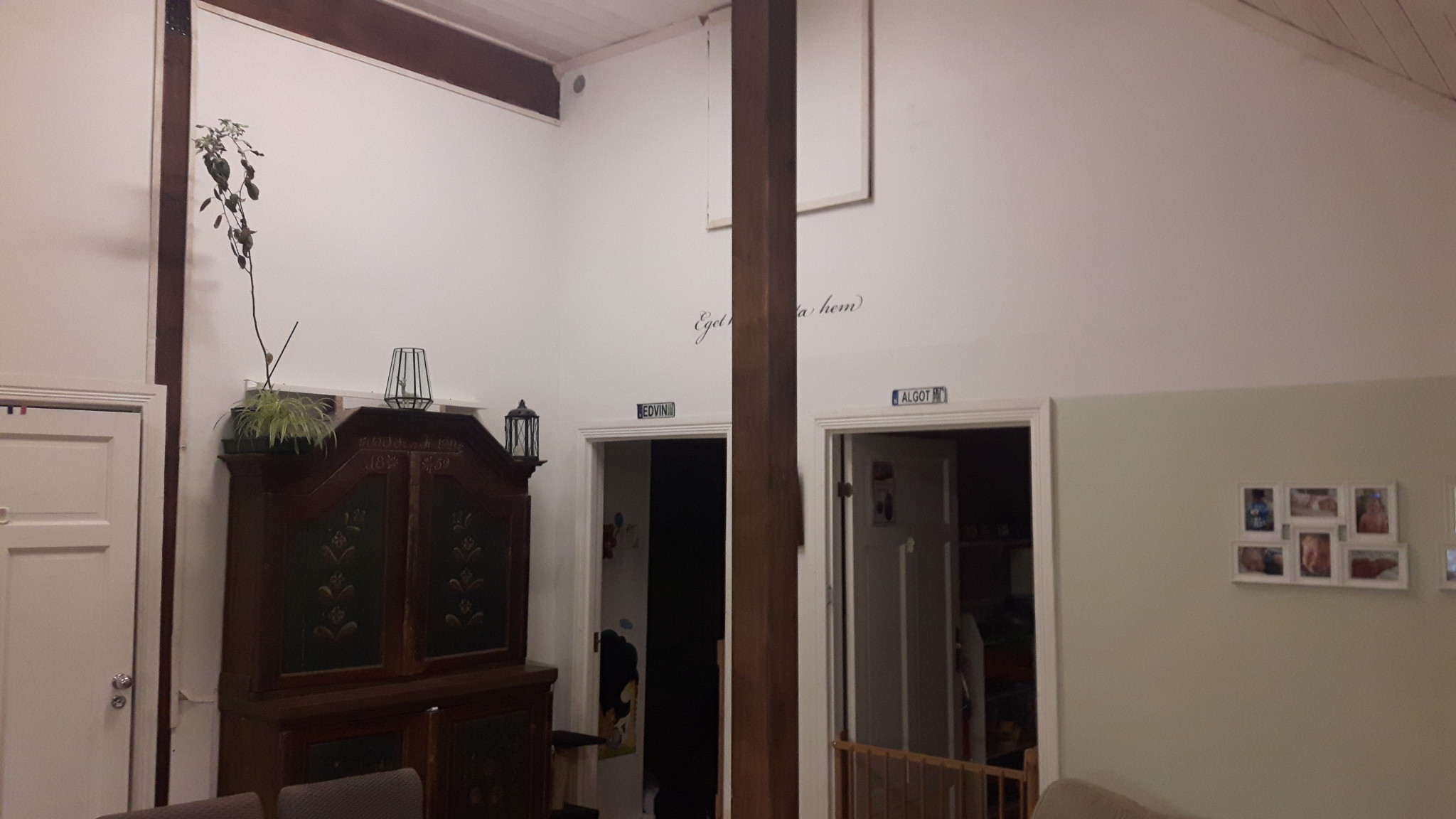
It depends on what level of flex you are willing to accept. I built a shelter with rough planks as the floor. Three meters supported in the middle and at the ends. It held up, but unfortunately, I had nailed together dry wood, and it looked really interesting after it rained on it. So it was supplemented with two 45*75 studs to straighten it again. I am sure that a 45mm tongue and groove floor will hold, but it probably won't feel sturdy.
Like to sketch on paper with a pencil and ruler.KMolinder said:
Something like this becomes relatively stable:

A screw-glued 45*95 beam in 45*195.

Functions as a frame around the entire floor, stabilizes the floor, the floor is laid on 45*95 beam, so it doesn't build up much either upwards or downwards.
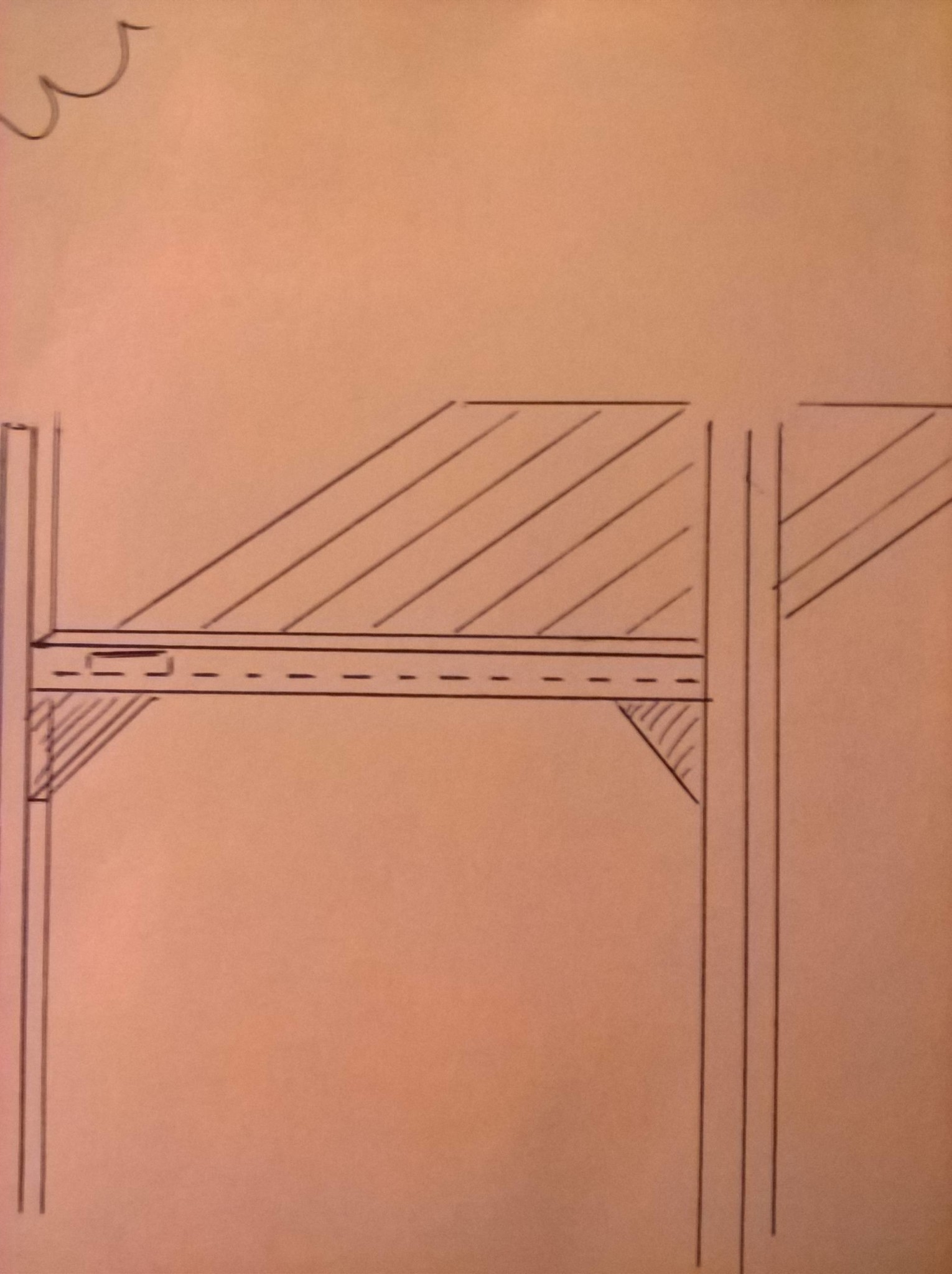
Diagonal braces 300*300mm take up much of the weight, gives the beam extra support.

This is my "morning coffee suggestion".
This construction holds but still gives a little flex in the middle of the floor.
If you want to reinforce the floor, you don't have to do it from underneath.
It is possible to custom build a low bed, screw the beams directly into the floor for a stable construction.
An important thing with my proposal for an L-beam around the floor is that screws must be set from the outside on the beam, into the short side of the floorboards, so that the entire "platform", the floor, doesn't fall down under too much load.
Regards P-A
Great!P Pagno said:[image]
This is my "morning coffee suggestion."
This construction holds but gives a little flex in the middle of the floor.
If you want to reinforce the floor, you don't need to do it from underneath.
It's possible to build a low bed in place, by screwing the beams directly into the floor for a stable construction.
An important thing with my suggestion of L-beam around the floor is that screws must be placed from the outside on the beam, into the short side of the floorboards, so the entire "deck," or floor, doesn't fall down under too much weight.
Regards, P-A
Does the L-beam have to be on the short side?
Can you trim down 45x95 to 45x70 and use more screws, or use 45x220 + 45x70?
On the long side against the existing wall; 45x95 with the floor screwed from above, or L-beam there as well?

If you want a loft that doesn't feel wobbly but still has a low construction height, I suggest the following solution. For the 3-meter span, install a glulam beam as the girder. It should have the dimension 140x120 (width x height), which can be achieved either by special order or by ripping a taller beam (of homogeneous quality). As floor joists perpendicular to the girder, install 90x120 C24 joists (screw-bonded) at c/c 600 mm. Suitable floorboards, (for a sturdy feel) should be in the range of 26-28 mm.
Agree that your proposal is better in terms of durability. The problem is that ts wants a floor as low-profile as possible, with decent stability, a little deflection is acceptable. So with ts's requirements as a premise, traditional construction techniques don't apply.J justusandersson said:If you want a loft that doesn't feel wobbly, but still has a low construction height, I suggest the following solution. On the 3-meter span, install a glulam beam as a load-bearing beam. It should have the dimension 140x120 (width x height), which can be achieved either by special order or by ripping a higher beam (of homogeneous quality). As floor joists perpendicular to the load-bearing beam, install 90x120 C24 joists (screwed and glued) at c/c 600 mm. Suitable floorboards, (for a rigid feel) should be in the range of 26-28 mm.
If the ceiling height were different, your proposal would definitely be the best.
Best regards, P-A
In terms of construction with the right fasteners in the vertical beam, certainly.
More screws in 45*70 do not provide better stability; it's better to glue and screw.
One problem with this L-support is that the contact surface against the 45*70 beam, although equally small against 45*90, is minimal. The best would be to get a deeper support, but with deeper support, the load/torsion on the fasteners in the vertical beams increases.
Everything is possible if you want it.
Best regards, P-A
Click here to reply