
6,103 views ·
25 replies
6k views
25 replies
Thin, uninsulated floor with 2-meter span. What should I use?
I'm thinking of building a small loft at home. I feel like I want to save as much ceiling height as possible and therefore have the thinnest load-bearing floor possible. The surface will be 2x3 meters and the floor span will be 2 meters, attached between a load-bearing wall and a glulam beam.
A little flex doesn't matter, and the surface type doesn't matter. It will be used as a cozy corner/guest space.
I've been looking at tongue and groove pine flooring that is 45 mm thick. Could that be enough?
A little flex doesn't matter, and the surface type doesn't matter. It will be used as a cozy corner/guest space.
I've been looking at tongue and groove pine flooring that is 45 mm thick. Could that be enough?
Hi!KMolinder said:
Planning to build a small loft at home.
Feel like I want to save as much ceiling height as possible and therefore have as thin, load-bearing floor as possible.
The surface will be 2x3 meters and the floor span will be 2 meters, fixed between a load-bearing wall and a laminated wood beam.
A little flexing doesn't matter, and the type of surface is irrelevant. It will be used as a cozy corner/guest area.
I have looked at tongue-and-groove pine flooring that is 45 mm thick. Could that be enough?
The answer is no!
You cannot build a wooden floor without joists, wires, or anything else that supports the floor.
If you have thicker flooring, it becomes heavier and will sway more.
3 joists at 45*145 with a 25mm solid wood floor is sufficient, flexes a bit but it holds.
But if you want the floor to be rigid, you should have at least 45*170 with a maximum of cc 600.
The joists should be upright as joists should be, not lying flat.
You can support the weight with metal joists and diagonal braces from underneath, from the wall towards the floor/ceiling.
Best regards, P-A
If I go with 145 + 25, it becomes 170 mm thick. It's not enough.
Is it possible to go down to 45*120, or even 45*95 if they are placed closer together?
As mentioned, thickness is the most important thing.
Supports from underneath will be in the way.
Is it possible to go down to 45*120, or even 45*95 if they are placed closer together?
As mentioned, thickness is the most important thing.
Supports from underneath will be in the way.
Feel free to take pictures from different angles, up towards where you want the ceiling, or the floor. Then you might not expect to get the solution directly this evening. There are many knowledgeable people on the forum, it's just a matter of them finding your post.
Take care in the meantime!
Regards, P-A

Interesting suggestion, but flat slabs often require a joist or framework from the top side. The point of the flat slab is that you can have long distances between joists/slabs. But the idea, as a basic concept, is good in combination with a cable or, as @BerraBo suggests, a post that transfers the load to the existing roof and intended floor.J Jorak said:

2 pieces of screw-glued 45x120 become as rigid against deflection as a 45x145.
http://www.weland.se/sv-se/laettdurk/
Lättdurk is an option. Handles 2 meters span and has a thickness of 48 mm.
Will take some pictures tonight so you can give good advice and encouragement!
Lättdurk is an option. Handles 2 meters span and has a thickness of 48 mm.
Will take some pictures tonight so you can give good advice and encouragement!
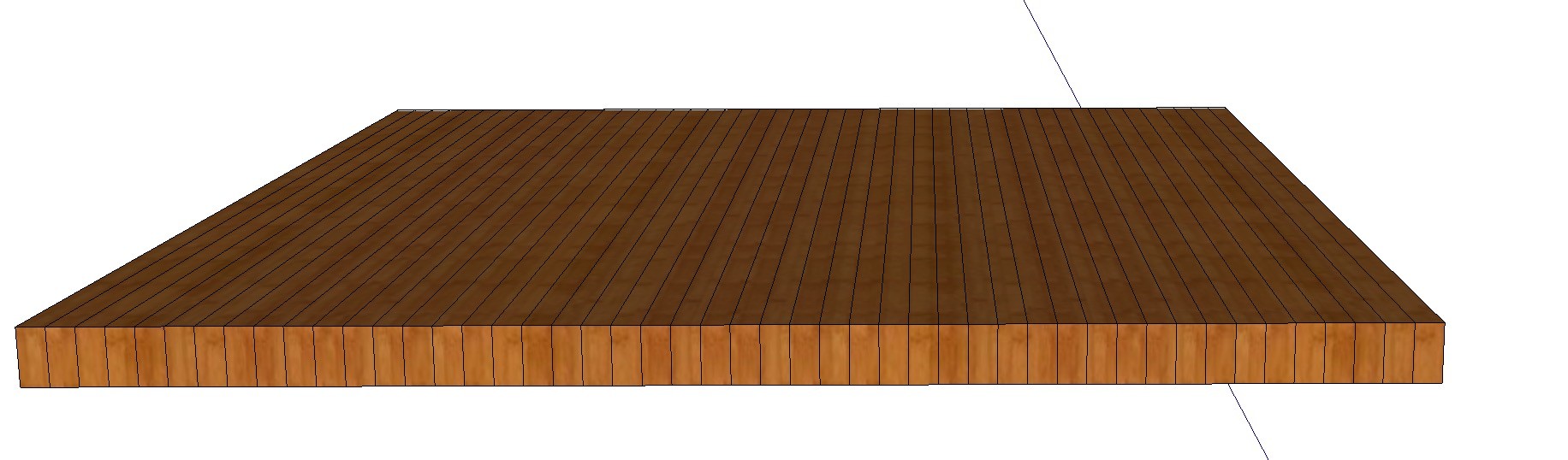
But, if you drill through, skip the glue, have good walls, pull a wire through, passing, tighten "the floor" you have a nice hammock model.Peter2400 said:
Hmmm, fun idea if nothing else.