Now I'm about to go crazy with all the different approaches I'm finding here and on other sites on the internet, so I'm posting questions about my specific case here.
On Monday (28/5), I will cast a slab of about 72 m2 inside my barn. The slab will be epoxy-coated and will serve as the floor in my future cider brewery, which is a food facility.
I will be using steel fiber-reinforced self-compacting concrete. No insulation under the slab.
1. How do I get the smoothest possible surface? Is a screed and laser enough?
2. Should I use a troweling machine to finish the surface as if it were regular concrete?
3. Approximately how long should I wait before grinding the slab? This is both to remove any steel fibers and minor unevenness, and to remove the "concrete skin" so the epoxy adheres (the epoxy is applied about 2 months after casting)?
I might have more questions as we go along, but let's start like this.
I've never cast before but I'm known for being crazy and still getting it right in the end...
/Samuel
Hope the casting for ts went well, but since there is still interest in the question, I can give some tips.
Getting a reasonably smooth casting with SKB, rörsloda, and laser is not a problem. In this case, when it is to be sanded for epoxy laying, I would have skipped the smoothing.
The sanding is performed in conjunction with the floor laying to avoid dirt on areas that should be painted.
If you want a really smooth surface, without sanding marks, you need a large sander (at least 650 mm). It's important to use the right type of segment too, both for results and economy. Hard concrete = soft segments, soft concrete = hard segments. The right type of segment can last up to 5000m2, but if you use the wrong ones, they can be finished after 50. A set of sanding segments costs a few thousand kronor.
A thin-layer coating (0.4 kg/m2) doesn't hide any unevenness in the substrate, while a thicker system (2kg/m2) flows out and hides most things.
The problem that can arise when grinding SKB with diamond segments and choosing the right one as Saell mentions above.
The top "film" that needs to be ground is often quite soft (hard segments), but then if you continue grinding, the concrete is rock hard, and then soft segments are needed.
Fun that there was some response to my questions even if it was a couple of years late...
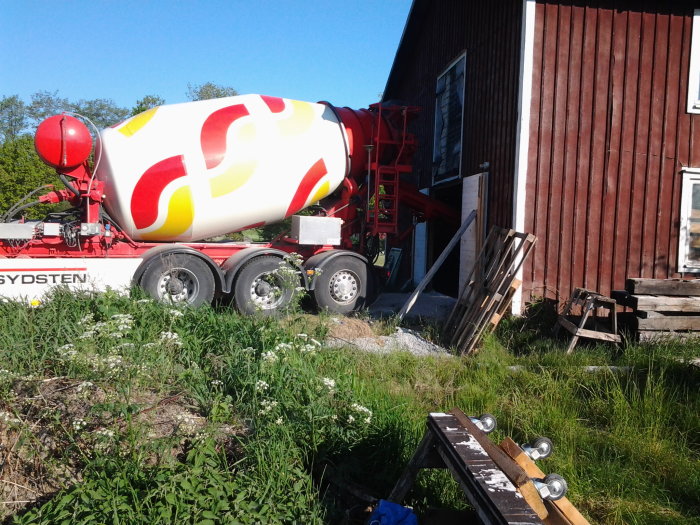
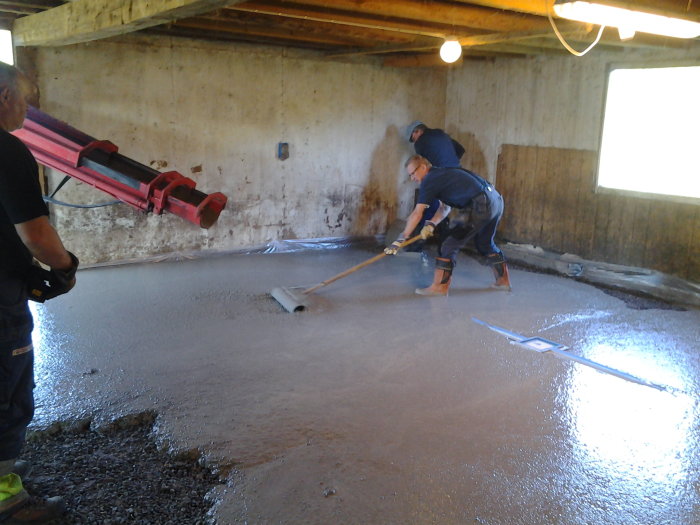
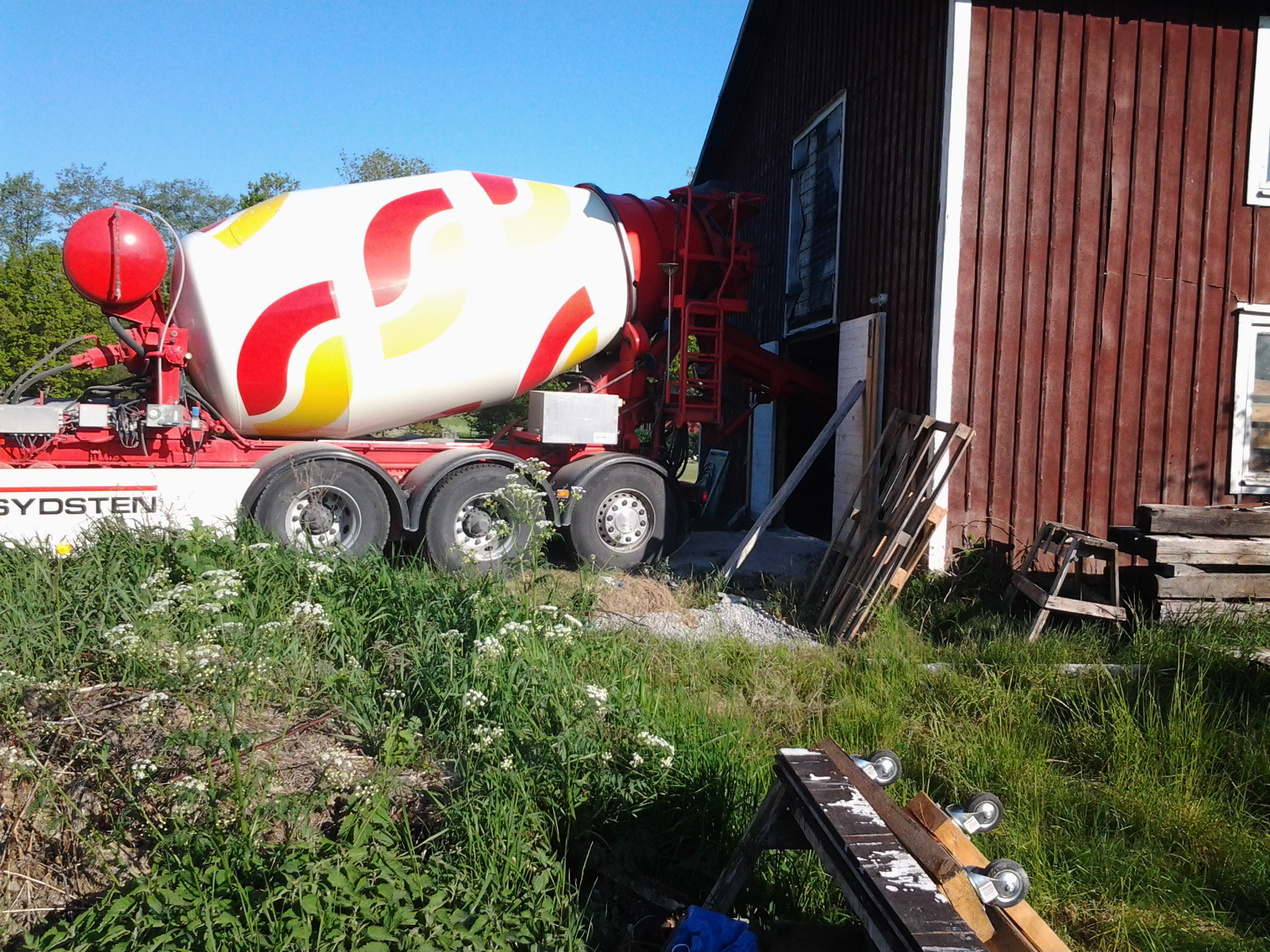
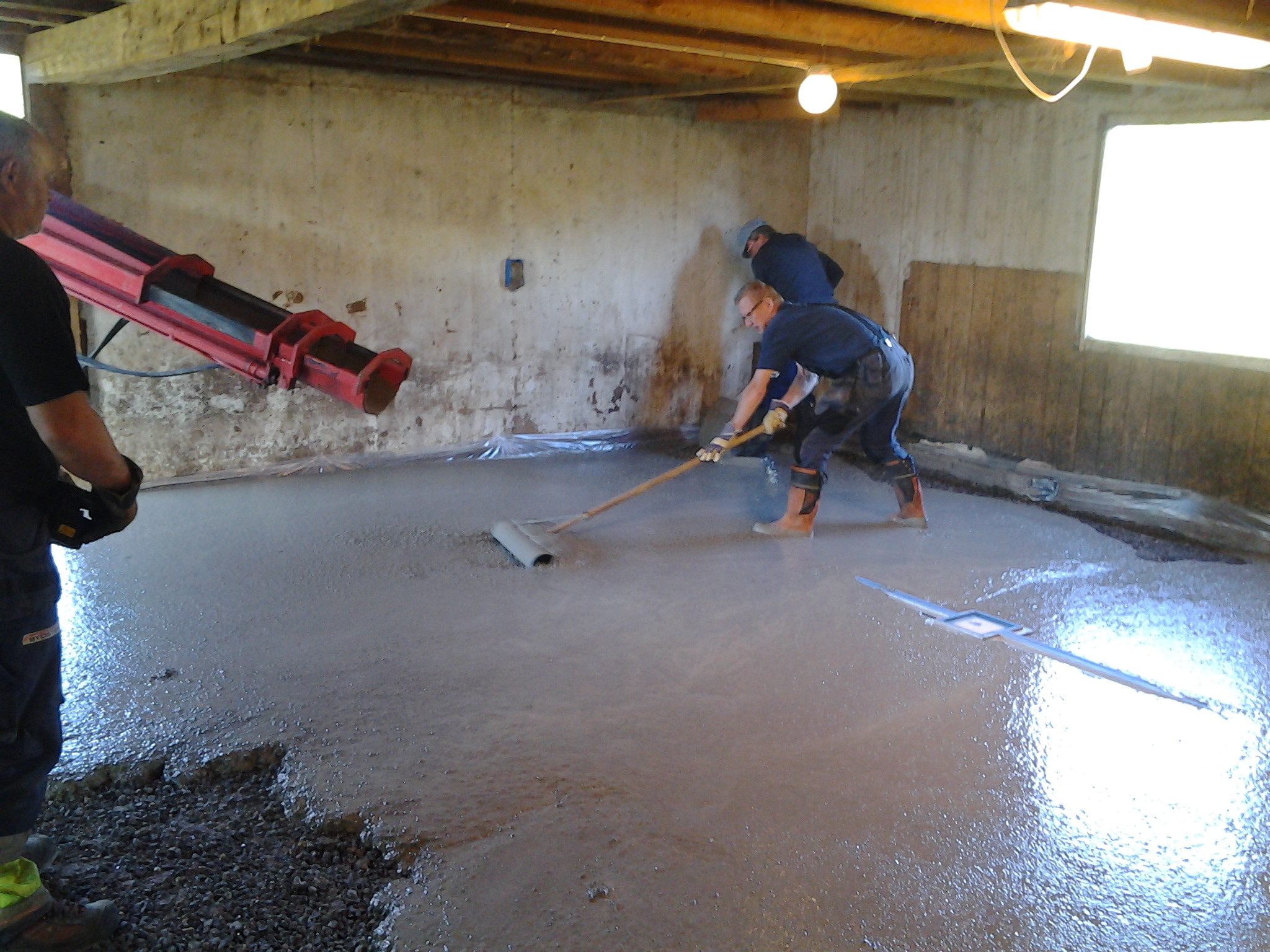
The pouring went quite well, the concrete truck could back in with the chute into the barn and almost reached the entire floor. My dad and father-in-law had to scrape out a little in the corners.
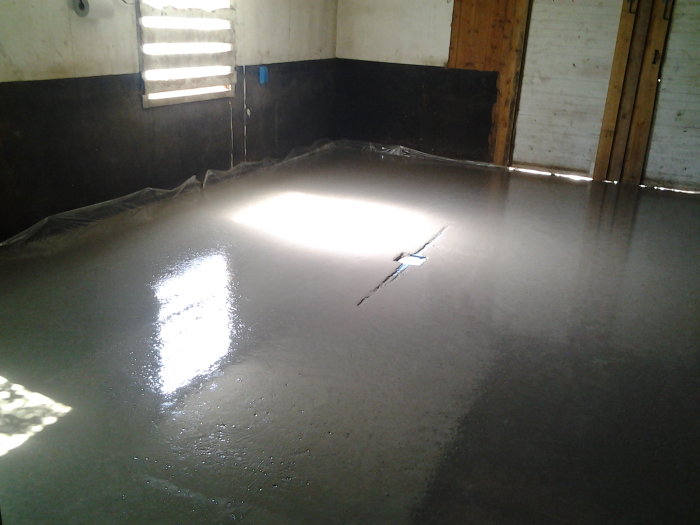
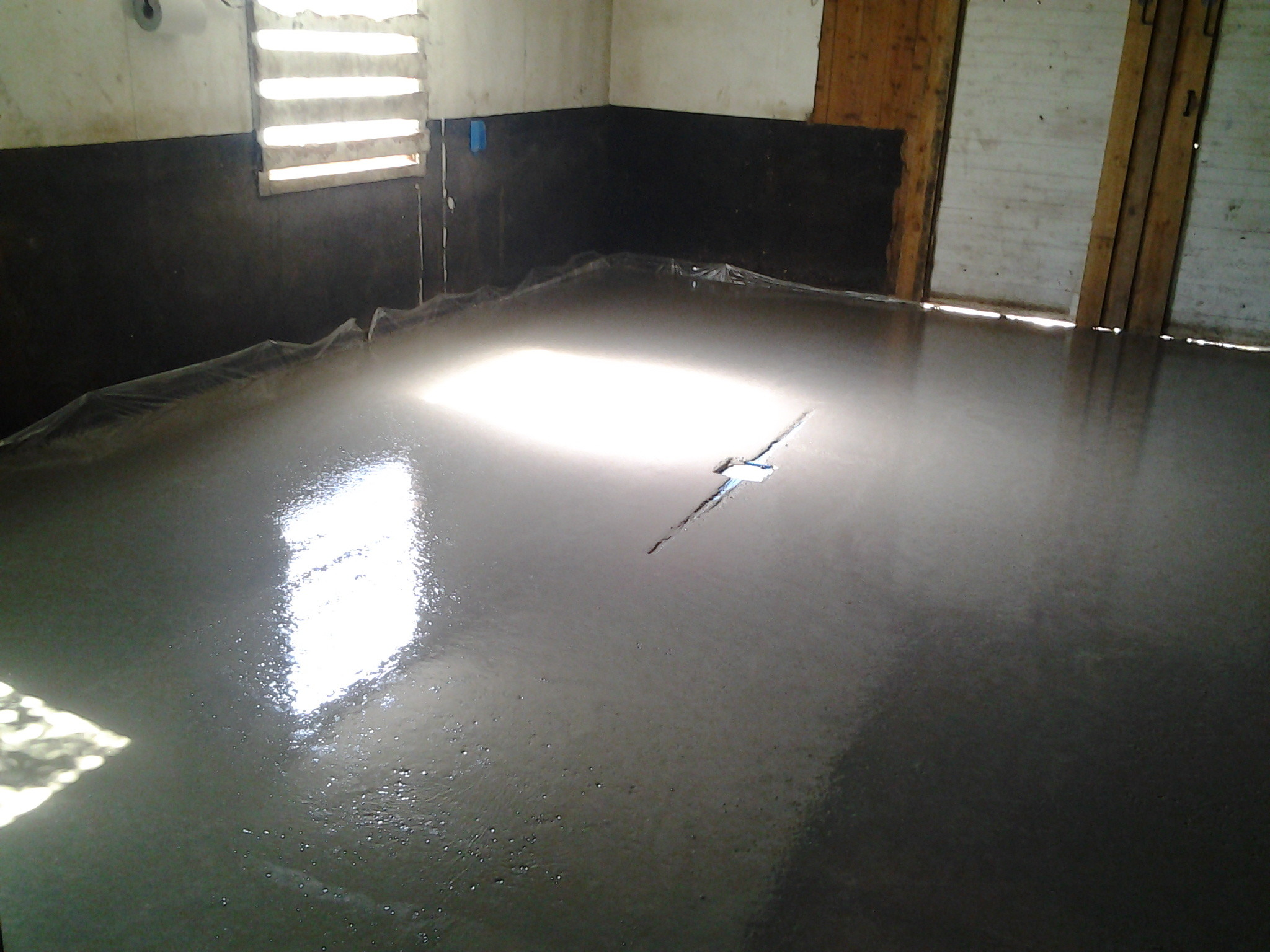
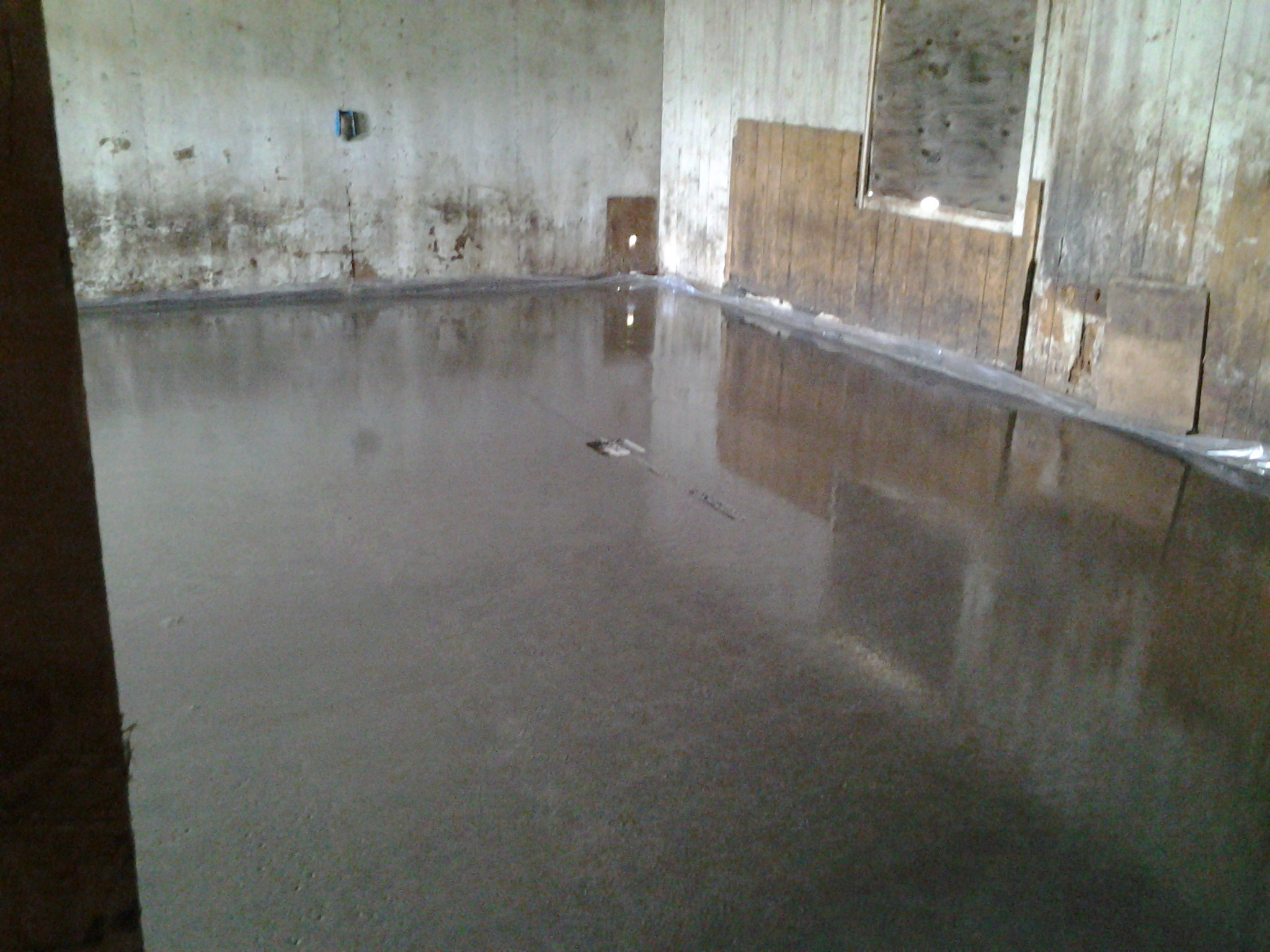
When everything was spread out, we vibrated the concrete with a pair of drainage pipes attached to broom handles so they looked like upside-down "T"s. This was to remove air bubbles and try to get the surface as smooth as possible without protruding reinforcement fibers or stones. Otherwise, I just watered a little.
When the electrician came at the end of the pouring to check on an electrical fault in the house, I had to run off, which meant it became a bit high over the trenches. Mostly my own fault since I hadn’t instructed the "guys" properly. Later, I had to work a bit with the angle grinder and diamond disc to find the trenches properly...
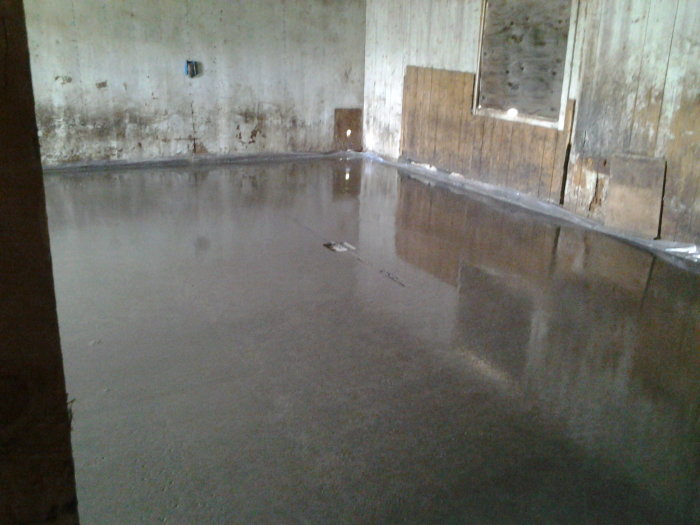
I got a little backfall into the far corner, which is a bit annoying since during cleaning after musting, I spray quite a lot of water on the floor and then have to be ready with the floor scraper all the time.
When the floor had cured completely, I sanded it with a large floor sander, like a floor polisher. It required some technique to operate it. The key was to keep the handle at a precise right angle, otherwise, you spun away with the machine. My father-in-law never managed to figure out how to do it, so I sanded everything myself.
What turned out the worst, apart from the backfall, is that there were quite a lot of small "pores" in the floor and because we rolled on the floor paint, they weren't filled with paint but instead fill with dirt and make the floor difficult to clean. When we find the time, we will repaint the floor, but then scrape out the paint instead so it fills the pores.
That's what I remember now, 4 years after pouring...
/Samuel
Click here to reply
Vi vill skicka notiser för ämnen du bevakar och händelser som berör dig.