
9,121 views ·
11 replies
9k views
11 replies
Tear down wall containing electricity, don't think it is load-bearing?!
Hello
I am going to tear down a wall between the hallway and the living room and get rid of the hideous archway we have today. It's a gypsum wall and I don't think it's load-bearing. See the attached picture, the red-marked area is what should be removed.
However, I am a DIY enthusiast trying to know my limitations, so I pose question number 1:
Could it be a load-bearing wall?
Then I also wonder how I should handle the electrical items in the wall. I see two options:
1) I carefully demolish as much as possible and hang the electrical conduits aside until I can’t go further without needing to move the electricity. Then I contact an electrician to relocate the electrical installations to a more suitable place.
2) I start by bringing in an electrician to move the electrical items before I start demolishing?
Single-story house (Myresjöhus) built in 1966, wooden facade (with imitation brick) which should mean it's a wooden joist construction...?


I am going to tear down a wall between the hallway and the living room and get rid of the hideous archway we have today. It's a gypsum wall and I don't think it's load-bearing. See the attached picture, the red-marked area is what should be removed.
However, I am a DIY enthusiast trying to know my limitations, so I pose question number 1:
Could it be a load-bearing wall?
Then I also wonder how I should handle the electrical items in the wall. I see two options:
1) I carefully demolish as much as possible and hang the electrical conduits aside until I can’t go further without needing to move the electricity. Then I contact an electrician to relocate the electrical installations to a more suitable place.
2) I start by bringing in an electrician to move the electrical items before I start demolishing?
Single-story house (Myresjöhus) built in 1966, wooden facade (with imitation brick) which should mean it's a wooden joist construction...?


Those in the forum who can determine if a wall is load-bearing usually ask for construction drawings, how the walls are built, what type of trusses are used, and how they are located in relation to the wall.

One-story Myresjöhus from 1966 usually have self-supporting roof trusses, so it is likely that the wall is not load-bearing. For certainty, blueprints are needed. A sectional drawing might be enough, but having the floor plan as well wouldn't hurt.

I think that's the best option (as a layman).Feyin said:
The electrician can't really install the switch and wall outlet before he knows where the new section of wall will be located.

It's probably safest if an electrician comes first to ensure they disconnect the electricity running through the wall so that you don't risk causing a short circuit or anything else during the demolition.Then I also wonder how I should handle the electrical gadgets in the wall. I see two options:
1) I carefully tear down as far as possible and hang the electrical pipes to the side until I can't go further without needing to move the electricity. Then contact an electrician to place the electricity in a more suitable location.
2) I start by having an electrician come over to move the electricity before I start tearing it down?
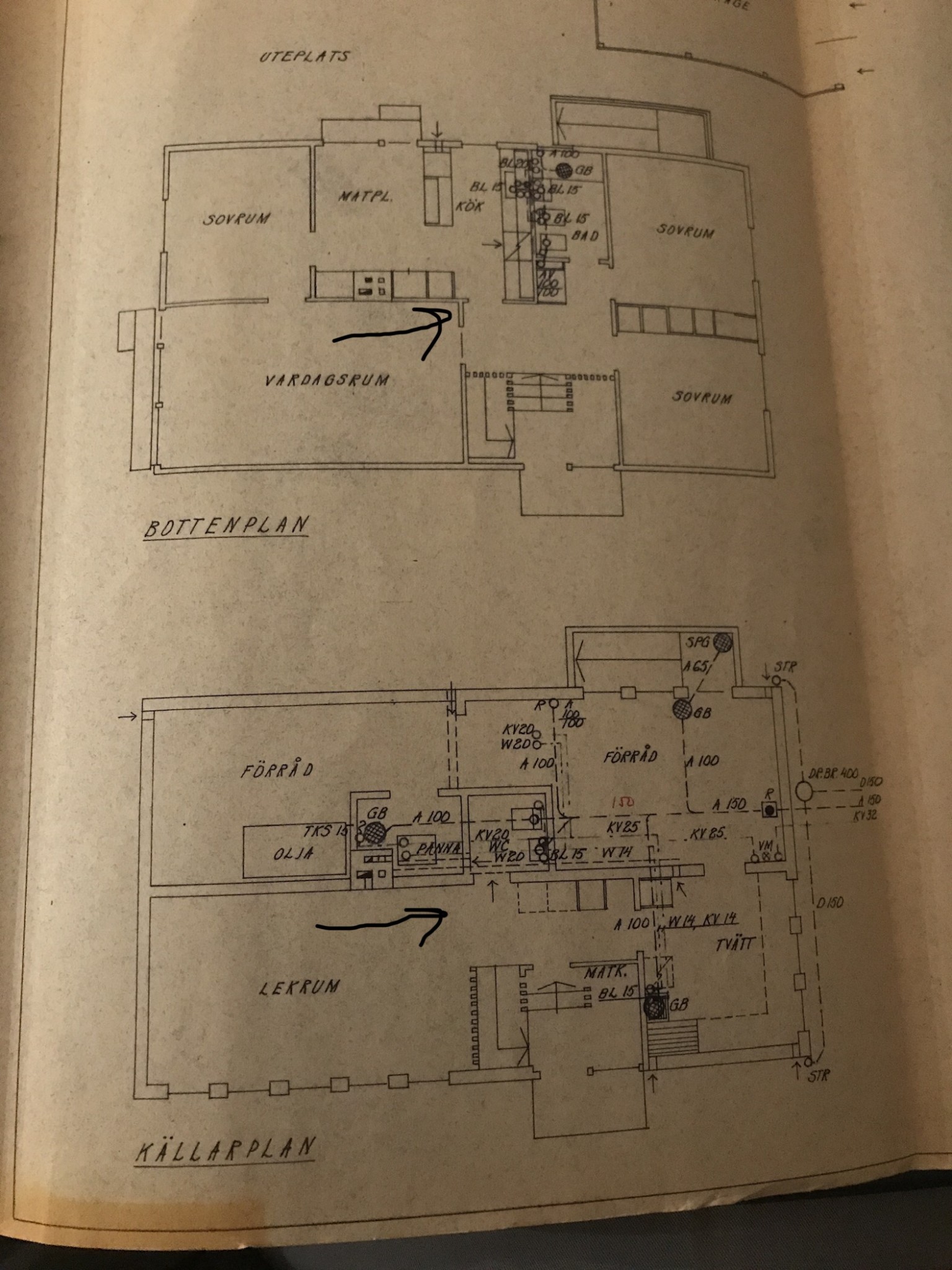
No, that wall is not load-bearing. You can conclude that by looking at the basement plan.
I would express it like this: The loads that load-bearing walls support must always be transferred down to the foundation. Usually, this is done with the help of walls in the underlying layers, but sometimes with the help of beams and columns.
Best answer
Furthermore, load-bearing walls typically run in the same direction as the roof ridge, perpendicular to the roof trusses that the wall is meant to support. Though trusses and ridge aren't visible on your drawing, since the house is rectangular and not square, it is highly likely that the ridge runs horizontally in the image, and therefore none of the walls running vertically in the image are load-bearing.
Click here to reply