
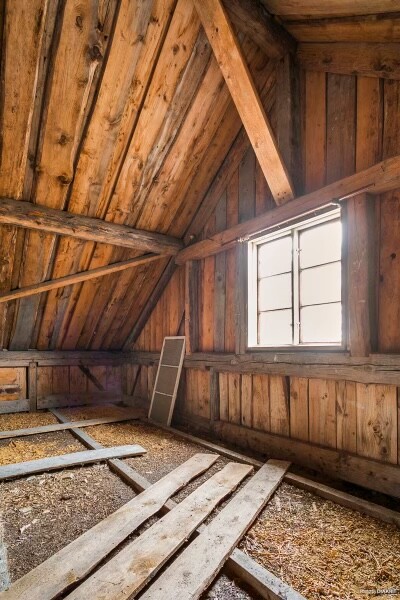

Are you thinking about the timber, not the planks?
Surely, they used what they had on hand, but it's likely not a problem. Does it smell a lot of tar if you go near?
When was the house built? Looks like typical 19th century.
Looks like someone applied varnish or something similar on certain parts. Creosote came in during the 1900s.
Surely, they used what they had on hand, but it's likely not a problem. Does it smell a lot of tar if you go near?
When was the house built? Looks like typical 19th century.
Looks like someone applied varnish or something similar on certain parts. Creosote came in during the 1900s.
In cases where creosote is involved, it generally means that constructions have been made with used utility poles. Something I associate with summer cottages from the 60s.
Hello and welcome to this occasionally eminent forum. Unfortunately, I lack the ability to visually identify creosote, so I can't help you there. But a little friendly tip for the future is that it is customary not to ask the same question in two different parts of the forum, known as cross-posting. It can make so-called forum foxes angry, and you don't want to be near angry foxes.

Haha I am new here and wanted to get answers and thought that different experts hung out in different forums and you couldn't choose two different ones, so I put it in both building materials and health as it concerned both! But now I know! Thanks

Doesn't look that way in the picture, but you could do some work yourself. Firstly, you can try to find out when the house was built and compare it with when creosote came and started to become popular. Then you can take some sample pieces of the wood you suspect might have creosote and compare with pictures of how creosote looks. You can also smell the wood you suspect and compare with wood you know doesn't have creosote.
From what I can see, the construction technique of the loft seems to be much older than the technique of using creosote. I associate creosote with a more brown and black tone than your beams have. Wood can turn gray with age.
Finally, you can ask yourself why they would use wood with creosote up in the attic?
From what I can see, the construction technique of the loft seems to be much older than the technique of using creosote. I associate creosote with a more brown and black tone than your beams have. Wood can turn gray with age.
Finally, you can ask yourself why they would use wood with creosote up in the attic?

Member
· Korpilombolo
· 3 771 posts
Creosote is usually brown and smells like old railway sleepers, i.e., tar-like. Gray is rather a sign of weather-exposed timber. Perhaps the timber was stored outdoors before the cottage was built.
There is little reason to use treated timber where it will not be exposed to moisture/water.
There is little reason to use treated timber where it will not be exposed to moisture/water.
Member
· Västra Götaland
· 68 posts
Creosote is a yellowish transparent liquid if made from wood tar and is completely harmless. If made from coal tar, it is carcinogenic and has a brown tar-like color. This type has primarily been used for railroad ties and tele/electric poles.
I cannot tell from the photo that there is the dangerous type.
Perhaps we have a "dangerous" electric pole on our property. It actually smells very good of tar, so it might be impregnated with regular wood tar.
I cannot tell from the photo that there is the dangerous type.
Perhaps we have a "dangerous" electric pole on our property. It actually smells very good of tar, so it might be impregnated with regular wood tar.

Düsseldorff
Building conservationist
· Bromma
· 3 373 posts
Düsseldorff
Building conservationist
- Bromma
- 3,373 posts
I have built quite a few garden stairs with creosote-impregnated sleepers. They basically last forever. Once they are in place, it's like asbestos: As long as you don't lick them, it's fine.
However, that's outdoors. I have never heard of using creosote in an attic, except if you are reusing poles as someone mentioned. It also doesn't look like creosote in your picture.
However, that's outdoors. I have never heard of using creosote in an attic, except if you are reusing poles as someone mentioned. It also doesn't look like creosote in your picture.
Member
· Korpilombolo
· 3 771 posts
Just as an addition. Avoid touching creosote-treated wood like old telephone poles and railway sleepers without protective gloves. The toxic substances can penetrate the skin. There's no need to expose yourself to this when you are aware of the risk.
The wood in the cottage, however, is harmless as far as can be seen.
The wood in the cottage, however, is harmless as far as can be seen.

Creosote is indeed black, right? I only see fresh yellow wood and parts that have grayed with age. I also don't know that creosote has ever been used to paint on impregnation on either planks or beams, as others have already said, it's telephone poles and possibly old railway sleepers. It was known even when it was created that it was insanely toxic, that was partly why it was used, you got rid of the weeds as well.
Yes, but it also leaches into the groundwater. However, less and less as time goes on. Unsuitable if you have your own well.I've built quite a few garden steps with creosote-treated sleepers. They last virtually forever. Once they are in place, it's like asbestos: don't lick them, and it'll be fine.
However, that's outdoors. I've never heard of using creosote in an attic, except for reusing poles as someone mentioned. It also doesn't look like creosote in your picture.
There are a couple of studies on this. Leaches the most when submerged in water.
Düsseldorff
Building conservationist
· Bromma
· 3 373 posts
Düsseldorff
Building conservationist
- Bromma
- 3,373 posts
Ok, that was more than I knew. What I have built is not submerged in water, and none of the properties have their own well. But of course, it's inappropriate to pollute the groundwater with creosote. I'll read up on it.G Genomklok said:
Click here to reply