
353 views ·
8 replies
353 views
8 replies
Surface of stove. How to apply putty

We have had a stove installed that did not get a surface finish. I'm unsure how to do it. The craftsman who didn't want to (finish) the job himself says I should use regular filler and then paint.
The surface consists of two different materials. The stove itself is concrete-like, and then there is an upper structure of boards in a concrete-like material. A fire protection board.
How would you do this job?
My concern is that it will crack at the joints. 5cm filler strips will be hard to conceal since there is no recess for filler. The craftsman suggested a full-cover fabric that I can embed with filler.
The heat can cause movement. Would it help to first seal the joints with some flexible sealant that can then be covered with filler? How can you make the filler adhere in such a case?
What type of filler is used? It doesn't get very hot when I burn, but there's some heat.
I've also considered microcement, but the instructions I read said it was troublesome if the substrate was already cement.
The surface consists of two different materials. The stove itself is concrete-like, and then there is an upper structure of boards in a concrete-like material. A fire protection board.
How would you do this job?
My concern is that it will crack at the joints. 5cm filler strips will be hard to conceal since there is no recess for filler. The craftsman suggested a full-cover fabric that I can embed with filler.
The heat can cause movement. Would it help to first seal the joints with some flexible sealant that can then be covered with filler? How can you make the filler adhere in such a case?
What type of filler is used? It doesn't get very hot when I burn, but there's some heat.
I've also considered microcement, but the instructions I read said it was troublesome if the substrate was already cement.
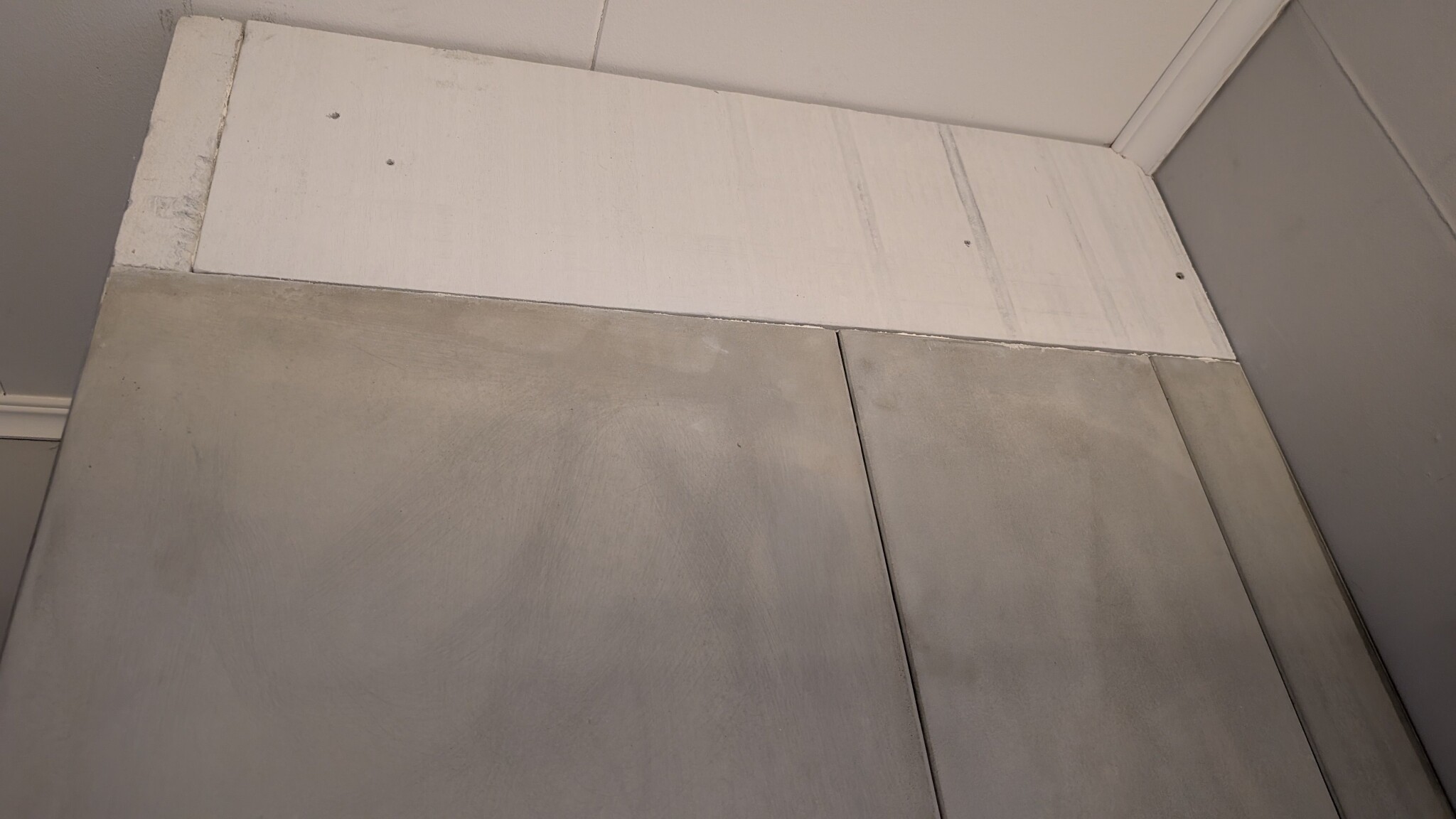
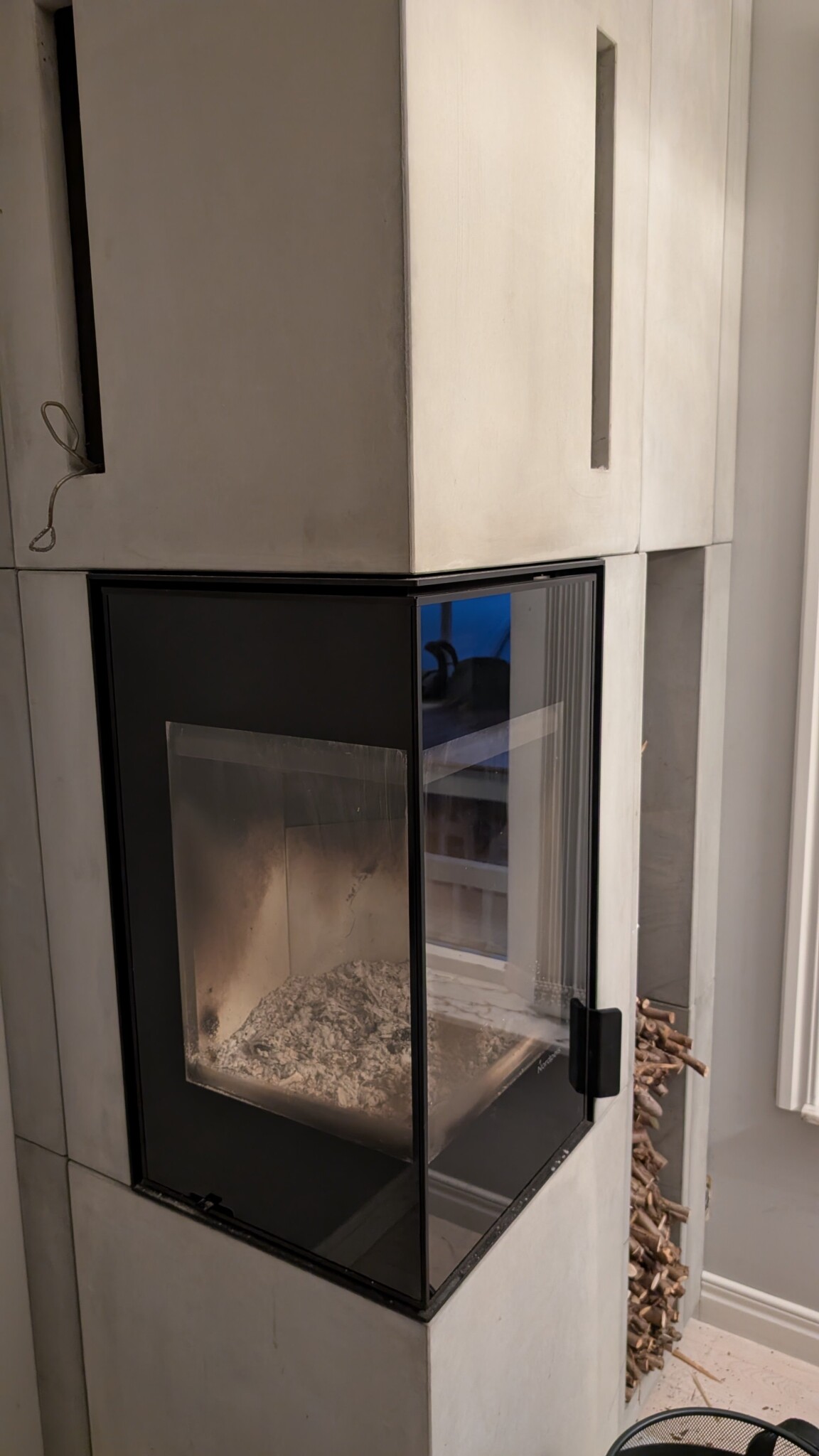

I don't know how likely it is that the seam will crack, maybe you can fill it with an elastic fireproof sealant, it probably won't crack as easily as a joint that hardens and becomes completely rigid.
However, I learned from chimney renovators that if you want a surface that looks slightly polished, you can mix putty with a little water and roll it onto the surface before painting it. It worked excellently on our old chimney in the countryside where I tore down a bit of wall against the brick and needed to improve that surface.
However, I learned from chimney renovators that if you want a surface that looks slightly polished, you can mix putty with a little water and roll it onto the surface before painting it. It worked excellently on our old chimney in the countryside where I tore down a bit of wall against the brick and needed to improve that surface.
Click here to reply