
1,176 views ·
10 replies
1k views
10 replies
Strange truss - load-bearing interior wall?
I am considering removing an inner wall, but since one of the outer walls is lower than the other, I'm confused about how the roof truss looks and if the wall might be load-bearing.
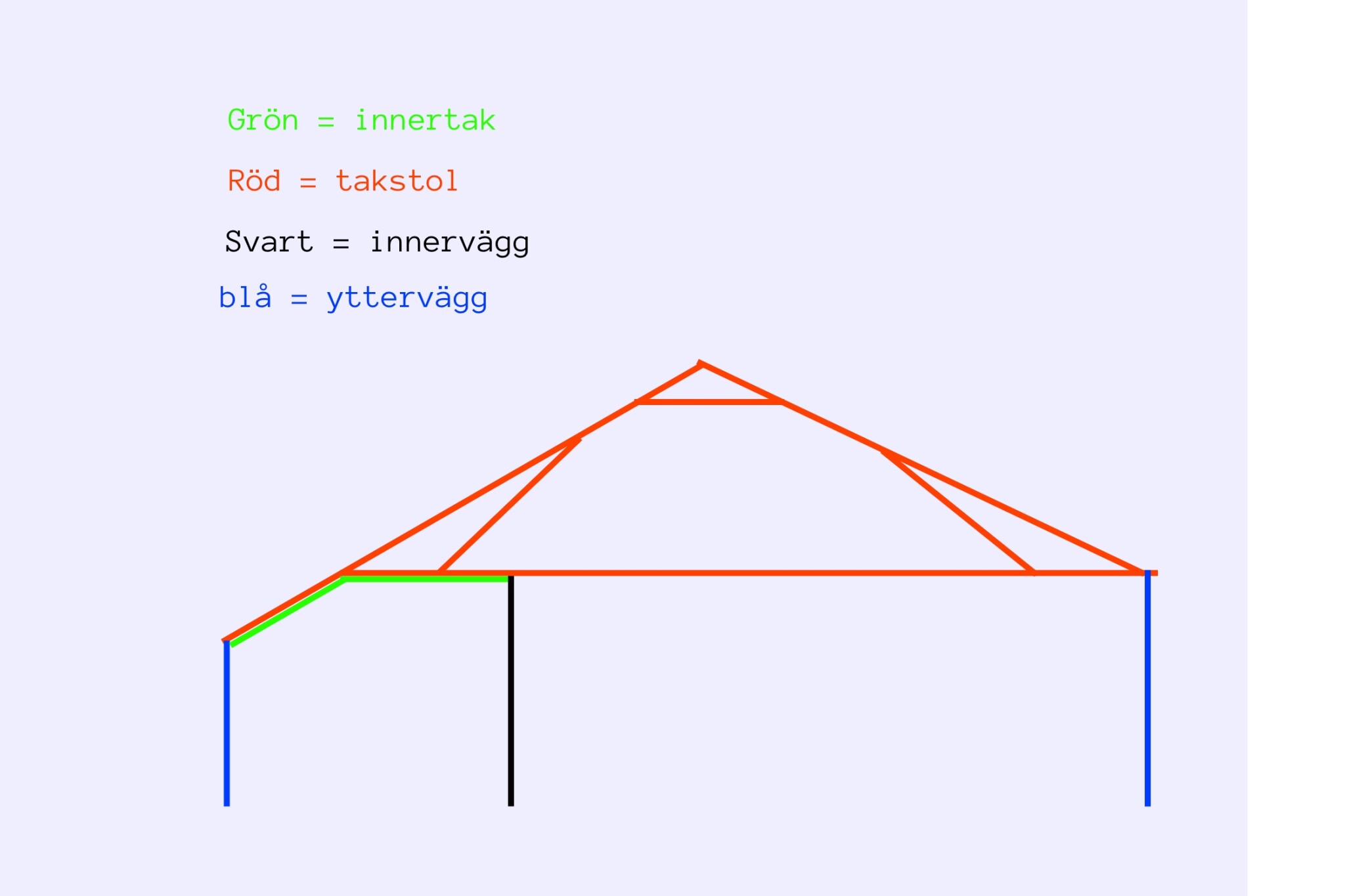
I haven't yet removed the ceiling or crawled up to the attic to take a closer look. The attic is low, with a maximum of 50 cm between the insulation and the roof decking. The house is narrow, with exterior measurements of 600 cm. So, I have drawn up a sketch of how I think it might look. I've of course looked up into the attic via the hatch and seen the roof truss from there... but it's hard to say how the collar tie goes.
What do you think?
I haven't yet removed the ceiling or crawled up to the attic to take a closer look. The attic is low, with a maximum of 50 cm between the insulation and the roof decking. The house is narrow, with exterior measurements of 600 cm. So, I have drawn up a sketch of how I think it might look. I've of course looked up into the attic via the hatch and seen the roof truss from there... but it's hard to say how the collar tie goes.
What do you think?

The house was built in the 60s but was expanded in the 70s.BirgitS said:
The building plan does state that there are self-supporting trusses... but I'm still confused haha
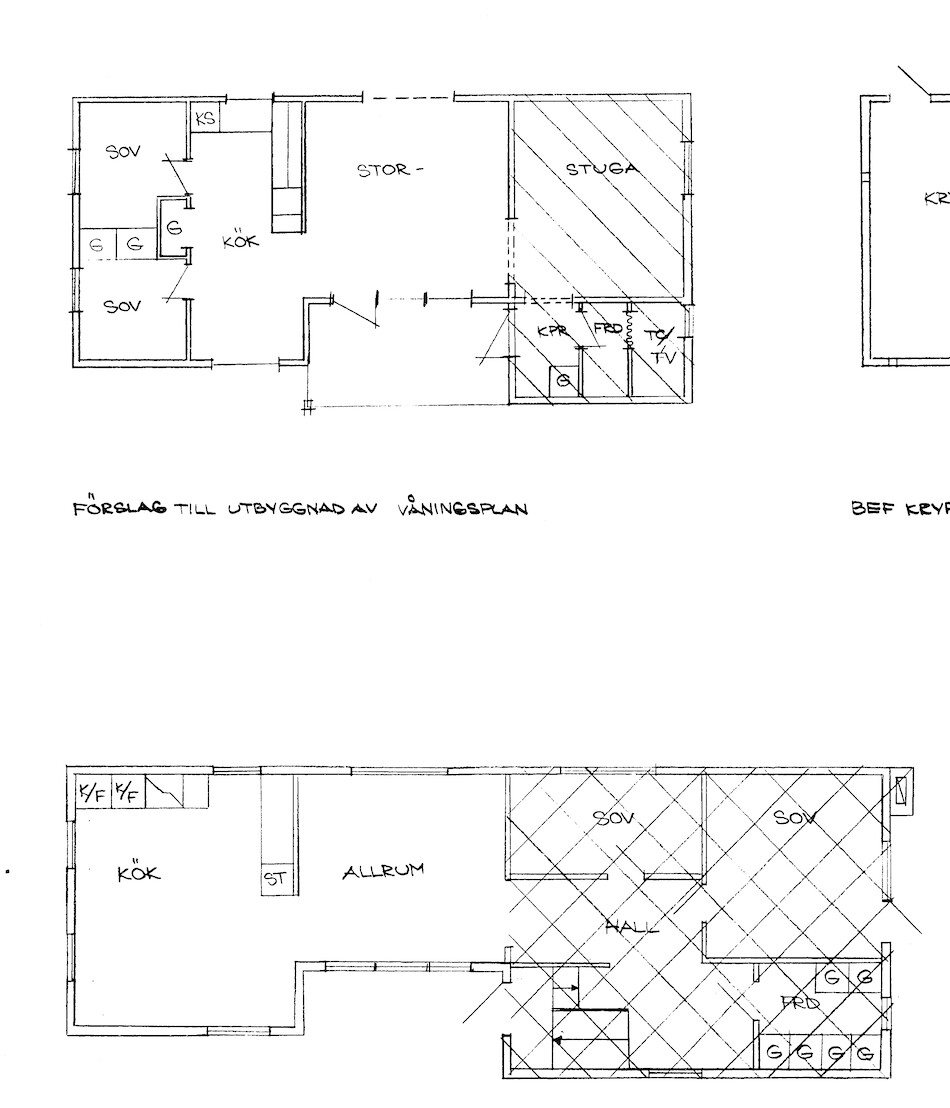
 And when I look at the drawing, I don't really think it matches reality. At least not on the sectional drawing for the basement; it shows an upper floor that looks symmetrical, or?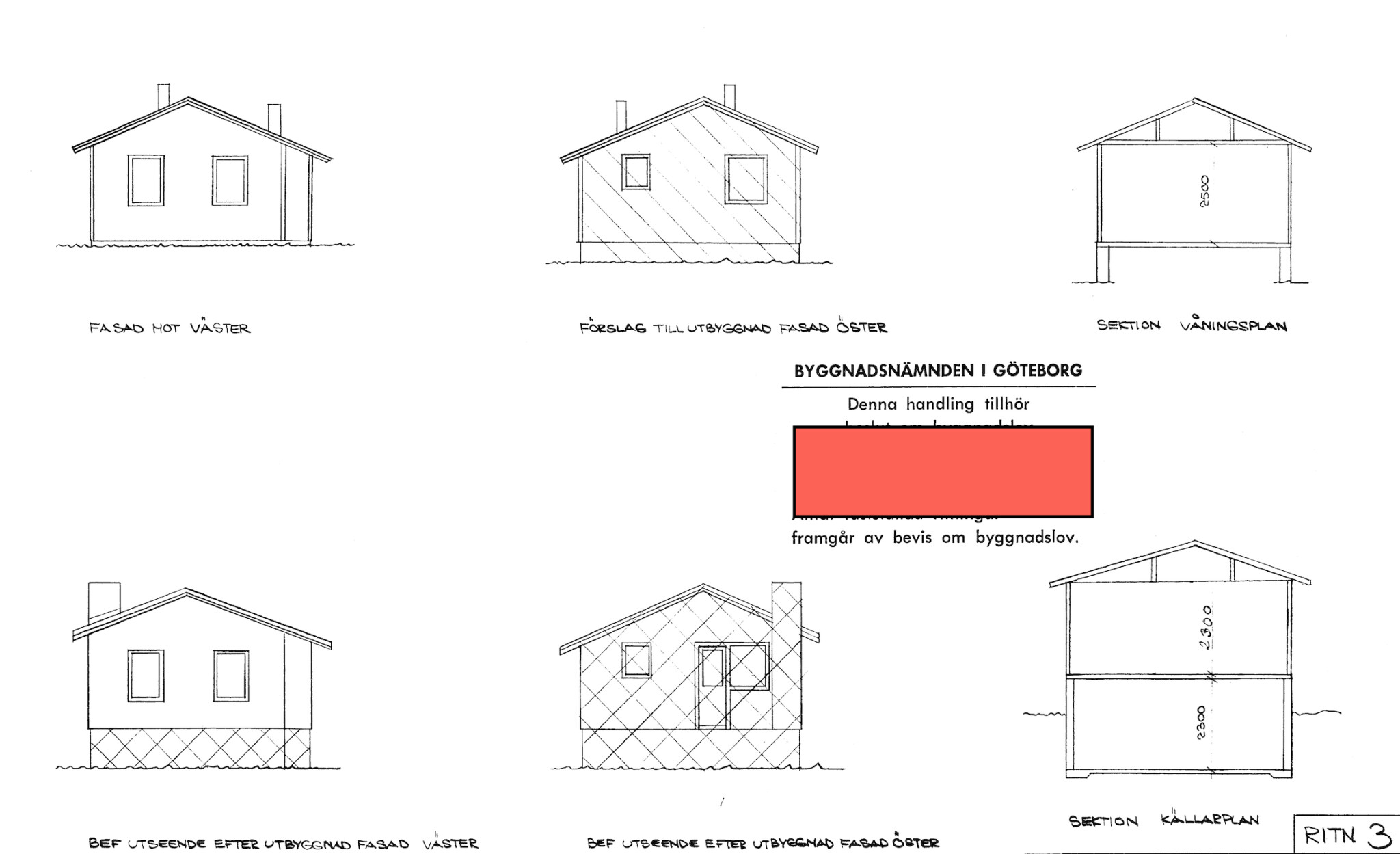
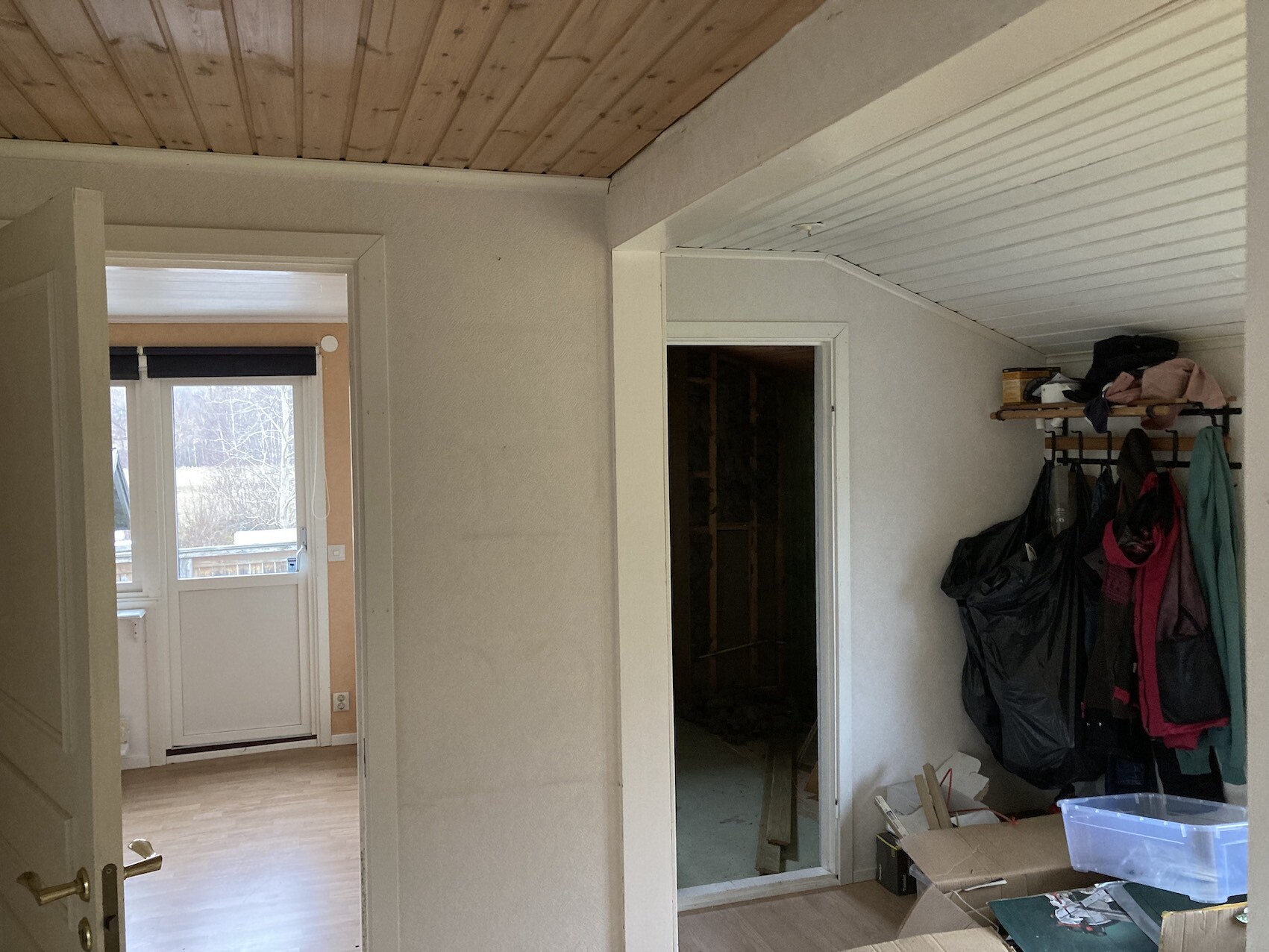

Where you have drawn a green sloped ceiling, how tall is the exterior wall? That's the part that doesn't quite match your drawings.
In the drawing, it doesn't appear to be truss rafters. If you rely on the sectional drawing, there are no load-bearing interior walls. But in the drawing, it doesn't look like you've drawn the rafters either.
In the sectional drawing with the basement, I think there is a different distance between the outer sides and the nearest vertical stud for the attic. Unlike the upper sectional drawing.
In the sectional drawing with the basement, I think there is a different distance between the outer sides and the nearest vertical stud for the attic. Unlike the upper sectional drawing.
Now I see a mistake I also made on the drawing I sketched. The treads are not symmetrically placed. See the attached photo showing the right and left sides.In the drawing, it does not appear to be truss rafters. If we believe the sectional drawing, there are no load-bearing interior walls. But in the drawing, it also does not look like you have drawn the rafters.
In the sectional drawing with the basement, I do think that the distance between the outer sides and the nearest standing rule for the attic is different compared to the upper sectional drawing.
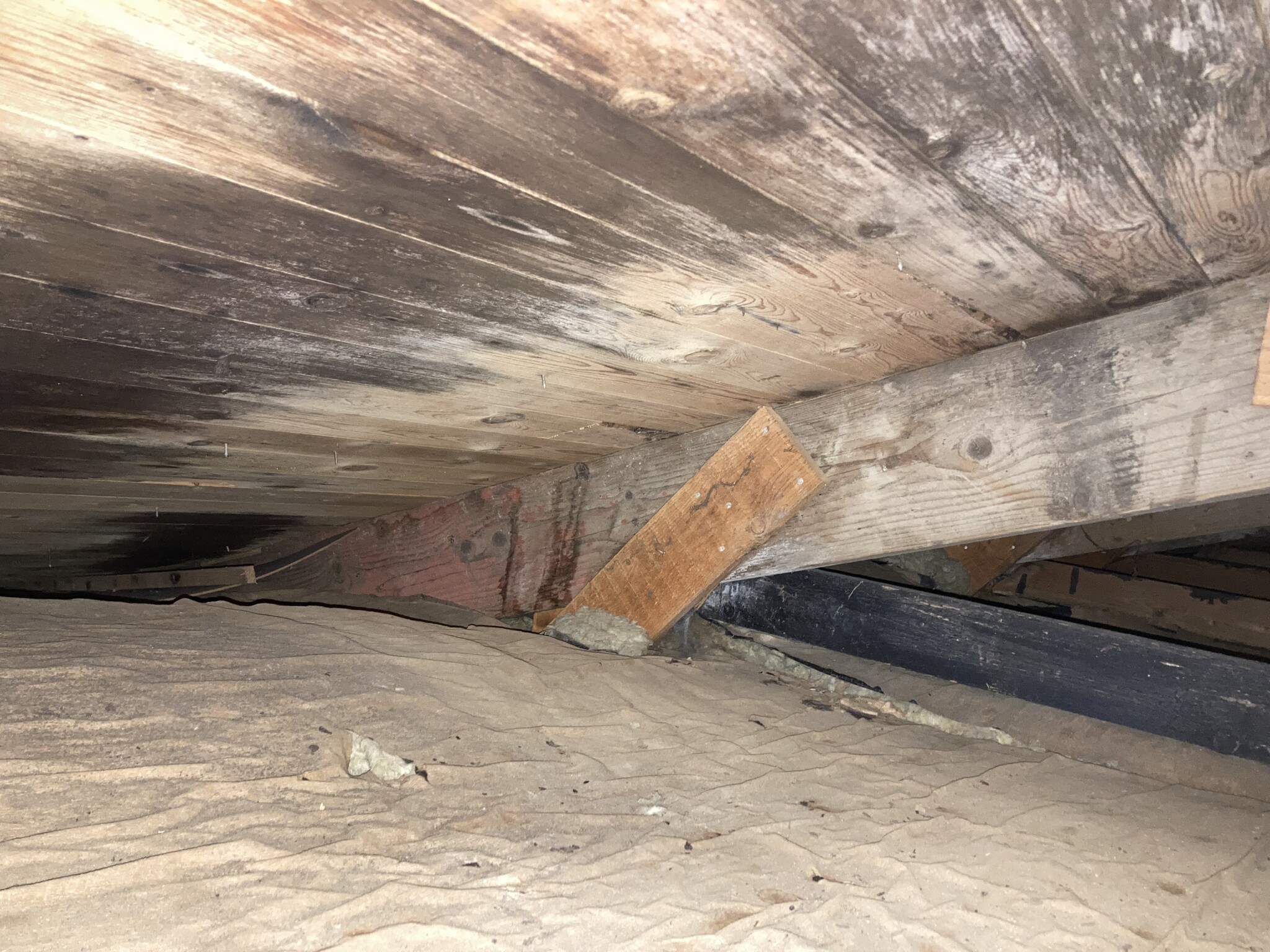
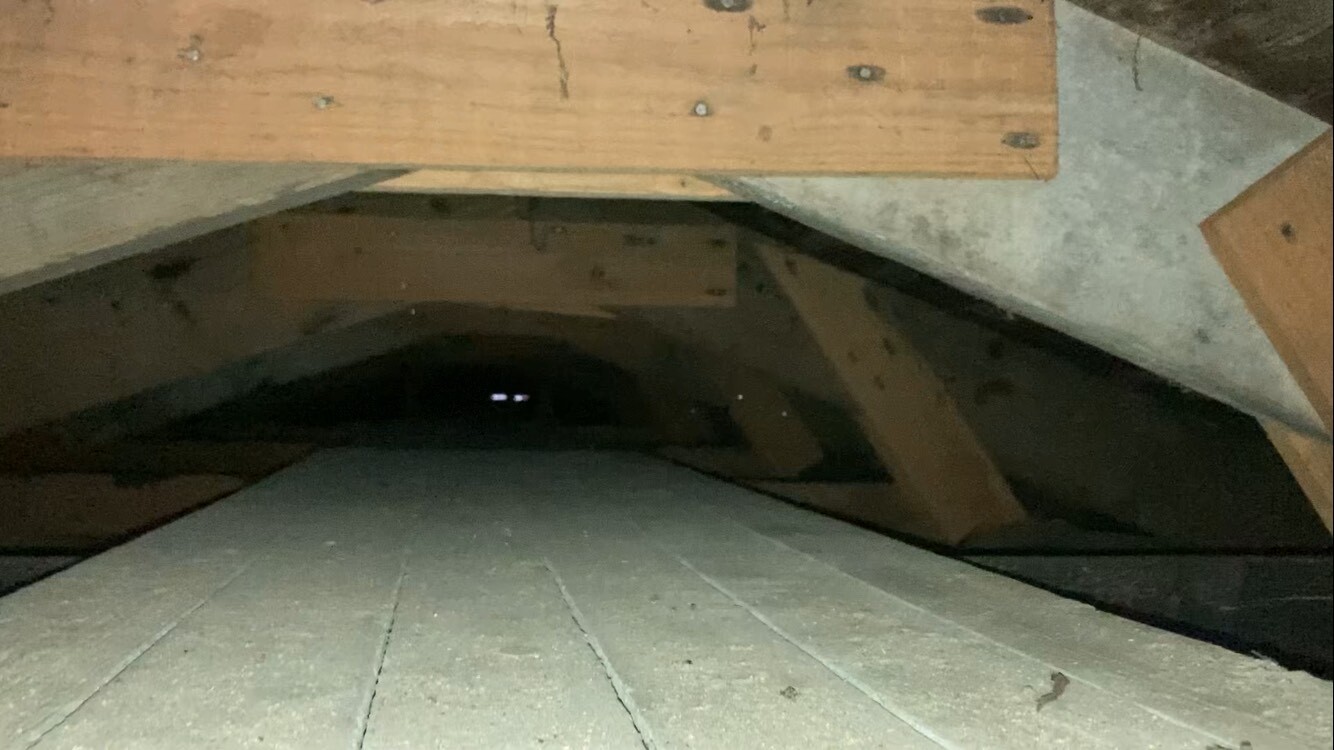
Well, the drawing you have does not match reality.
And usually, reality wins...
Either there has been a renovation after the building permit drawing, or perhaps more likely, they have built in a different way than it was drawn.
Based on how it seems to look in reality, it doesn't feel unreasonable that it is a load-bearing wall, but to be really sure, you would need to bring in a structural engineer who can check and calculate what you have before making any major changes in those parts of the construction.
Btw, are the dark parts of the roof moisture? I see on the paper that you've had some leakage, but not much and unclear when.
And usually, reality wins...
Either there has been a renovation after the building permit drawing, or perhaps more likely, they have built in a different way than it was drawn.
Based on how it seems to look in reality, it doesn't feel unreasonable that it is a load-bearing wall, but to be really sure, you would need to bring in a structural engineer who can check and calculate what you have before making any major changes in those parts of the construction.
Btw, are the dark parts of the roof moisture? I see on the paper that you've had some leakage, but not much and unclear when.
That might be trusses but could also be some sort of reinforcement to allow the roof to handle being extended.
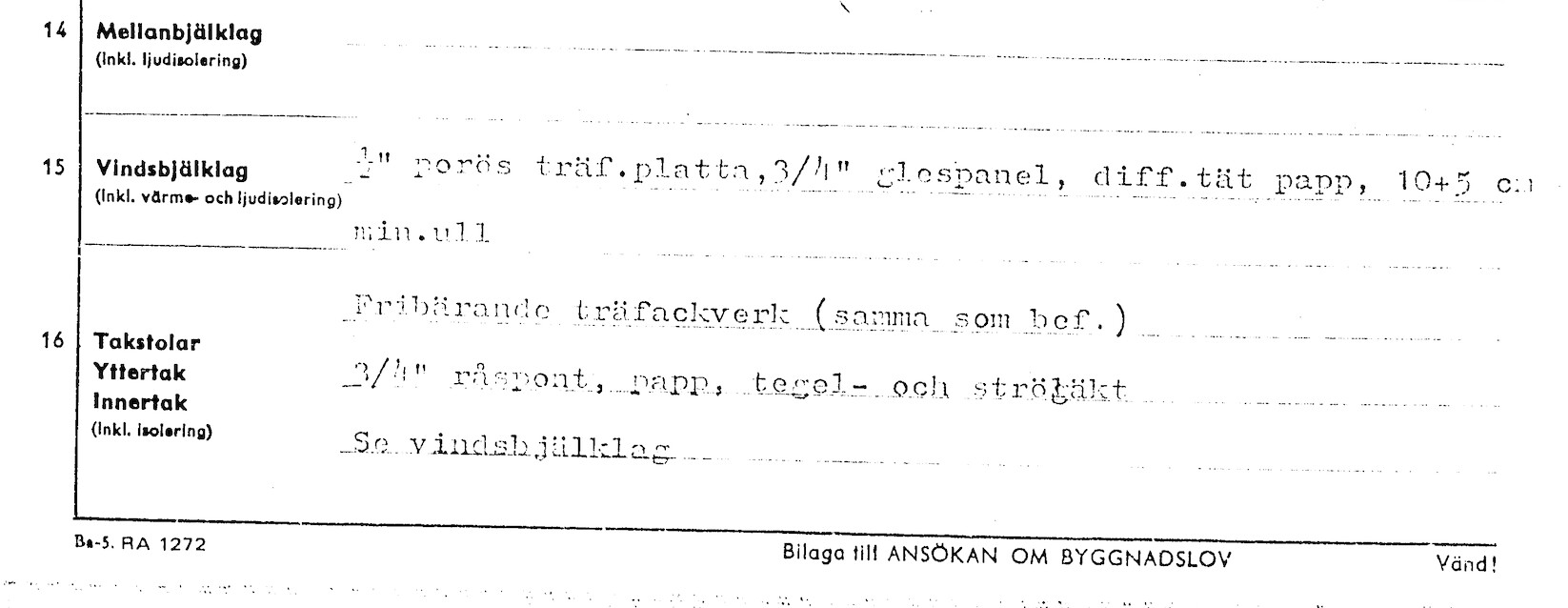
Are there any descriptions in the building permit documents where you can find more about the trusses?
Are there any descriptions in the building permit documents where you can find more about the trusses?
No, unfortunately, I can't find any more information about the rafters. The only thing I have found about the rafters is the draft I posted above, i.e. that they should be free-spanning truss
Click here to reply