
Hello,
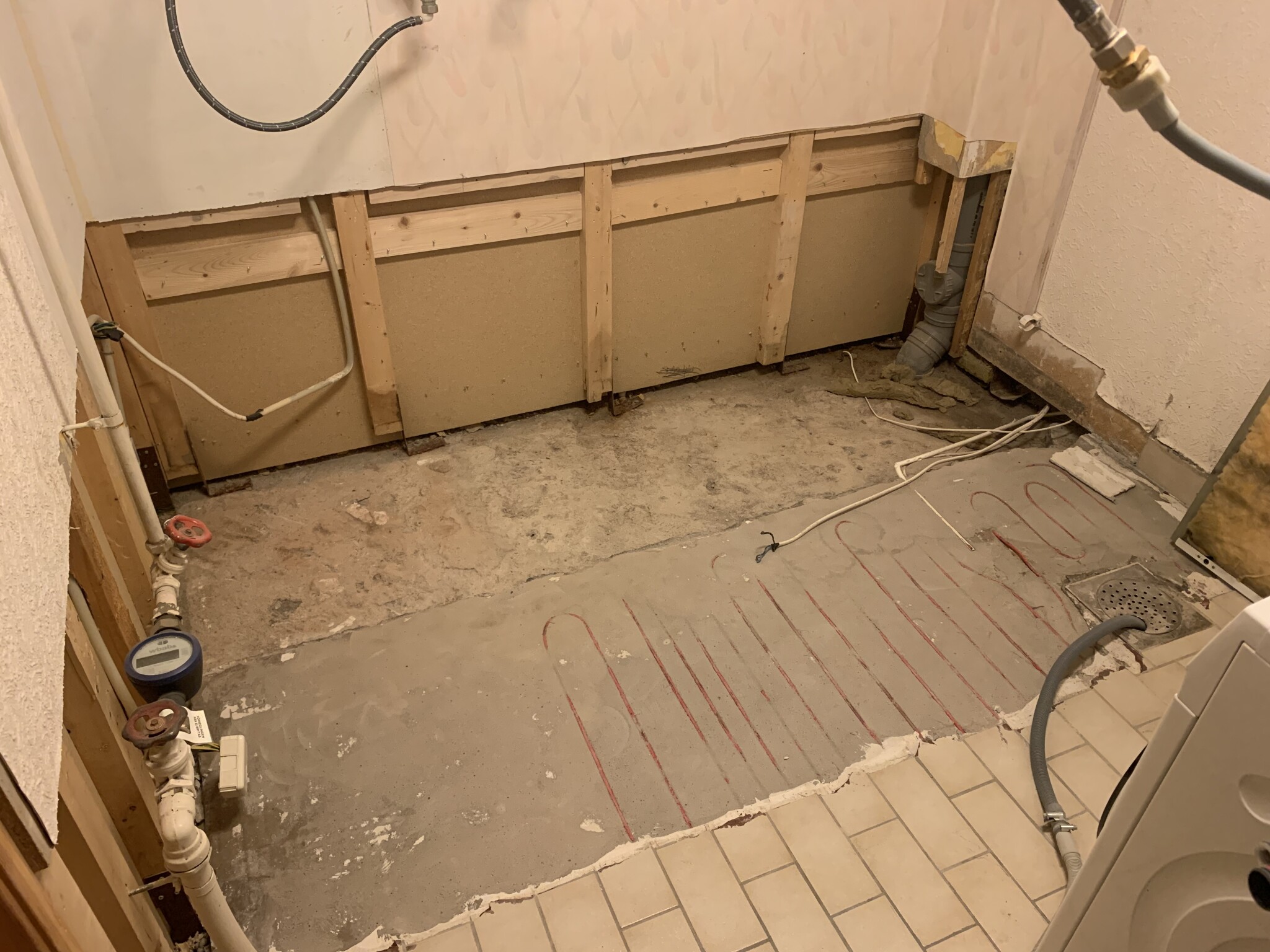
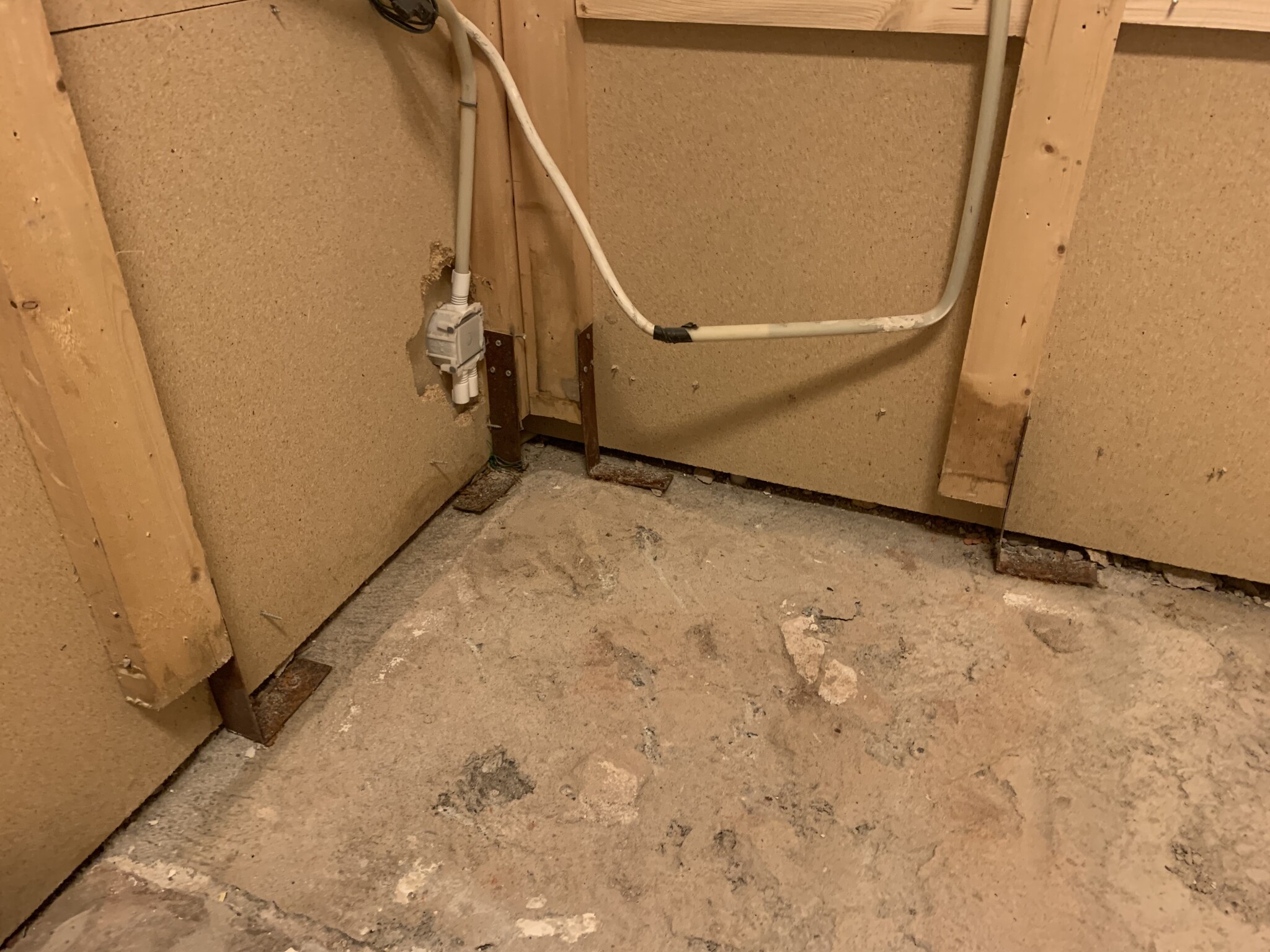
I have received moisture damage in the laundry room in a split-level house, with a leaking hot water heater being the culprit. The insurance company is involved, and I've started tearing down. Now that it's opened up, I think the upright studs look very oddly anchored. They are attached with angle brackets down to the slab. Has anyone seen this before?
I know there was moisture damage in the 90s where a leveling floor was installed. Could they have then cut the studs and done some sort of special solution?
I have received moisture damage in the laundry room in a split-level house, with a leaking hot water heater being the culprit. The insurance company is involved, and I've started tearing down. Now that it's opened up, I think the upright studs look very oddly anchored. They are attached with angle brackets down to the slab. Has anyone seen this before?
I know there was moisture damage in the 90s where a leveling floor was installed. Could they have then cut the studs and done some sort of special solution?
Doesn't look stable, you should have a sole plate, if needed you can prop up the sole plate with suitable material..Farsan87 said:
Hi,
I have a moisture damage in the laundry room in a hillside house, a leaking water heater was the culprit. The insurance company is involved and I've started tearing down. Now that it's opened up, I think the vertical studs appear very strangely anchored. They are kind of placed on angle brackets down towards the slab. Has anyone seen this before?
I know there was moisture damage in the 90s when they installed a leveling floor. Could they have cut the studs and made some special solution?
as I see it, this needs to be fixed, it already looks like the iron angles have taken damage…

During the previous water damage, the studs were corroded and cut off, even the wall material had suffered and was cut. Reinforcement and fastening have been done with angle irons. The studs should stand on a firm base, possibly with tar paper underneath or, as it is said, a stud on the floor with tar paper underneath all the way. What has been done is a bit of a shortcut to avoid replacing the studs all the way.
It seems like the studs were previously nailed to a sillHello,
I have a moisture damage in the laundry room in a split-level house, a leaking water heater was the culprit. The insurance company is involved, and I have started tearing down. Now that it's opened up, I find the vertical studs to be very oddly anchored. They are attached with angle irons down to the slab. Has anyone seen this before?
I know there was moisture damage in the 90s when they installed leveling floors. Could they have then cut the studs and made some kind of special solution?

My guess is that they previously removed all the wood in contact with the base plate due to rising moisture.
Is the slab in gravel/sand/clay, or is there any insulation or other capillary-breaking construction underneath?
Is the slab in gravel/sand/clay, or is there any insulation or other capillary-breaking construction underneath?
Click here to reply