
1,854 views ·
6 replies
2k views
6 replies
Strange facade cladding for the shed
Hello,
We have a storage room that we need to take care of. One of the big question marks is what this is and why on earth it was used.
The storage was built around 1909 and has been freshened up over time. So I'm also wondering if anyone wants to guess what we might find behind it. Can we just remove it and what would you replace it with?
We had a carpenter here who speculated. But I think in this forum, there might be someone who knows more about old houses and how things were done in the past. Alternatively, someone with experience with similar constructions.
I'm wondering if it's the same material as the rest of the house. But here it seems like the panel isn't placed to cover... but on the house, it feels more cast and here it looks like a mix of wood chips, stone, cement? Very strange.
All suggestions on what it might be are welcome.
We have a storage room that we need to take care of. One of the big question marks is what this is and why on earth it was used.
The storage was built around 1909 and has been freshened up over time. So I'm also wondering if anyone wants to guess what we might find behind it. Can we just remove it and what would you replace it with?
We had a carpenter here who speculated. But I think in this forum, there might be someone who knows more about old houses and how things were done in the past. Alternatively, someone with experience with similar constructions.
I'm wondering if it's the same material as the rest of the house. But here it seems like the panel isn't placed to cover... but on the house, it feels more cast and here it looks like a mix of wood chips, stone, cement? Very strange.
All suggestions on what it might be are welcome.


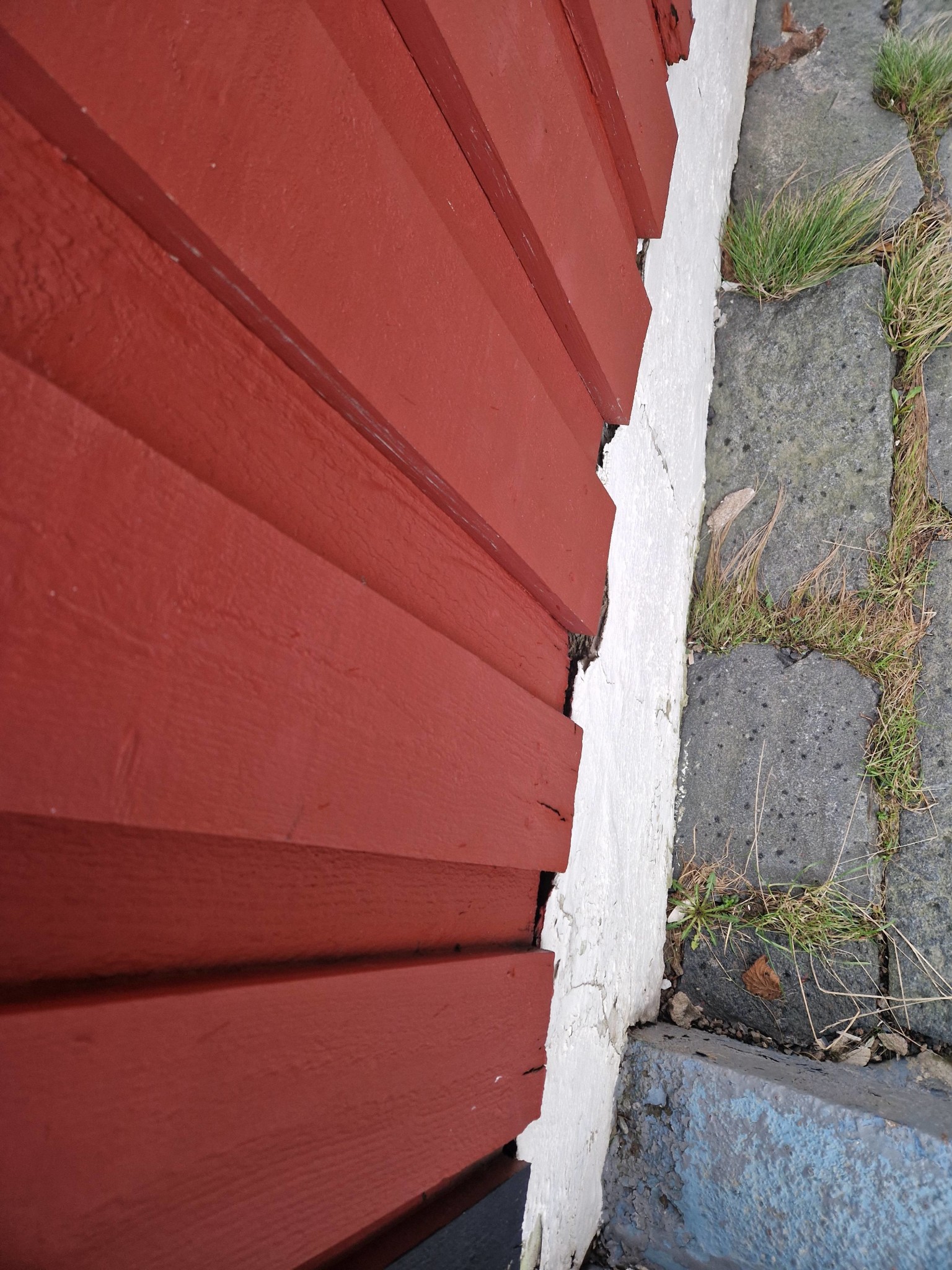
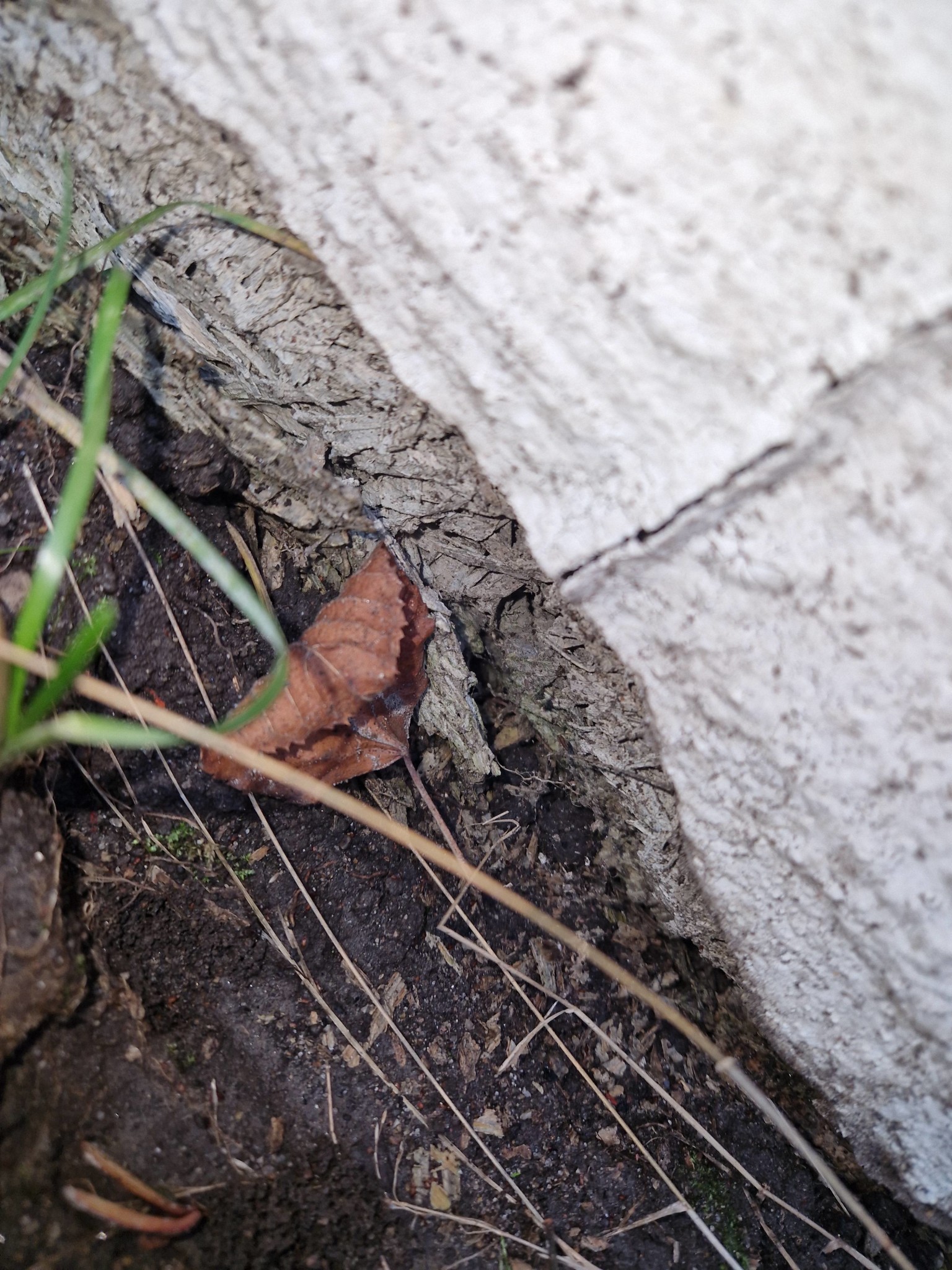
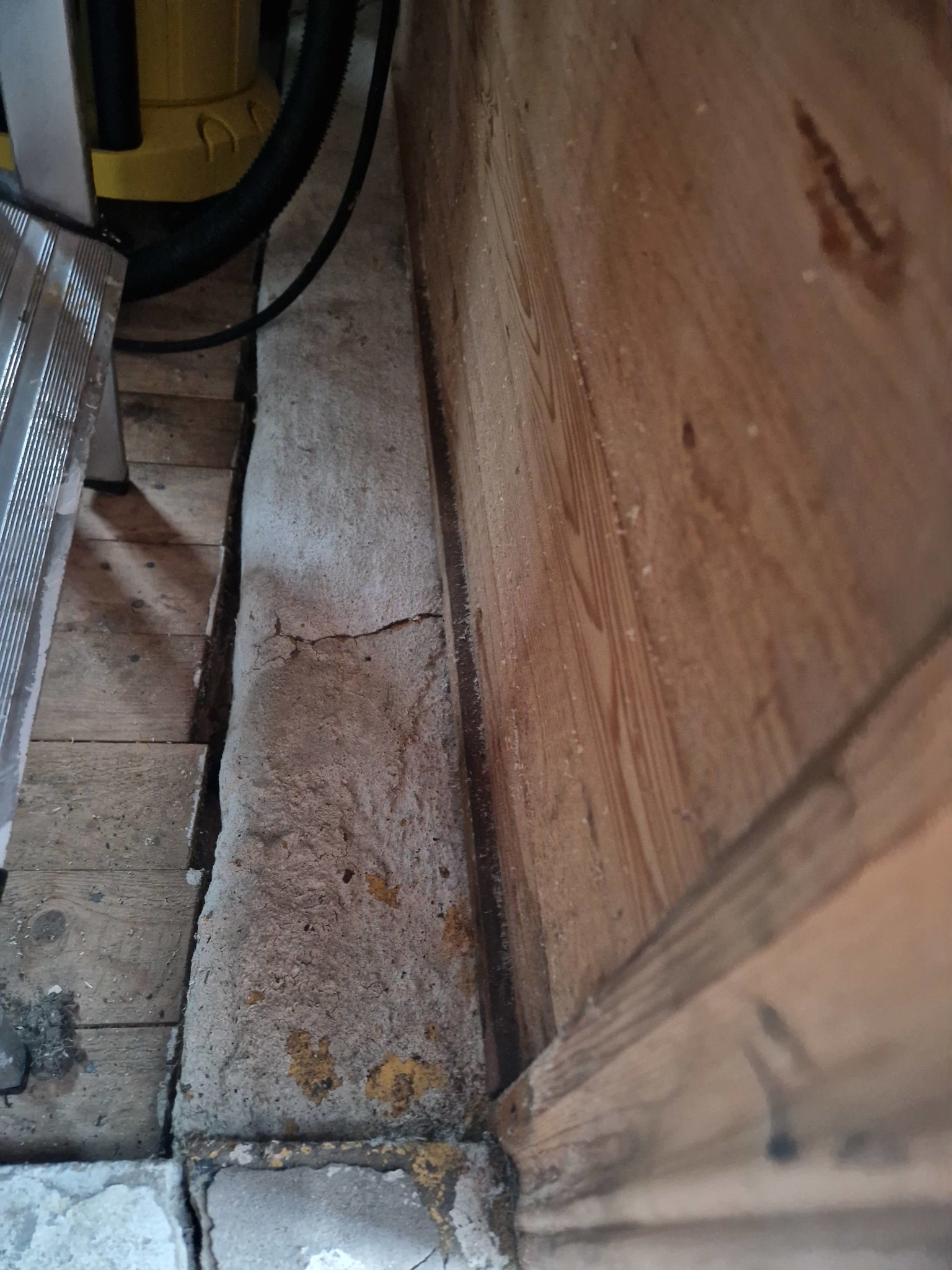
Right now, I appreciate all guesses that can lead me in any direction - hopefully towards the goal haha. Thanks for that. Is it a common area of use? (doesn't seem so smart considering it constantly gets wet). And what makes you guess it's a träullit board?F fribygg said:
It looks like cement-based träull, the product is still manufactured today, but I don't know if it's so suitable as a base without it being used more as a sound absorber now, even though it was mainly used as a plaster carrier on exterior walls in 40-60s houses as far as I know.M Miscela said:
Thanks for the help!F fribygg said:
You can replace it with a cement-based plinth board, Cembrit probably makes products that fit. If you need something that carries, a lecagrund might be suitable.
If the space inside is going to be insulated and heated, it might be a good idea to choose Benders plinth element I, it is easy to work with, quick, and probably fits well even if the space is cold.
If the space inside is going to be insulated and heated, it might be a good idea to choose Benders plinth element I, it is easy to work with, quick, and probably fits well even if the space is cold.
Great with some tips. Thanks againF fribygg said:You can probably replace it with a cement-based baseboard, cembrit likely makes things that fit. If you need something to carry, a lecagrund might be suitable.
If the space inside is to be insulated and heated, it might be an idea to choose Benders baseboard element I, it's easy to work with, quick, and probably fits well even if the space is cold.

Click here to reply