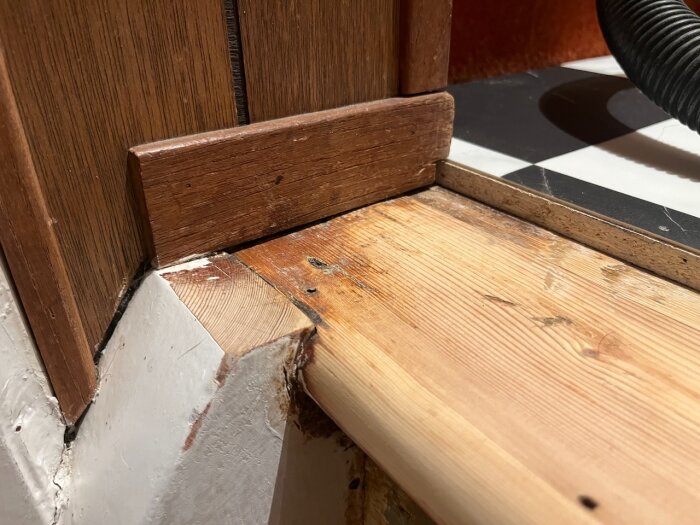
A new floor in the mudroom also leads to the renovation of two steps in our house from 1926. This will also serve as a basic course in staircase renovation before next fall's renovation of the main staircase! 🥳
But as usual when you haven't done such things before, some questions arise, hence this thread.
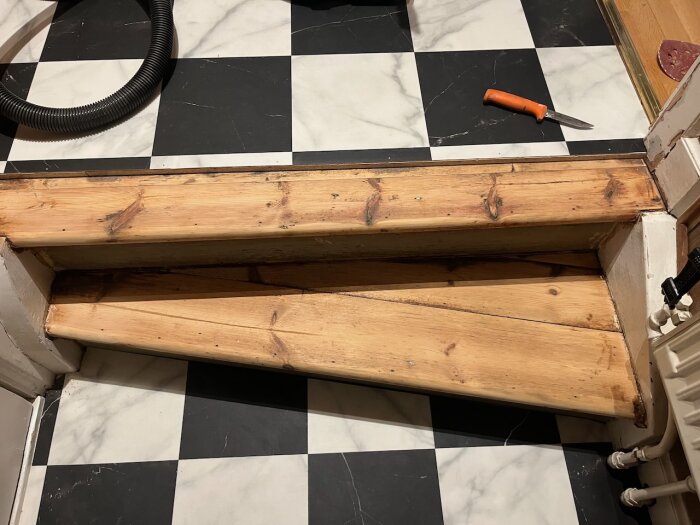
Unfortunately, I haven't taken a before picture, so one will have to imagine a brown felt carpet on the steps and the upper surface, while there was a brown plastic carpet with dark brown details on the lower surface. The house was thoroughly renovated in the 70s so it was probably very nice back then. So they thought. In the pictures, you can also see the main staircase, today glued with a red carpet. Quite stylish actually, but it's getting replaced next fall.
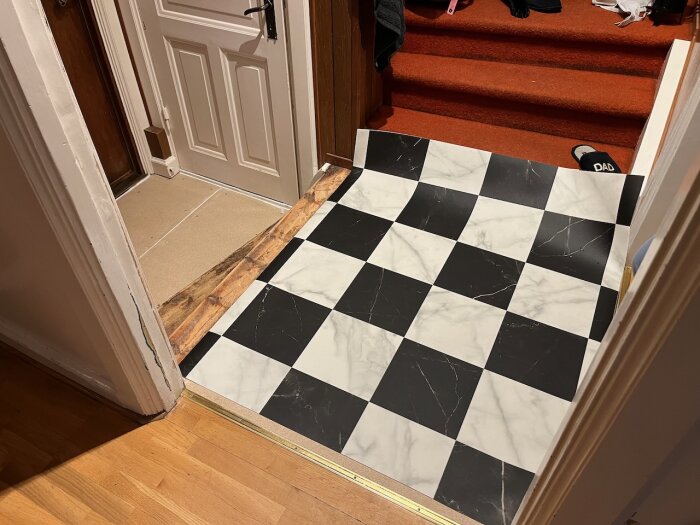
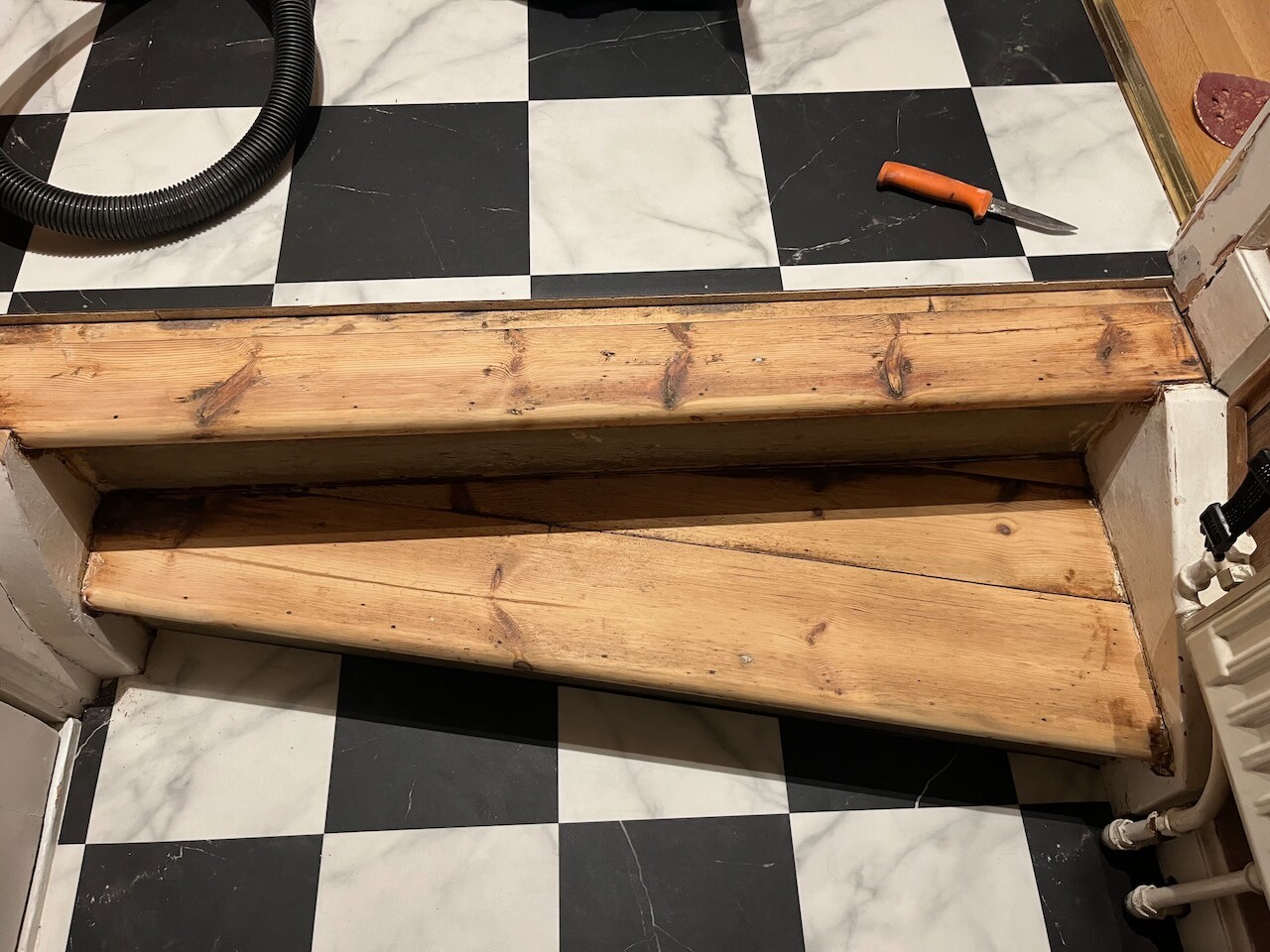
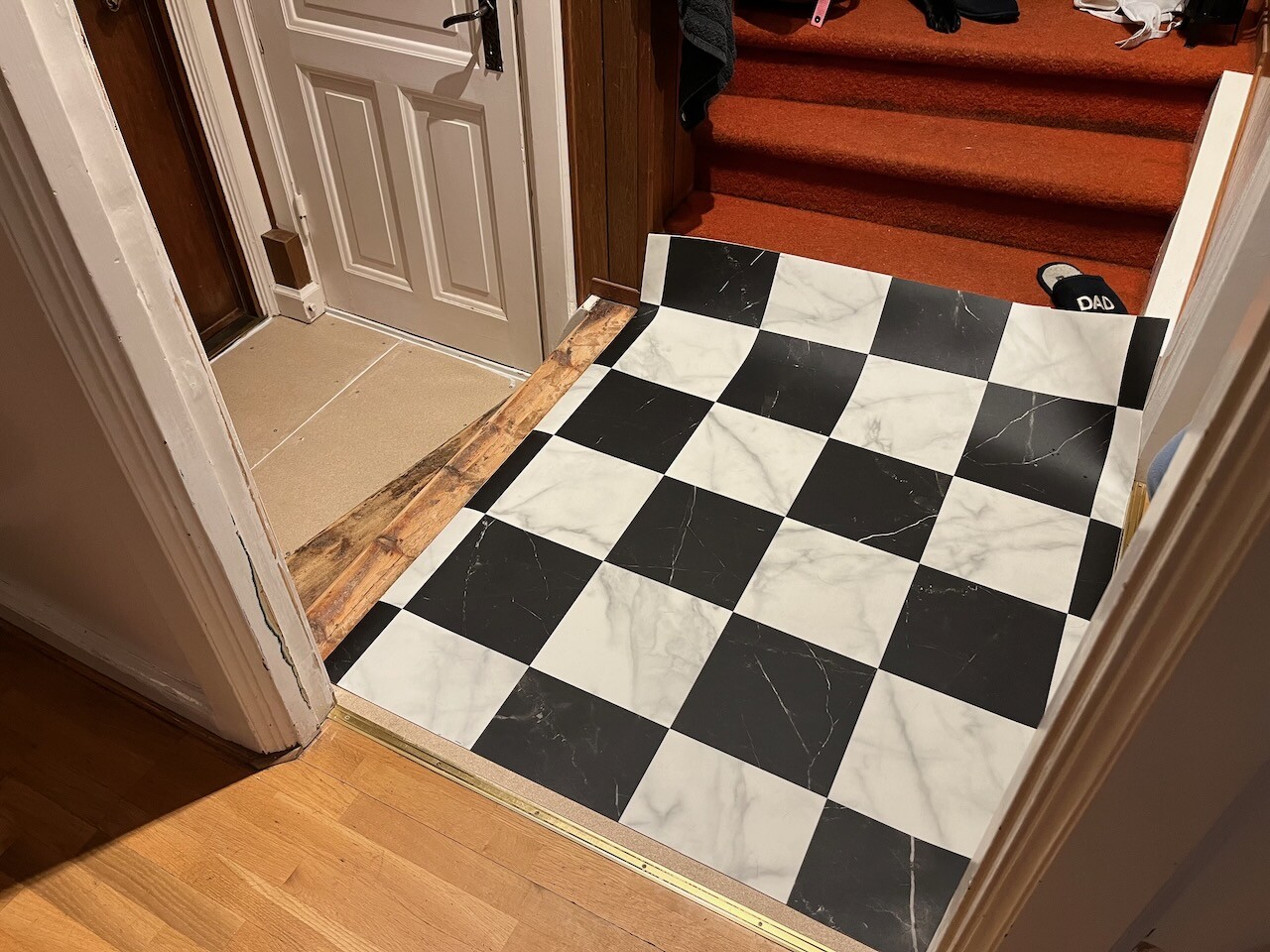
On the hallway surfaces, a checkered plastic carpet is now being placed. The wooden details of the staircase are being sanded down, the treads are stained with dark mahogany before varnishing, while the risers are painted white. The rest of the hall will eventually become white, and the main staircase will continue in the same style.
I'm using a Milwaukee random orbital sander with 3M's Xtract Cubitron sandpaper, which works very well! For corners and other details where the sander doesn't reach, I'm using my Milwaukee multi-tool with the sanding attachment.
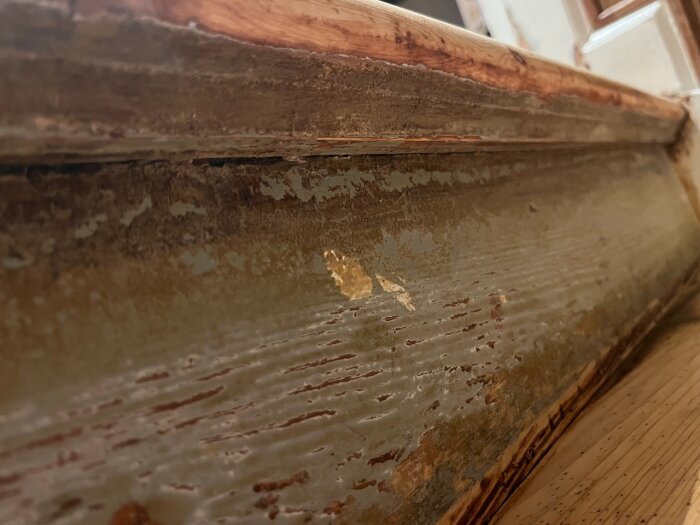
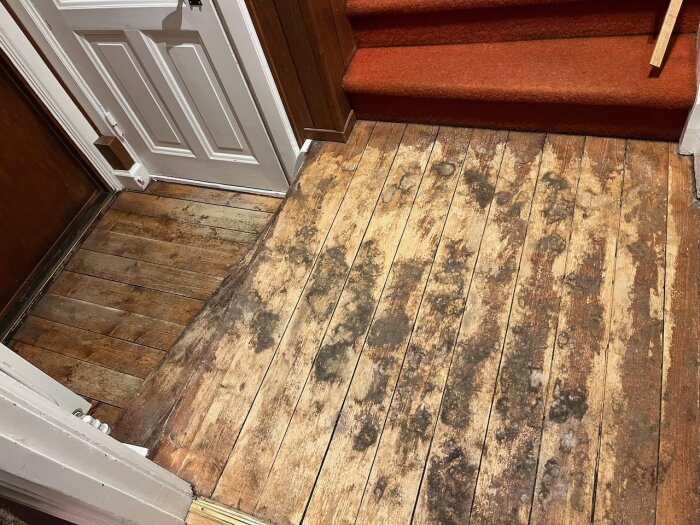
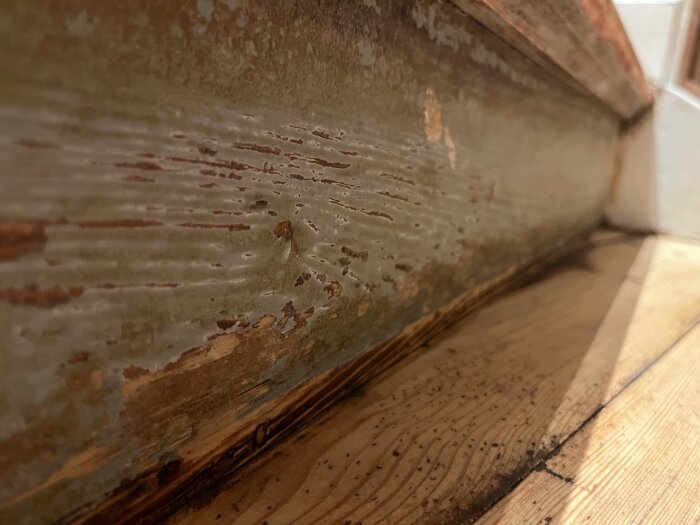
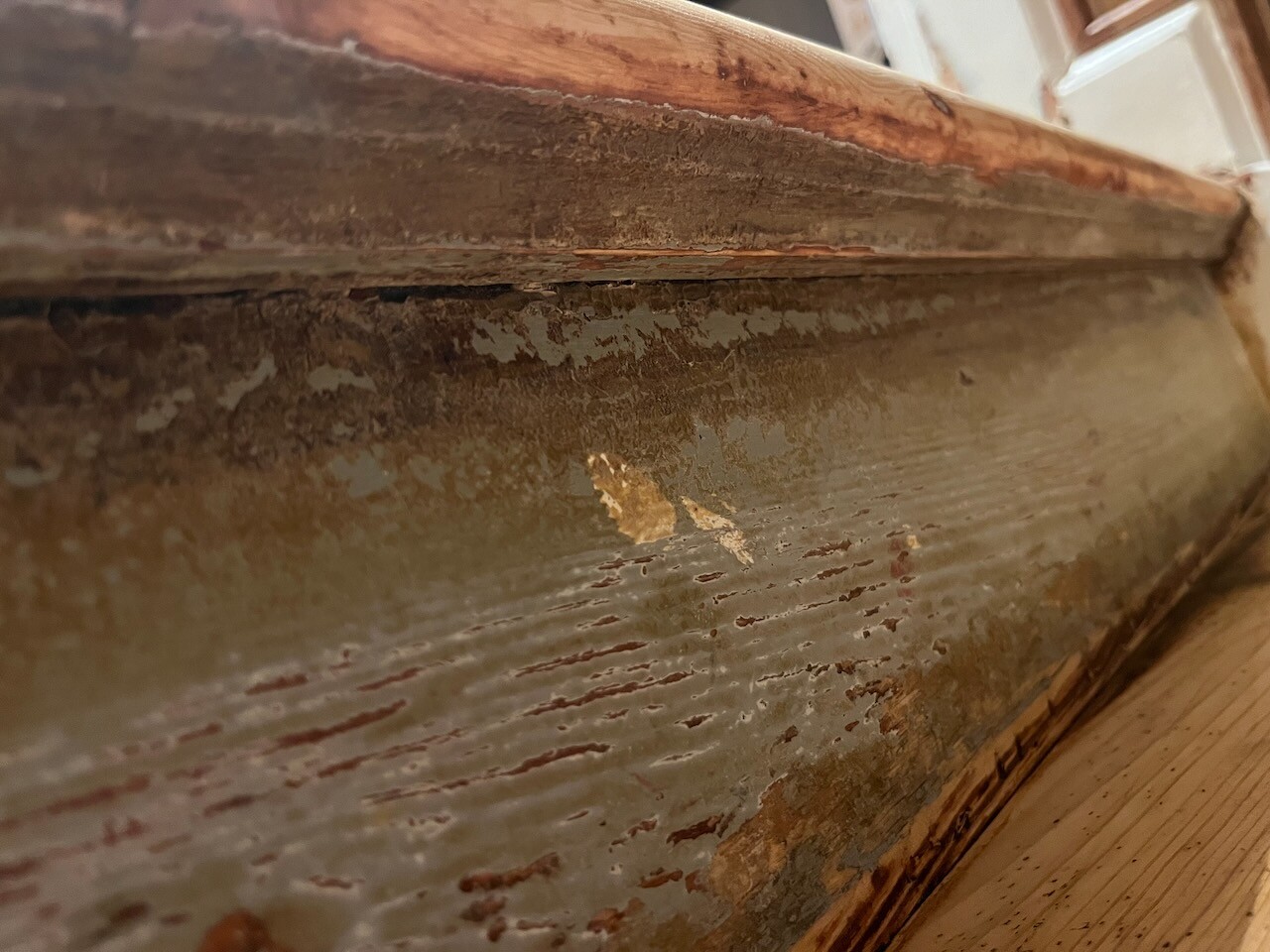
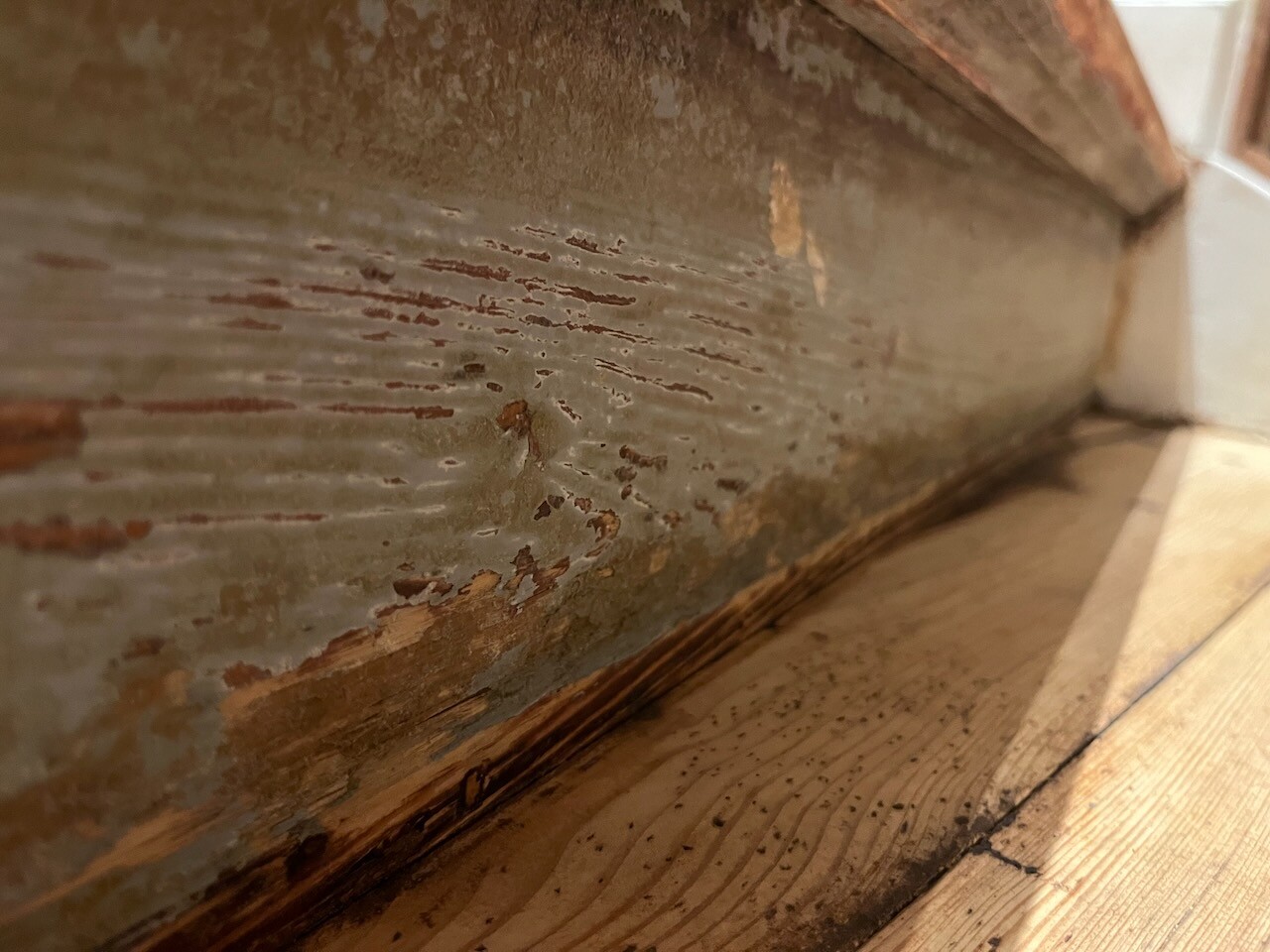
The previous owner didn’t skimp on the glue when he laid down the carpet, making this job quite tedious. When the glue warms up during sanding, the mass also sticks to the sandpaper, leading to the need to scrape away the glue residues...
So a few questions:
- Are there any tools generally recommended to use instead?
- Is there a stain generally considered the best?
- Is there a varnish that's fairly glossy but still prevents it from feeling slippery?
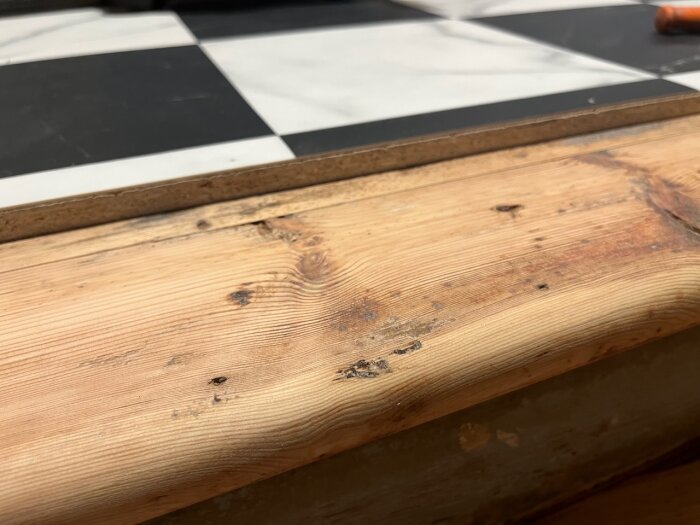
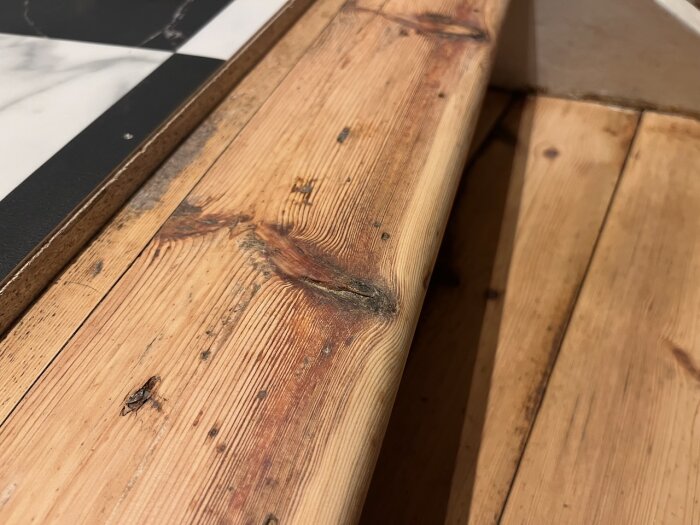
The bullnose has some details I want to preserve, but here some other tool is required to remove the glue.
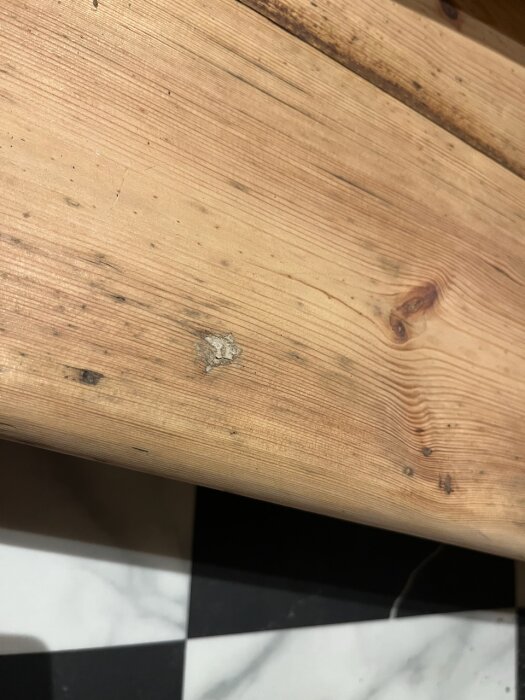
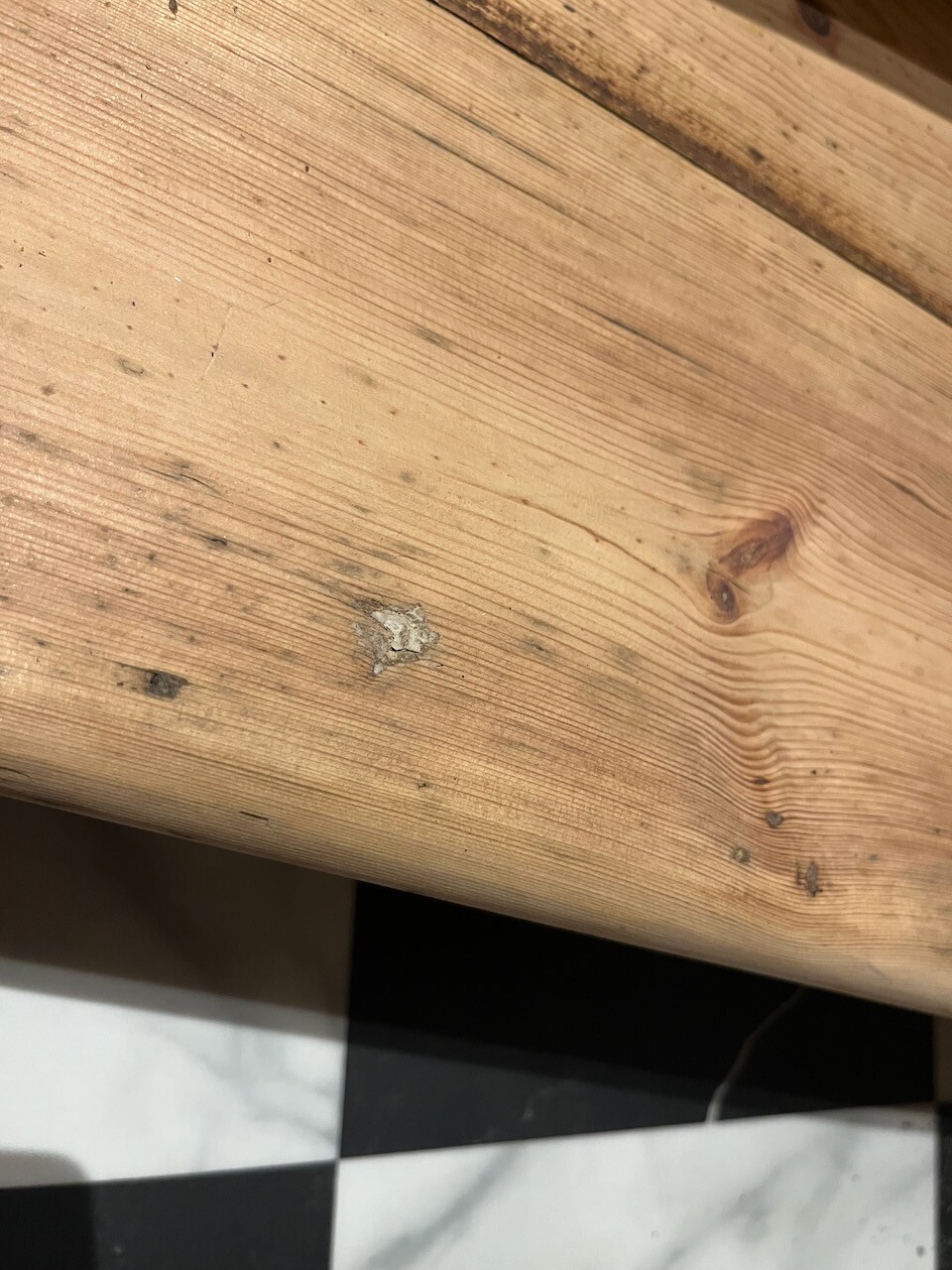
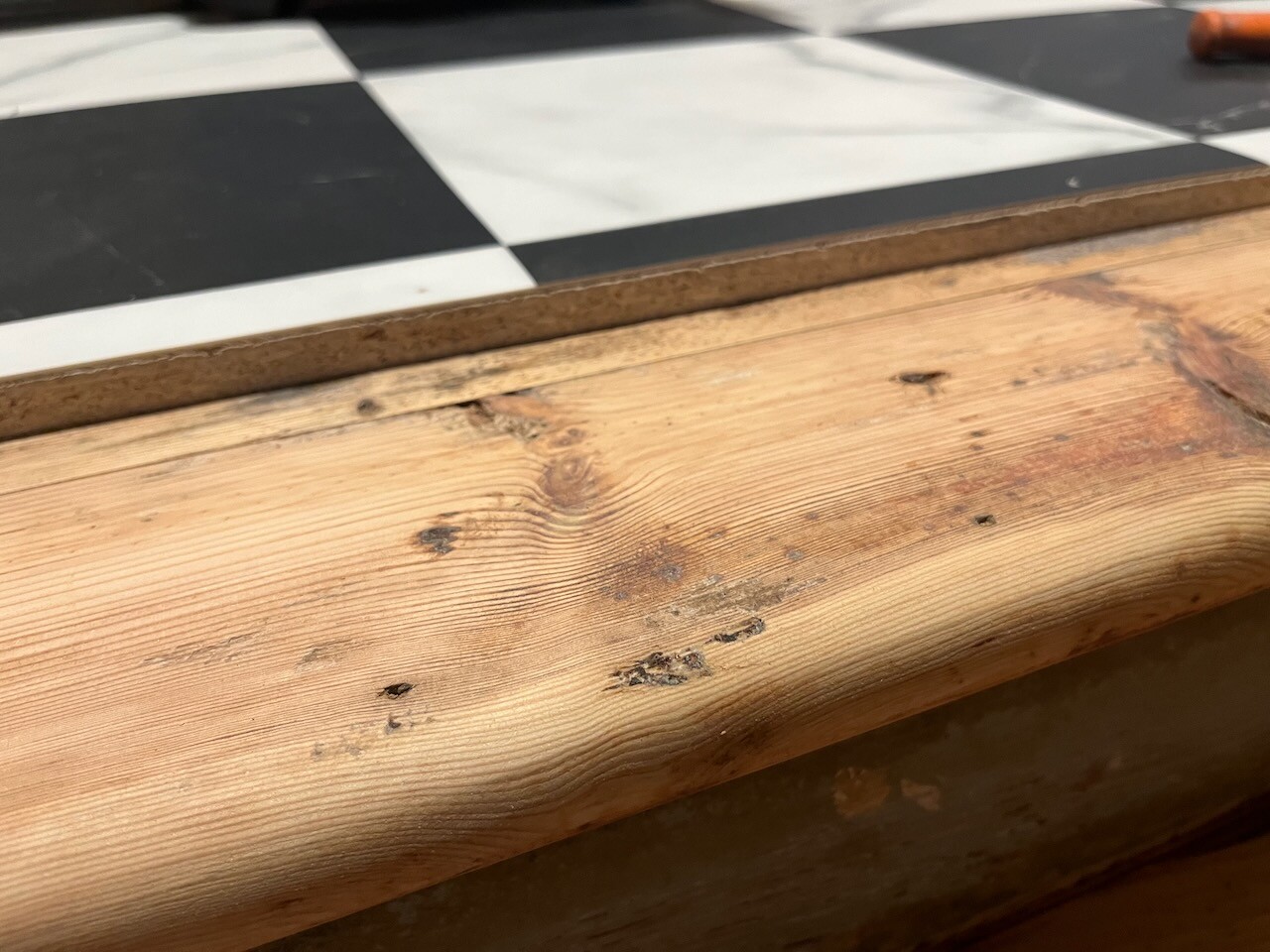
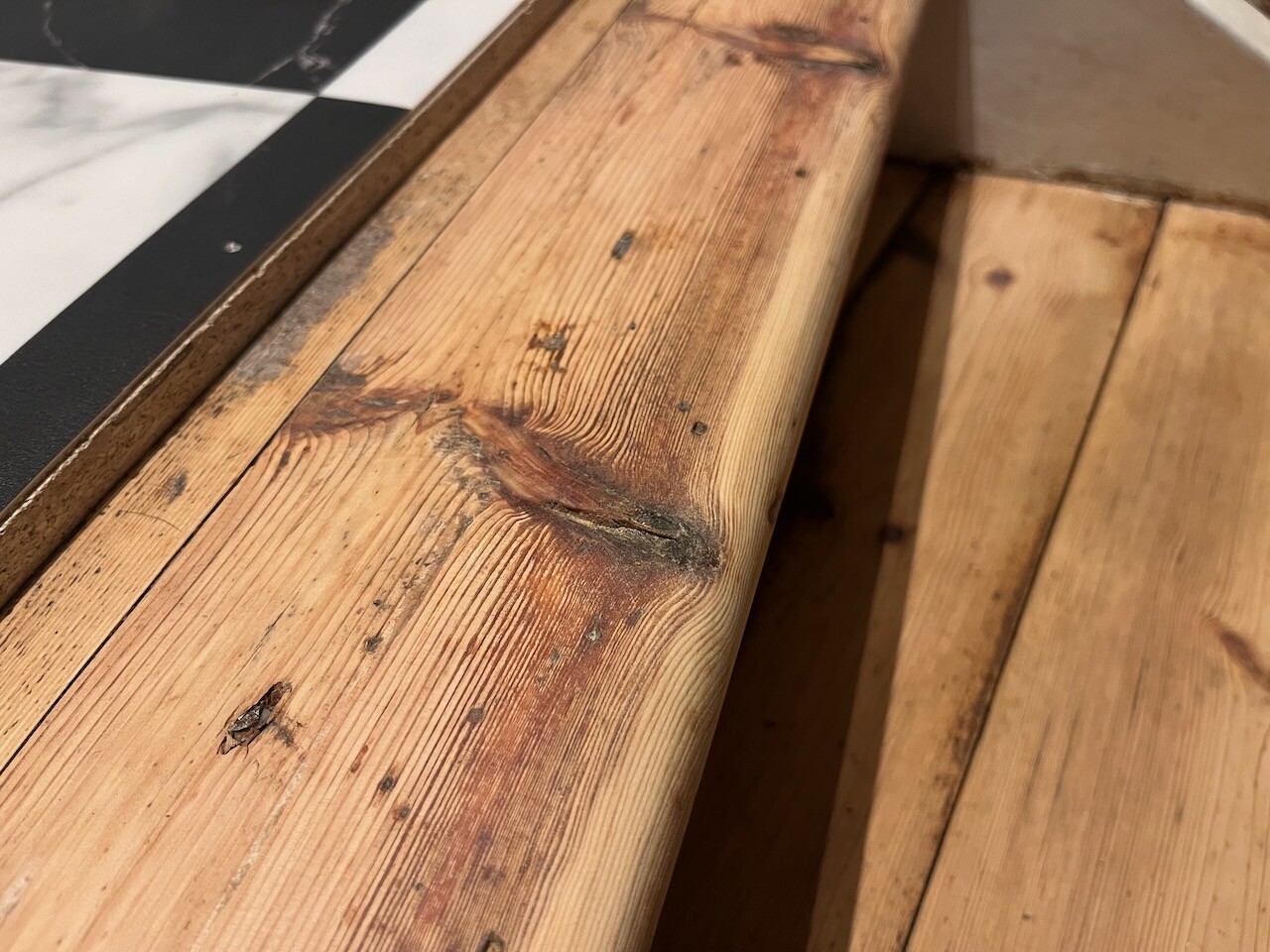
A small hole has been filled with putty or something similar. Should it be dug out and left as a hole, or can a wood filler be used for a nice result when staining?
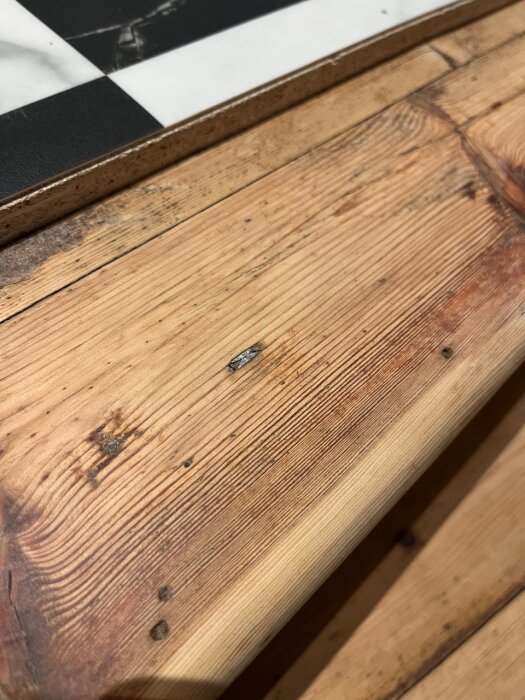
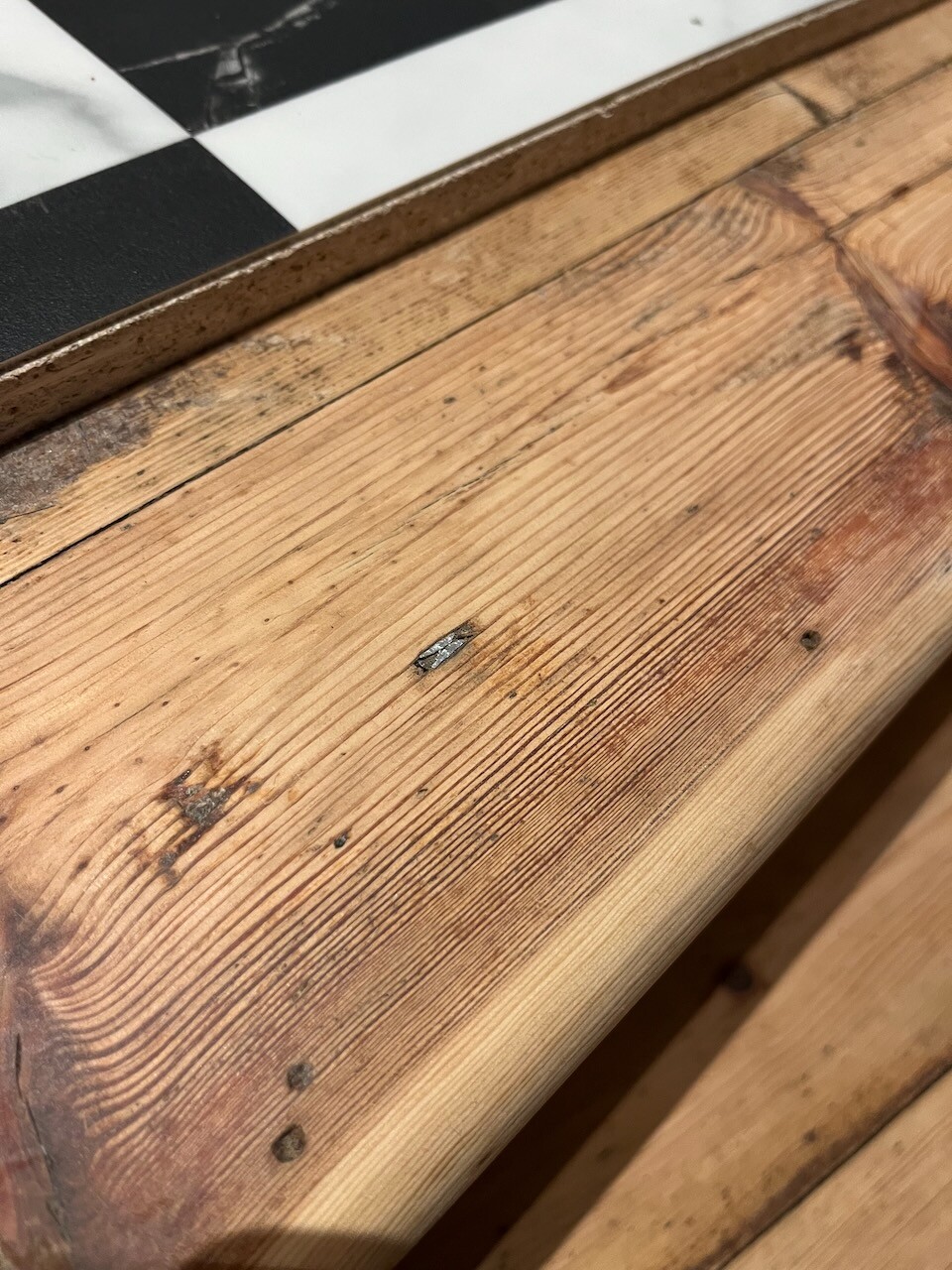
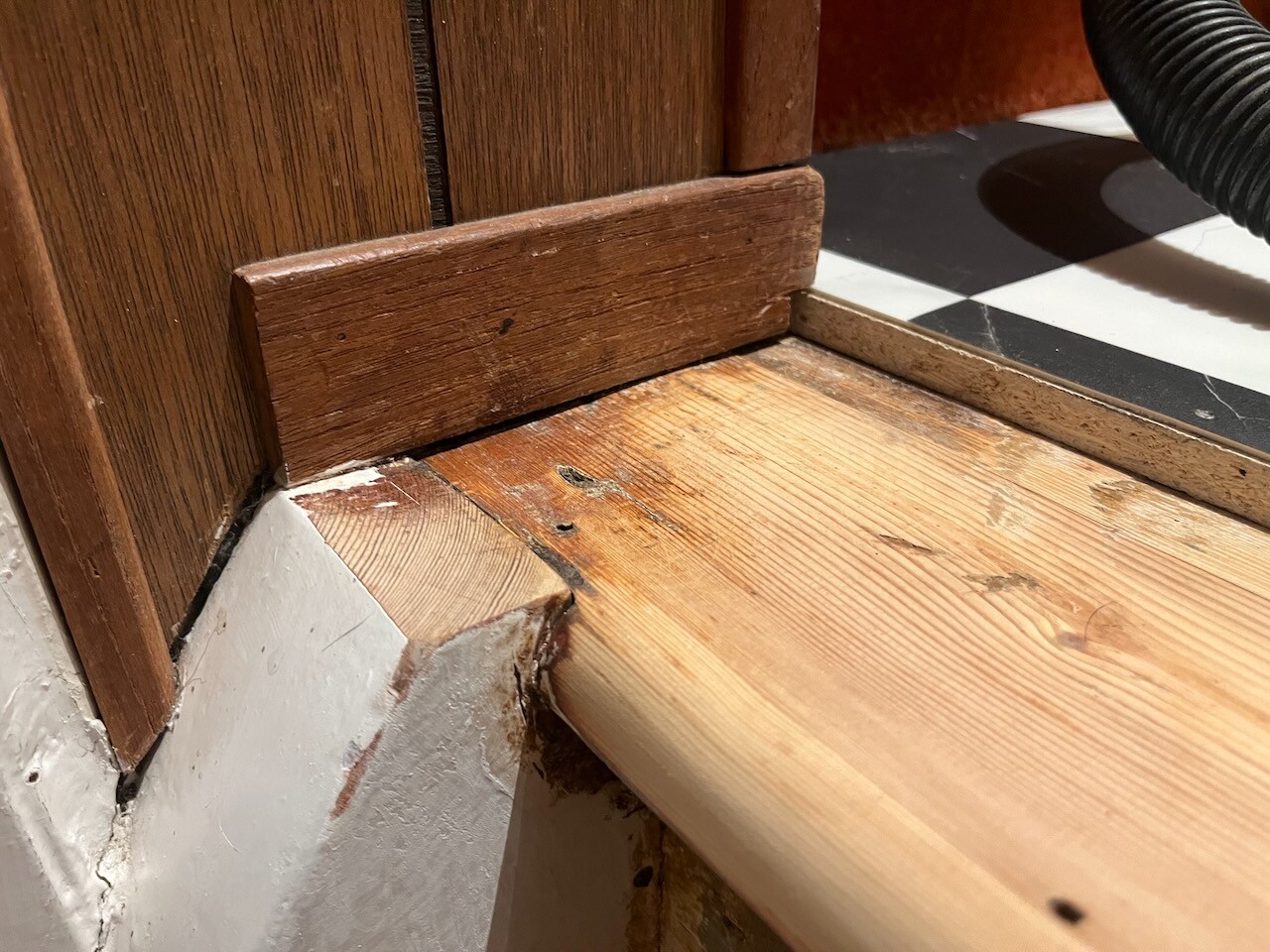
There are two nails in the top tread. It doesn't seem like an option to remove these, but will they ruin the appearance? My hope is that they won’t be very noticeable after staining.
To the right on the middle step, there's a gap between the planks. Is it possible to fill this with wood filler and stain, or should it be left as is?
A few environment pictures:
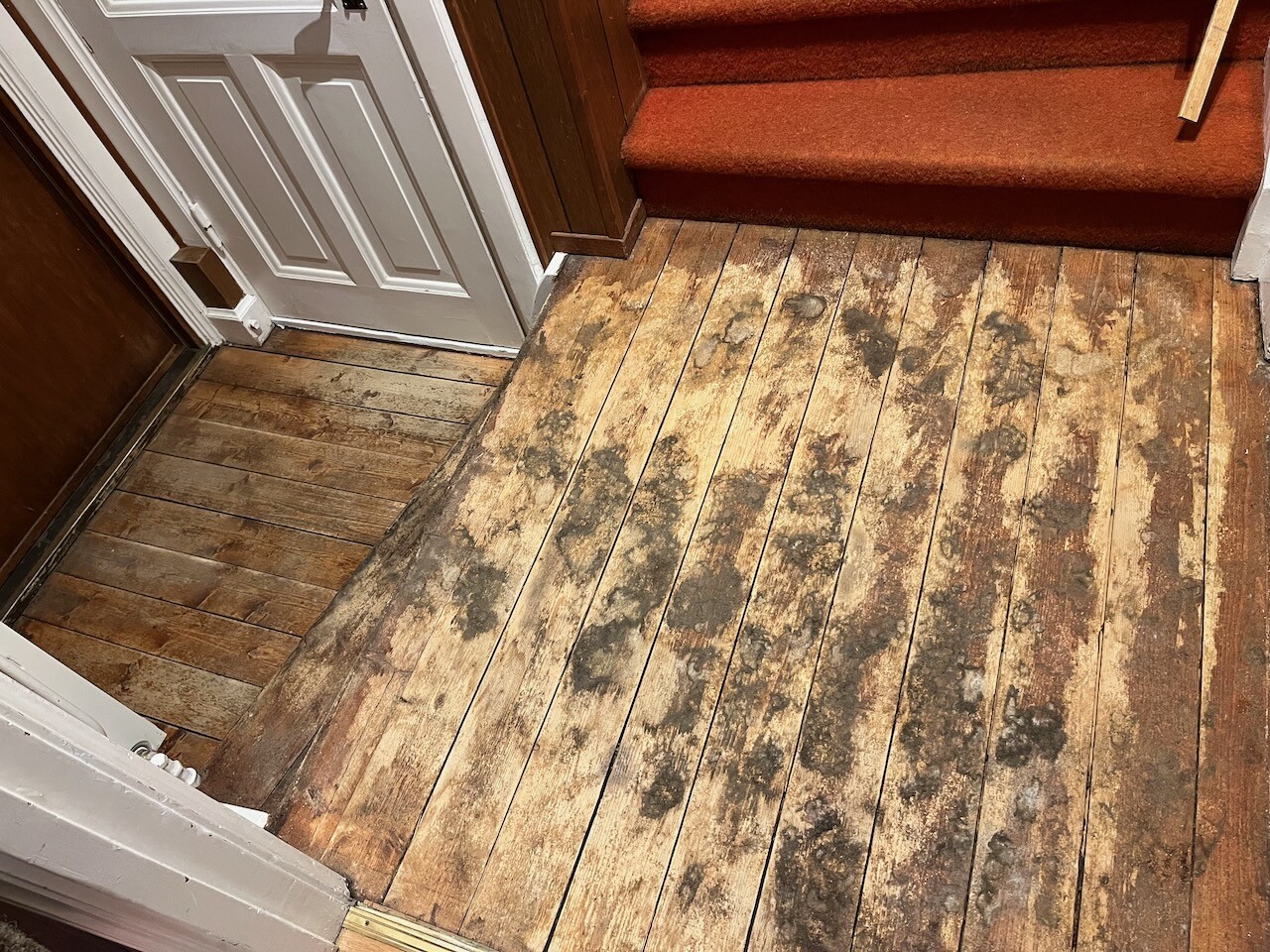
Carpets removed.
Upper carpet measured out, the substrate is now chipboard screwed in place. Screw holes and gaps filled with wood putty.
There are some cavities around the knots; the question is whether they should be filled with wood filler or not…? 🤔
Details…
Most glue wins. Here I'm thinking of applying putty and making it look nice before painting it white; it will take a year to sand this down...
That’s probably all for now. Your input is appreciated! My biggest concern seems to be whether or not I can use some kind of wood filler. For those who work with staircases or have done a similar job before, there are probably straightforward answers to this.
I don't think you'll get good results with filler, but I'm not sure. I would guess either you'll get a lot of pigment from the stain or none at all.
A paint scraper could be a good place to start, to remove most of the glue.
I think Bona has a finish with anti-slip properties, I remember asking a few years ago, otherwise, most finish manufacturers should have it.
I've only ever used Bona finishes, so I can only recommend that one. If you want a really good finish, Bona HD (it might have disappeared or changed name) is a two-component finish that's solvent-free; if it works for public spaces, it should work in a hallway 🙂
Click here to reply
Vi vill skicka notiser för ämnen du bevakar och händelser som berör dig.